



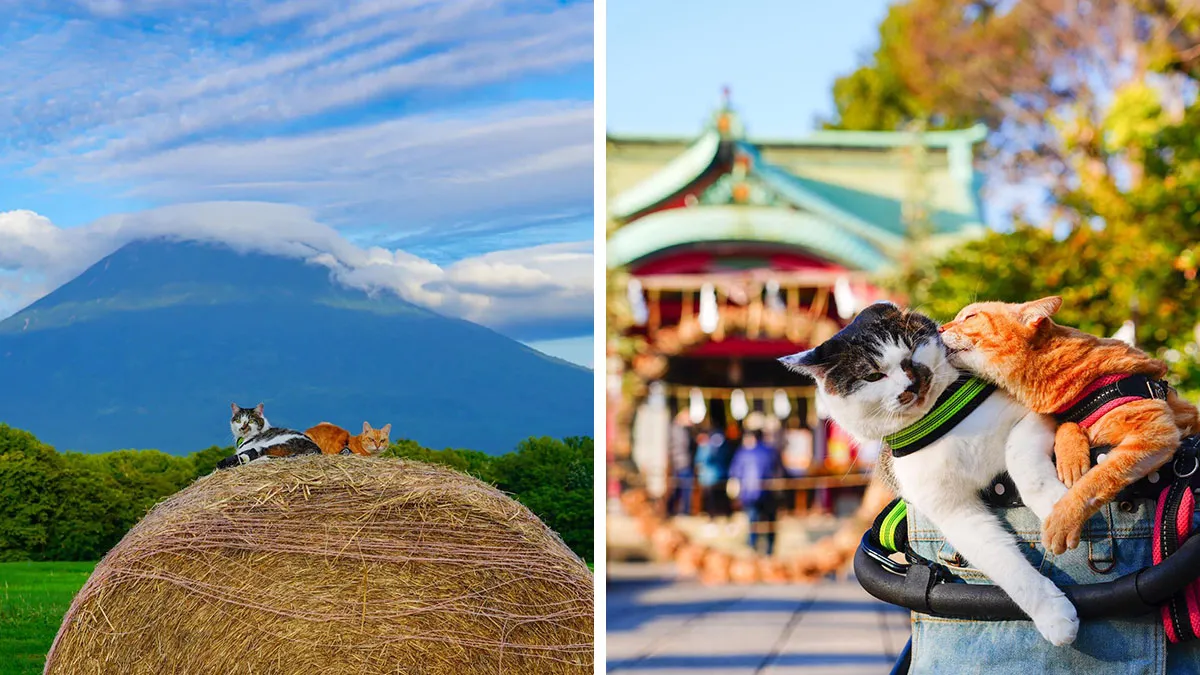


If you're thinking of leaving your cats at home while you go on an adventure, think again, as these two cats won't have it! Daichi and Fuku-chan are traveling cats and very much enjoy new scenery, like their owner, Daisuke, does.
Their travels began before Daichi came into their lives as they had another cat named Daichiki. In an interview with Bored Panda, Daisuke shared: “My journey of traveling with cats began with my late cat Daikichi. After he passed away in 2021, I continued with Fuku-chan and later welcomed Daichi. The decision to travel with them stemmed from a desire to share experiences and create memories together. Over time, it evolved into a lifestyle that has brought us closer and allowed us to explore Japan in a unique way.”
Their travels began before Daichi came into their lives as they had another cat named Daichiki. In an interview with Bored Panda, Daisuke shared: “My journey of traveling with cats began with my late cat Daikichi. After he passed away in 2021, I continued with Fuku-chan and later welcomed Daichi. The decision to travel with them stemmed from a desire to share experiences and create memories together. Over time, it evolved into a lifestyle that has brought us closer and allowed us to explore Japan in a unique way.”
So, without further ado, we invite you to take a look at their cutest travel photo gallery ever.
More info: Instagram | Facebook | artandstrategy.co.jp
More info: Instagram | Facebook | artandstrategy.co.jp
#21

"Finally, Dichi and I have got to Hawaii Beach, where the sunset is beautiful! ⠀
⠀
I'm not joking. It is the Hawaii of Japan. In Chinese characters, it is written "羽合(feathers flock)" which is the name of a town along the central coast of Tottori Prefecture. ⠀
⠀
This town has a long history. It is said that the name of the place with this pronunciation was already described in a document published around 1258 during the Kamakura period (1185-1333). ⠀
⠀
In fact, the name of the town shares the same name as Hawaii County in the state of Hawaii, U.S.A., and in 1996, the two counties formed a sister city affiliation."
⠀
I'm not joking. It is the Hawaii of Japan. In Chinese characters, it is written "羽合(feathers flock)" which is the name of a town along the central coast of Tottori Prefecture. ⠀
⠀
This town has a long history. It is said that the name of the place with this pronunciation was already described in a document published around 1258 during the Kamakura period (1185-1333). ⠀
⠀
In fact, the name of the town shares the same name as Hawaii County in the state of Hawaii, U.S.A., and in 1996, the two counties formed a sister city affiliation."
Report
12points
#22
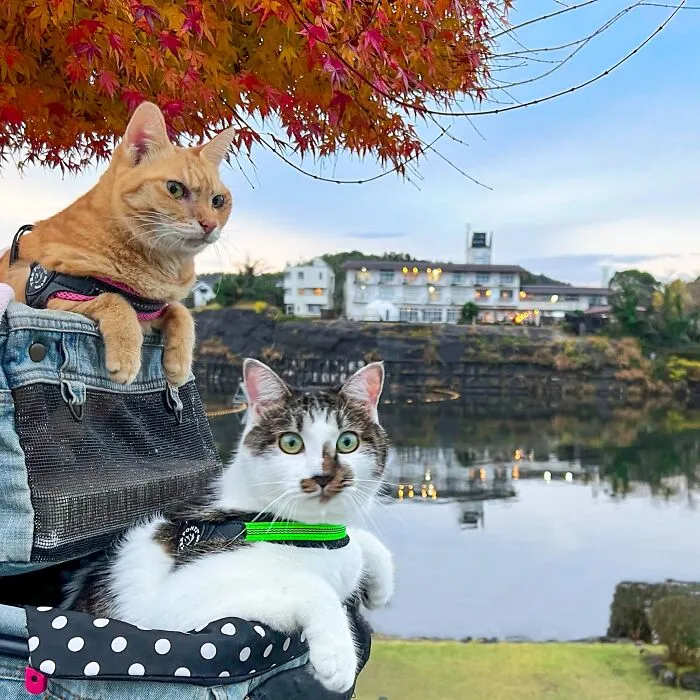
"The hotel in the background is Kameyama Onsen Hotel, located on the shore of Kameyama Lake in Kimitsu City, Chiba Prefecture.
The third-generation owner of this hotel and my dad knew each other, so we stopped by during our trip. Mom and Dad enjoyed the hotel's famous oyakodon for lunch and a natural hot spring bath.
Oyakodon is an old traditional Japanese dish that has been around since the Meiji Era (1868-1912). It is a type of bowl of rice topped with a beaten egg and chicken meat simmered in a special sauce and served on top of rice. Oyako means "parent and child," and it derives from the use of chicken meat and eggs.
While Dad and Mom were enjoying themselves, we took a nap, and after they returned, we took a walk along the lakeside together, and it was a fun day."
Report
12points
#23

"As we strolled through Zempukuji Park at dusk, we couldn't help but feel our hearts swell with joy.
The serene beauty of the "Upper Pond" shimmering under the warm glow of the setting sun was truly breathtaking. It was as if time stood still in that moment, and all that mattered was the peaceful serenity of the park.
We felt grateful to be alive, surrounded by such natural wonders, and in the company of our beloved cats."
Report
11points
#24
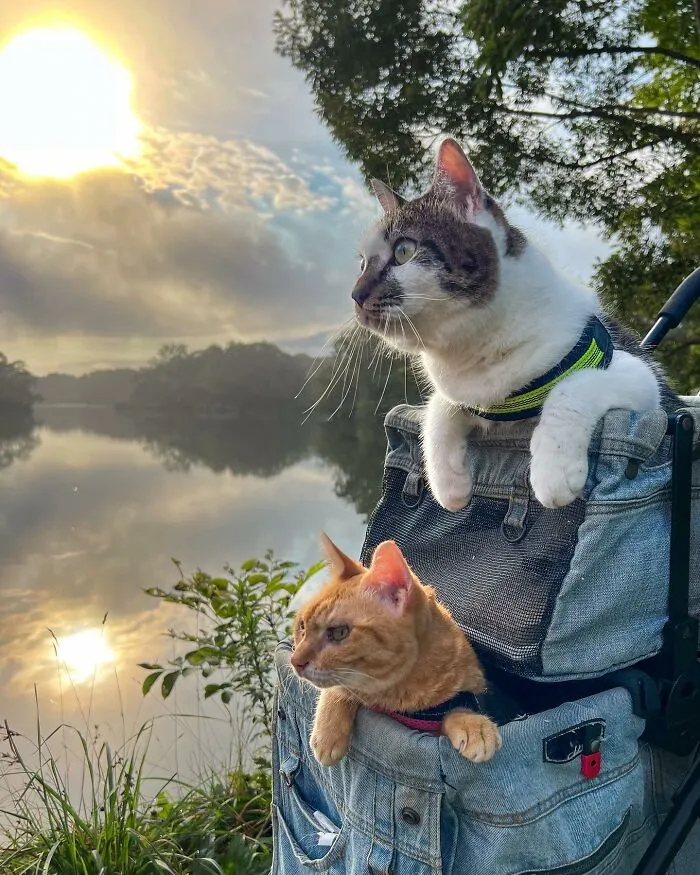
"Although the lingering summer heat of the day is still intense even in Hokkaido, an early morning walk along the lakeshore was cool and pleasant. As you can see from the calm expressions on Fukuchan and Daichi's faces!"
Report
11points
#25
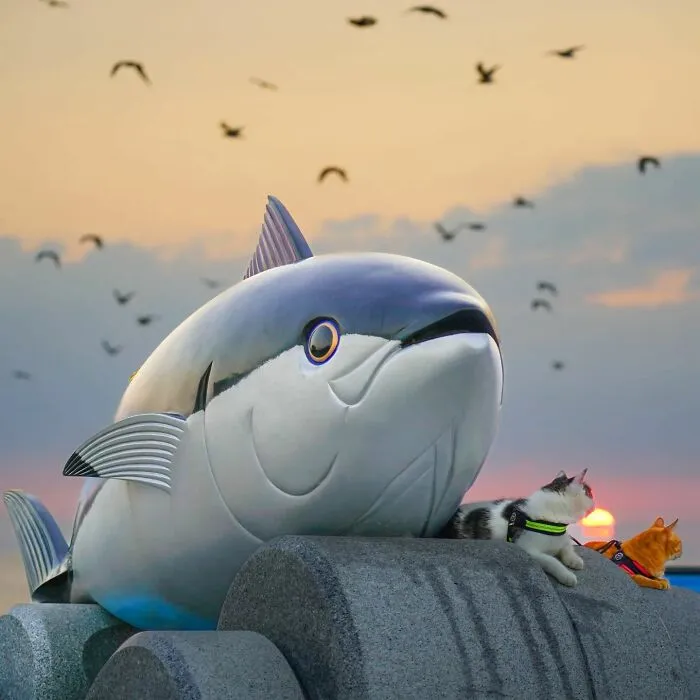
"This is a photo of a flock of seagulls flying over a giant tuna statue at dusk, and two cats beside the statue, staring out at the evening sea."
Report
11points
#26
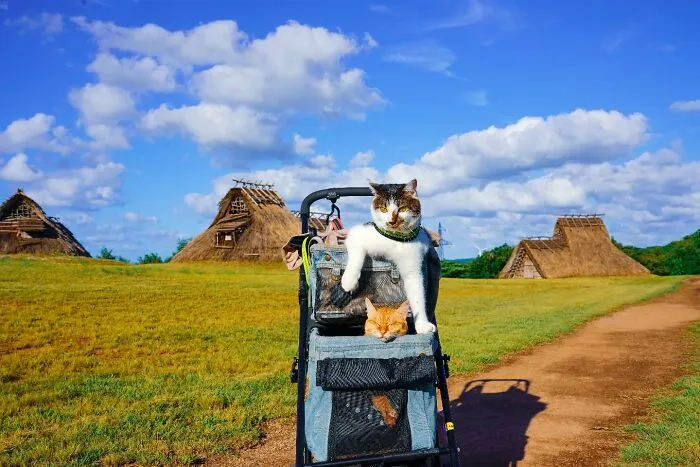
"The largest area of Yayoi Period (c. 300 BCE to c. 250 CE,) ruins in Japan is here at the Mukibanda Ruins in Tottori Prefecture.⠀
⠀⠀
Several of the approximately 460 excavated pit dwelling sites have been reconstructed as settlements in this manner.⠀
⠀
Anyway, the clouds lined up in a row accentuated the perspective, and it was really a beautiful day with a beautiful sky.⠀
⠀
By the way, Mi-chan is tucked in behind Daichi."
⠀⠀
Several of the approximately 460 excavated pit dwelling sites have been reconstructed as settlements in this manner.⠀
⠀
Anyway, the clouds lined up in a row accentuated the perspective, and it was really a beautiful day with a beautiful sky.⠀
⠀
By the way, Mi-chan is tucked in behind Daichi."
Report
11points
#27
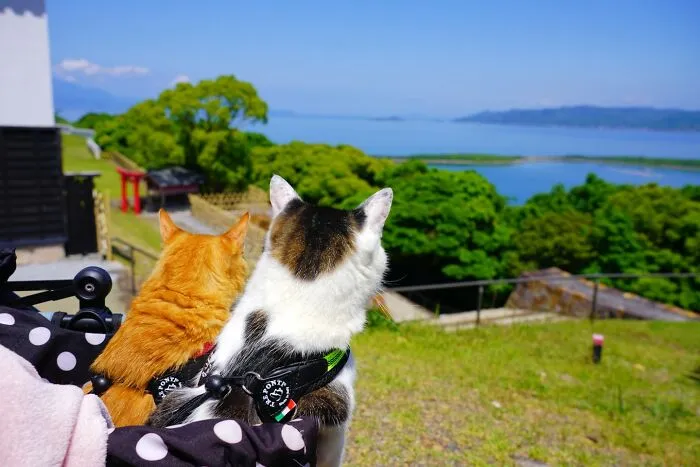
"Blessed with clear skies, the view from the high ground of Tomioka Castle Ruins revealed a blue sky and the sea stretching out before Fuku-chan and Daichi's eyes.
The unique earth and sand accumulation called "sand spit," which continues to grow even now, was also beautifully visible as shown in the photo."
Report
11points
#28
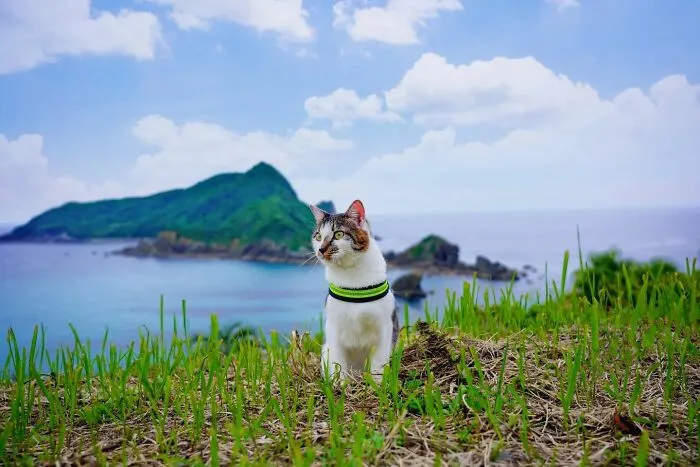
"Here is a closer view of Okiakime Island from the harbor.⠀
⠀
It is an uninhabited island on a cliff 8 kilometers southeast of Cape Noma on the Satsuma Peninsula."
⠀
It is an uninhabited island on a cliff 8 kilometers southeast of Cape Noma on the Satsuma Peninsula."
Report
11points
#29
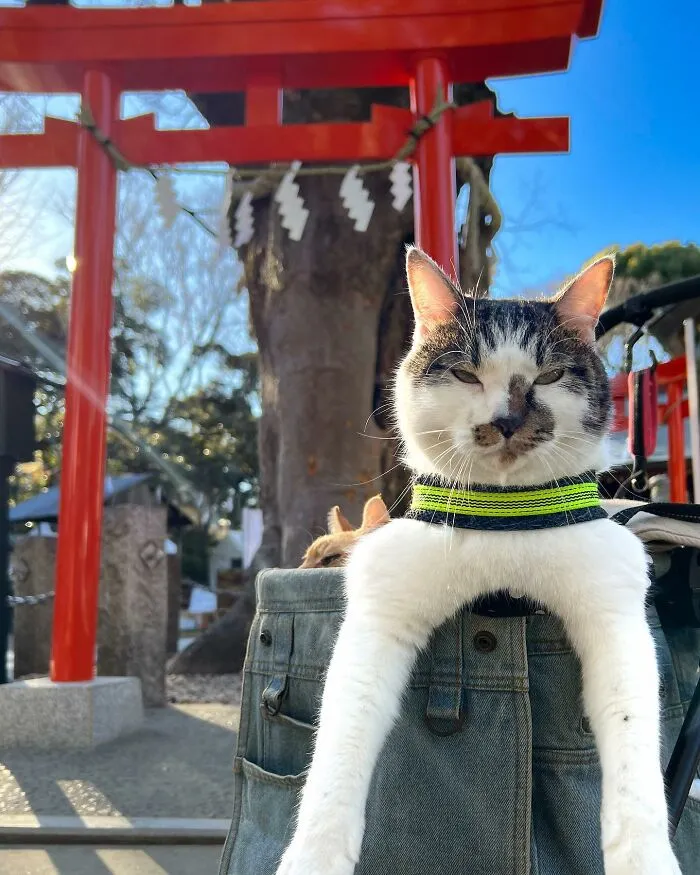
"Daichi is imitating a torii gate.
Now, the fourth spiritual spot introduced here is the sacred zelkova tree of Nitta Shrine.
The 700-year-old zelkova tree at Nitta Shrine was struck by lightning during the Edo period, splitting more than half of its trunk, but it did not die.
Then, in the Tokyo Air Raid of April 1945, bombs fell on the precincts of the shrine, and the shrine pavilions and the town were almost completely destroyed by fire. Although a part of the zelkova tree was also destroyed by fire, it did not wither, but rather, every year in the season of fresh greenery, it grows lush green leaves, providing a moment of relaxation for worshippers.
It is said that touching this sacred tree brings blessings of "health, longevity, healing, and rejuvenation," and it has become a "representative symbolic spiritual spot in Tokyo" ."
Report
9points
#30

"Just after sunrise here on Kujukuri-hama, Daichi enjoyed a seaside walk. Surfers are up as early as Daichi!
Kujukuri-hama is an arch-shaped beach stretching 66 km from Taitozaki's Ichinomiya-cho in the south to Cape Gyobu's Asahi City in the north. The beach is fringed with white waves, and there is not a single reef in sight."
Report
8points


