





In his wonderfully rich book Medieval Bodies: Life, Death and Art in the Middle Ages, Dr. Jack Hartnell shows that the era wasn't as ignorant or stagnant as we often assume but acknowledges that, at times it was pretty wild. Feeling sad? Come get your blood drawn.
However, a few hundred years later, we still don't have all the answers. Far from it. When Reddit user Immediate_Hair_3393 asked all health professionals on the platform to share the questions that are still puzzling us, they were flooded with responses!
This post may include affiliate links.
#21

The brain and especially how it governs our actions and personality.. Why do some people commit crimes like r**e and m*rder despite knowing the consequences while others would never do such things? Why do some people require multiple chances for ‘rehabilitation’ while others live their entire lives ‘right’? We don’t know the answers. It annoys me to no end when some people while chime in and claim “everyone can be rehabilitated” as if we actually know what that even means and how it works.
64points
#22

Rabies pathology
Alzheimer’s etiology
Encephalitis lethargica/chronic fatigue syndrome.
61points
#23

I'm a sleep specialist. While we do have some good theories about some of the functions of REM as far as how it affects the brain and health, we still don't fully understand the purpose of dreaming. Like, why do we dream at all and why do dreams have a narrative instead of random incomprehensible imagery? Unfortunately this is unlikely to even be solved.
59points
#24

I’m a nurse, not a doctor, but in school I learned that when in vitro fertilization was being pioneered, scientists were unable to create an embryo from the combination of s***m and egg. It wasn’t until they added female secretions in that they were able to produce viable embryos, and they don’t know what role those secretions play in the process.
This was about 15 years ago, so if anyone has new information on the topic I’d love to hear it!
59points
#25

We don't know the precise mechanism by which B12 deficiency causes nerve damage. We know that it happens, but not why.
(Many medical things are like that - easily observed and proven cause and effect, but complex and unclear mechanisms. Much of biology is still a black box to us. Neurological stuff in particular is full of this - lots of "we definitely know damage here causes effect XYZ, but not why.").
58points
#26

Apparently we know next to nothing about fibroids, which like 75% of women have at some point in their lives. That's great, considering that the largest one removed was 100 lbs- so not exactly a minor issue.
There are theories about different hormones and what things put you at higher risk, but aside from having surgery to have your existing ones removed, there is basically no information on what you can to do prevent them from coming back.
56points
#27
The biggest one I want solved
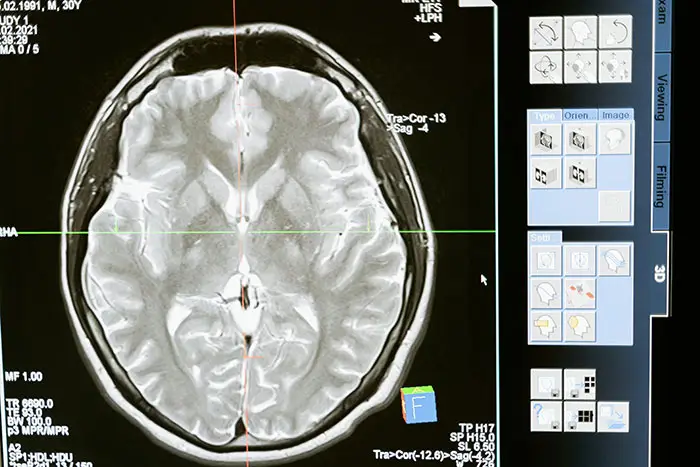
How we remember things, how does our memory work?
Some headway has been made at MIT but it hasn't been completely c*****d yet.
52points
#28

The “uncanny valley” fear. Why are humans unnerved and/or afraid of things that sound like, mimic, look like or act like humans but aren’t human?
Think of seeing human shaped shadows, dolls, robots, animals walking on 2 legs vs their usual 4, AI… it’s fascinating how we all have that feeling about some of the same things.
49points
#29

I have a very niche answer. We don’t know what is supposed to naturally bind to the area that benzodiazepines work at.
Benzodiazepines, BZD, are medications like Xanax and Valium. They produce anti-anxiety effects. And they have a very distinct chemical shape to fit into the BZD site in a group of five proteins. But we don’t know what is supposed to go there. Many medications are analogs of naturally binding molecules that we copy and then use to create an effect. The BZD site is for something, we just don’t know what.
42points
#30

Not a doctor but a speech pathologist - we still don’t fully understand what causes people to develop a stutter. We know there’s sometimes a genetic link and that some children do it as a developmental stage that they grow out of. It’s very difficult to treat.
33points
