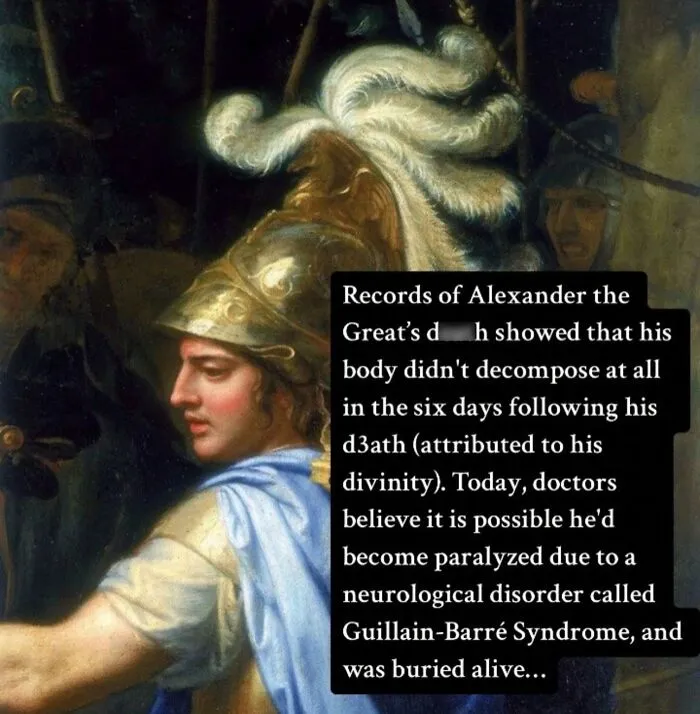



History and factual reality can often be scarier, weirder, and far more brutal than anything you see in fiction. If you’re a fan of horror, creepiness, and bizarre things like we are, then we’ve got a truly terrifying list lined up for you today.
#21

In 2015, the Hatton Garden safe deposit burglary became one of the most significant thefts in United Kingdom history. A group of experienced elderly criminals broke into a vault in London’s jewellery district over the Easter weekend, targeting safety deposit boxes containing cash, jewellery, and other valuables. The total value of the stolen items was estimated at around £19 million.
Despite a high profile investigation and multiple arrests, only about £5.9 million of the stolen property has ever been recovered. The case drew widespread attention due to the age of the offenders and the scale of the crime, cementing its place as one of the largest burglaries ever prosecuted in the UK.
Report
12points
#22
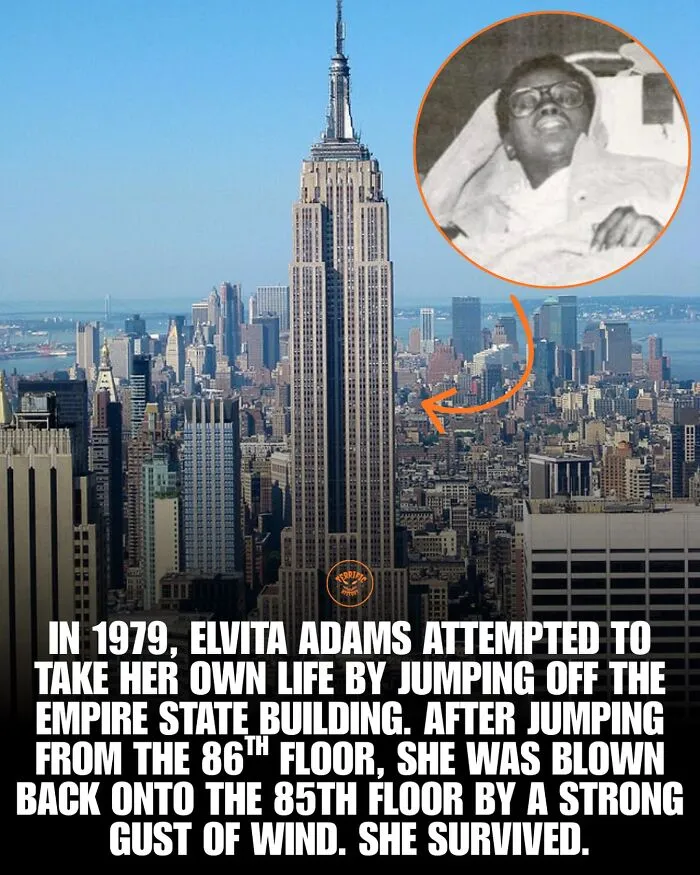
In 1979, Elvita Adams, a woman struggling with overwhelming despair, attempted to end her life by jumping from the Empire State Building. She chose the iconic skyscraper as the site of her attempt, reportedly feeling trapped by personal struggles and seeking a dramatic escape from her pain. As she leapt from the 86th floor, a powerful gust of wind unexpectedly pushed her back onto the 85th floor ledge, miraculously preventing her from falling to her death.
Adams survived the ordeal, and her story became widely reported as a rare instance of someone surviving such a high fall from one of the tallest buildings in the world. The incident highlighted both the dangers of severe mental health crises and the unpredictable forces of nature. It also served as a reminder of the importance of support and intervention for those facing intense emotional distress, showing how even in moments of despair, survival and help are possible.
Report
12points
#23
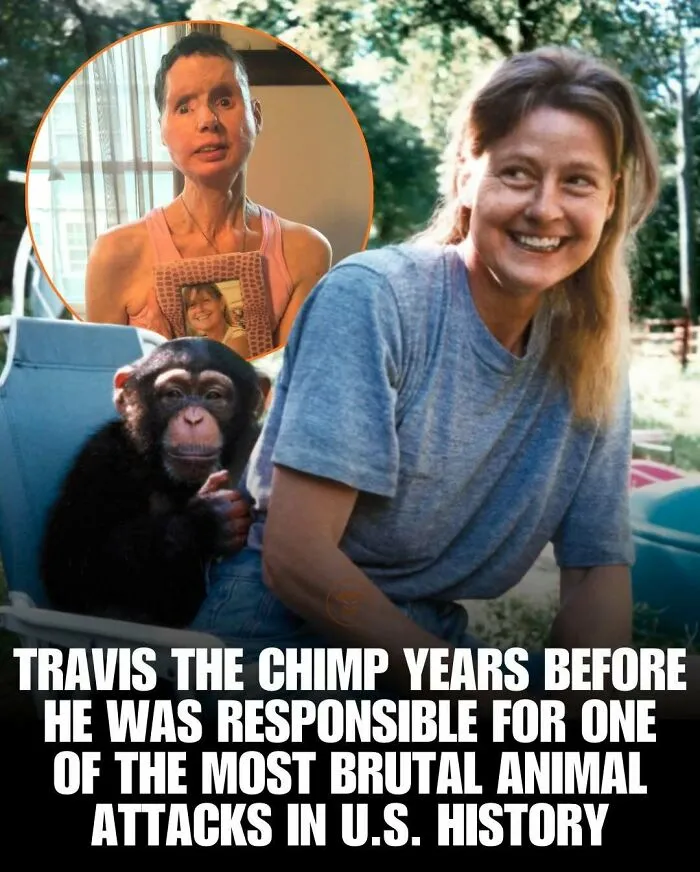
These unsettling photographs show Travis the chimpanzee gently holding a baby, taken years before he became associated with one of the most shocking animal attacks in United States history. Raised largely in a human environment, Travis was treated less like a wild animal and more like a child. He lived inside a home, wore clothes, watched television, and was even given alcohol and prescription medications intended for people.
Though he often appeared calm and obedient, his upbringing could not override the extraordinary strength and natural instincts inherent to chimpanzees. No amount of socialization can fully remove the behaviors rooted in a wild animal’s biology.
On February 16, 2009, in Stamford, Connecticut, that fragile sense of normalcy collapsed. Travis suddenly attacked his owner’s friend, Charla Nash, causing catastrophic, life altering injuries. The incident shocked the nation and sparked intense debate about the dangers and ethics of keeping exotic animals as pets.
Travis’s story remains a sobering reminder that affection and familiarity cannot erase an animal’s innate instincts and that placing wild animals in domestic settings can carry profound and irreversible consequences.
Report
12points
#24
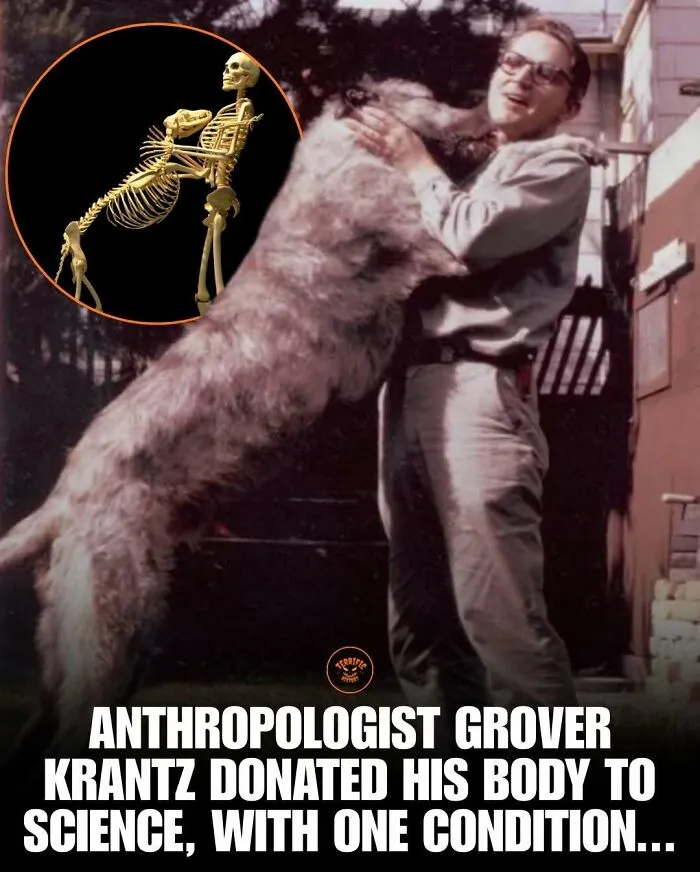
Anthropologist Grover Krantz made an unusual and deeply personal decision when he donated his body to science — with one specific condition attached: his dog had to remain by his side. After his death, both Krantz and his beloved companion were preserved and placed together for study and display at the Smithsonian in Washington, DC.
True to his wishes, the two were arranged so that the dog stayed close to him, reflecting the bond they shared in life. Rather than being separated as typical specimens, they became a single, shared exhibit — symbolizing loyalty, companionship, and the connection between humans and animals even beyond death.
The display has since become one of the Smithsonian’s most talked-about and emotionally striking exhibits, standing as both a scientific contribution and a quiet tribute to a lifelong friendship. It serves as a rare reminder that even in the most clinical spaces of science and research, deeply human stories can still be preserved.
Report
12points
#25

terrifichistory
Report11points
#26

Jason Vukovich, known as “The Alaskan Avenger,” drew national attention after receiving a 23-year prison sentence for targeting men listed on Alaska’s official s*x offender registry. In 2016, he located three individuals on the list, went to their homes, and attacked them with a hammer. The case quickly made headlines and sparked widespread debate.
During his trial, Vukovich submitted a letter explaining that his actions were fueled by childhood trauma, revealing that he had been sexually abused by a family member. He said his goal was to prevent other children from experiencing the same suffering.
Since then, public opinion has been deeply divided. Some view him as a vigilante and a defender of children, while others emphasize that no one has the right to carry out their own form of justice.
Report
11points
#27
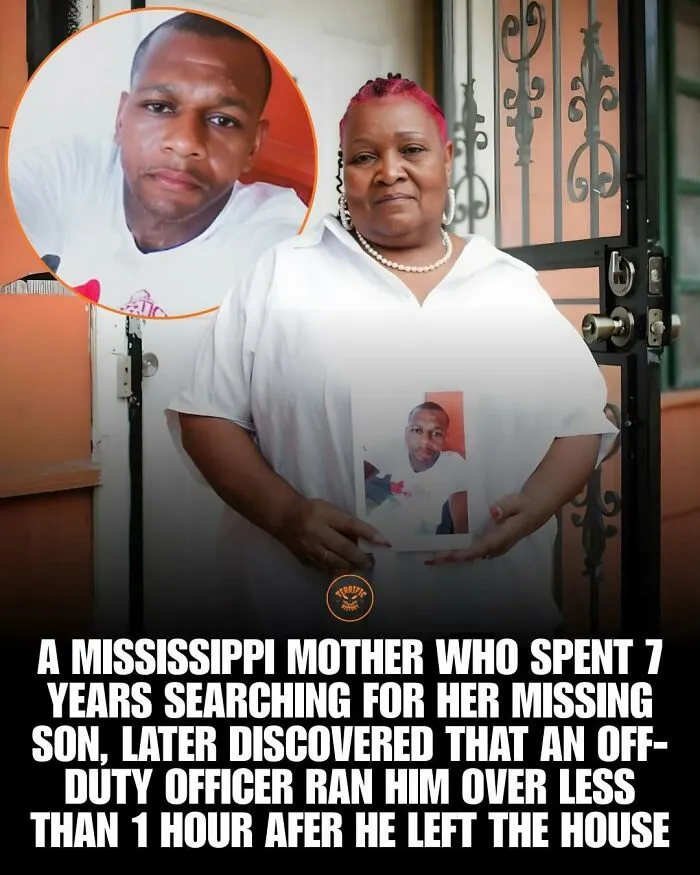
A Mississippi mother spent months desperately searching for her missing son, only to later learn a devastating truth.
Bettersten Wade looked for her 37-year-old son, Dexter Wade, for nearly seven months after he disappeared in March 2023. She filed a missing person’s report, contacted authorities repeatedly, and even searched neighborhoods herself, all while being told there were no updates.
What she didn’t know was that less than an hour after leaving home, her son had been struck and k****d by an off-duty police officer on a nearby highway.
Authorities were able to identify him shortly after the incident, but his family says they were never notified. Instead, his body remained in the county morgue for months before being buried in a pauper’s grave, without his mother’s knowledge and marked only by a number.
Wade only discovered what had happened in late August 2023, after months of searching and contacting police for answers. The case has since sparked national outrage, legal action, and calls for a federal investigation into how authorities handled the situation.
Report
11points
#28
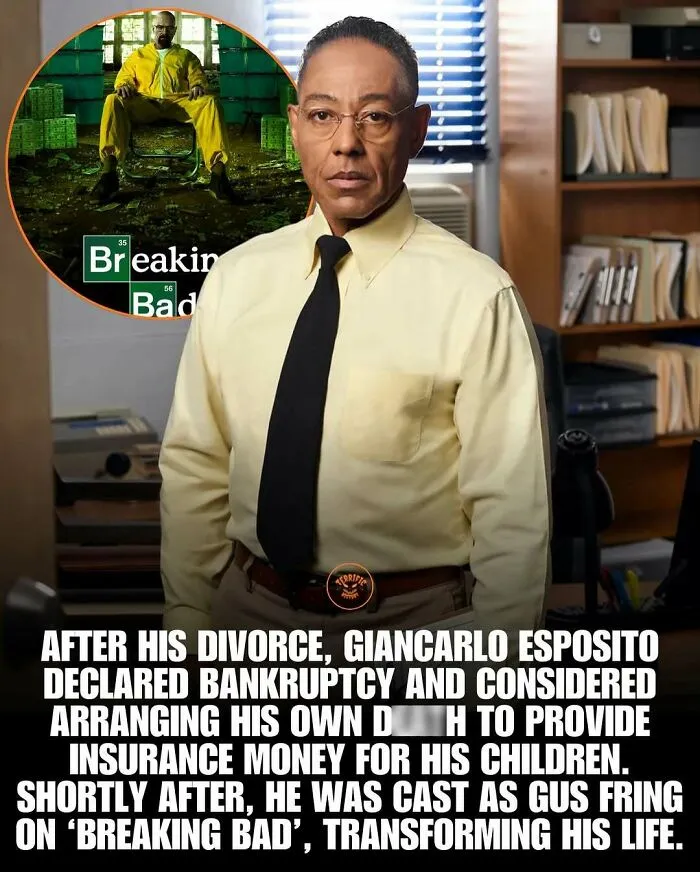
After his divorce, Giancarlo Esposito found himself in a devastating financial crisis. Work had slowed, opportunities were scarce, and the pressure of supporting his children weighed heavily on him. Overwhelmed and desperate, he filed for bankruptcy and reached an incredibly dark point in his life. In later interviews, he revealed that he even contemplated arranging his own death so that his children could receive the life insurance money, believing it might be the only way to secure their future.
Everything changed soon after when he was cast as Gus Fring on Breaking Bad. The role of the calm, calculating drug kingpin became one of the most iconic characters in television history. The performance earned widespread acclaim and revived his career in a way few could have imagined. What once felt like the end became a turning point, transforming not only his professional life but also restoring his sense of purpose and possibility.
Report
11points
#29
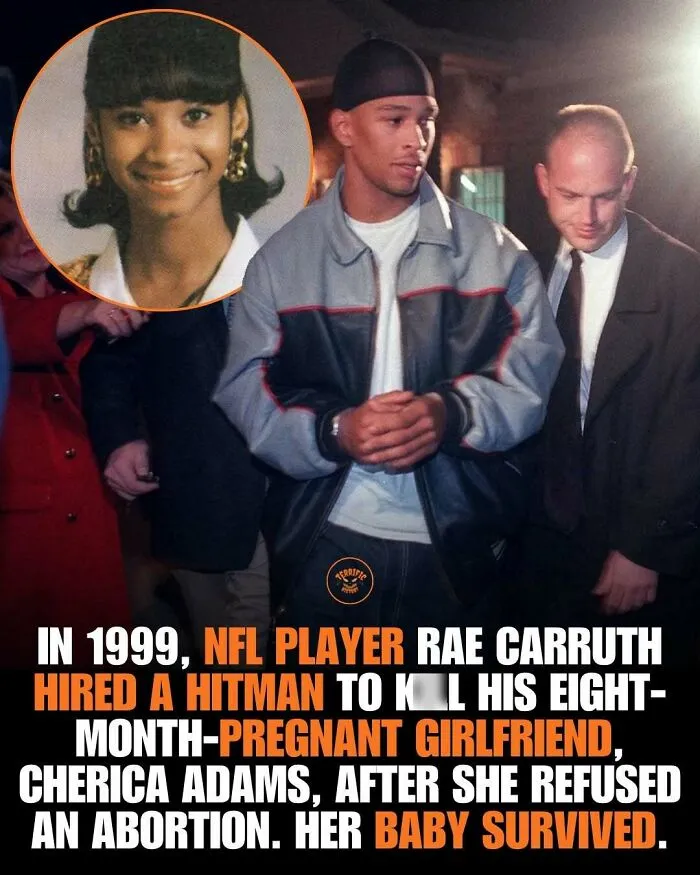
In 1999, former NFL player Rae Carruth orchestrated the attempted m*rder of his eight-month-pregnant girlfriend, Cherica Adams, after she refused to terminate their pregnancy.
During the attack, Adams was sh*t four times while driving and miraculously managed to call 911, identifying Carruth as the assailant. She was rushed to the hospital, but despite medical efforts, her injuries proved fatal, and she died shortly after the sh**ting. Doctors were able to perform an emergency delivery, and her baby, Chancellor Lee Adams, was born alive.
Tragically, he sustained serious complications from the sh**ting, including brain damage that left him with lifelong disabilities, requiring ongoing care and therapy. Carruth fled the scene, hiding in the trunk of a car, but was apprehended shortly afterward and later convicted of conspiracy to commit m*rder and related charges. He was sentenced to 18 to 24 years in prison and released in 2018. The case remains one of the most harrowing examples of domestic violence with devastating consequences for innocent lives.
During the attack, Adams was sh*t four times while driving and miraculously managed to call 911, identifying Carruth as the assailant. She was rushed to the hospital, but despite medical efforts, her injuries proved fatal, and she died shortly after the sh**ting. Doctors were able to perform an emergency delivery, and her baby, Chancellor Lee Adams, was born alive.
Tragically, he sustained serious complications from the sh**ting, including brain damage that left him with lifelong disabilities, requiring ongoing care and therapy. Carruth fled the scene, hiding in the trunk of a car, but was apprehended shortly afterward and later convicted of conspiracy to commit m*rder and related charges. He was sentenced to 18 to 24 years in prison and released in 2018. The case remains one of the most harrowing examples of domestic violence with devastating consequences for innocent lives.
Report
9points
#30
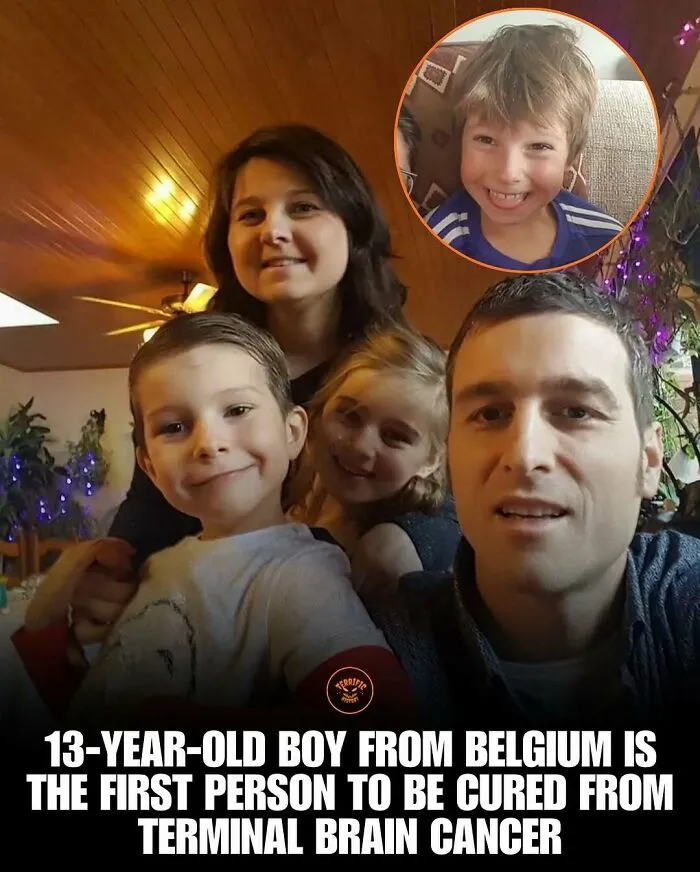
Lucas, a 13-year-old from Belgium, has become the first child ever cured of DIPG, one of the deadliest and most aggressive brain cancers. Diagnosed at age six, his chances were extremely slim, as DIPG rarely allows for long-term survival. While participating in a clinical trial in Paris, Lucas was treated with the drug everolimus, and his response was unprecedented. Over time, his tumor vanished completely. Remarkably, even after more than a year without treatment, there has been no sign of the cancer returning. Doctors believe his recovery may be linked to a rare genetic mutation, now being studied to help develop potential new therapies for other children. Lucas’ story, once thought impossible, now stands as a powerful symbol of hope in pediatric cancer research.
Report
9points
#31

In 2001, a German man named Armin Meiwes posted a disturbing message online searching for “a well built man who wanted to be eaten.” Shockingly, a man named Bernd Brandes responded to the ad and willingly agreed to meet him.
The two signed a written agreement before consuming alcohol and sleeping pills together. Later that night, Meiwes mutilated Brandes and the pair reportedly consumed part of his body together before Meiwes ultimately k****d him. Over the following months, he stored parts of the body in his freezer and continued consuming them until authorities uncovered the crime. Meiwes was eventually sentenced to life in prison, where he remains today. The case became one of the most shocking and widely discussed examples of consensual cannibalism in criminal history.
Report
9points
#32
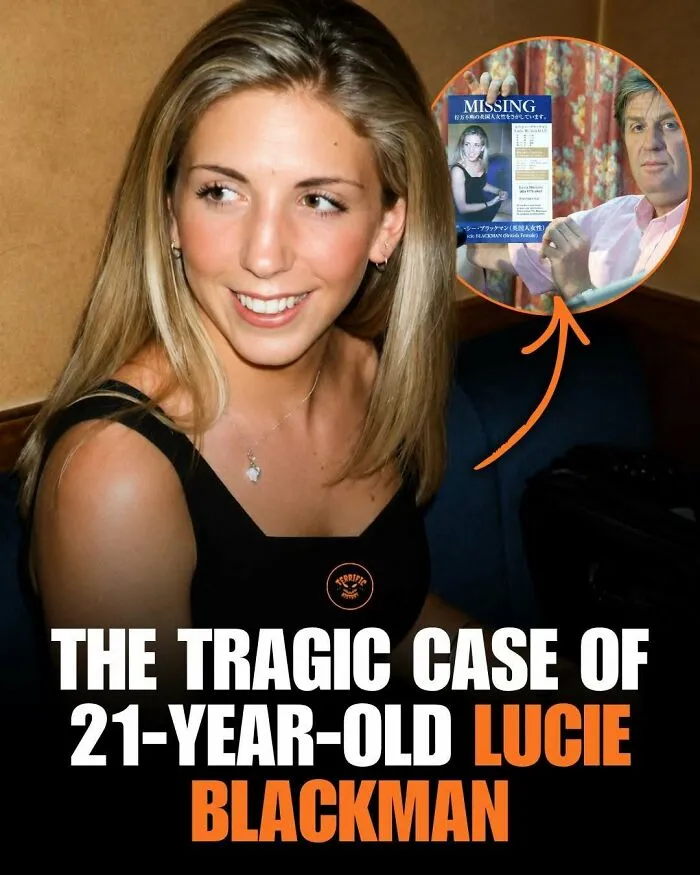
In July 2000, 21-year-old Lucie Blackman, a British former flight attendant, traveled to Tokyo, Japan, where she was working in the Roppongi district as a hostess. She had moved there shortly before her disappearance and was last seen on July 1 after going to meet a client arranged through her workplace. When she failed to return or make contact, concern quickly escalated, triggering one of the largest international missing person investigations between the United Kingdom and Japan at the time.
Her disappearance led to an extensive police investigation that ultimately focused on a Japanese property developer, who was later arrested after evidence linked him to her death. In 2001, her remains were discovered in a coastal area near Miura, south of Tokyo. The case drew global attention not only because of its brutality but also due to scrutiny of the hostess industry in Japan and the safety risks faced by young foreign workers abroad. The investigation and trial concluded years later with a conviction, but the case remains widely remembered as one of the most high profile missing person tragedies involving a British citizen overseas
Report
9points
#33
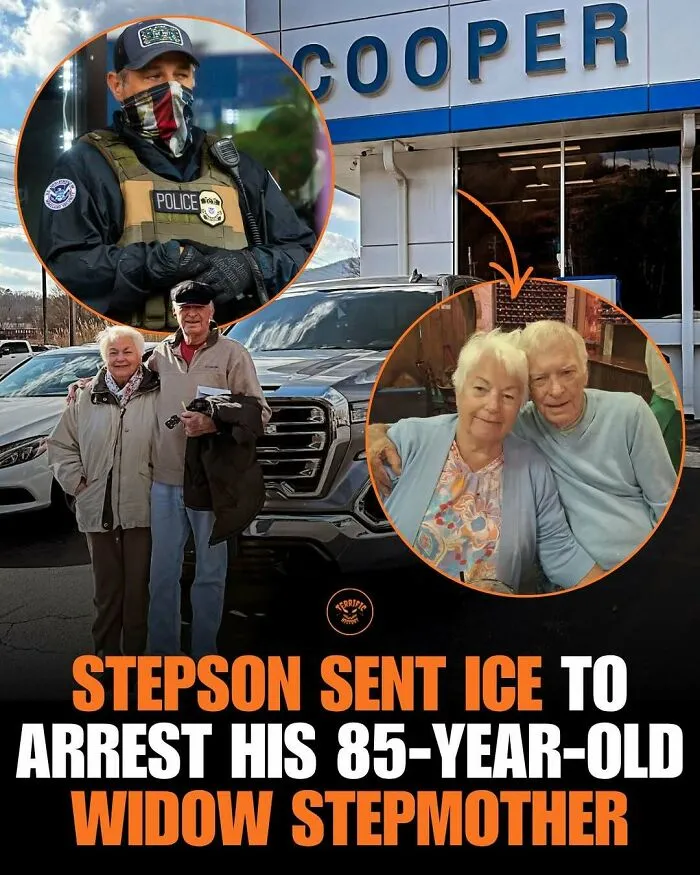
In a highly unusual and controversial case involving Marie-Thérèse Ross-Mahé, court documents and a probate judge’s findings allege that her stepson played a central role in escalating a family inheritance dispute that preceded her detention by U.S. immigration authorities.
According to filings cited in court proceedings, the stepson—identified in reports as Tony Ross—was accused of using his professional connections within law enforcement to influence the timing and e*******n of her arrest by U.S. Immigration and Customs Enforcement. The judge overseeing the estate matter stated that communications appeared to show he was informed in advance that she would be taken into custody and received confirmation shortly after the arrest occurred.
The dispute unfolded in the aftermath of the death of her husband, a U.S. military veteran, when disagreements arose over property and inheritance rights tied to the family home and assets in Alabama. Court testimony described escalating tensions, including control of property access and financial restrictions placed on Ross-Mahé while her immigration status remained unresolved.
While the stepson has denied requesting or orchestrating any arrest, the probate court’s comments raised concerns about potential misuse of influence in a sensitive legal and immigration context. The allegations remain part of ongoing civil and legal scrutiny, and have not resulted in a criminal conviction.
Ross-Mahé was later released from ICE custody and returned to France, but the case has continued to draw attention due to the intersection of family conflict, immigration enforcement, and claims of abuse of authority.
Report
9points
#34

A Florida woman is accused of giving birth in a toilet and letting her newborn die before attending a theater performance. College student Anne Mae Demegillo allegedly placed her baby’s body in a duffel bag and went about her normal routine. Authorities say Demegillo admitted to police that she watched her newborn daughter struggle and cry until she died.
The 20-year-old student reportedly led police to the location where she buried the baby in a shallow grave only three to five inches deep. Chief Deputy Joe Barile commented on the case, saying, “I watched some of the interview, and I didn’t see any remorse. For someone to stand and watch this, that’s tough.” Barile added that Demegillo has shown no remorse for the horrific act. The infant girl weighed three pounds six ounces and measured over eighteen inches long.
Report
9points
#35
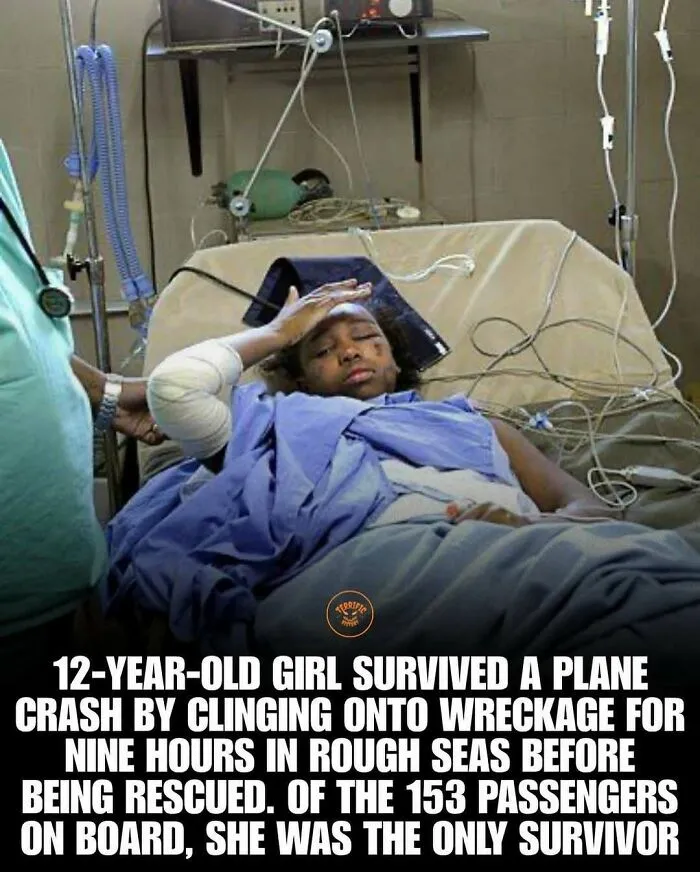
In June 2009, Yemenia Flight 626 went down in the Indian Ocean near the Comoros Islands during a landing attempt in severe weather. Of the 153 people on board, 152 were k****d.
The only survivor was 12-year-old Bahia Bakari from France, who had been traveling with her mother. Bahia held onto floating debris for approximately nine hours amid turbulent seas before rescuers reached her. She sustained a broken collarbone and burns but eventually made a full recovery.
Report
9points
#36
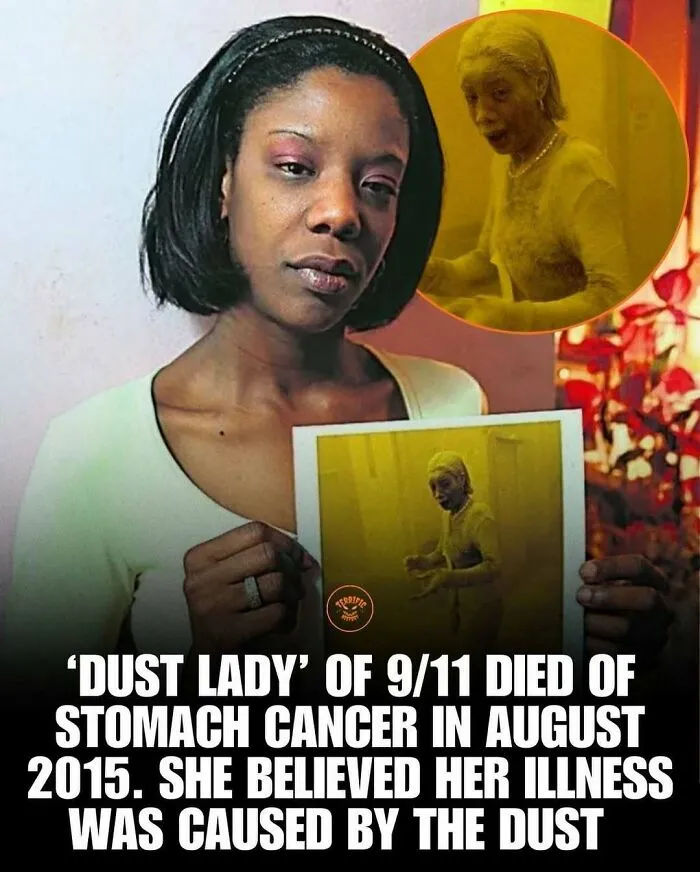
Marcy Borders was a young legal assistant working for Bank of America in the World Trade Center on September 11, 2001. When the towers were attacked, she managed to escape, fleeing down dozens of flights of stairs and out onto the ash-filled streets. A photographer captured her just moments after she emerged—covered head-to-toe in gray dust, her face frozen in shock. The haunting image quickly spread around the world, and she became known as the “Dust Lady,” a symbol of the human toll of that day.
But survival came with lasting consequences. In the years that followed, Borders struggled with trauma, anxiety, and health issues. In 2014 she was diagnosed with stomach cancer, a disease she believed was linked to the toxic dust and debris she inhaled during her escape. Despite treatment, she passed away in August 2015 at the age of 42.
Her story is remembered not only for the iconic photograph, but for the long-term human cost of 9/11—reminding us that the impact of that day extended far beyond the immediate tragedy and continued to shape survivors’ lives for years afterward.
Report
9points
#38
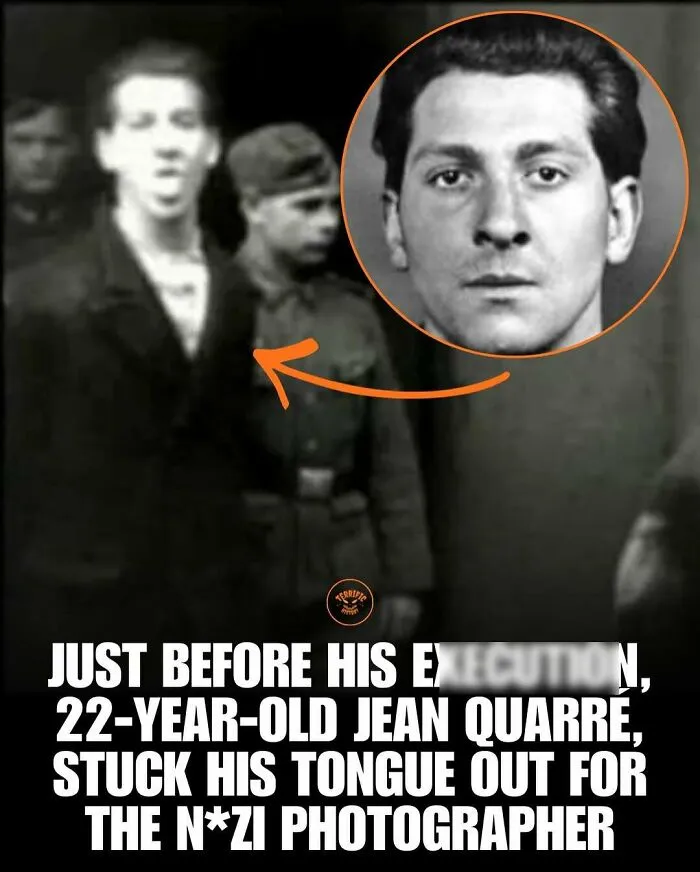
Just before being executed by German forces in April 1942, French resistance member Jean Quarré defiantly stuck out his tongue at the German cameraman filming him as he was led away. Quarré was a young communist activist from Paris who had joined the Bataillons de la Jeunesse, a resistance group opposed to N**i occupation and the Vichy regime.
He was arrested in early 1942 and later tried alongside dozens of other resistance fighters in what became known as the Maison de la Chimie trial. Despite facing imminent death, his gesture captured a moment of personal resistance against his captors.
Quarré was executed by firing squad at Mont-Valérien on 17 April 1942 at the age of 22, and is remembered as one of many young people who resisted N**i occupation with courage and conviction.
Report
9points
#39
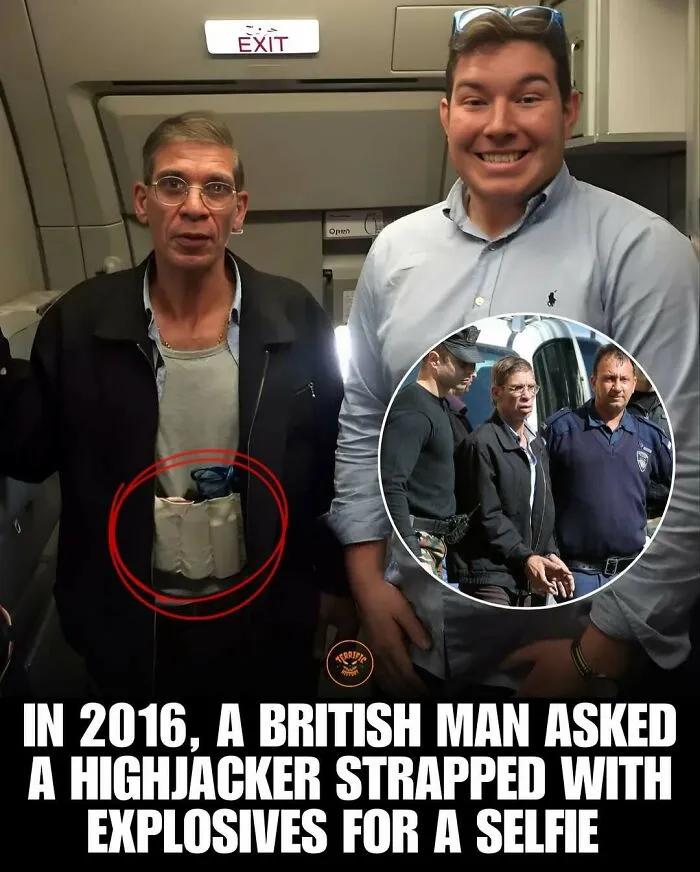
In 2016, when an EgyptAir flight was hijacked, panic swept through the cabin—everyone except Ben Innes, a passenger who would soon make international headlines for his audacious response: he asked the hijacker for a selfie.
The hijacker, wearing what appeared to be a live explosive belt, posed beside a grinning Innes in a photo that quickly became one of the most surreal images of a hostage situation ever captured. Remarkably, the device was later confirmed to be fake, and the hijacking ended peacefully, with no injuries reported.
Innes’ bold act sparked a global conversation about courage, composure, and risk-taking under extreme pressure. Some saw it as daring and clever, others as reckless, but it undeniably highlighted how human behavior can defy expectation even in life-threatening circumstances.
Sometimes, history’s strangest and most unforgettable moments come with a grin.
Report
9points