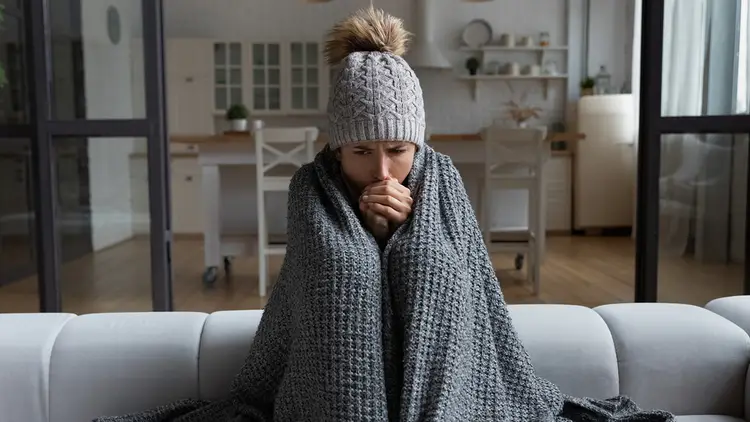
Living in a tropical country, I don't have to worry too much about winter heating, but my older sister, who lives in Canada with her husband, has a very different experience. When the colder months roll around, keeping their home at a temperature they both agree on becomes a hassle. She wants the heat turned up, but her husband thinks it's already warm enough. When the weather gets cold, there's nothing quite like coming home to a warm, cozy space. That is, unless a couple can't agree on what "warm" actually means. One person is reaching for the thermostat, and the other has already taken off their sweater, wondering why the heat is on so high. As it turns out, these disagreements have a scientific explanation. Research on temperature perception found that women tend to feel colder than men in cold environments. This has a lot to do with differences in how our bodies are built and how they respond to temperature. With energy bills to consider, finding a setting that works for both people isn't always easy. So let's look at why men and women can experience the same temperature differently and what couples can do to stay comfortable without turning every chilly evening into another thermostat argument. namii9 / Magnific (not the actual photo) Many women tend to feel colder than men in cooler environments, even when they're sharing the same room. As a woman, I can relate to this one. I've sat in a room with my partner, with the air conditioner blasting, and he's perfectly happy enjoying the cool air. Meanwhile, my legs and feet are freezing, and I try to warm them by pressing them against his body. He, of course, has no idea what I'm complaining about and wonders why my feet are always so cold! As it turns out, there's actual science behind this experience that many women might be familiar with. A 2025 study compared how men and women respond to different temperatures and found some interesting differences in how their bodies perceive and regulate heat. The researchers found that women generally reported feeling colder and also tended to have lower skin temperatures, even though their average core body temperatures were slightly higher. This might sound contradictory, but it makes more sense when we look at how the body produces and manages heat. Muscle tissue plays an important role in this process because it releases heat as the body uses energy. Since men usually have larger bodies and more lean muscle mass on average, they tend to produce more heat at rest. Women, on the other hand, tend to have smaller bodies and lower resting energy expenditure, so they may produce less heat under similar conditions. This can affect how quickly they start to feel chilly when the temperature drops. However, body size and muscle mass matter more than gender alone, so the difference isn't the same for everyone. In addition, regulating our body temperature isn’t just about how much heat we produce, but also how much of that heat we manage to hold on to. Fat beneath the skin acts as a natural insulator, slowing the rate at which heat escapes the body and helping keep its core warm. It's a little like wearing an extra layer under your clothes. The body loses heat more slowly, even when the surrounding air is cold. A study compared healthy, lean men and women exposed to different room temperatures. The researchers found that the women had more body fat on average, which provided greater insulation. This appeared to offset the fact that their smaller body size was associated with a lower resting metabolic rate, meaning they produced less heat at rest. Interestingly, the study did not find a significant difference in how comfortable the men and women felt at the colder temperatures. This may be because the two groups had different advantages when it came to keeping warm. user10358013 / Magnific (not the actual photo) Although the women had more body fat to help insulate their bodies and slow heat loss, they also had less muscle mass on average, which meant they produced less heat at rest. These two factors may have helped balance each other out, explaining why the researchers did not find a noteworthy difference in how comfortable the participants felt. Even when the body is doing enough to keep its core warm, some parts of us can still feel cold. When temperatures drop, the body narrows some blood vessels near the skin in a process called vasoconstriction. This reduces blood flow to the hands, feet, and other outer areas, allowing the body to conserve heat around vital organs. As a result, the skin in those areas cools down. Your core temperature can remain perfectly normal, but your fingers and toes may feel freezing. In a study comparing men and women with similar body sizes and body compositions, researchers found that the women's blood vessels began narrowing earlier when they were exposed to mildly cool temperatures. They suggested that reproductive hormones may play a role in this difference, as they can influence the nervous system and the chemical signals that regulate blood flow. These hormones can affect body temperature in other ways, and their levels don't stay the same throughout a woman's life. Estrogen and progesterone fluctuate during the menstrual cycle, causing a woman's baseline temperature to change slightly throughout the month. After ovulation, for example, progesterone levels rise and raise core body temperature by about 0.3–0.7°C (about 0.5–1.3°F). Pregnancy and menopause bring further hormonal changes that can affect temperature regulation, sometimes causing women to experience hot flashes or unexpected changes in how warm they feel. fkcreation420 (not the actual photo) If you've ever sat at your desk wearing a sweater while your male coworker seems perfectly comfortable in short sleeves, there might be another reason besides biological differences. The temperature settings in many buildings are based on a thermal comfort model developed in the 1960s, and some of its assumptions don't fully reflect how women's bodies produce heat. Danish researcher P. Ole Fanger developed the model to help engineers determine indoor temperatures that keep people comfortable. It accounts for several factors, including air temperature, humidity, airflow, clothing, and how much heat a person's body produces. However, one of its standard reference values for metabolic rate was based on a 40-year-old man weighing around 70 kilograms (154 pounds). This became a widely used benchmark for calculating indoor thermal comfort. In a 2015 paper, the researchers pointed out that using this reference value could overestimate women's metabolic rates by as much as 35%. Because metabolic rate affects how much heat the body produces, a room designed around the standard assumption may feel colder to someone whose body produces less heat. They argued that using more accurate metabolic rates could help create more comfortable indoor environments for women. The thermal comfort model also accounts for how much insulation people's clothes provide. However, traditional workplace expectations haven't always been the same for men and women. In some offices, men may wear suits or heavier layers, while women are expected to wear lighter blouses, skirts, or dresses. These clothing differences can affect how warm or cold someone feels in the same environment. While the original model has been refined and updated over the years, its influence hasn't disappeared. Its principles remain part of widely used indoor comfort standards that guide heating, ventilation, and air-conditioning systems. Many buildings also rely on centrally controlled systems, meaning individuals have little say over the temperature. A study involving 584 office workers found that women preferred higher temperatures than men in the two office buildings examined. The researchers estimated an overall comfort temperature of 24°C (75.2°F) for women, compared with 23.2°C (73.8°F) for men. So, if you find yourself reaching for a sweater while everyone else seems happy with the office temperature, you might not be imagining things. The standard setting may not account for how differently people's bodies experience the same environment. Drazen Zigic / Magnific (not the actual photo) When two people share a home, agreeing on the temperature can cause some friction, especially during the colder months. One person might see turning up the heat as a basic comfort need, while the other is already thinking about how much it will add to the energy bill. Some couples have even found sneaky ways to get around the problem. In a recent Guardian article, one woman, Sheena, shared how she secretly used an app to turn the heating back up after her husband lowered it at night. She said the new thermostat had brought her some peace, even though he didn't realize she was overriding his settings. These disagreements aren't just funny anecdotes, either. A study involving 112 participants found that when someone in a household felt too hot or too cold, the chances of a discussion about the temperature increased. The researchers also found that these conversations didn't always end the same way. Some households reached an agreement, others found a compromise, while some remained in conflict. Interestingly, thermostat adjustments were more likely on days when people reached an agreement or compromise. This suggests that household members often have to find common ground to keep everyone comfortable. Household finances can make these compromises trickier. When one person turns up the heat, the other might see it as an unnecessary expense, especially when energy bills are already straining the budget. A 2026 Uswitch survey found that 39% of couples living together argued about their heating costs. The survey also found that 19% of people with partners admitted to secretly changing the thermostat without their partner knowing. Of course, these arguments aren't always just about being too hot or too cold. One partner may feel their discomfort is being dismissed, while the other may feel their concerns about spending money on energy aren't being considered. Research found that disagreements over indoor temperatures could also reflect deeper concerns about personal control, saving money, and consideration for other household members. In some cases, turning up or lowering the heat could leave someone feeling like their partner is being careless or wasteful. dimaberlin / Magnific (not the actual photo) The good news is that couples don't have to agree on one perfect temperature to enjoy a cozy home together. Instead of constantly turning the thermostat up and down, they can make a few adjustments that help each other feel more comfortable without necessarily heating the entire house. One option is zoned heating, which lets different parts of a home have their own temperature settings. For example, the living room can stay warmer while a bedroom is kept cooler. Some heating systems use separate thermostats for different areas, while thermostatic radiator valves allow people to adjust the heat in individual rooms. There are also smaller fixes that don't require changing the heating system. If one partner is always cold, a heated blanket or heating pad can provide extra warmth without raising the temperature for everyone else. Separate duvets can also help, especially if one person likes to sleep bundled up while the other prefers lighter bedding. Sometimes, adding a few extra layers helps. Warm socks, slippers, sweaters, and cozy pajamas can make chilly evenings more bearable without requiring the heating to run constantly. The couple can also agree on a reasonable shared temperature and make small adjustments depending on the time of day. The Energy Saving Trust recommends setting the thermostat to the lowest temperature that still feels comfortable for the household, which is generally between 18°C and 21°C (64°F and 70°F) for most people. It's also worth checking whether cold air is sneaking in around windows and doors. The U.S. Department of Energy explains that sealing air leaks and improving insulation can help prevent drafts, make a home more comfortable, and reduce the strain on heating systems. A little consideration can go a long way toward keeping the peace at home. Sometimes, it means turning the heat up a little or grabbing an extra blanket for the person who feels cold. These small compromises are also a way of looking out for each other, and it’s really lovely knowing your partner cares enough to make sure you're warm and comfortable.