

#1
This is 100% true before someone comes at me!
#2
#3

A plane is the strangest room most people will ever stand in. In 1992, the French anthropologist Marc Augé coined the term "non-places" for spaces like airports, motorways, and hotel corridors, where nobody lives and everybody is passing through.
People in them stop acting like themselves, because nobody around them knows who they are. Add a cabin pressurized to an altitude of up to 8,000 feet, which is the legal cap, and the mild oxygen dip that comes with it. You end up with a passenger who believes the rules of the ground no longer apply.
#4

#5
#6

Turns out, they were amazing people, so humble, flying for the first time to visit the daughter who was living abroad. They simply didn’t know that it was not a thing, and back home (Brazil) it’s very common to have warm bread for breakfast.
OF COURSE I went to business class and prepared an amazing bread basket for them. A few months later I met the daughter and she was so grateful for the way I treated her family.
The job of cabin crew was invented for exactly this crowd. In 1930, a registered nurse named Ellen Church talked Boeing Air Transport into hiring women to calm nervous first-time flyers. She and seven other women became the "Original Eight," and the rules were strict: they had to be nurses, single, under 25, and under 115 pounds. The duties included carrying luggage and helping push the plane into the hangar. The brief was to reassure the passengers, and it still is.
#7

A man sitting next to the man in trouble tapped her shoulder vigorously. Thinking maybe he’s a doctor, she turns to him.
Man: “I am peckish and wanting something to munch. Do you have peanuts”?
#8

Also lasagna….
#9
Then the 1960s rolled around and started selling the job as glamour. “Coffee, Tea or Me?”, published in 1967, was billed as the racy memoir of two stewardesses and sold more than a million copies. It was ghostwritten by Donald Bain, fooling thousands into thinking it was a woman called Trudy Baker spilling her darkest secrets. The stereotype it left behind explains why a modern flight attendant can be asked for things no safety card covers, and why "coffee, tea, or me" is still a joke someone thinks they invented.
#10

True story.
#11

#12

The truth is that the beverage cart is the side hustle. The FAA requires at least one flight attendant for every 50 passenger seats, and the reason is evacuation. Manufacturers have to prove in testing that a full plane can be emptied in 90 seconds with half the exits blocked. The person politely declining your request is trained to run that evacuation and handle medical emergencies. They also can't open a door mid-flight, even if you ask nicely, because at cruising altitude the cabin pressure pushes it shut with many thousands of pounds of force.
#13
#14

Right around the same time, a woman asked for wine after downing the cup she had gotten 10 minutes earlier. She became irate because the person she asked was actively carrying oxygen to fc and asked for a few minutes to get it for her. She came to the back and caused a scene.
#15
In her 1983 book “The Managed Heart”, the sociologist Arlie Hochschild followed trainees at Delta Air Lines and coined the term "emotional labor." Trainees were told to treat passengers as guests in their own living room. One instructor's rule was "Smile. Really smile. Really really smile." That training is how a crew member can hear "can you ask the baby to stop?" and answer with "let me see what I can do."
#16
#17
#18
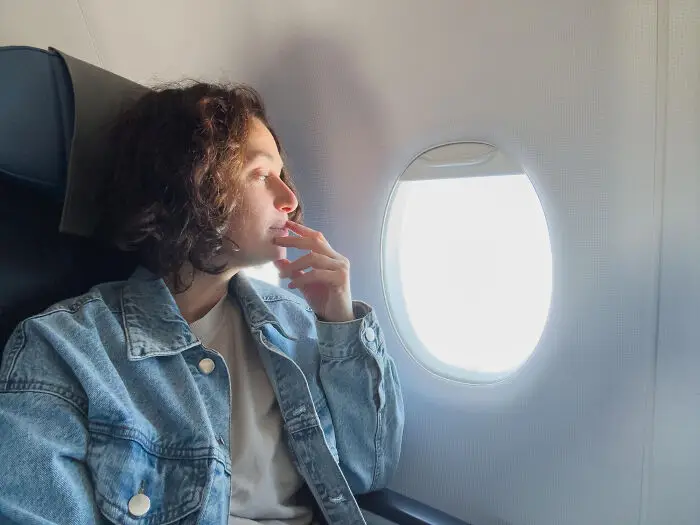
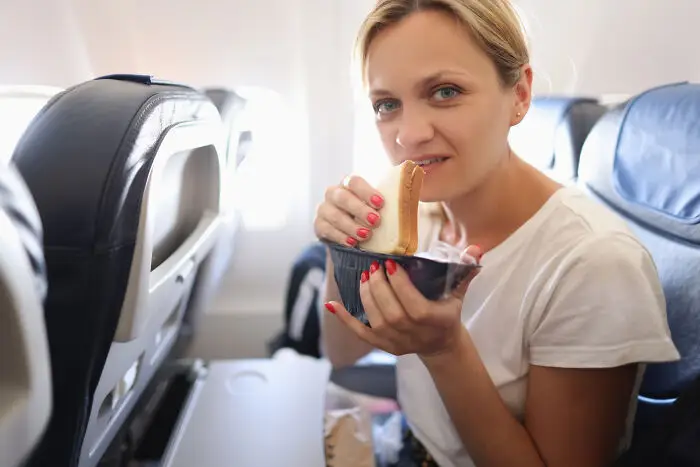
Some strange food requests come from the cabin itself. A study by the Fraunhofer Institute for Building Physics, carried out for Lufthansa, found that low pressure and dry air at cruising altitude dull the perception of sweet and salty tastes by around 30%. Umami held up fine, which is why people who never touch tomato juice on the ground suddenly order it in the air. It also explains the demands for extra salt and hot sauce. It’s not just you flying economy; your taste buds are there too.
#19

A woman told me that her oxygen wasn’t working. I asked her to explain and she stuck the prongs up her nose.
#20