





With more than 8 million species of living things on Earth, it is no wonder that nobody knows or has seen them all. And if you wanted to look at 8 million pictures of all the cool animals roaming the Earth, it would take around eight years to spend 30 seconds for each photo and do it non-stop, without any breaks for eating or sleeping.
And with scientists discovering new rare animal species almost every day, this operation sounds quite unrealistic. That’s why we’ve chosen the most curious and weirdest animals, so you won't have to spend a decade checking them out yourself.
We’ve included land and sea animals, mammals and reptiles, and even bugs, so you’d see many unique animals. A mammal that looks like a crossbreed between a zebra, a giraffe, and a moose? Sure, that’s an okapi! A fish that takes the shape of a blob?
Of course, it even has a very appropriate name - blobfish! A weird-looking animal called a thorny devil? Why, yes! After seeing these unusual animals, you’ll be amazed that these sometimes very unsightly beings inhabit the same planet as us!
#21 Mata Mata

Found in South America, the mata mata is a freshwater turtle known for a large, triangular, flattened head characterized with many tubercles and flaps of skin, and a "horn" on its long and tubular snout.
Report
43points
#22 Sea Pig

Scotoplanes are sea cucumbers that live on deep ocean bottoms, specifically on the abyssal plain in the Atlantic, Pacific and Indian Ocean, typically at depths of over 1000 meters. They are deposit feeders, and obtain food by extracting organic particles from deep-sea mud.
Report
42points
#23 Superb Bird-Of-Paradise

Superb bird-of-paradise is a small bird that has a small female population, therefore the competition amongst males is fierce. Because of that, they have one of the most bizarre and elaborate courtship displays in the avian world.The male is black with an iridescent green crown, blue-green breast cover and a long velvety black erectile cape covering his back, while the female is a reddish-brown bird with brownish barred buff below.
Report
41points
#24 Satanic Leaf-Tailed Gecko

Satanic leaf-tailed gecko is a species of gecko that is found on the island of Madagascar. Their tail is flattened and appears to look like a leaf, helping the animal blend in within the environment.
Report
40points
#25 Halitrephes Jelly

Halitrephes is a type of deep sea hydrozoan that lives at a depth of 4,000-5,000 feet.
Report
40points
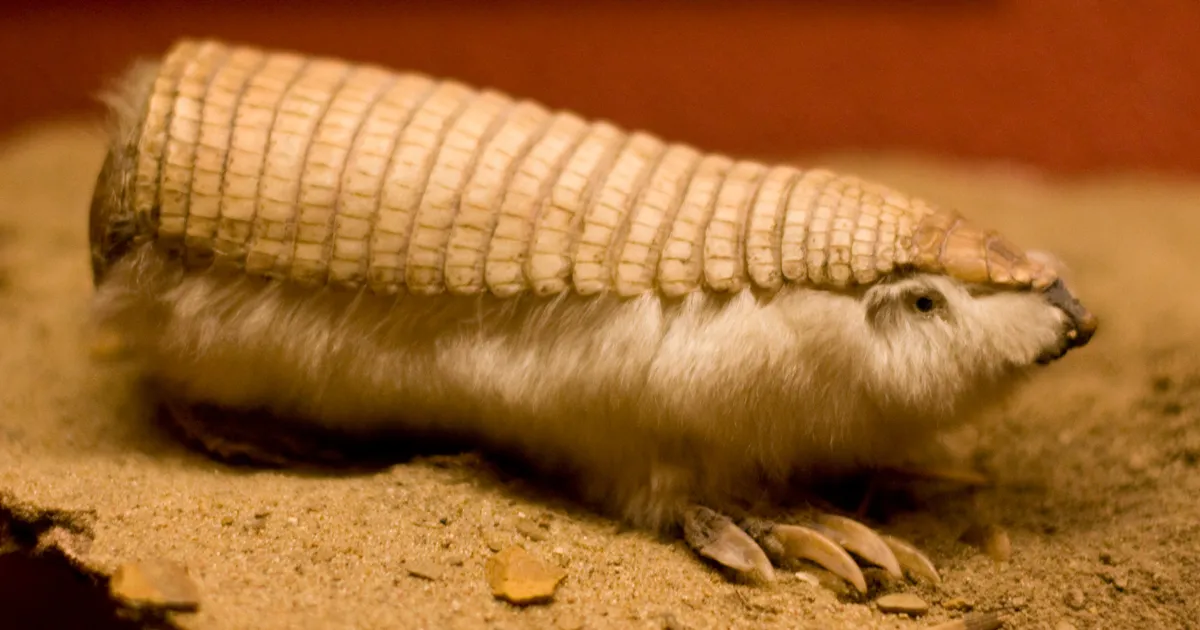
#26 Pink Fairy Armadillo

Found in central Argentina, the pink fairy armadillo is the smallest species of armadillo. They have small eyes, silky yellowish white fur, and a flexible dorsal shell that is solely attached to its body by a thin dorsal membrane.
Report
40points
#27 Okapi

This mammal is native to the Democratic Republic of the Congo in Central Africa. Despite the zebra-like stripes, it is actually more closely related to giraffes. Okapi's coat is a chocolate to reddish brown, much in contrast with the white horizontal stripes and rings on the legs and white ankles.
Report
39points
#28 Maned Wolf

Maned Wolf is the largest canid found in South America. It bears a striking resemblance to foxes, but is neither a fox now a wolf. The maned wolf participates in symbiotic relationships with other species and is shy around humans.
Report
39points
#29 Star-Nosed Mole

A a small mole found in wet low areas in the northern parts of North America, Star-nosed mole is easily identifiable by its snout which is used as a touch organ with more than 25,000-minute sensory receptors. Named Eimer's organs, the receptors are great at deteting seismic waves.
38points
#30 Blobfish

The blobfish is a deep sea fish that inhabits the deep waters off the coasts of mainland Australia and Tasmania, Zealand. The body of the blobfish is primarily a gelatinous mass with a density slightly less than water and this allows it to float above the sea floor without expending energy on swimming. They only appear droopy when taken out of the sea, when pressure changes drastically.
Report
38points
#31 Pacu

Pacu have square, straight teeth, which are uncannily similar to human teeth. Pacu, unlike piranha, mainly feed on plant material and not flesh or scales.
Report
37points
#32 Golden Tortoise Beetle

Native to the Americas, the golden tortoise beetle is a species of beetle that varies in color from reddish-brown with black spots through gold, and often metallic, earning it the nickname "goldbug". It tends to switch color in different conditions, such as during mating, and during times of disturbance, such as when it is touched by a researcher.
Report
37points
#33 Sea Pen

Sea pen is a colonial animal with multiple polyps that 'root' itself in sandy or muddy substrate. They mainly catch plankton. When touched, some sea pens emit a bright greenish light.
Report
36points
#34 Axolotl

Also known as a Mexican salamander, the axolotl is a critically endangered salamander. They are used extensively for research because of their regenerative qualities.
Report
36points
#35 Narwhal

This medium-toothed whale has a large "tusk" from a protruding canine tooth and is found in the arctic, has been valued for over 1000 years by the Inuit people for its meat and ivory. Narwhals, however, are especially vulnerable to climate change.
Report
35points
#36 Mantis Shrimp

Also called the “sea locusts“, “prawn killers” and even “thumb splitters”, this is one of the most common predators in tropical and sub-tropical waters. They have powerful claws that are used to attack and kill prey by spearing, stunning, or dismembering. Some larger species could even break through aquarium glass.
Report
32points
#37 Shoebill

Shoebill is a large stork-like bird which gets its name from its enormous shoe-shaped beak. The bird lives in tropical east Africa in large swamps and is known for its slow movements and tendency to stay still for long periods thus species getting described as "statue-like".
Report
32points
#38 Patagonian Mara

Found in Argentina, the Patagonian mara is a large rodent. While it is monogamous, the animal often breeds in warrens that are shared by several pairs. They mostly resemble hares.
Report
32points
#39 Goblin Shark

This rare shark is sometimes even called a “living fossil”, “is the only extant representative of the family Mitsukurinidae, a lineage some 125 million years old.” Goblin sharks inhabit the depths greater than 100 m (330 ft), with adults found deeper than juveniles. Given the depths at which it lives, the goblin shark poses no danger to humans.
31points
#40 Hummingbird Hawk-Moth

As this hawk-moth feeds on flowers and makes a similar humming sound, it looks a lot like a hummingbird. What’s interesting is that it is surprisingly good at learning colors.
Report
31points