



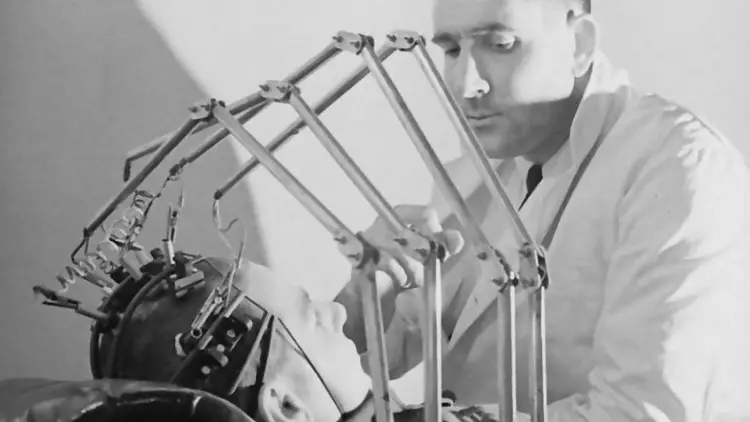




Modern medicine is one of the reasons we’re able to take care of ourselves, stay healthy, and recover from illnesses that once had no cure. But getting to this point took centuries of experimentation and plenty of questionable methods along the way. You definitely wouldn’t want to be the test patient.
Unfortunately, someone had to be. Below, we’ve gathered some old medical devices that look downright creepy by today’s standards. Take a look and see if you’d have the guts to let a doctor use one on you.
#21 Checking The Wrist-To-Wrist Circulation Time With Radioiodine In The 1960s
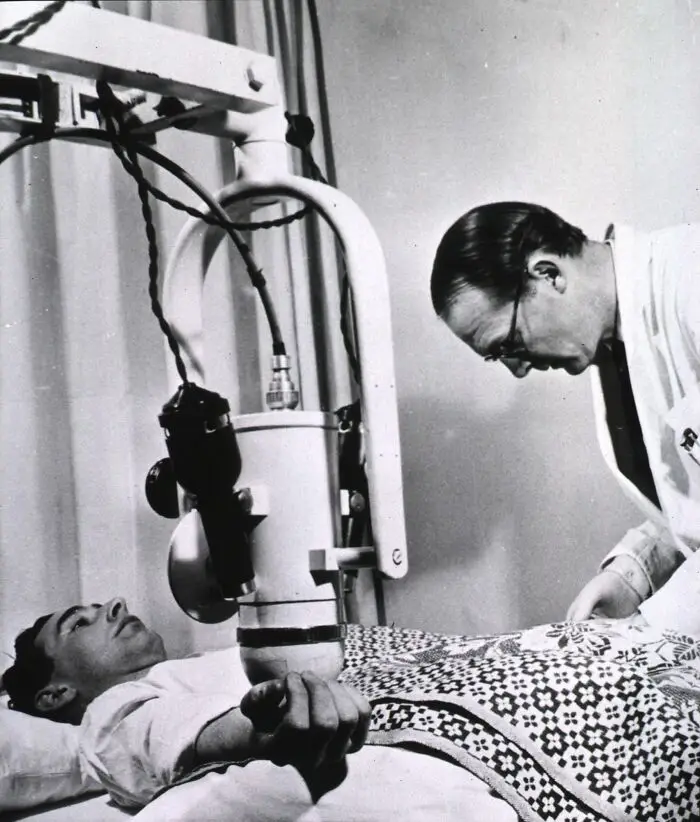
Here's a creative way to track your blood flow: inject radioactive iodine into one wrist and see how long it takes to show up at the other. This diagnostic technique measured circulation time by detecting when the radioactive tracer completed its journey through the cardiovascular system, providing valuable information for cancer diagnosis and other conditions.
Abnormal circulation times could indicate tumors, heart problems, or blockages affecting blood flow. It was an elegant solution for its era as it was using the body's own circulatory system as a delivery route and radioactivity as a tracking beacon. The patient just had to lie there, relax, and try not to think too hard about the radioactive material coursing through their veins.
Abnormal circulation times could indicate tumors, heart problems, or blockages affecting blood flow. It was an elegant solution for its era as it was using the body's own circulatory system as a delivery route and radioactivity as a tracking beacon. The patient just had to lie there, relax, and try not to think too hard about the radioactive material coursing through their veins.
17points
#22 Nurse Using An X-Ray Machine In 1951
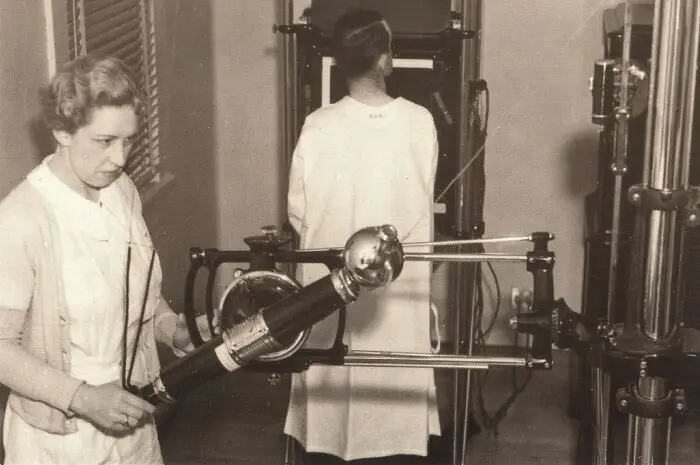
This nurse operates an early X-ray machine, carefully positioning the articulated metal arm and tube to capture an image of her patient. Early radiological workers often operated these machines dozens of times a day without any understanding of cumulative exposure. Today's X-ray technicians step behind protective walls and wear monitoring badges; back then, everyone just stood in the radiation together and hoped for the best.
17points
#23 Aviation Teaching Equipment From The 1960s
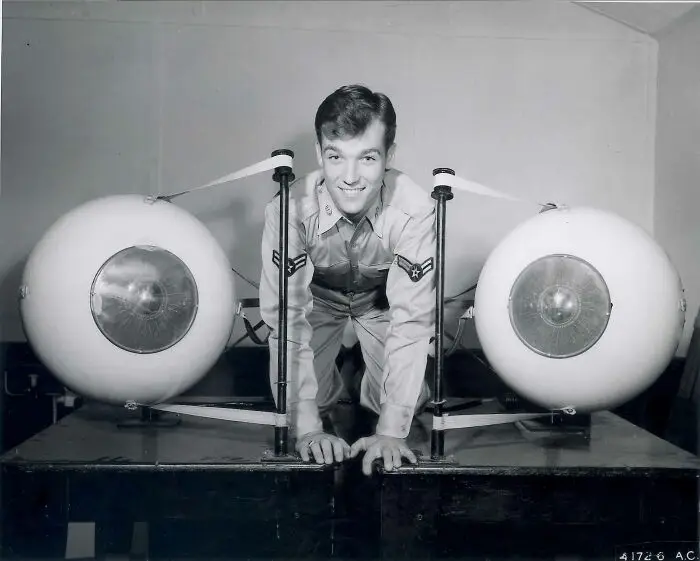
When regular eyeball diagrams just won't cut it, you build a pair the size of beach balls. Cpl. Charles F. Morris of Bristow, Oklahoma, poses proudly between these massive motorized eye models used to teach aviation medical examiners at Randolph Field how ocular muscles actually work.
The oversized specimens lit up and moved via small internal motors, allowing large classrooms to observe eye movements in real time during lectures. Understanding how pilots' eyes function under stress was crucial for aviation medicine, and these gloriously creepy teaching tools made sure every student in the room could see exactly what was happening.
The oversized specimens lit up and moved via small internal motors, allowing large classrooms to observe eye movements in real time during lectures. Understanding how pilots' eyes function under stress was crucial for aviation medicine, and these gloriously creepy teaching tools made sure every student in the room could see exactly what was happening.
Report
16points
#24 A Plastic Man Used To Simulate Human Radiation Exposures In 1959
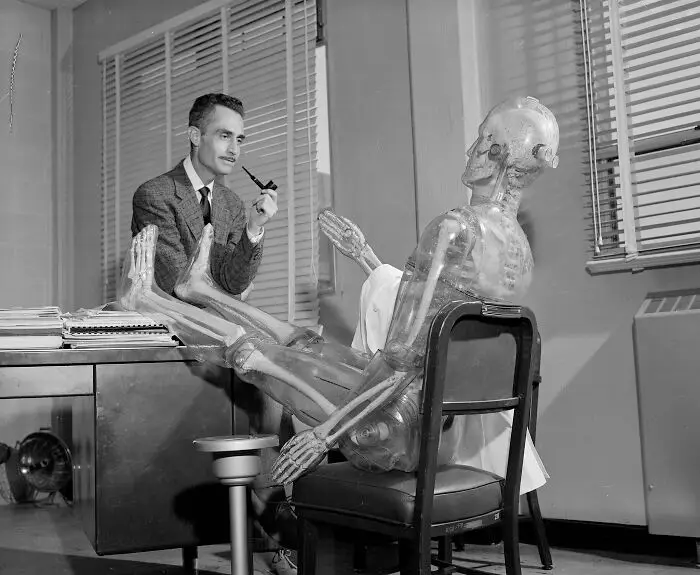
Just a scientist and his transparent best friend, casually discussing the effects of nuclear radiation. "Plastic Man" was a life-sized human phantom made of clear plastic with a full anatomical skeleton and was a crucial research tool used to simulate how radiation travels through and affects the human body.
By embedding dosimeters and sensors throughout the phantom, scientists could measure exactly how much radiation reached different organs and tissues without, you know, irradiating actual people. This was essential work during the Cold War era, when understanding radiation exposure was a matter of national security and public health.
By embedding dosimeters and sensors throughout the phantom, scientists could measure exactly how much radiation reached different organs and tissues without, you know, irradiating actual people. This was essential work during the Cold War era, when understanding radiation exposure was a matter of national security and public health.
Report
16points
#25 Flu Mask From The Late 1910s
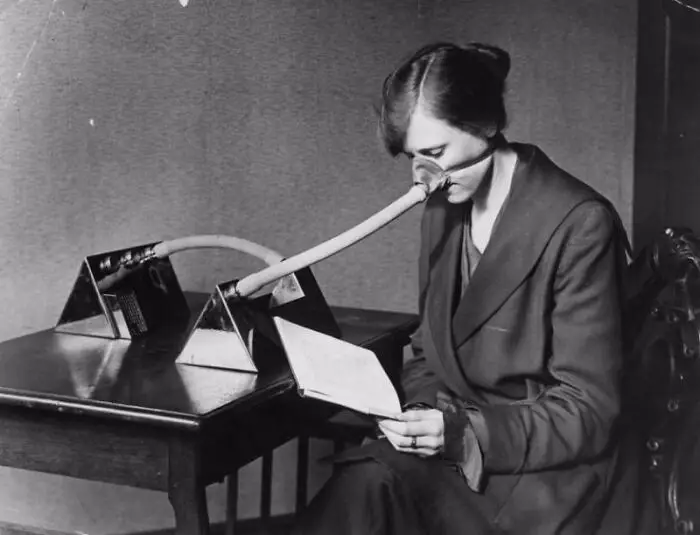
And you thought wearing a paper mask to the grocery store was inconvenient. This woman is casually reading while connected to an early respiratory filtration device during the devastating 1918-1919 Spanish Flu pandemic.
With no vaccines and limited understanding of how viruses spread, people got creative with protective measures. While most simply wore cloth masks (sound familiar?), some contraptions like this attempted to filter or purify the air before it reached the wearer's lungs. Whether this particular device actually worked is debatable, but you have to admire the commitment.
With no vaccines and limited understanding of how viruses spread, people got creative with protective measures. While most simply wore cloth masks (sound familiar?), some contraptions like this attempted to filter or purify the air before it reached the wearer's lungs. Whether this particular device actually worked is debatable, but you have to admire the commitment.
16points
#26 Nurse Using Electrocautery Machine In 1934
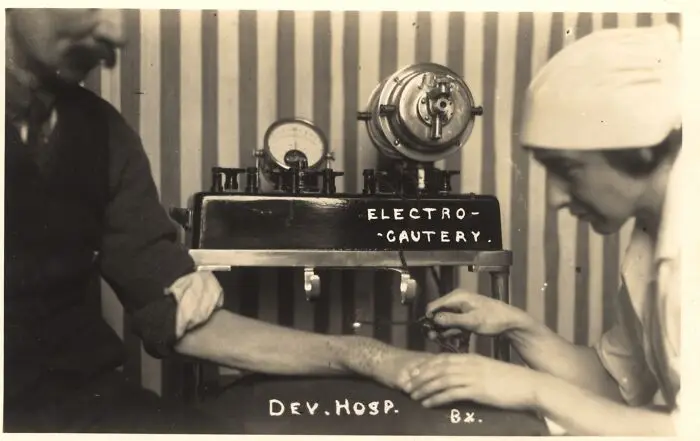
When in doubt, burn it off. This nurse operates an electrocautery machine while treating lesions on her patient's forearm. Electrocautery uses electrical current to heat a metal probe, essentially creating a precise burning tool for removing unwanted tissue like warts, moles, or small growths, and for sealing blood vessels to control bleeding during procedures.
16points
#27 The Sun Ray Department In The 1920s
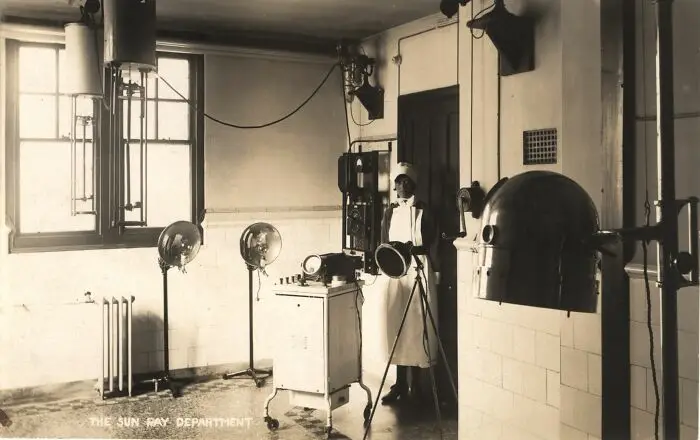
Welcome to the Sun Ray Department, where the cure for whatever ails you is being blasted with artificial light from multiple angles. Light therapy, or heliotherapy, was wildly popular during this era, and doctors believed that concentrated doses of ultraviolet light could treat everything from tuberculosis to rickets to skin conditions and general fatigue.
Report
15points
#28 A Pilot's Eye Test In 1960
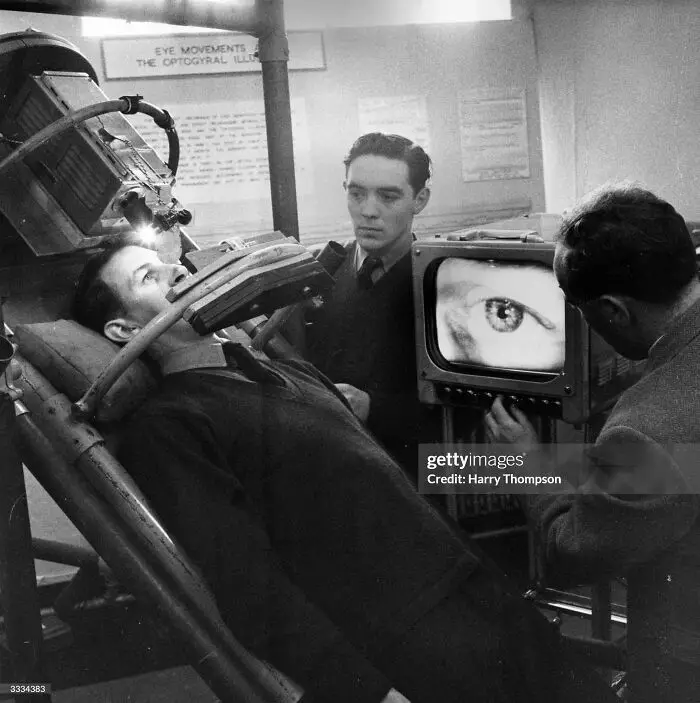
This experiment was part of ongoing research into reflex eye movements and visual illusions at the RAF Institute of Aviation Medicine. Understanding how eyes behave involuntarily was critical for aviation safety; pilots experiencing spatial disorientation could easily misread their instruments or lose their sense of direction, with very serious consequences.
By tracking exactly how the eye responds to various stimuli, researchers could better understand why certain illusions occur and how to train pilots to overcome them.
By tracking exactly how the eye responds to various stimuli, researchers could better understand why certain illusions occur and how to train pilots to overcome them.
14points
#29 The First Cobalt Radiation Therapy Machine In 1951
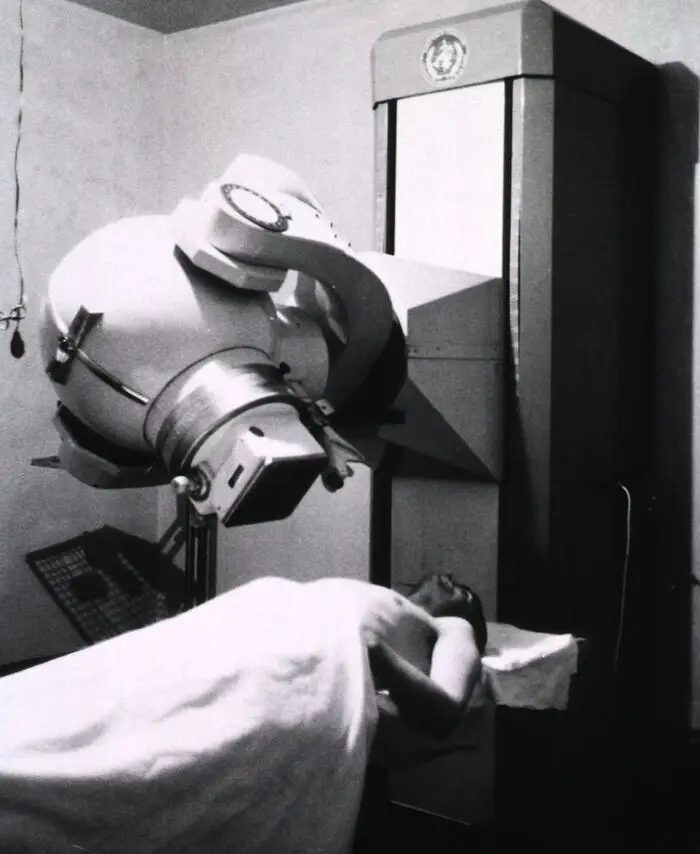
The reality of cancer treatment for much of the 20th century was much scarier than today (if that was even possible). This patient at the Tirana Cancer Institute receives cobalt-60 therapy, a form of radiation treatment that used the radioactive isotope to bombard tumors with gamma rays in hopes of destroying malignant cells.
The sheer size of these cobalt units was intimidating by design; the bulky housing was necessary to shield the intensely radioactive source material when not in use. During treatment, a small aperture would open to release a precisely targeted beam at the patient's tumor. It wasn't comfortable, it wasn't quick, and the side effects could be brutal, but for many cancer patients, it represented the best chance at survival.
The sheer size of these cobalt units was intimidating by design; the bulky housing was necessary to shield the intensely radioactive source material when not in use. During treatment, a small aperture would open to release a precisely targeted beam at the patient's tumor. It wasn't comfortable, it wasn't quick, and the side effects could be brutal, but for many cancer patients, it represented the best chance at survival.
Report
11points

