

The wedding industry is booming, and getting married has probably never been this expensive. Back in the day, it was customary for parents to pay for a wedding, but nowadays, according to Zola, most couples fund their weddings themselves, either fully (29%) or at least partially (59%).
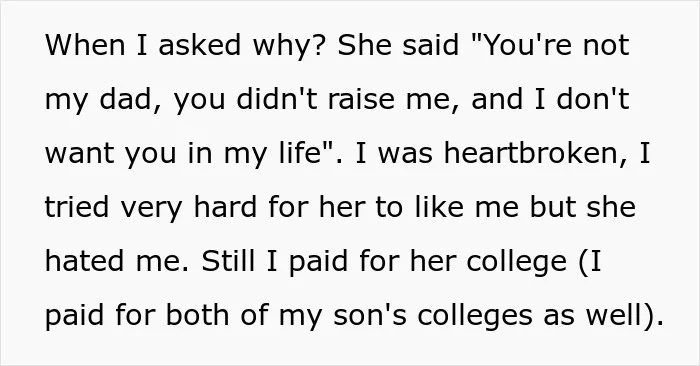
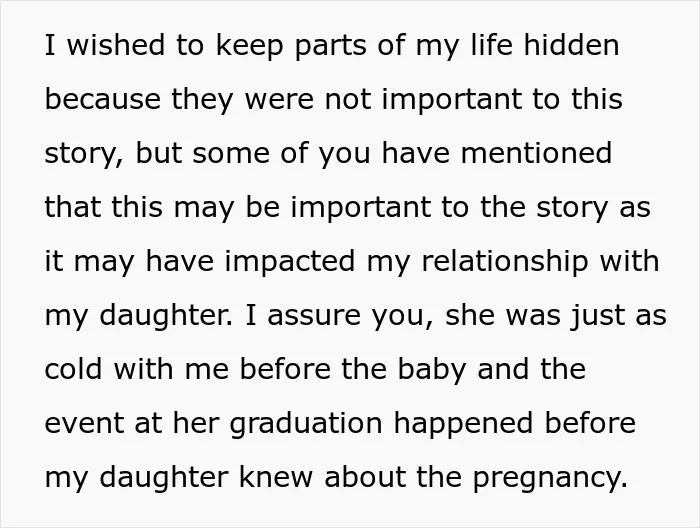
This stepdaughter expected her father to fund most of her wedding and contribute $160k. But since she always disliked him and at one point even told him that he was "not her dad," he felt like their relationship had become only transactional. That's why he decided to seek advice online and asked people whether not paying for the wedding of a stepdaughter who disowned him would be unreasonable.
A stepdaughter expected her father to pay for her wedding, even if she acted like he was a stranger her whole life

So, after refusing to fund her wedding, he came online and shared his story with others, asking for advice















Traditionally, the bride’s parents would pay for an Indian wedding, but modern couples are increasingly financing their own weddings
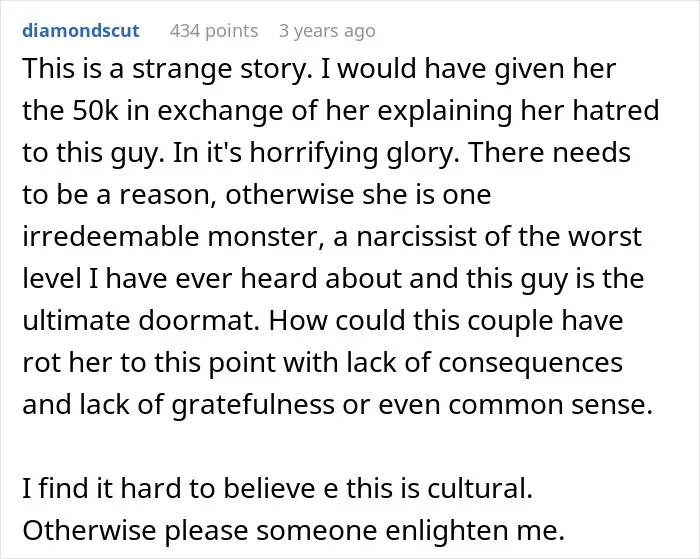
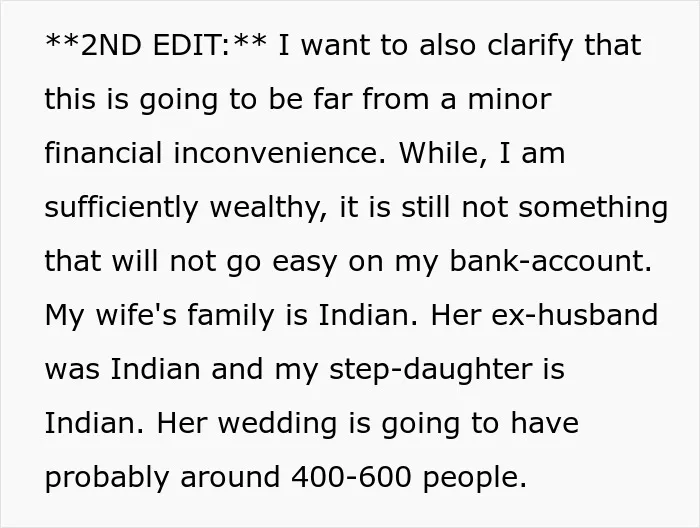
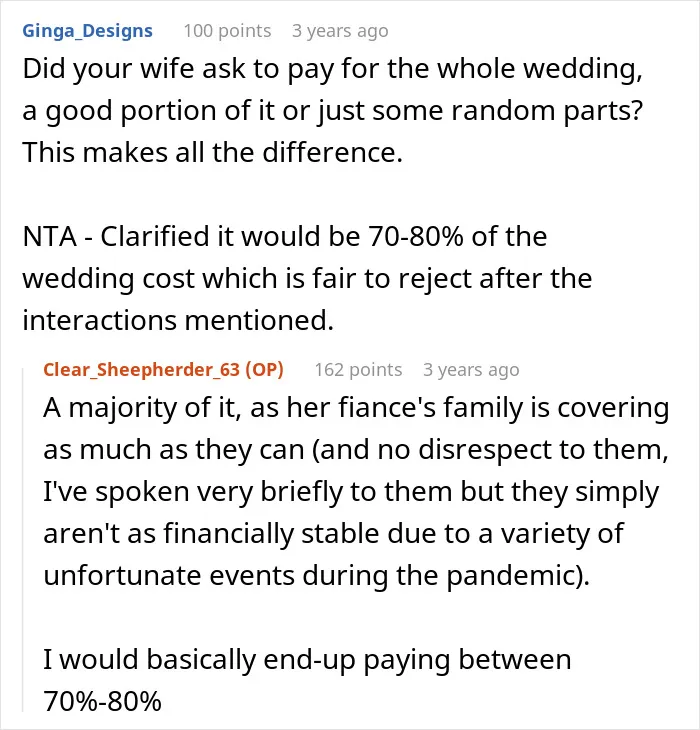
Weddings can be expensive, but Asian weddings are usually even more extravagant. Asian weddings sometimes feature twice as many guests as traditional Western weddings, so naturally, they become more expensive as well. It might seem wild that the OP's stepdaughter is asking for this crazy amount of money, but considering it’s an Indian wedding, it’s not that unusual.
An average American wedding has around 115 guests, but a traditional Indian wedding has somewhere around 400-500. It's not unusual for Indian weddings to go on for three or even five days, and some guests only make it for part of the festivities. Considering how long they can be and that, traditionally, every extended family member has to be invited, the costs can add up pretty quickly.
In the UK, experts estimate that an Indian wedding can cost anywhere from £50,000 to £100,000. The main reason is usually the large number of guests, which usually translates to more catering, decorations, and a bigger venue.
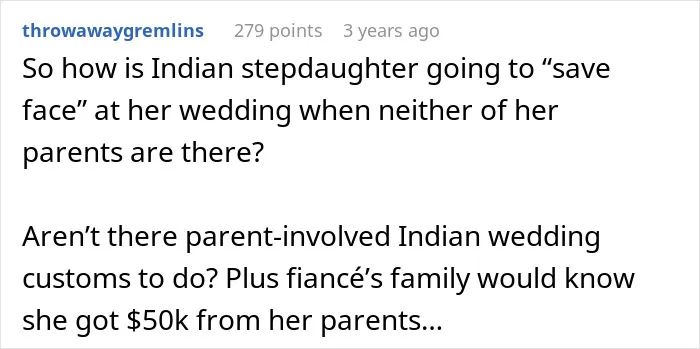
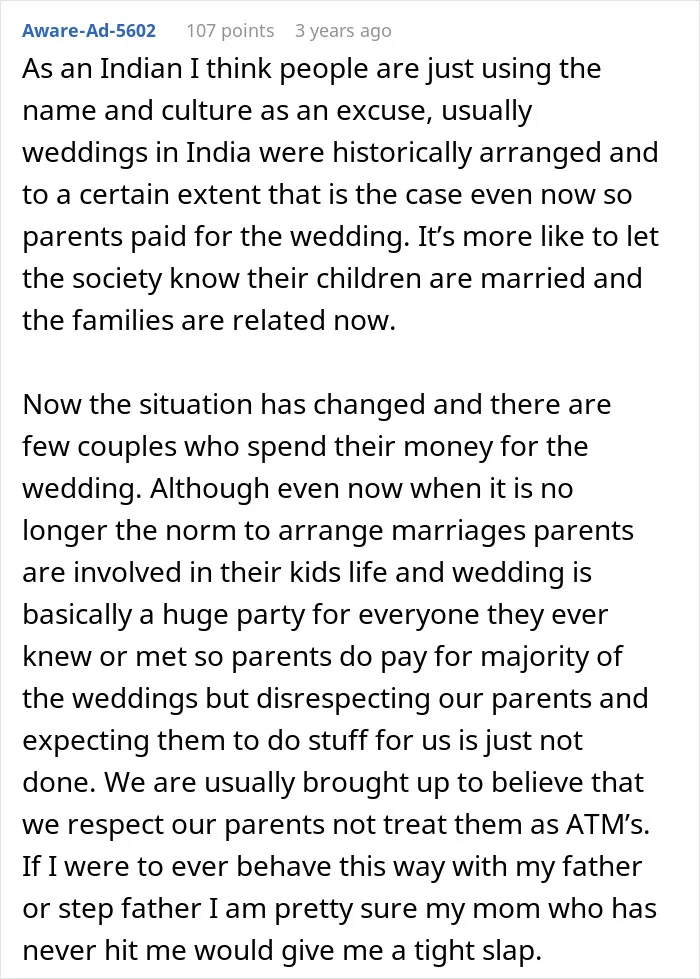
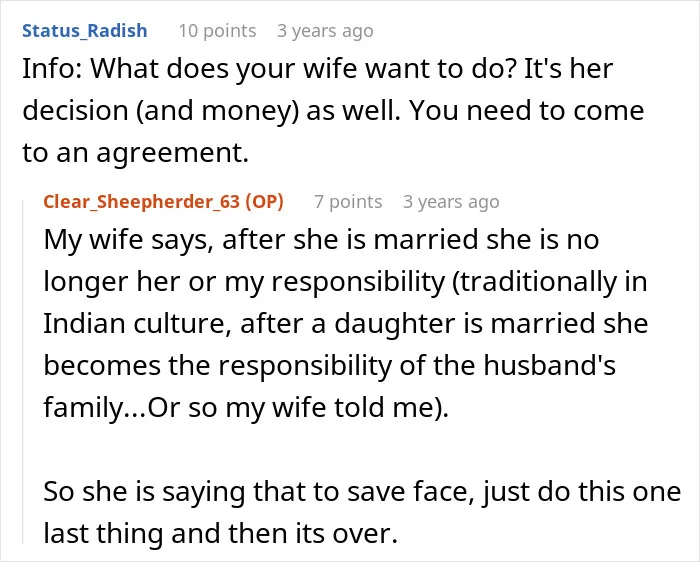
Because Indian weddings are so steeped in cultural traditions, there are also rules about who pays for the wedding. Traditionally, in Northern Indian weddings, it’s the bride’s parents who finance the wedding.
However, in urban Indian weddings, the traditions are less prominent, and more and more couples are financing their weddings from savings. What’s more, Gujarati and Maharashtrian traditions dictate a more even split, meaning that both families pitch in more or less equally.
Nowadays, both partners typically contribute to the household income and are able to at least partially finance their weddings. If not, they put their own money into funding the honeymoon, the cocktail evening, or a specific function.

Daughters are more likely than sons to not want a relationship with a step-parent
Blended families face a unique challenge, especially when both biological parents are alive. The step-parent tries to step into the role of a parent, but that can be confusing for children and evoke the “You’re not my dad” kind of feelings that the stepdaughter in this story had.
Surprisingly, most children report good relationships with their stepfathers. According to researchers from Princeton University, 75% of kids say they're close or extremely close to their stepdad at age 9, and 60% feel the same at age 16.
However, research also shows that boys adapt to step-parents more easily. Preadolescent and adolescent girls tend to view the step-parent as an obstacle and threat to the emotional intimacy and bond between them and their mom or dad. At least that's what psychologist Mavis Hetherington found in her longitudinal study.
After a divorce, a child's feelings of possessiveness and jealousy may become more intense, and the child may want to have her mom all to herself. The stepdad becomes an intruder in this scenario, although resistance and unkind behavior are more common in teen girls towards their stepmothers.
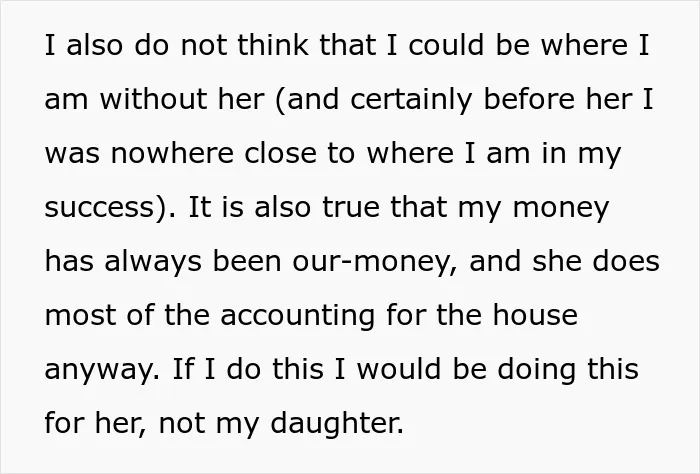
It's strange not to want to do anything with your stepfather, who has been a provider your entire life. However, research shows that stepchildren feel less pressure to help their step-parents compared to biological children and parents.
According to a Pew Research survey, 83% of biological children feel very obligated to help a parent in case of a financial or medical emergency. Only 56% of adult children said they feel the same level of obligation towards a step-parent.
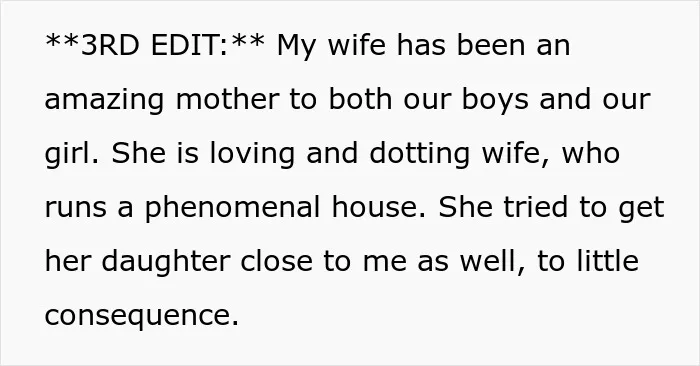
"My wife actively encourages my stepdaughter to engage with me, but it is all to no avail," the stepdad clarified in the comments



[Reactions]
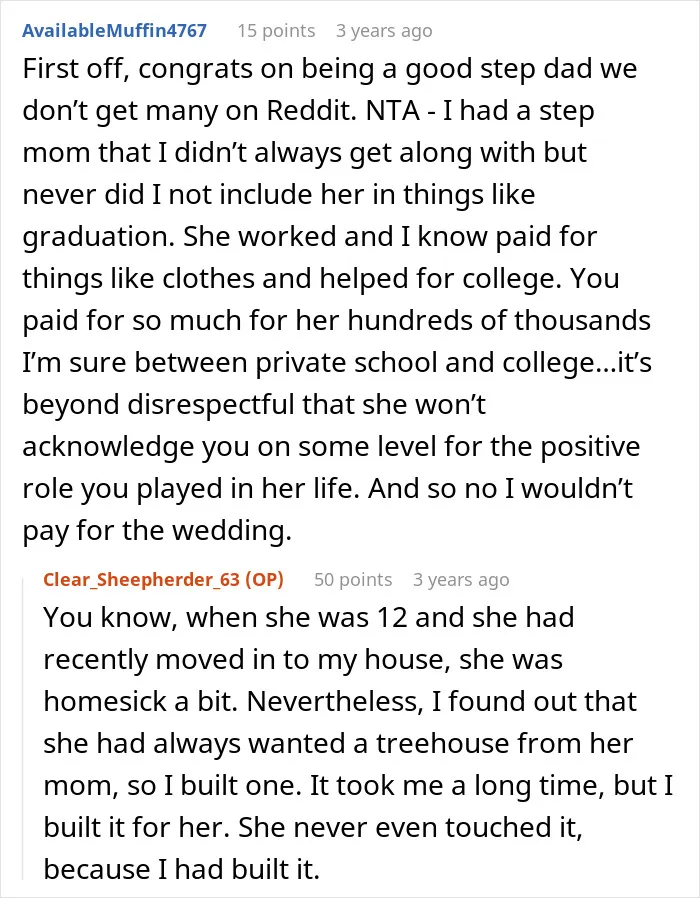

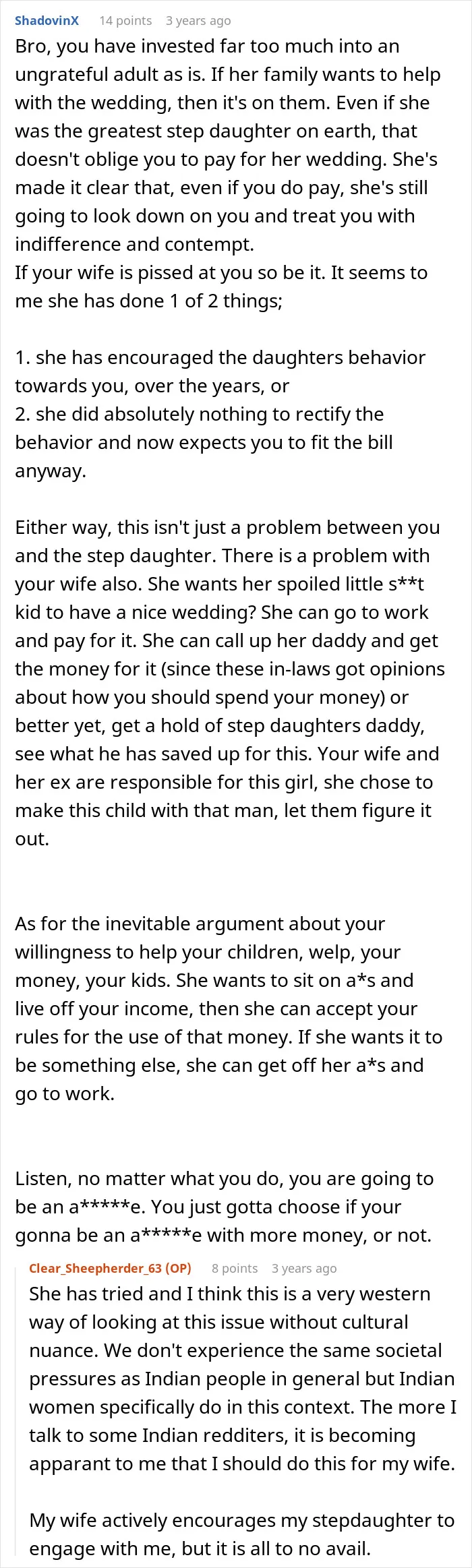
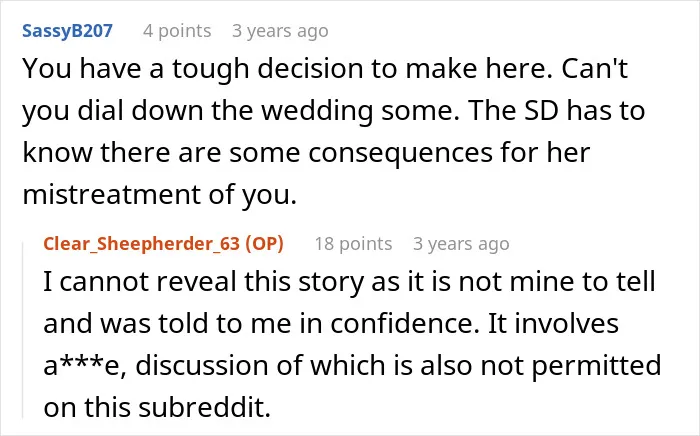
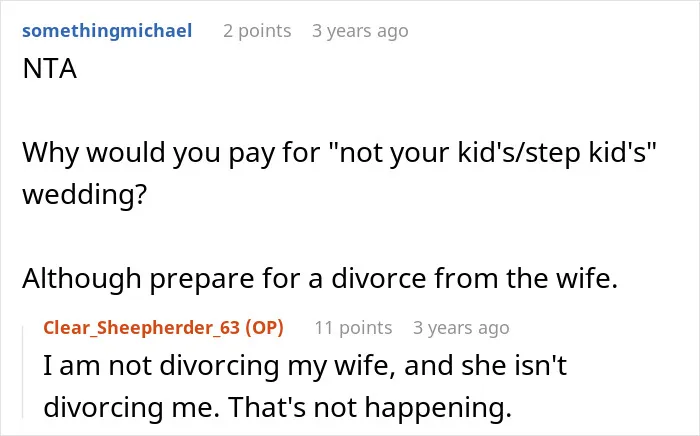
Most commenters sided with the stepdad, calling out the stepdaughter for her entitled behavior
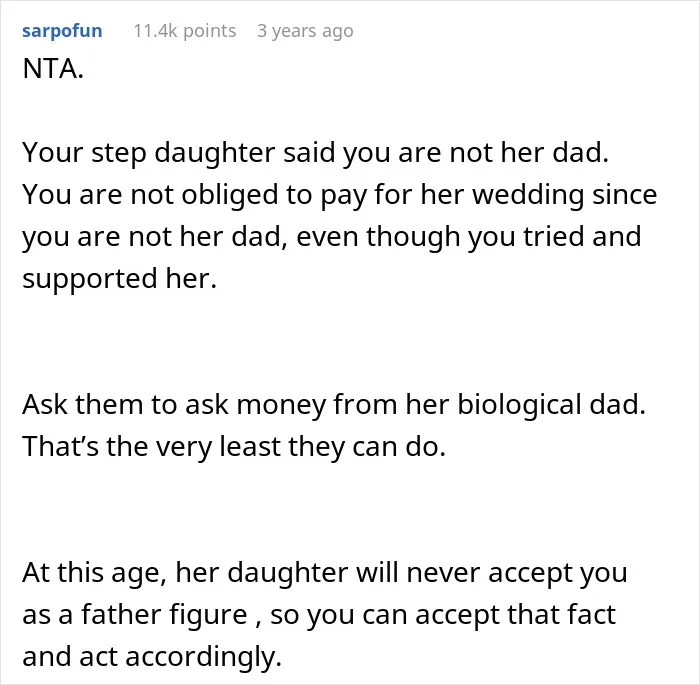

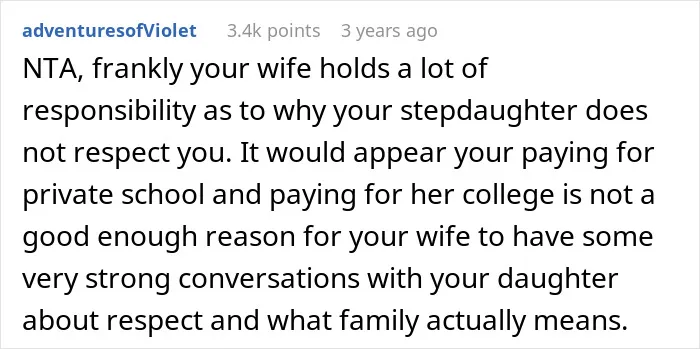


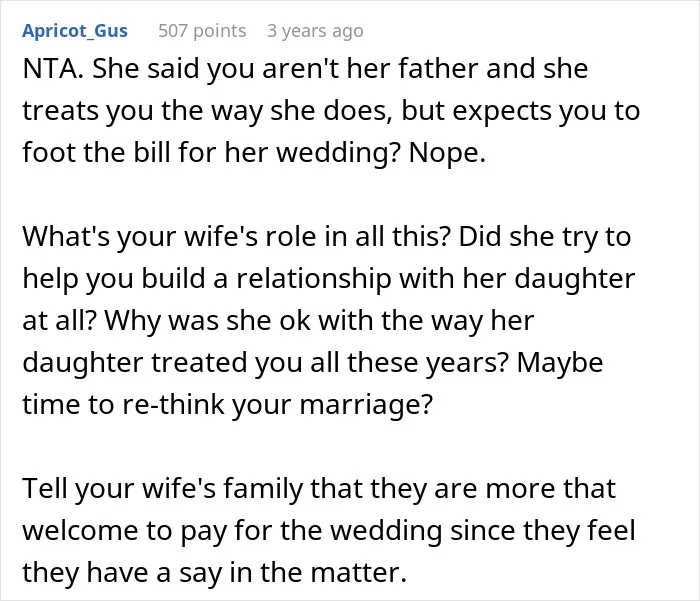




The stepfather discussed things with his wife, and the couple decided to give their daughter an ultimatum







Some people thought the OP should've stood up for himself better, others believed it was a good compromise