



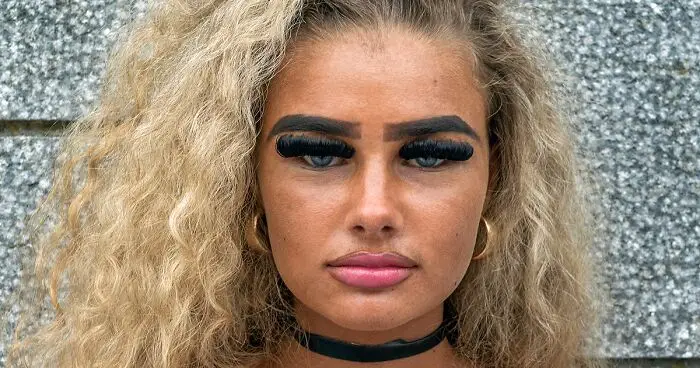

Women have a complex and multifaced history as both photographers and photographic subjects. In the early years of photography, women were largely underrepresented in the field, most practitioners being men. However, women were frequently the subjects of male photographers, who often used their images to reinforce traditional gender roles and societal norms.
As photography became more accessible and affordable in the late 19th and early 20th centuries, more women began to take up photography as a hobby or profession. Nevertheless, women photographers still faced barriers and biases in the field, such as discrimination in the art world, lack of representation in exhibitions and museums, and limited access to education and resources.
Despite these challenges, many women photographers made significant contributions to the field throughout the 20th century, they used photography to challenge these stereotypes, and depicted women in a more diverse and empowering way.
More info: all-about-photo.com
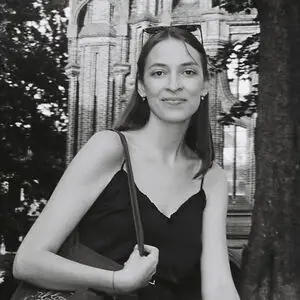
#21 Portrait Of Nina From The Series "Sunday Mornings In Paris" By Julien Sunye

"This project was initiated in 2017 to counterbalance the heavier theme I was exploring with Black Holes, which discusses violence and war. I started Sunday mornings in Paris with the idea to create something soft, gentle, and beautiful. I chose to render homage to the beauty of the female form which has inspired many an artist. This is against the background of one of the most beautiful cities in the world. The idea was to create images that give the feeling of a lazy Sunday morning after a jazzy night out, resulting in scenes varying from those that seem to come from a dream and some that tend more towards portraits. It is key for me that the models in the photograph own their own bodies and their own sensuality and not project my own fantasies onto them. As a photographer I’m there to capture what arises at the moment, ensuring the compositions, backgrounds, and light are all perfect when I hit the shutter. I never push for a certain pose or attitude, instead, I wish for the models to feel somewhat free to be their natural selves or to explore what feels right. This way I keep the photographs as natural as possible. I didn’t want the results to be visually overwhelming. Instead, I wanted to create calm yet powerful images that appeal to an atmosphere of times long gone by whilst remaining timeless. By opting for this approach, the results are visually peaceful, even for the more sensual photographs in the series."
10points
#22 Egg Heads From The Series "Through My Child’s Eyes" By Lisa Murray

"When time is measured in treatment cycles and how much hair the other ‘egg heads’ have who surround me in oncology… This image forms part of a larger body of work entitled ‘Through My Child’s Eyes’. The series is a photographic collaboration between mother and child. It is composed of re-created archival photographs originally taken by my five-year-old son, Griffin, paired with my own current reflections of the time. It spans eight years and chronicles a chapter of time when new life and near death momentarily sat side by side."
Report
9points
#23 Camera Intima By Stéphanie Probst

"Camera Intima is a series of portraits of women between 23 and 53 years old. I am one of the women of the project. It begins with an open discussion between the artist and participant, inspired by the “feminist talking circle”, a practice to recover your own experiences and express freely. This creates a space in which ideas and emotions can be shared in a safe environment. Then, the participant chooses to take part in the photographic project, or not. They give consent for me to use their words and pictures. As I recently experienced health issues, my body changed a lot. I realized that I never really knew what is «normal», what is a normal body, or what is a normal relation to it. I explore these questions by inviting others to have this conversation. Participants join the project upon invitation: it’s open to anyone identifying themselves as a woman, or born as a woman. Each step is based on confidentiality, caring, and consent. The elaboration of the picture is shared between the artist and the participant. The exposure time is 5 minutes. It’s a time of reflection, it’s also a performance. I use pinhole because it needs time, meaning it’s a moment of the person, not a snapshot. Long exposure is accurate because it’s an accumulation, a slice of life, where you breathe and live. It brings some blur, and some distortions, and induces a reverie-kind-of-state in viewers. It also helps to have an equal relationship because nobody sees exactly what picture is taken. After the shootings, a selection of sentences from the participants are made, including the artist. The texts should accompany the pictures, being projected, spoken, or recorded and played around the images. The purpose is to make a multi-portrait of all the women that participated, mixing their voices. When we look at portraits, we look for similarities or differences, we make links with ourselves. We act in front of portraits like with mirrors and we learn with others. Viewers can look at the pictures, read the texts, and think about their own feelings, experiences, and relation to their bodies. It could change the way we see ourselves and challenge the standards we have, to continue the series. The work is still in progress, it can grow in time."
8points
#24 Corpus By Xavier Blondeau
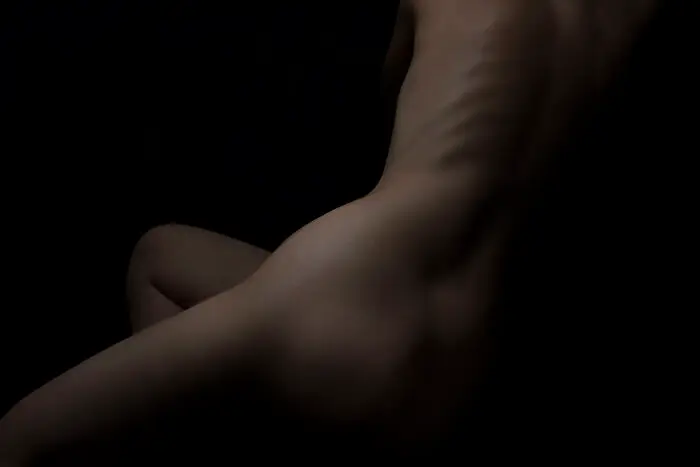
"The twilight slowly makes us discreetly discover the curves of a body, like a river polishes the stones, the wind shapes the tree tops. We perceive the delicacy of the skin grain and the details of a life story on this naked body. But the important thing is what we can't see in the obscurity that covers the essence of women’s intimacy."
Report
8points


