

Many parents who play favorites may not realize how unfairly they treat one child. In such cases, owning up to this damaging mistake is the best course of action.
However, some parents would refuse to acknowledge their blatant biases, causing deep-seated resentment in the less-favored child. This was the experience of an 18-year-old son whose mother and father had considered his younger brother their golden child.
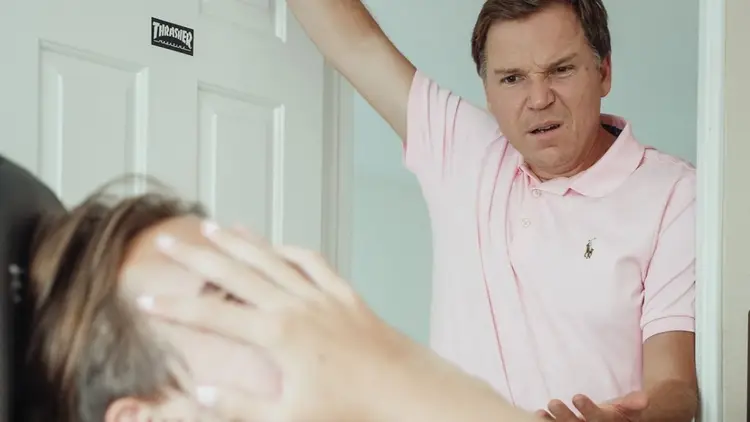
He finally confronted them, and the whole family learned what they’d been doing. This led to an ugly showdown that left the errant couple deeply embarrassed and regretful.
Parental favoritism can cause deep and potentially lifelong resentment in the less-favored child

An 18-year-old son learned firsthand how much his parents favored his younger brother over him
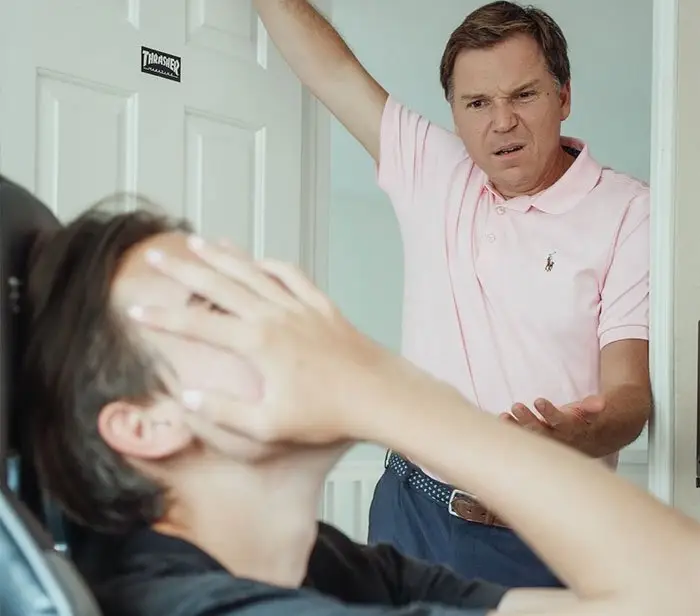
He decided to confront his folks, which led to a full-blown argument

Fortunately for him, his grandparents intervened
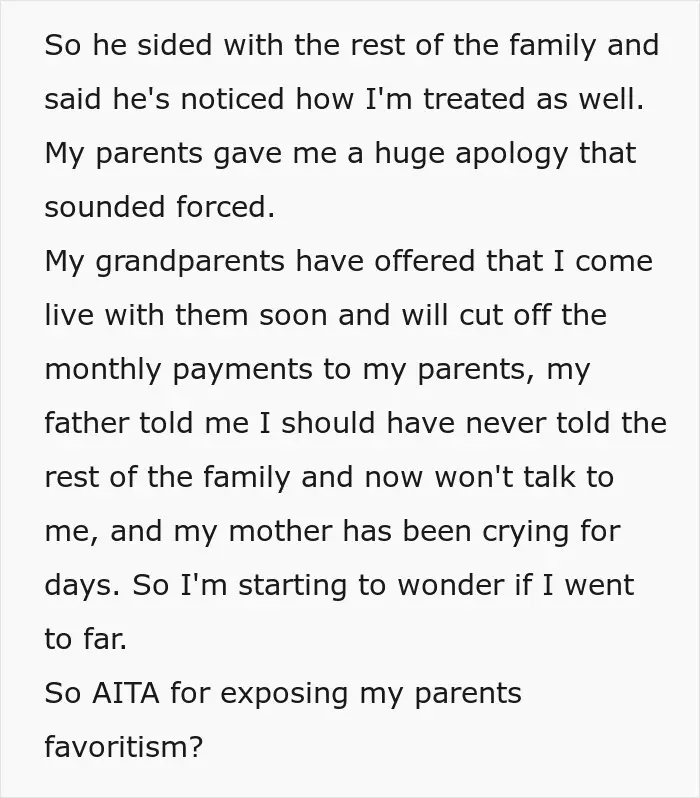
The long-term effects of parental favoritism can manifest in different ways throughout the less-favored child’s adulthood
At 18, the author mostly felt rage upon learning about his parents’ bias toward his brother. But these effects can get more complex once he reaches adulthood.
As licensed marriage and family therapist Katerina Pogosov tells Bored Panda, these effects may range from hyper-independence to poor self-esteem, and difficulties in relationships because of disorganized attachment styles.
“Hyper-independence can show up by not asking for help and really struggling through situations that a ‘simple' ask would take the edge off,” Pogosov explains.
“Poor self-esteem can develop due to the fact that if the person who birthed them or was supposed to take care of them didn’t view them as ‘worthy’ or ‘good enough,' then how can they themselves identify their own worth.”
Pogosov adds that neurodivergent-expansive people who were the less-favored children growing up may also experience amplified feelings of rejection sensitivity, along with “injustice intolerance” or feelings of things not being fair or logical.
However, many parents may not realize that they are playing favorites and that their actions are already damaging their child’s self-esteem. Pogosov says differing rules and expectations are one sign, as is having a shorter fuse for one kid or not wanting to spend time with them.
The onus to mend a damaged relationship from favoritism solely lies on the parents
It is bad enough that the author learned about how his parents blatantly favored his brother. At that point, confronting them was reasonable, especially for his peace of mind.
But when it comes to fixing the damage, Pogosov says the onus is on the parents.
“The parents damaged the family relationships, so the responsibility to repair them falls on them. The non-favored kid can decide on their own terms what type of relationship they want with their parents, and through that can set up their own expectations with each parent,” she said, adding that therapy can help in the process of healing.
The author likely felt he was going crazy thinking whether his parents played favorites, and he did what he had to do to confirm those assumptions.
The author provided more information about his story
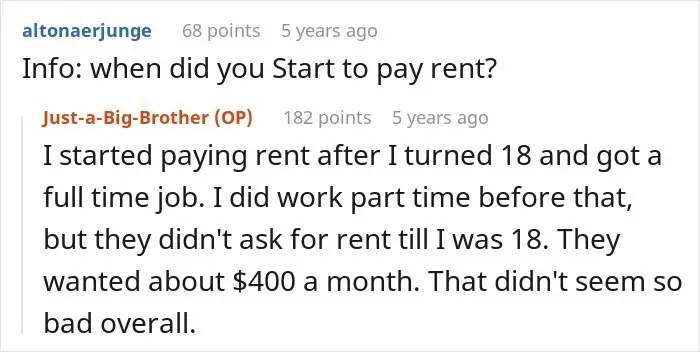
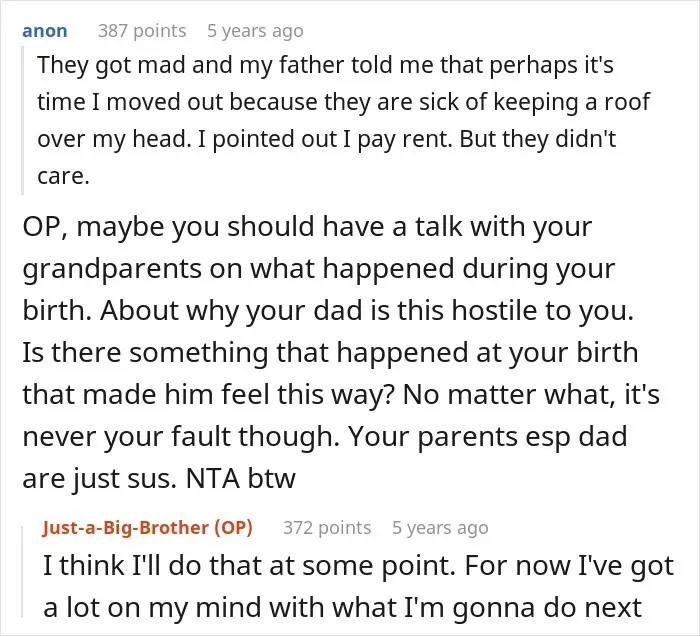
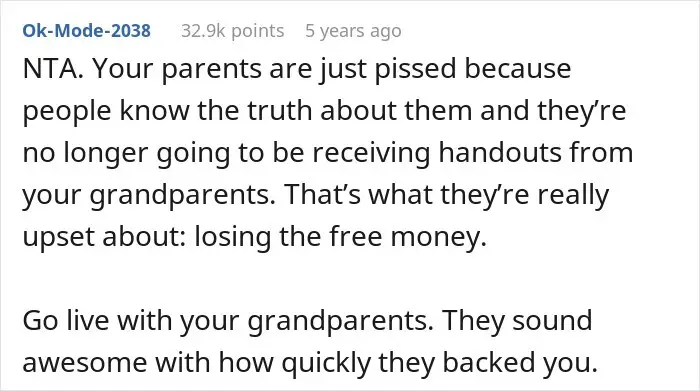
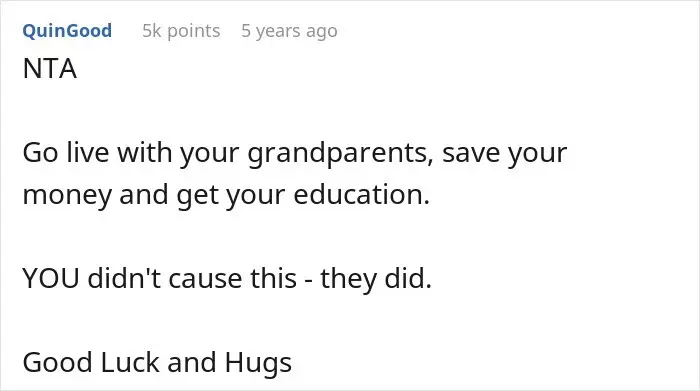
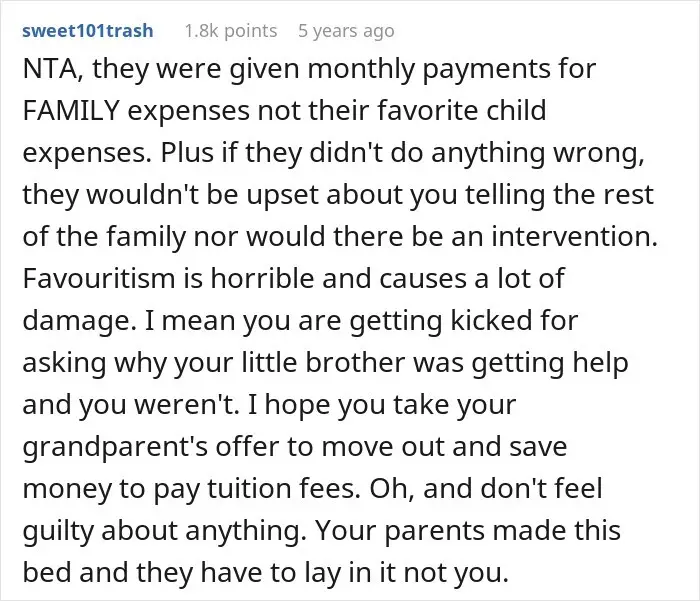
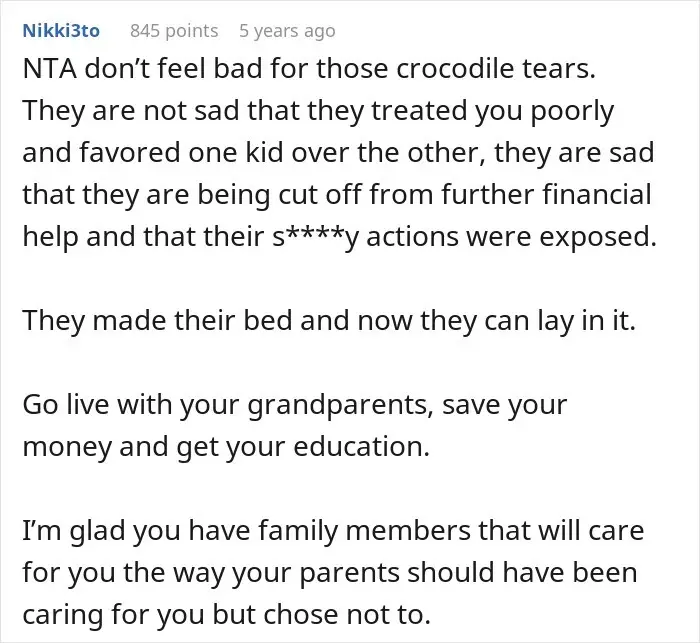
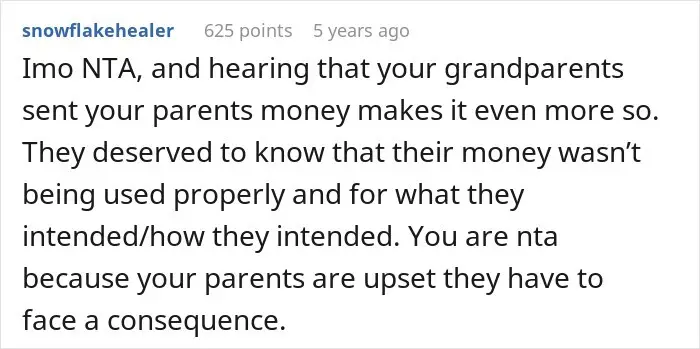
Most readers sided with him

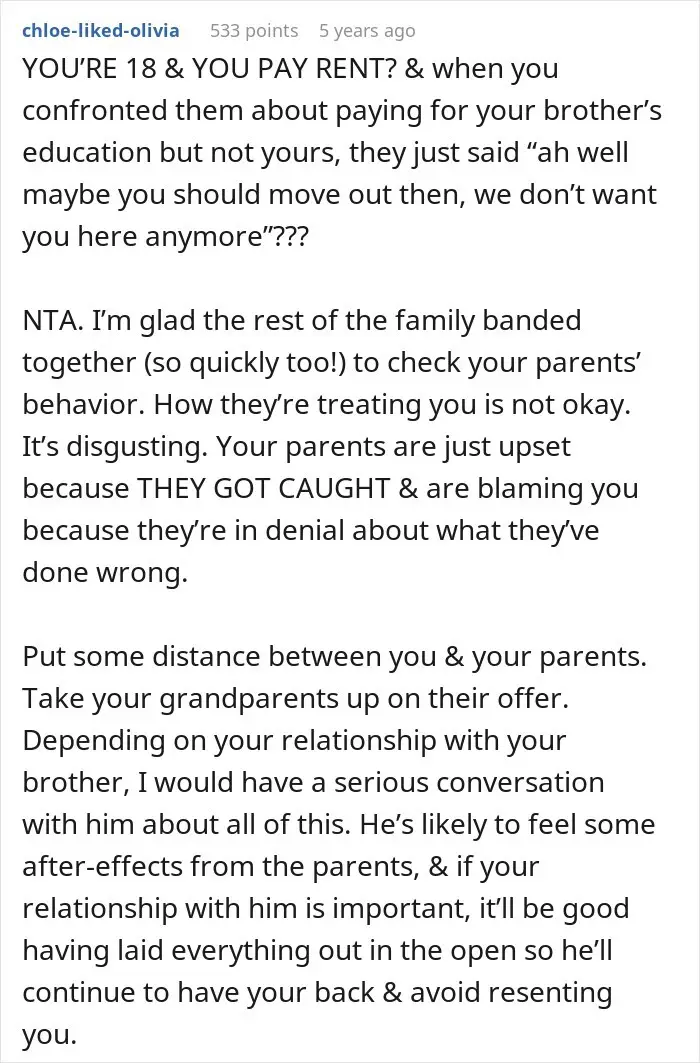
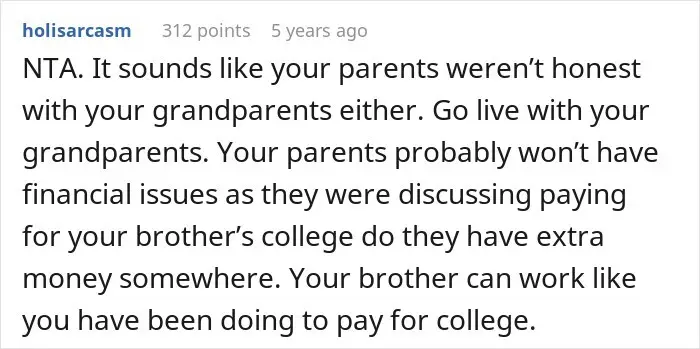
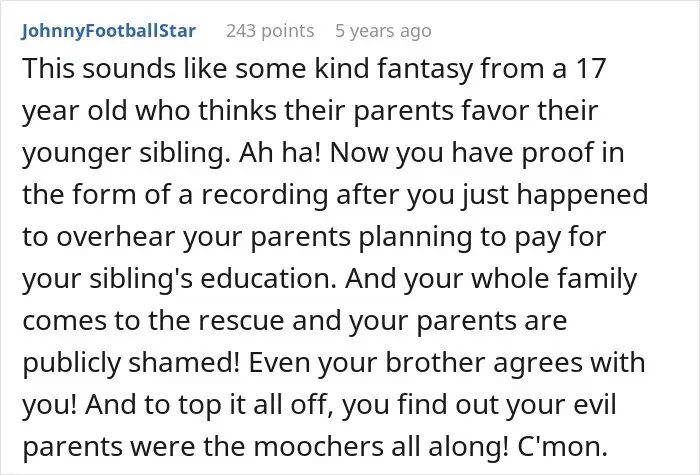



The teen provided an update, sharing how big of a help his grandparents had been the entire time
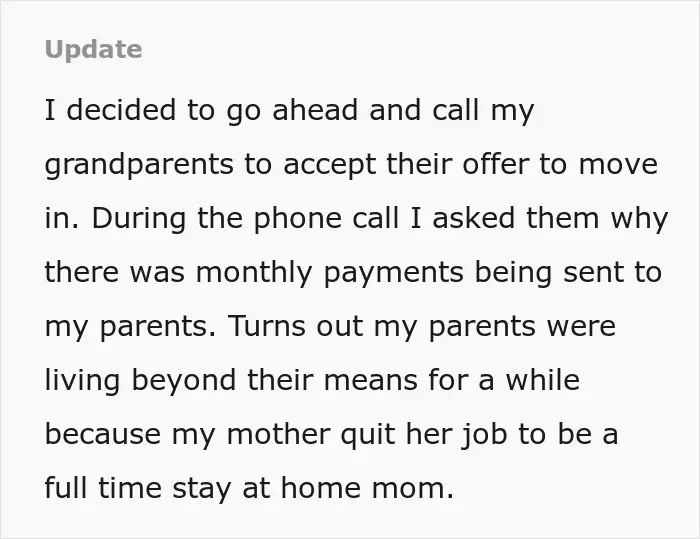

He confronted his parents for a second time, and what he learned became the last straw

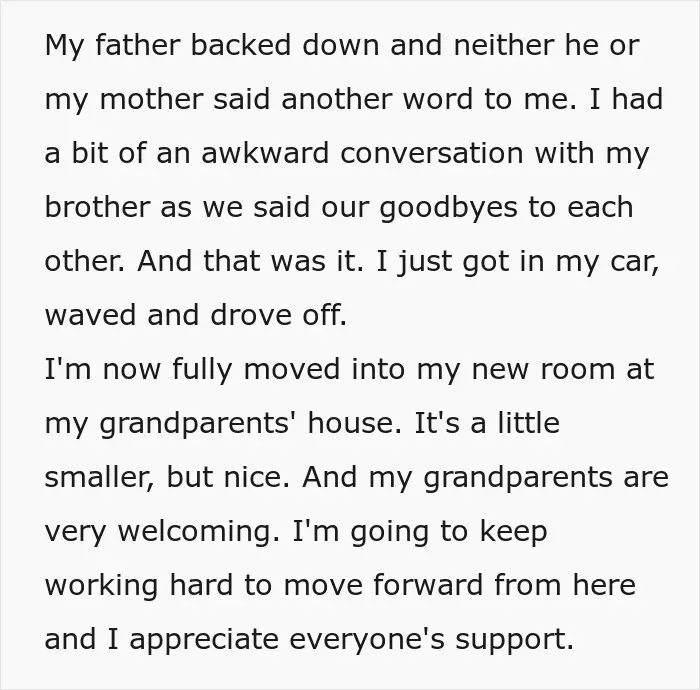
He ended up moving out, which he says was the best decision he has made

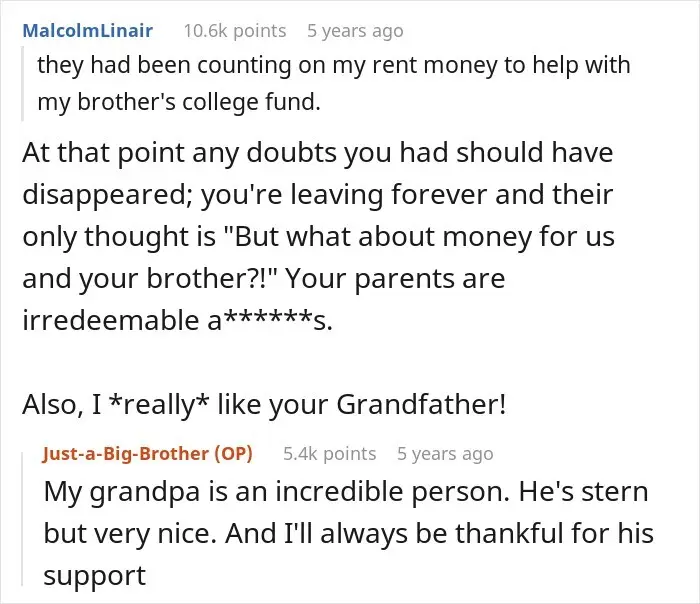
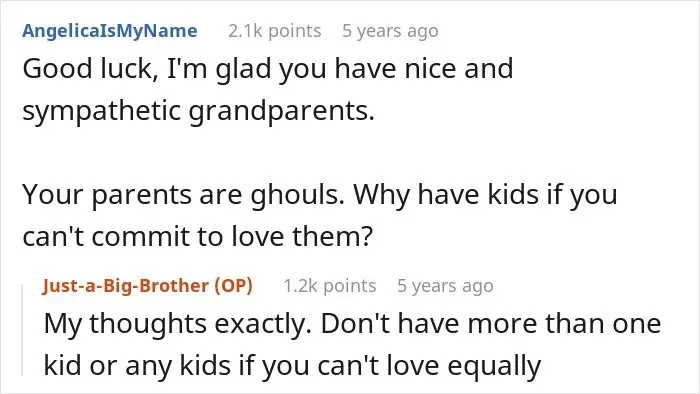
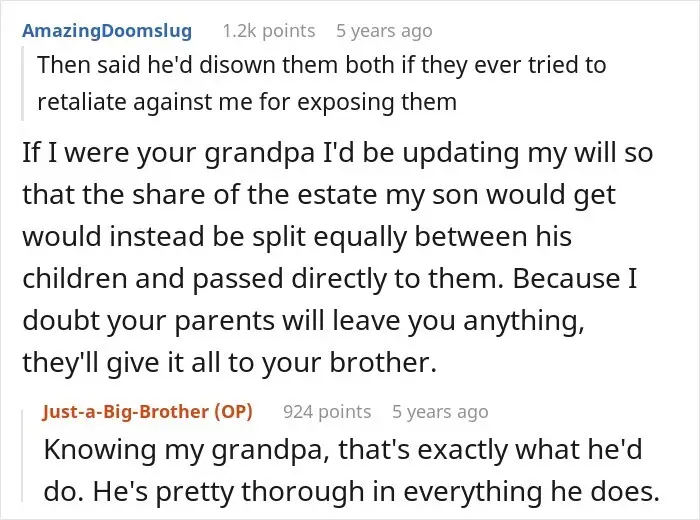
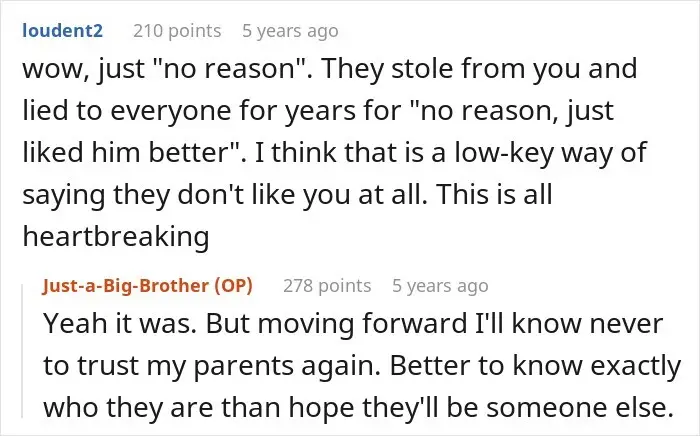
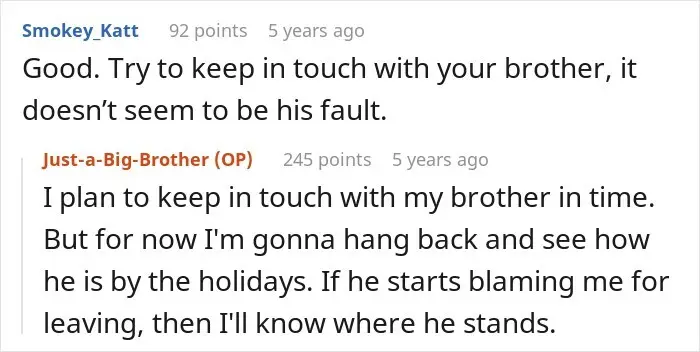
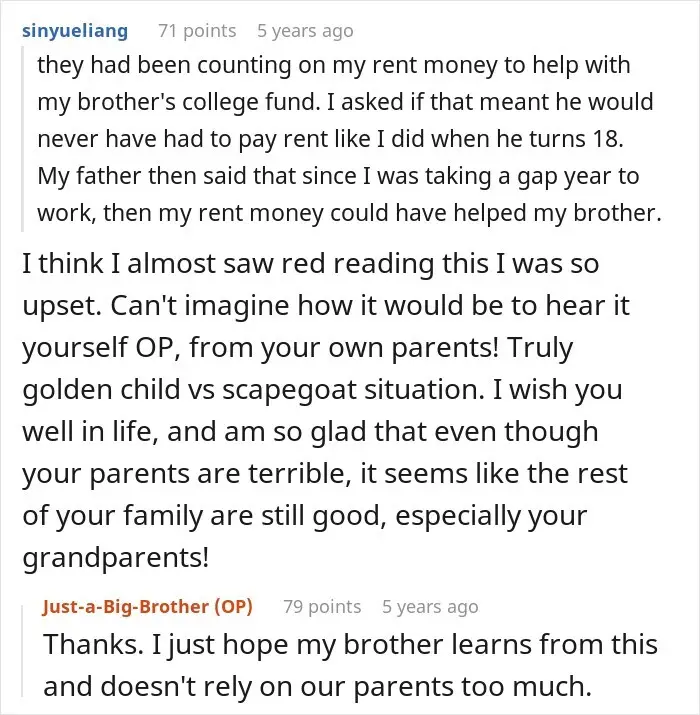
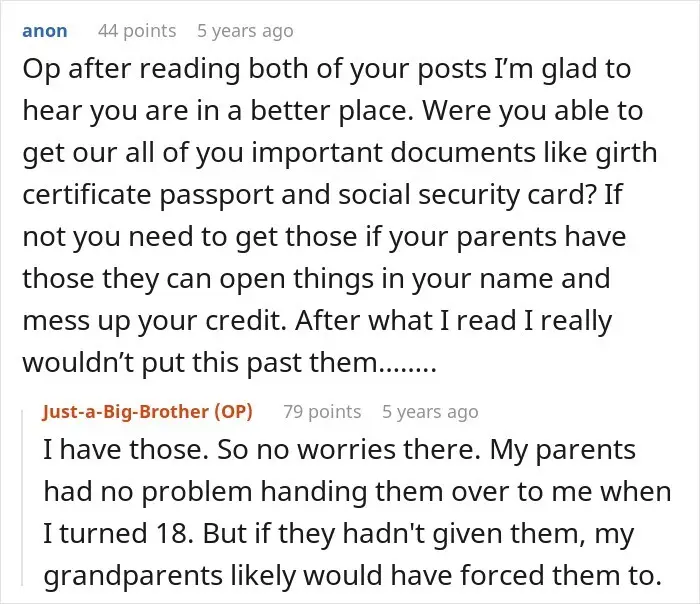
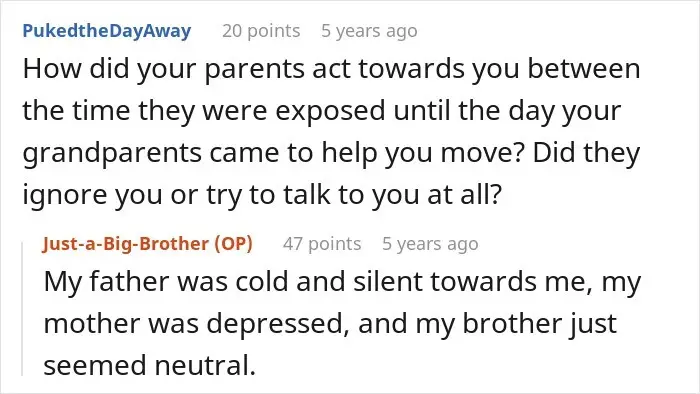
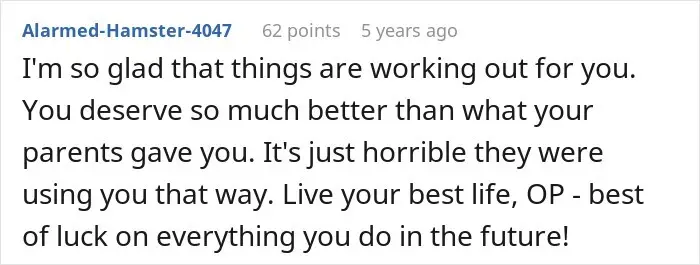
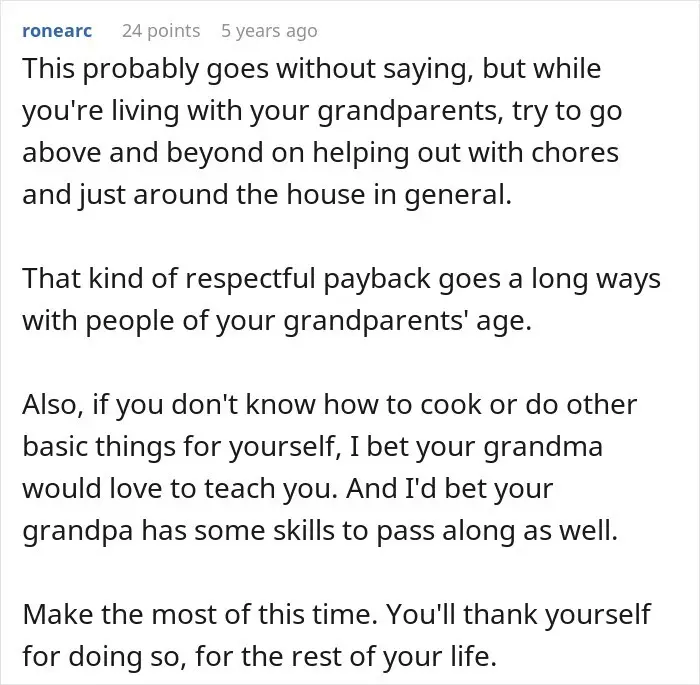
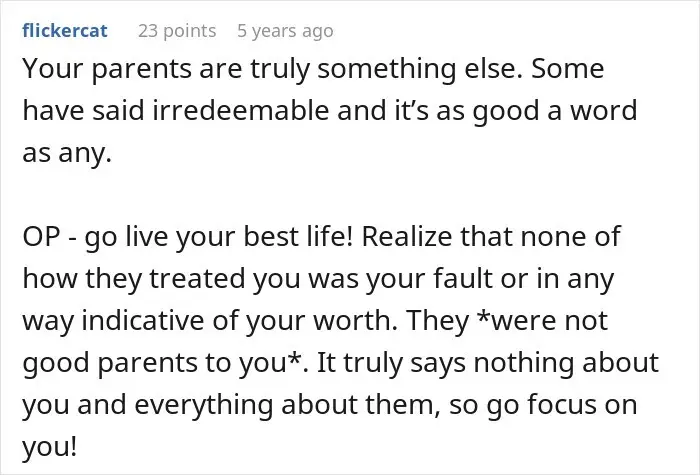
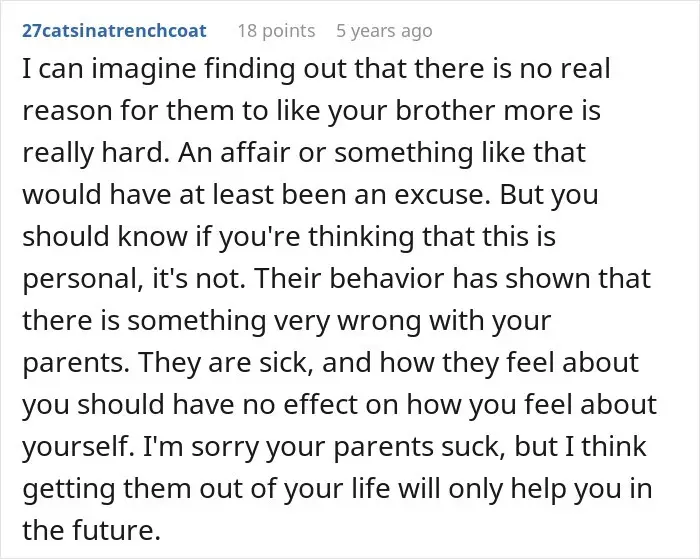
Some readers had questions, but most of them offered words of encouragement
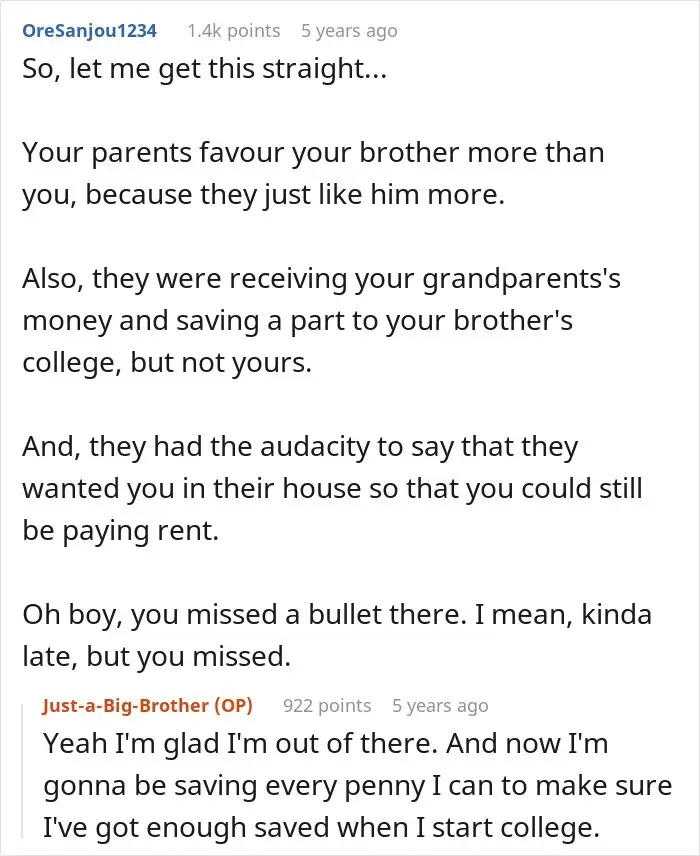


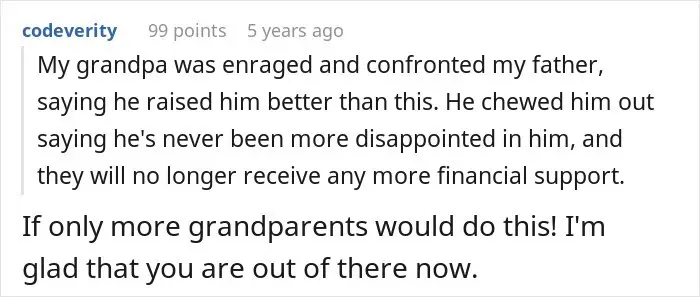







Others shared similar experiences