

Weddings can bring out the best in families, but they can also reveal some rather uncomfortable truths about the people sitting around the reception table. I've noticed that old rivalries might resurface, questionable decisions become impossible to ignore, and keeping the peace can be difficult. In fact, the hardest part of celebrating a marriage is figuring out which family relationships are actually worth maintaining.
That can become particularly complicated when the people causing the tension are close relatives. A disagreement over wedding etiquette might seem trivial on its own, but when it follows a history of hostility, offensive remarks, and disrespect toward loved ones, it can become the final straw. And for this bride, it was indeed the final straw.
heading
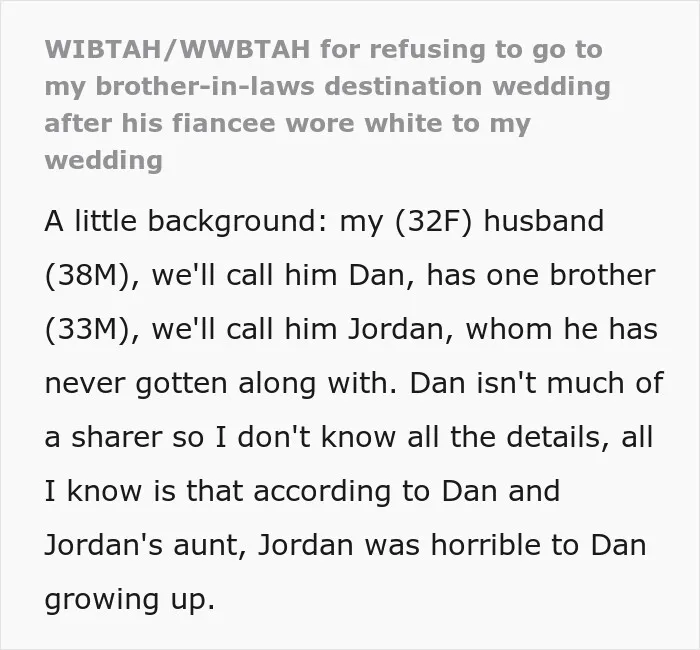
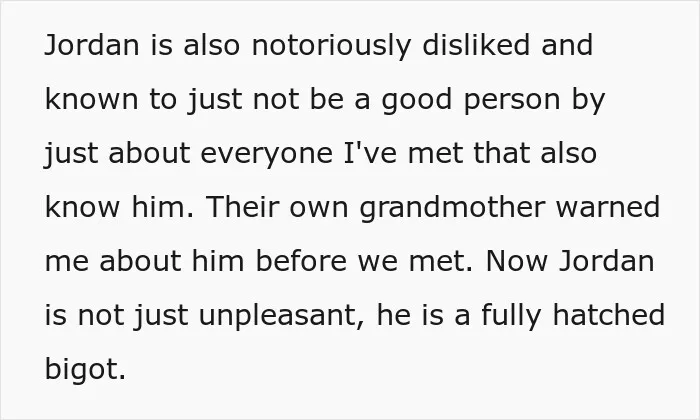
The bride explained that her husband had a strained relationship with his brother, who was known for his unpleasant behavior and bigoted views
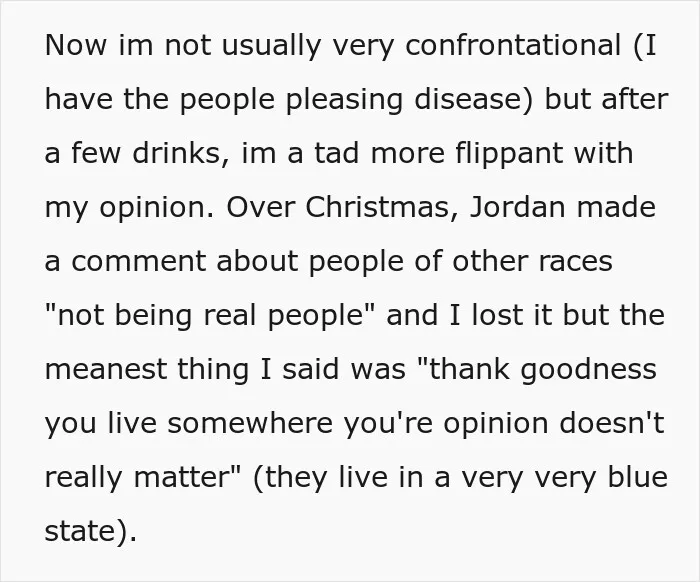







During Christmas, the brother-in-law made a racist remark, prompting the bride to confront him and later try to maintain peace with his fiancée



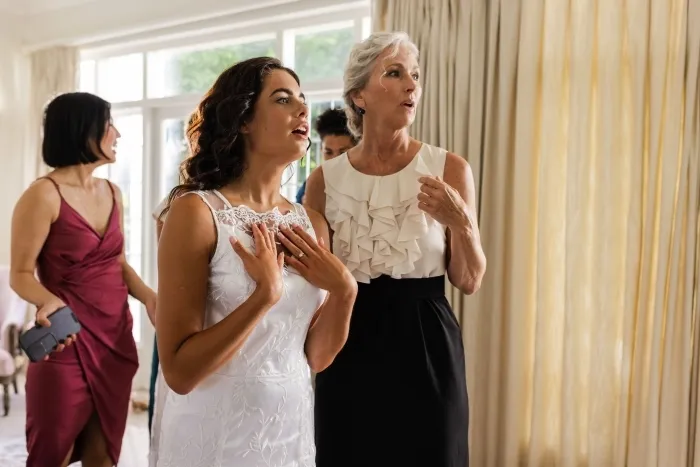


On the couple's wedding day, the fiancée showed up wearing a cream-colored dress that looked white, upsetting the bride and several guests


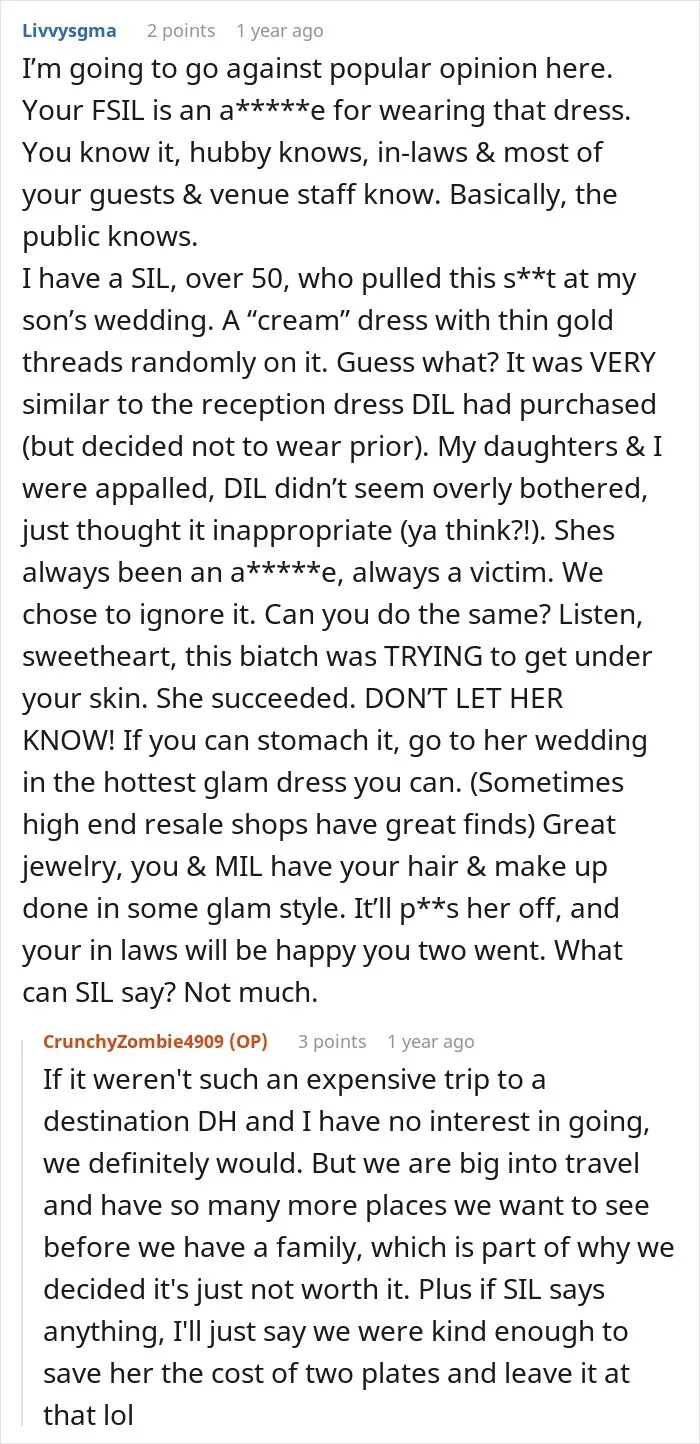
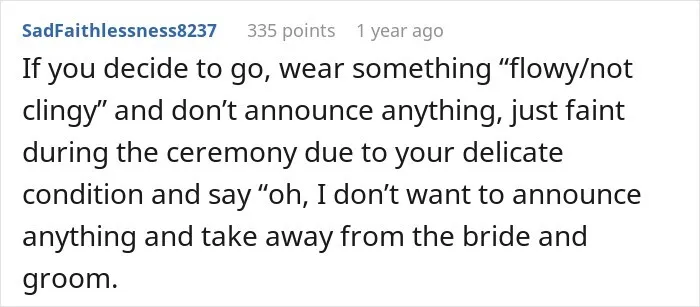
The woman agreed with netizens who urged her not to attend the wedding, also agreeing that her mother-in-law would be understanding about it


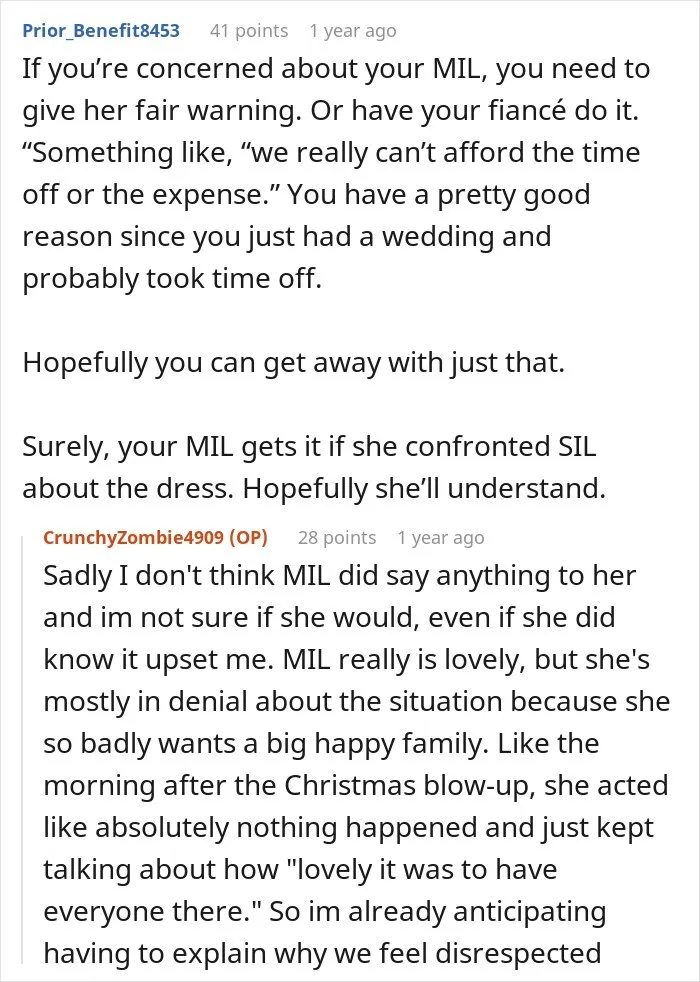
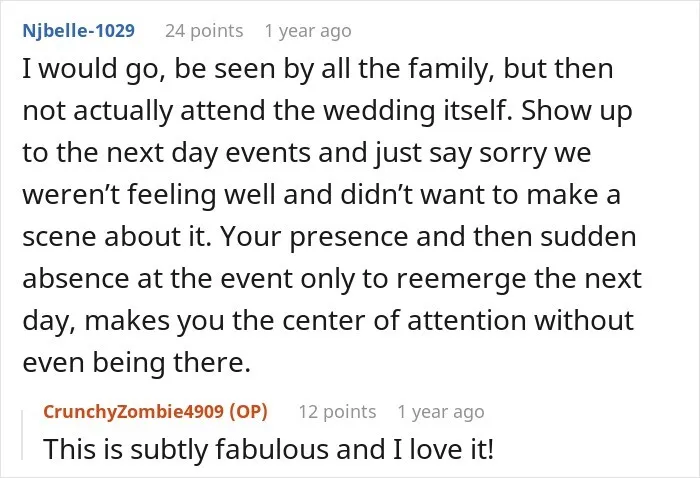

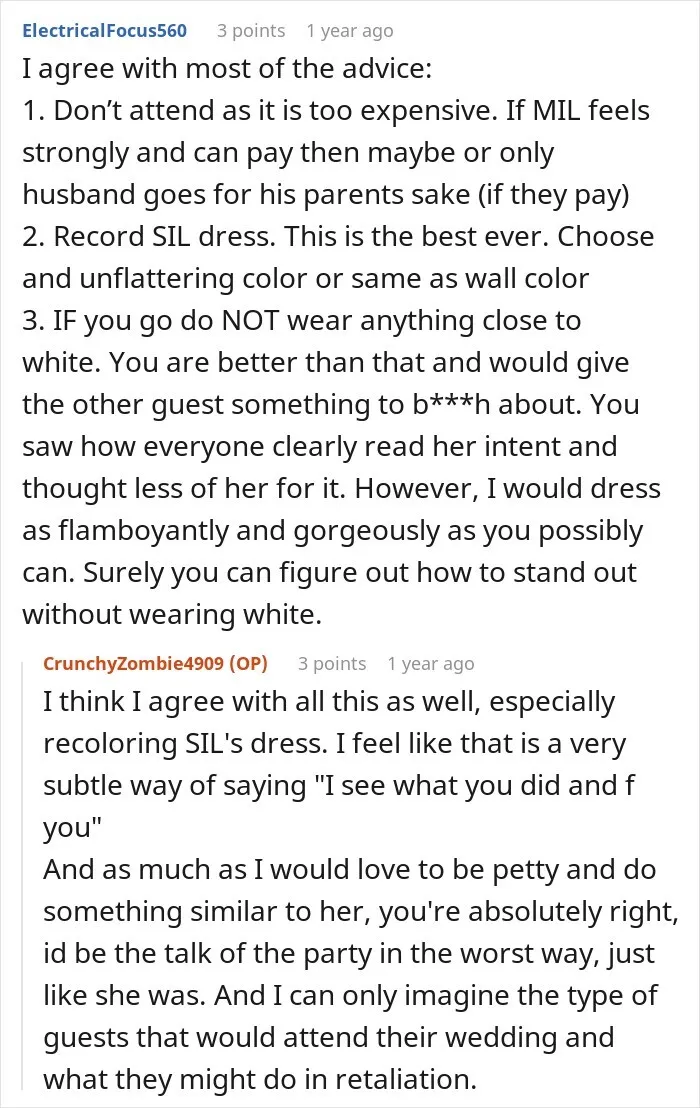

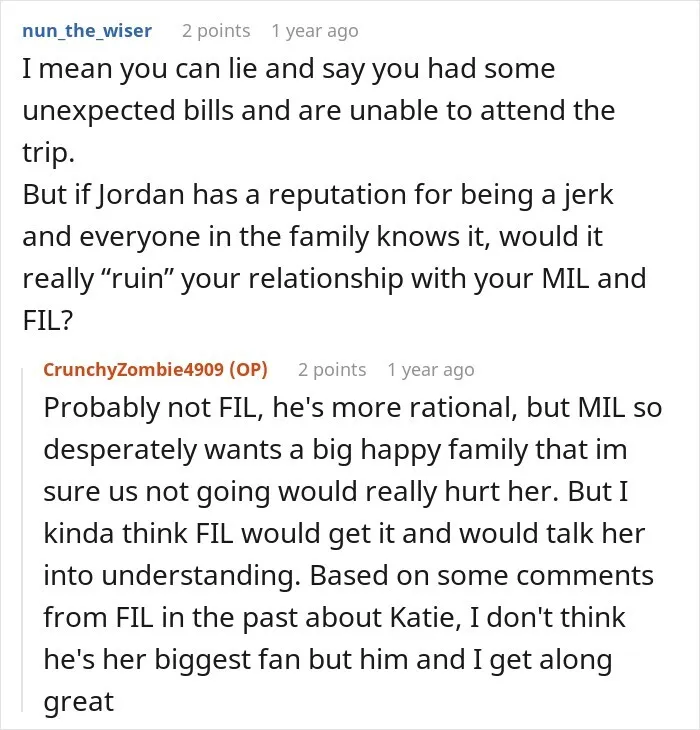
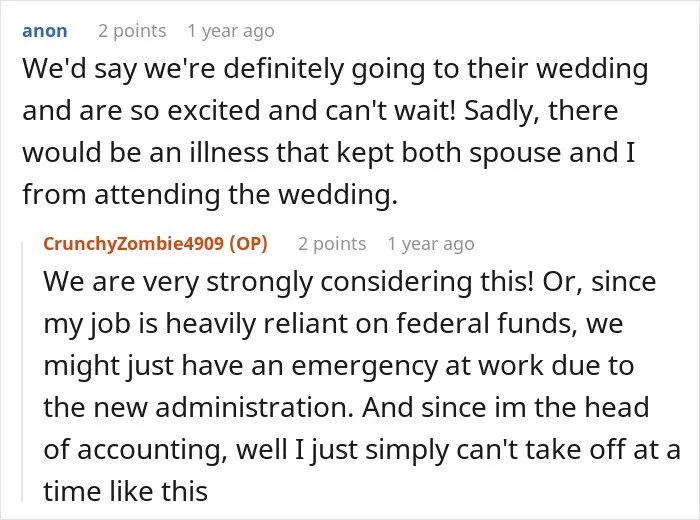

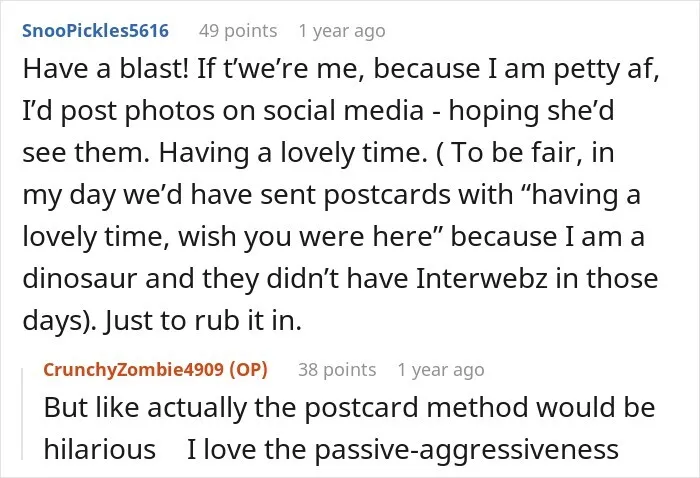
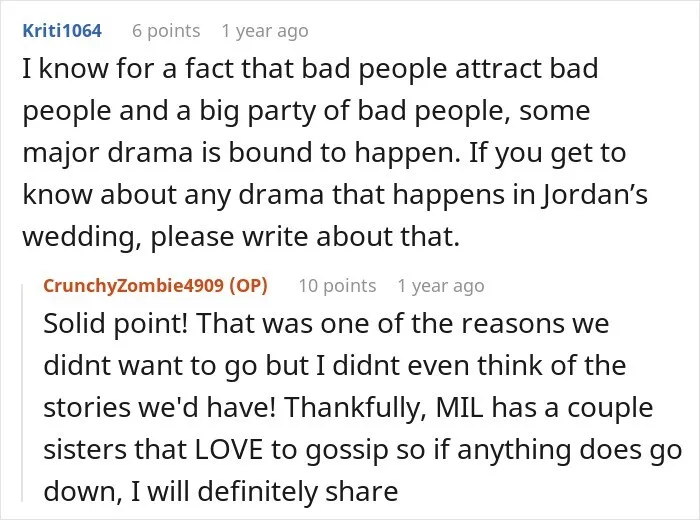
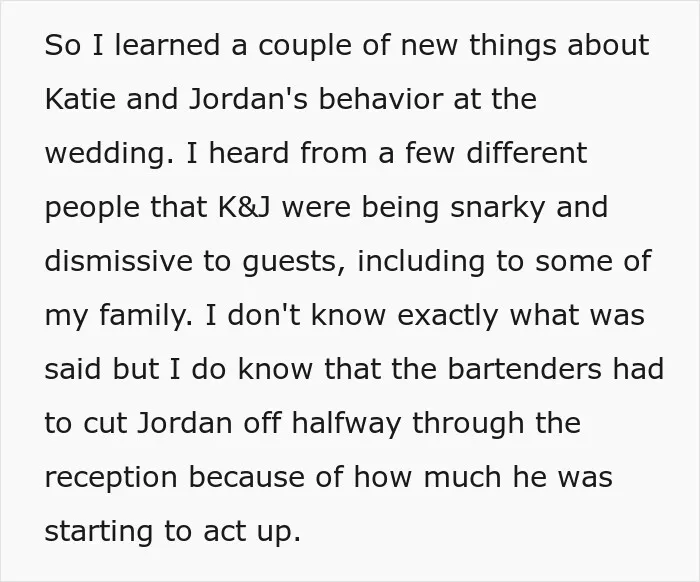
After learning that the brother-in-law and his fiancée had also behaved rudely toward guests, the couple decided not to attend their wedding

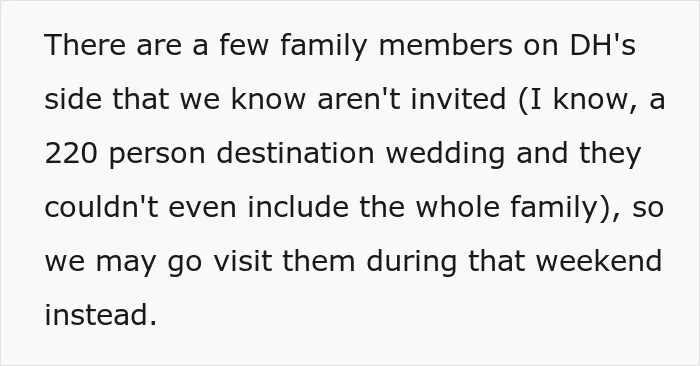

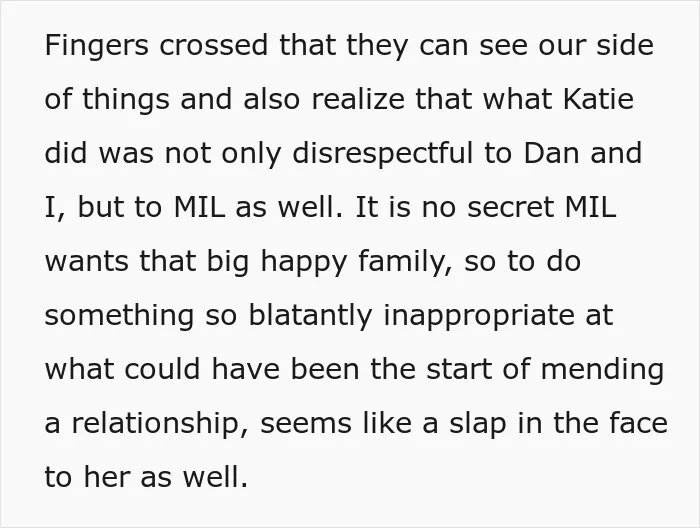
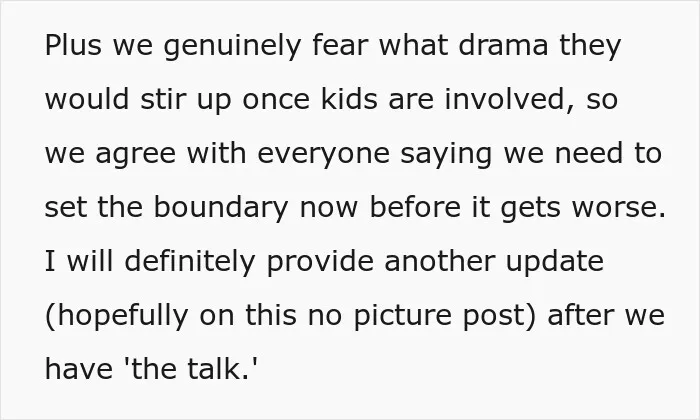


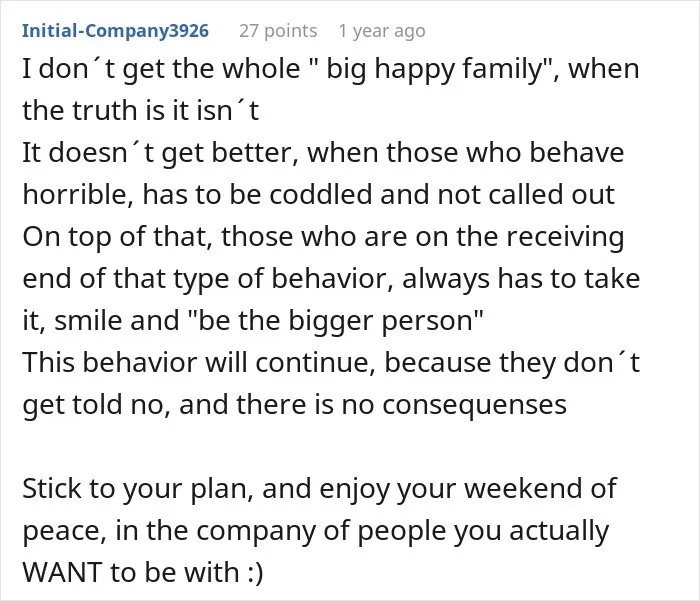
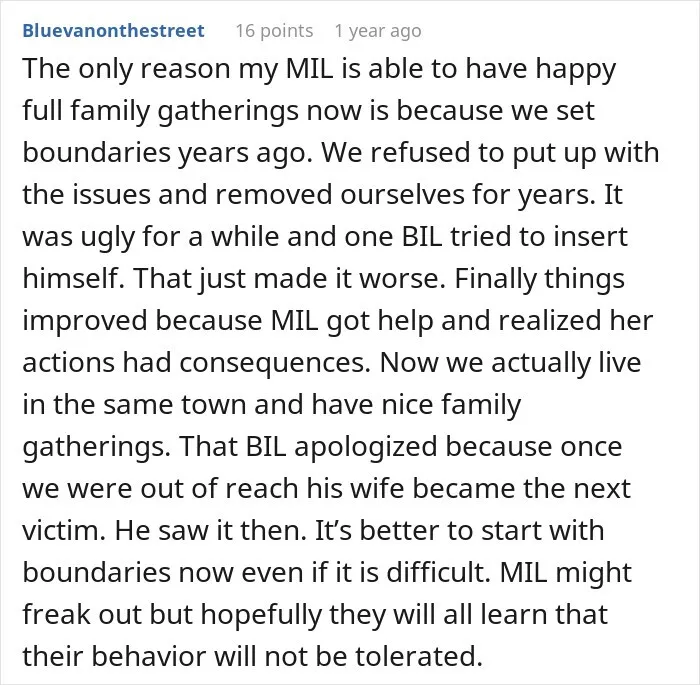
After an update, netizens still insisted that she protect her peace and not show up at the wedding since she had been really hurt by the situation







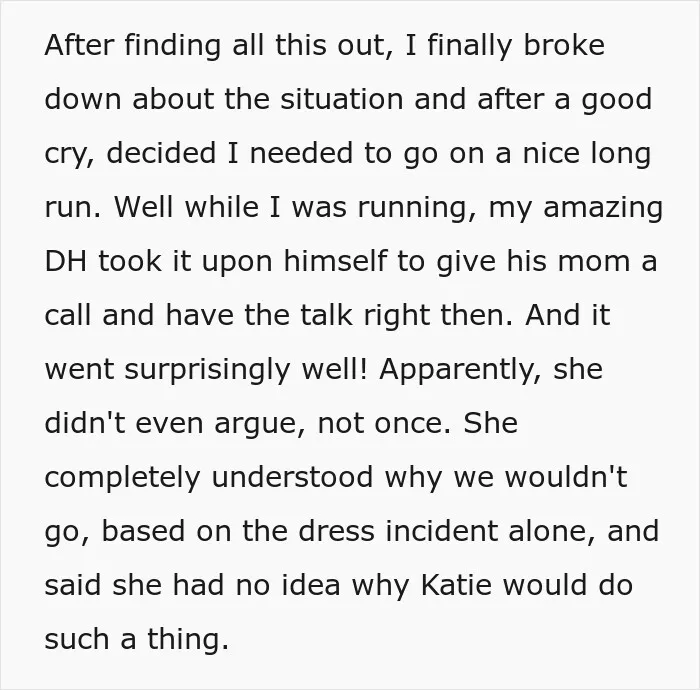
The husband spoke to his mother about their decision, and she understood their reasons, apologized for her son's behavior, and supported their choice







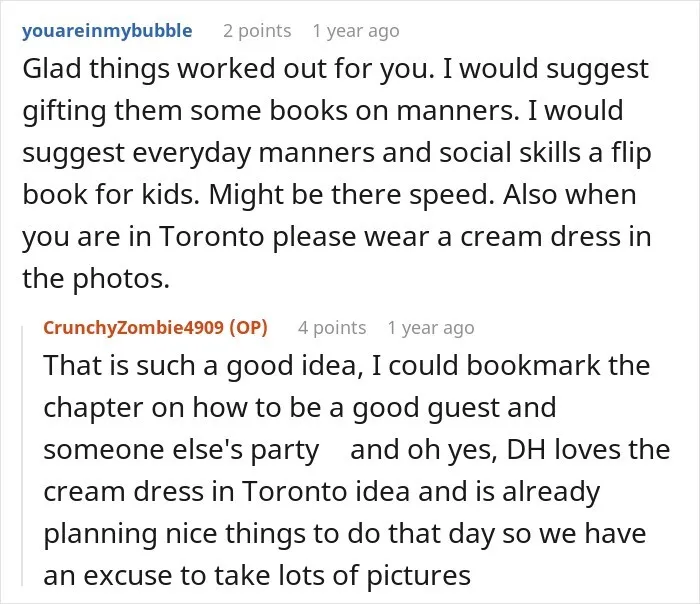
Instead of spending nearly $2,000 attending the wedding, the couple decided to visit the husband's best friend in Toronto and enjoy the weekend together
Wedding attire is one of those areas where a little consideration can prevent a lot of unnecessary tension. Fashion History shares that the tradition of reserving white for brides became popular after Queen Victoria wore a white gown to her 1840 wedding. Over time, the custom became an established part of Western wedding etiquette.
Today, wedding planners still advise guests to avoid white dresses, particularly those that resemble traditional bridal gowns. Now, the issue isn't necessarily the exact shade of fabric. Colors like ivory, cream, champagne, and even pale blue can appear white under certain lighting conditions. This is especially important when photographs are involved, as lighting and camera settings can make subtle color differences disappear.
Their suggestion is quite straightforward. If you have to wonder whether your outfit looks too white, it's probably better to choose something else. However, disagreements over etiquette can become much more complicated when there's already a history of tension. Family relationships often come with expectations that people should tolerate certain behaviors simply because they're related.
But boundaries are important even when the people involved are parents, siblings, or future in-laws. Psychology Today explains that boundaries aren't necessarily about pushing relatives away. Instead, they emphasize that boundaries are about communicating what someone needs to feel comfortable while maintaining healthy relationships. This distinction matters because maintaining contact with relatives doesn't mean accepting every behavior they display.

One particularly useful part of this advice is the difference between rules and boundaries. A rule attempts to control another person's behavior, whereas a boundary explains how someone will respond if that behavior continues. For example, a couple cannot force relatives to behave respectfully, but they can decide to leave an uncomfortable gathering or decline invitations where they don't feel welcome.
For this reason, approaching difficult family situations as a team with one's partner is often helpful. A healthy relationship extension from Utah State University highlights that this means discussing expectations beforehand, agreeing on limits, and communicating decisions together rather than leaving one spouse to handle the difficult conversations alone.
For people who naturally avoid confrontation, however, establishing those limits can feel incredibly uncomfortable. The bride described herself as someone who tended to please others, even when she was unhappy with a situation. Cleveland Clinic notes that while occasional compromises are part of healthy relationships, constantly putting yourself last can eventually lead to stress, frustration, and resentment.
This can be particularly difficult in extended families, where someone might feel pressured to keep everyone happy even when doing so comes at their own expense. Learning to say no is another important part of changing that pattern. Of course, being direct, showing empathy, and accepting that refusing a request might feel uncomfortable, but it's better to feel uncomfortably temporarily than to live with resentment.
What do you think about this situation? Do you think refusing to attend a family member's wedding is justified when they've shown you such little respect, or should family ties come first? We would love to know your thoughts!
After a final update, netizens applauded the woman for choosing herself and taking a trip rather than attending the wedding