

We all have our own view about what Christmas means as a holiday, but in general it’s mostly about being with the people we care about. Giving gifts is nice, but how much they cost shouldn’t measure our love for each other. The best gifts aren’t always the priciest, and families shouldn’t feel like they have to compete over spending during the holidays.
Money and expectations can turn things upside down quickly. In a story shared on Reddit, a woman argued with her younger sister, after noticing an unfair double standard in their Christmas gift exchange. Her sister wanted everyone to follow a small budget but asked for expensive gifts herself.
This disagreement led to bigger issues about money and family debts, and the woman asked if she was wrong to give her younger sister some tough love.
Money and gift expectations should never be the focus of a holiday

A sister urged everyone to keep their gift budgets low but shared an expensive wishlist of her own
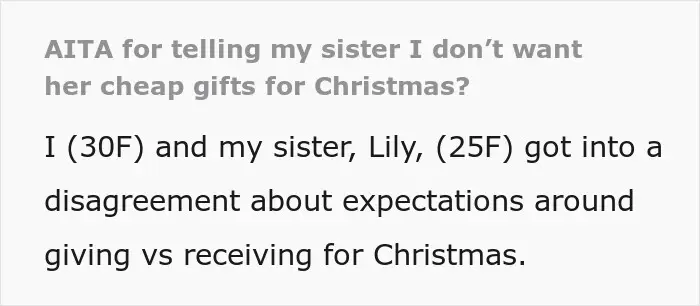
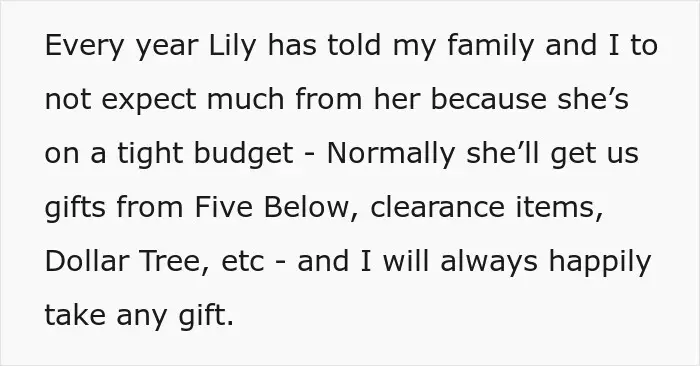
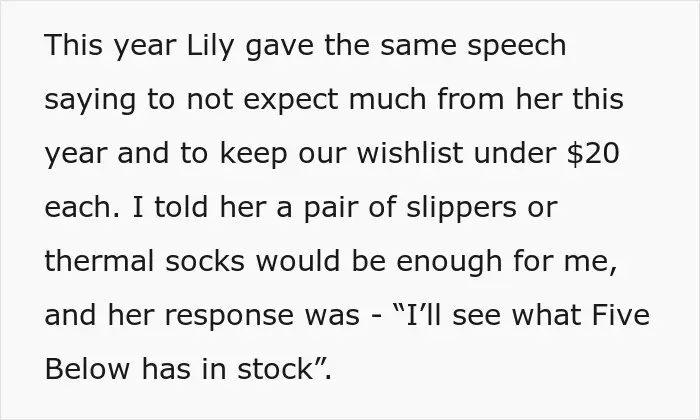
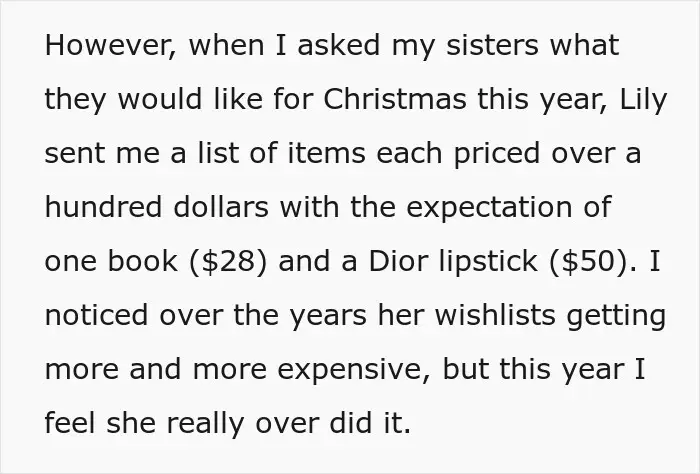
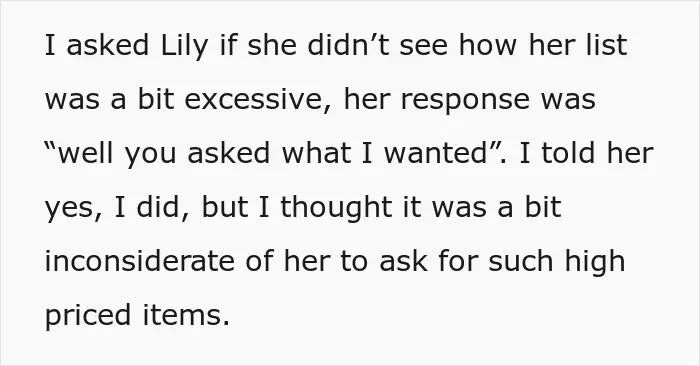
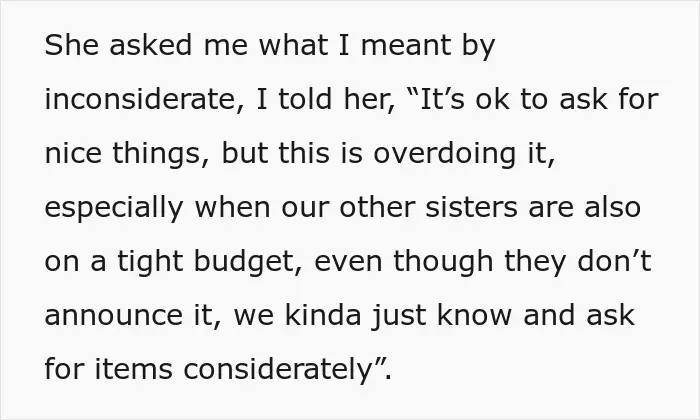
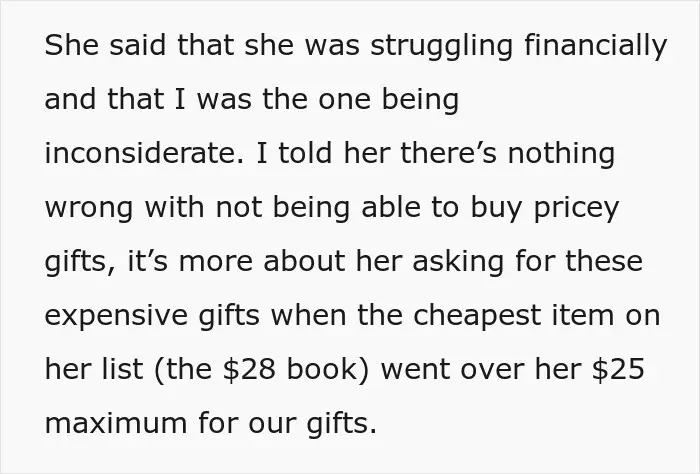
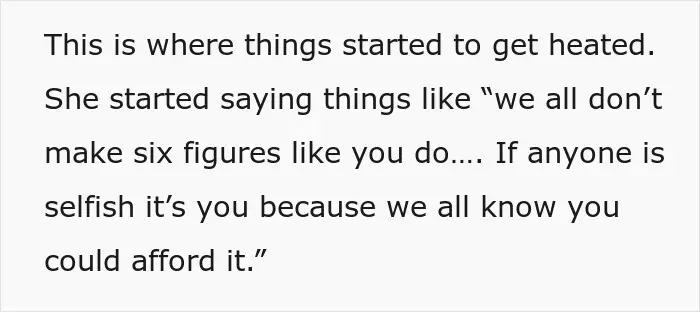
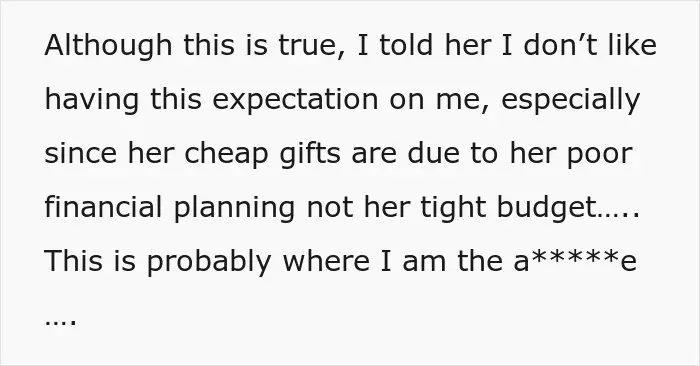

The woman confronted her sibling over lavish trips and unpaid debts while she expected expensive gifts from family
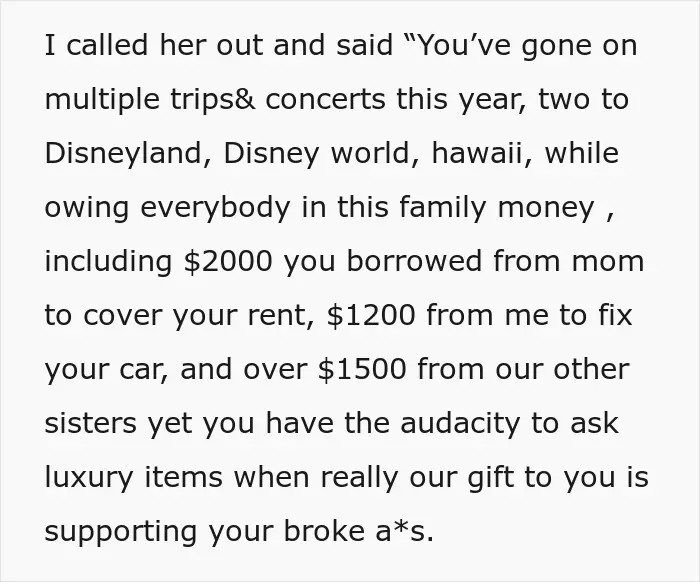
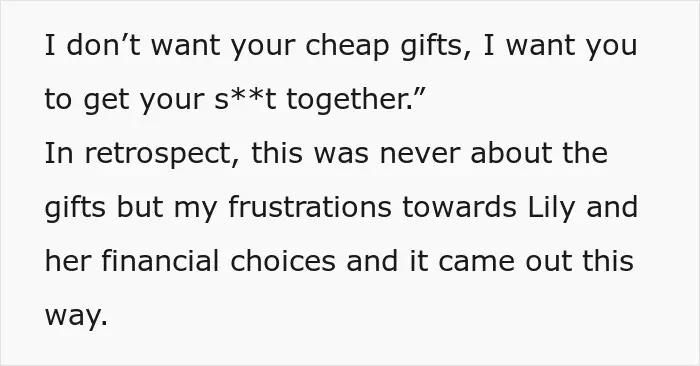
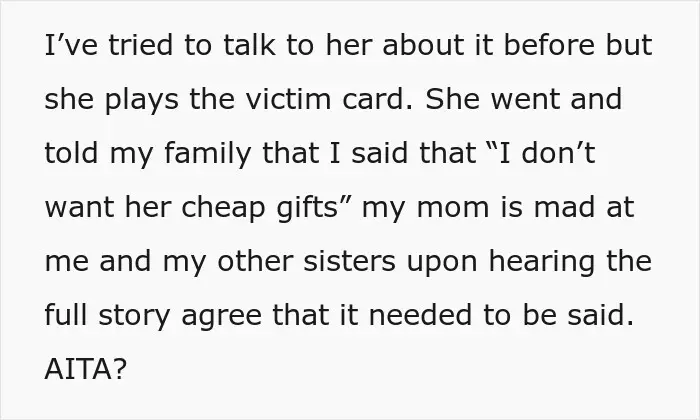
The older sister wondered if she went too far after bluntly calling out her sibling's behavior
This family dispute made me think of French sociologist Marcel Mauss, who questioned whether gifts are really about power instead of kindness. Almost a century ago, he argued that gifts come with unspoken obligations that go beyond the objects themselves. In his view, giving, receiving, and returning are all parts of a social exchange that can create bonds but can also make people feel uncomfortable.
It also brought to mind The Big Bang Theory episode called “The Bath Item Gift Hypothesis,” though that might just be my millennial side showing. Returning to Mauss, he pointed out three main obligations in gift exchanges: people need to give, accept what others offer, and eventually give something back.
Turning down a gift can hurt a relationship, while accepting one often means there’s an expectation to give something in return. Even if no one talks about these expectations, both people might feel pressure to keep the exchange going.
When Mauss studied the “potlatch,” a ceremonial exchange among Indigenous peoples of the Pacific Northwest, he found that gift-giving could be very competitive. Leaders would give away huge amounts of wealth to show their status and challenge their rivals. If someone couldn’t match this generosity, they risked losing respect, which shows how gifts can also create social pressure.
Mauss’s ideas led to bigger debates about generosity, power, and obligation. Georges Bataille looked at how gift-giving and excess are connected, and how people sometimes use big, generous gestures to show their status over others. In this sense, giving wasn’t always about helping: it could also be about competing.
Bataille’s focus on excess helps explain why a very generous gift can sometimes feel awkward. If someone gives much more than the other person could ever give back, it creates an imbalance. The recipient gets something valuable but is also reminded of what they can’t offer in return.
Jacques Derrida looked at this issue from a different angle. He explored the paradox of a truly selfless gift: as soon as someone notices a present and feels thankful or feels they should give something back, the exchange becomes a cycle. So even a gift with no strings attached can create expectations once people recognize it.

This dynamic can become particularly complicated within families, where presents often carry emotional meaning beyond their price tags. One person might see a gift as thoughtful, while someone else uses it as a chance to ask for something pricey. If generosity feels one-sided, even holiday traditions can make people feel unappreciated or taken for granted.
Money differences can make things even more awkward. Someone in the family who has a tight budget might hope others respect that, but still wish for expensive gifts. This kind of imbalance can lead to resentment, especially if others feel their generosity isn’t noticed or that no one cares about what they can afford.
In the end, the real issue isn’t the price of a gift, but what people expect from each other. If someone keeps giving without getting the same thoughtfulness back, or expects others to spend more than they can, gift-giving can lose its meaning. Instead of showing care, it can turn into another source of stress and frustration in the family.
Expectations around gifts can also affect the person getting them, even if the gift isn’t expensive. Some people feel uneasy accepting something because they worry they’ll owe a favor in return. If they can’t give back, what began as a kind gesture can end up making them feel indebted instead of appreciated.
This kind of pressure can even affect whether someone accepts a gift at all. Studies with Asian and North American participants found that Asian participants were more likely to turn down small gifts from people they didn’t know well. They often wanted to avoid feeling like they owed something if they couldn’t give back, while North American participants cared more about how appealing the gift was.
Interestingly, these differences went away when close friends gave the gifts. Being close changed how people saw the exchange, so feeling like they had to give something back mattered less. This shows how much context matters: a gift can feel warm and friendly between friends, but it can cause discomfort if it feels like just another obligation.
At the end of the day, gifts should bring people closer, not leave them keeping score of who owes whom. Christmas is a chance to show appreciation, not another occasion to measure someone's generosity by the price tag.
What do you think? Was the older sister right to call out her sibling, or did she take things too far? Share your thoughts in the comments!
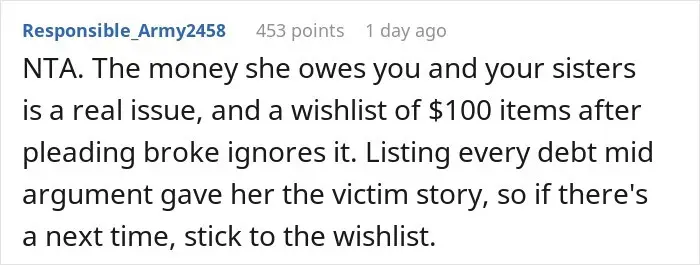
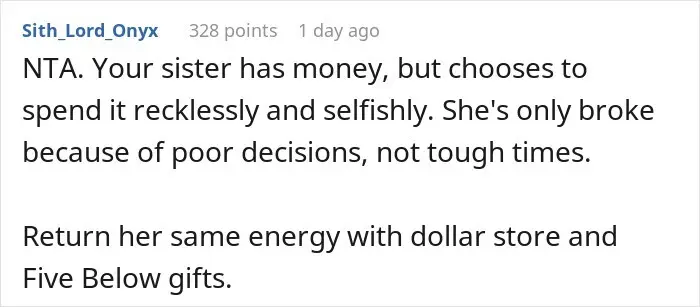
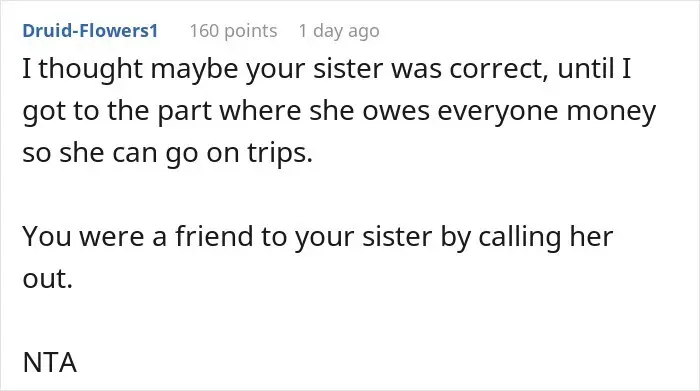
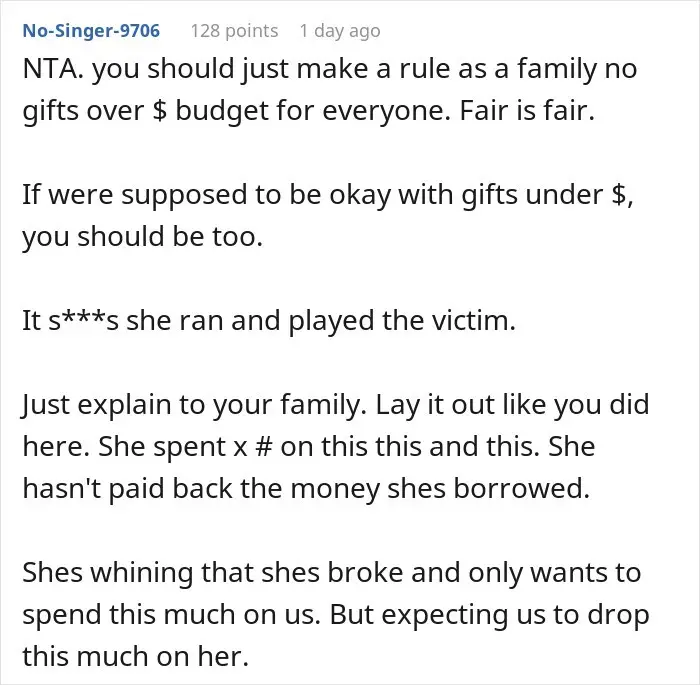
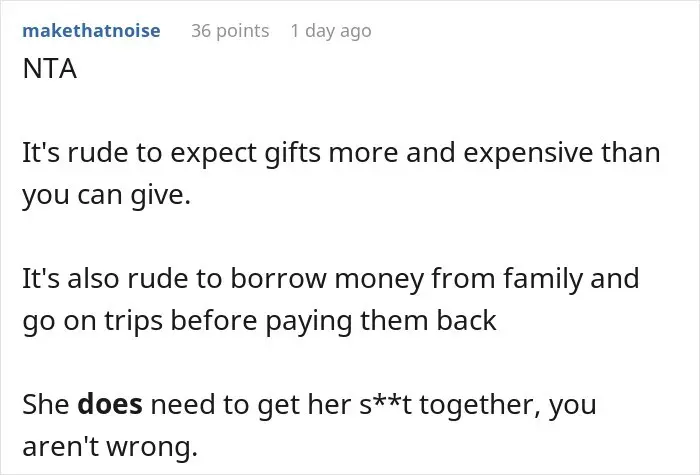
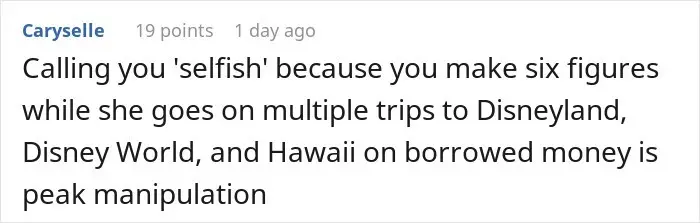
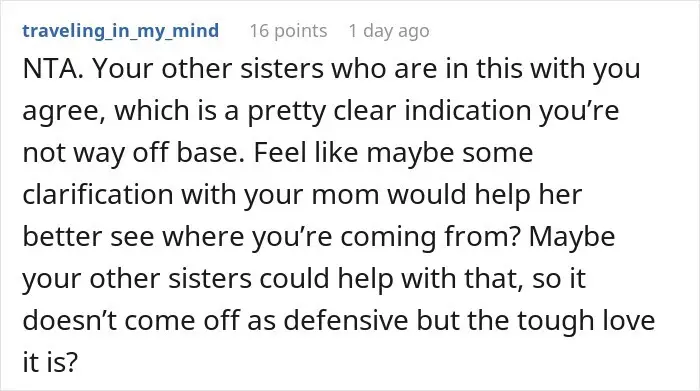
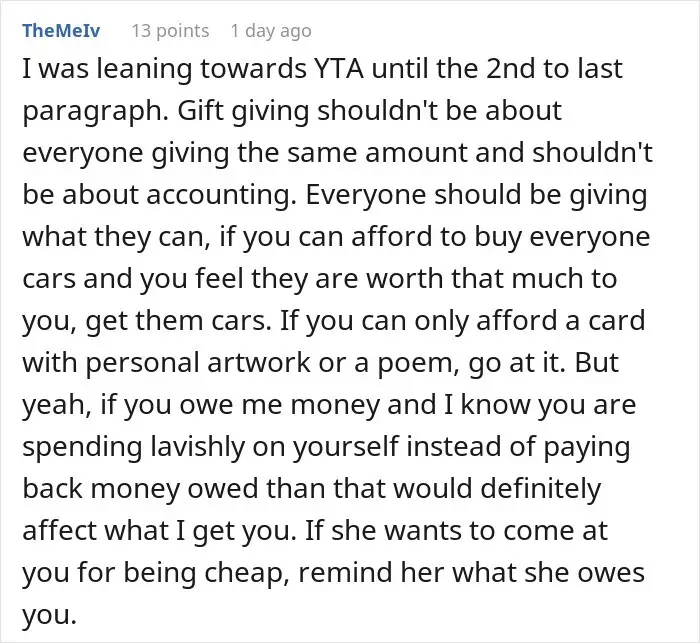
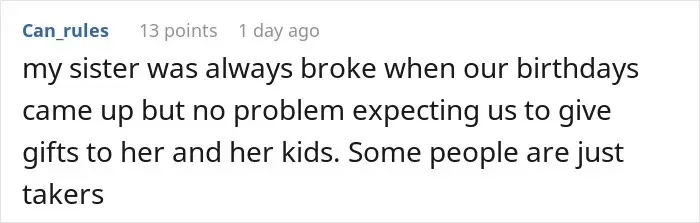
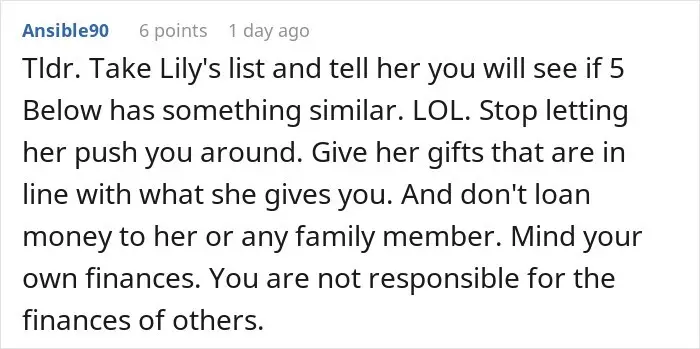
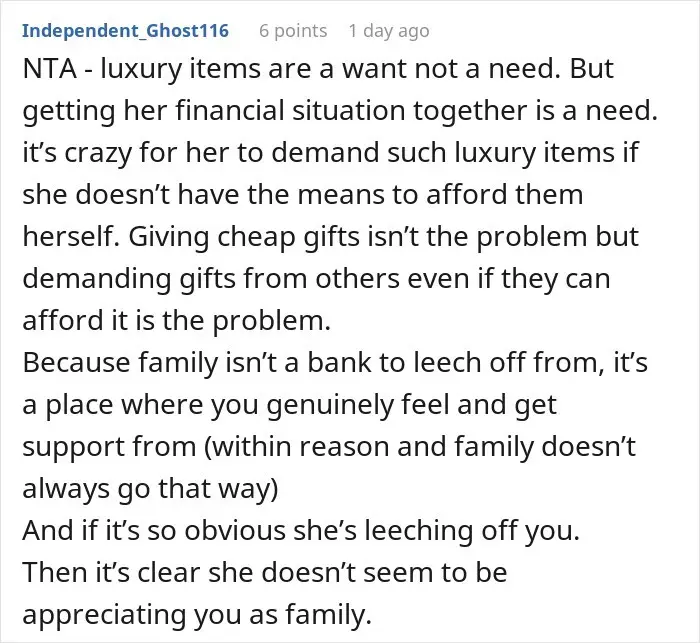
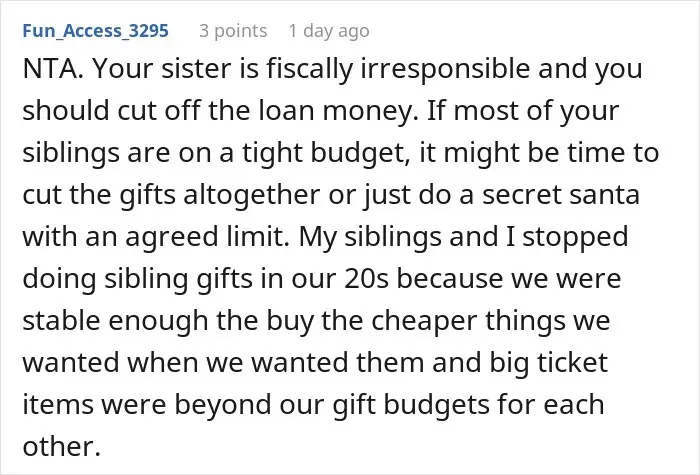
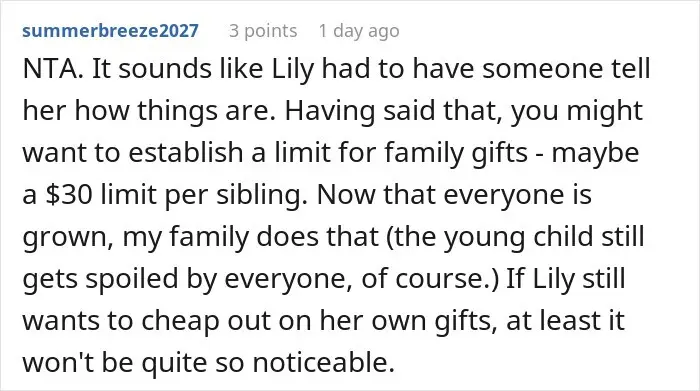
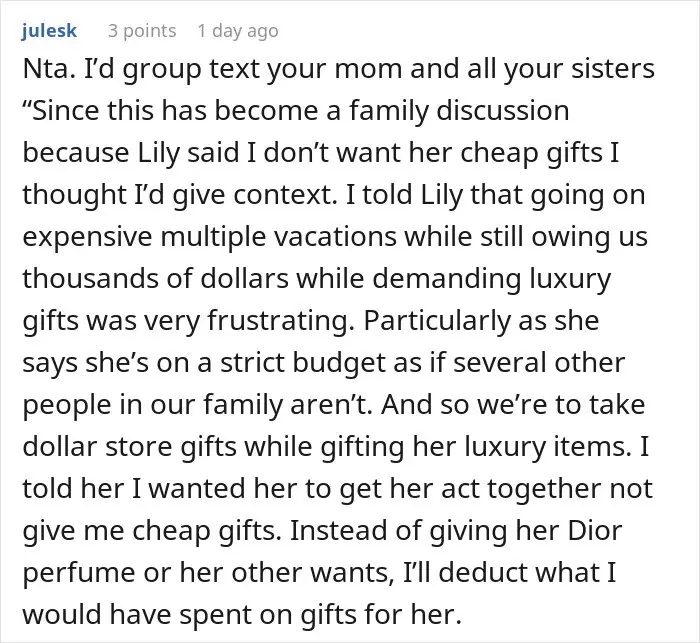
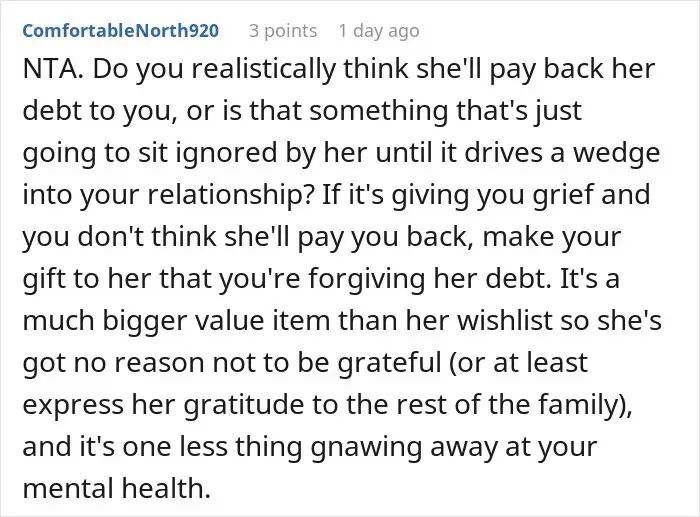
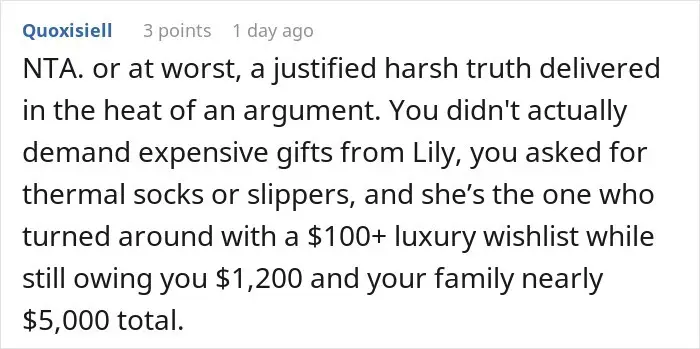
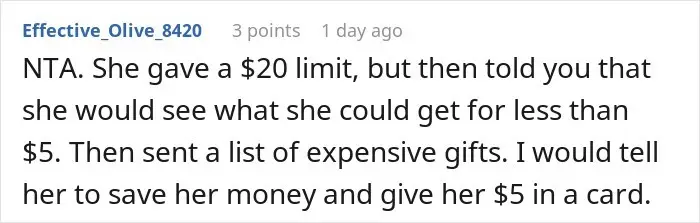
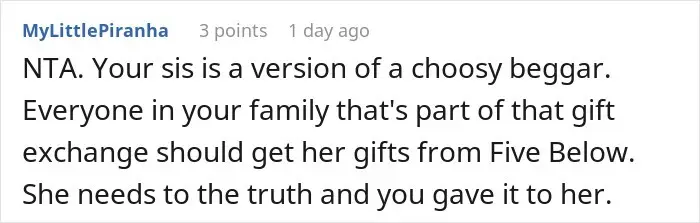
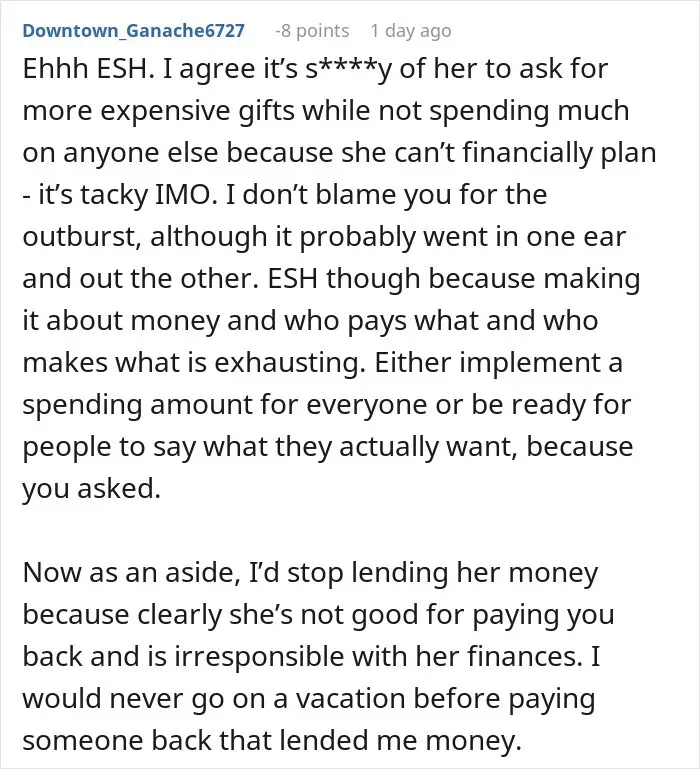
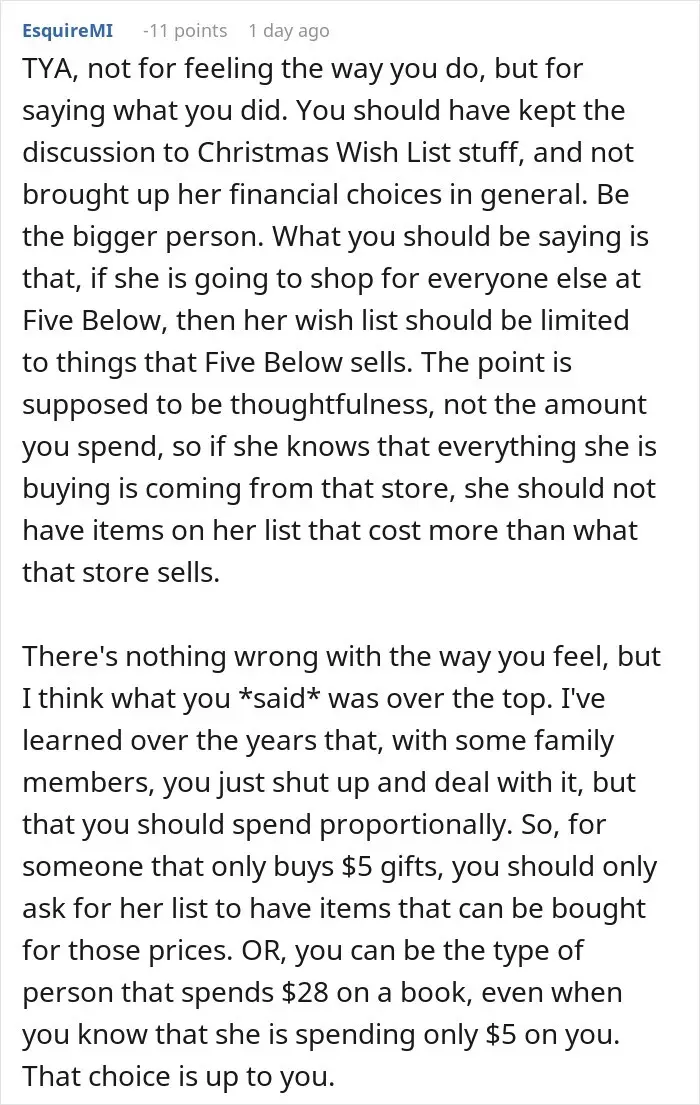
Commenters supported the older sister, agreeing that she was right to call out her sibling's actions