

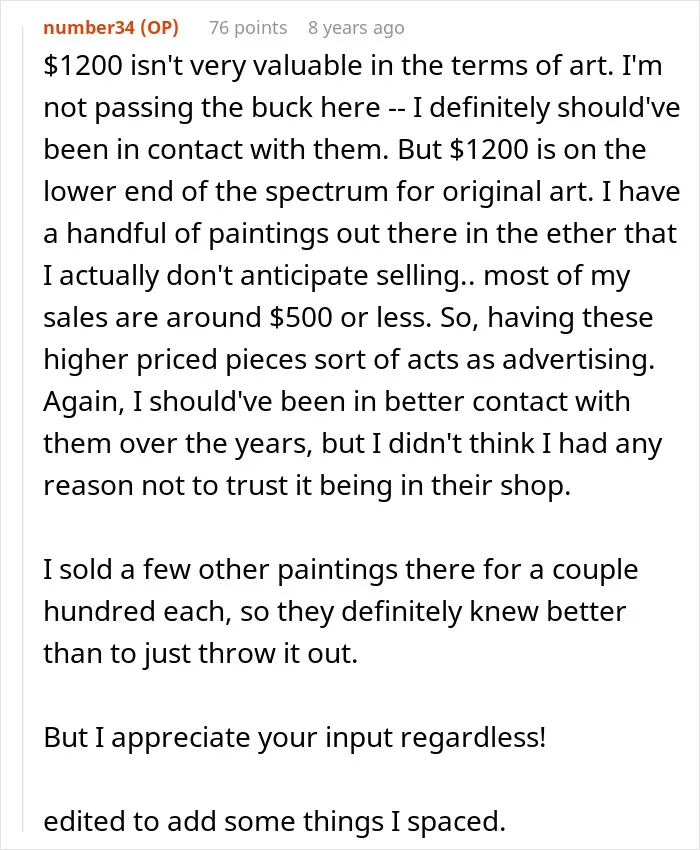
As a painter, it must be pretty cool to realize that someone wants to buy your work. Unless, of course, you learn that someone actually already bought it, you don’t know where it is and it was sold for an amount way below its value.
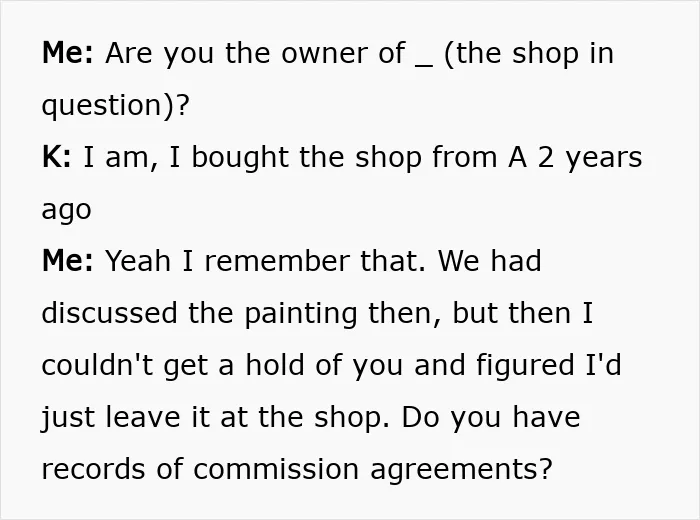
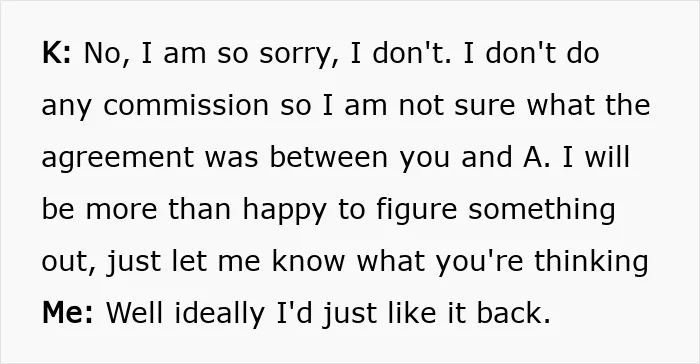
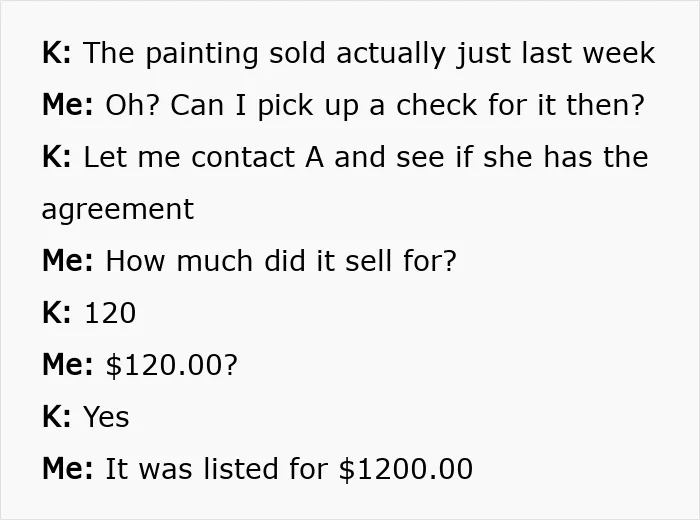
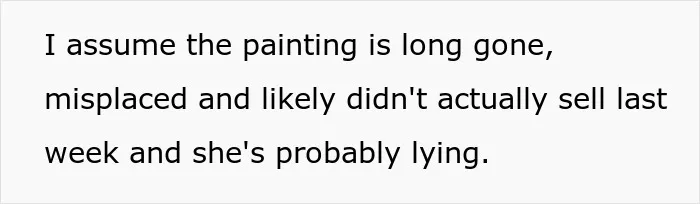
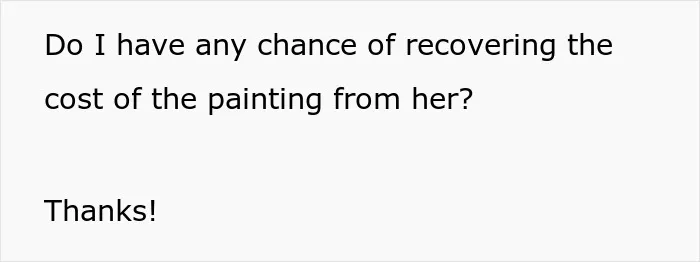
An artist turned to the legal advice internet group after discovering that one of their paintings had been sold without their knowledge at a fraction of the listing price. The store owner would ignore their calls and claimed to not remember at all what had actually happened. So netizens rolled up their sleeves and did their best to help.
Finding that someone sold your property without your knowledge is “I need legal advice” territory

So one artist turned to the internet when their painting was sold off at 1/10th of its price
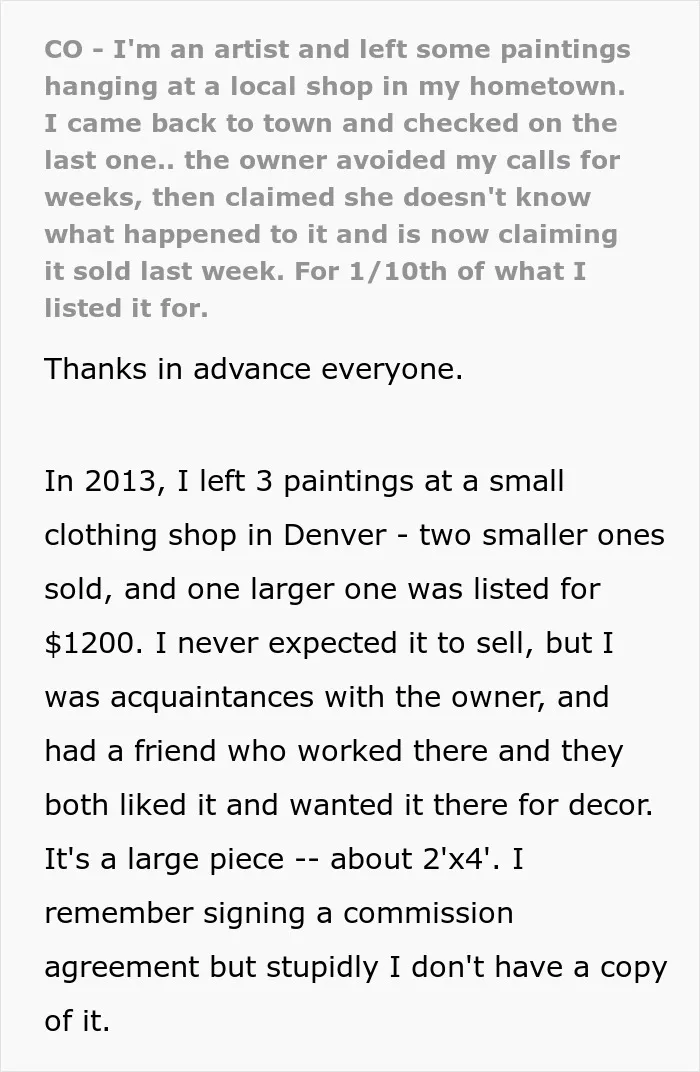
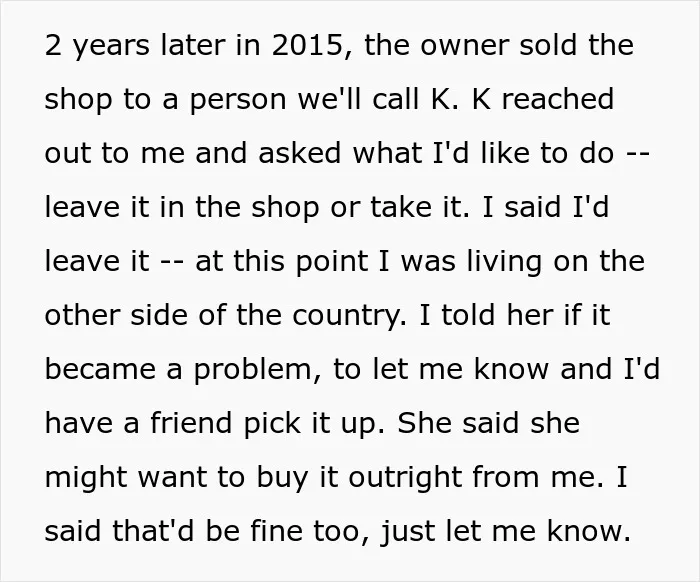
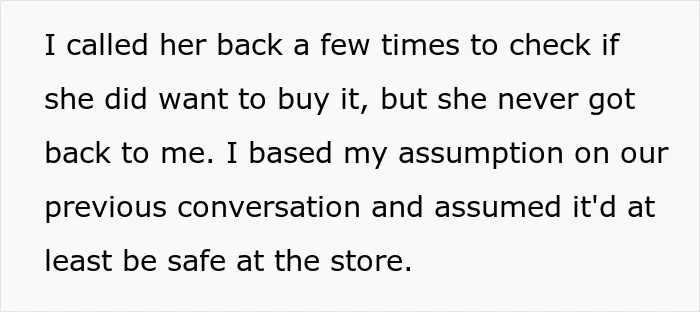
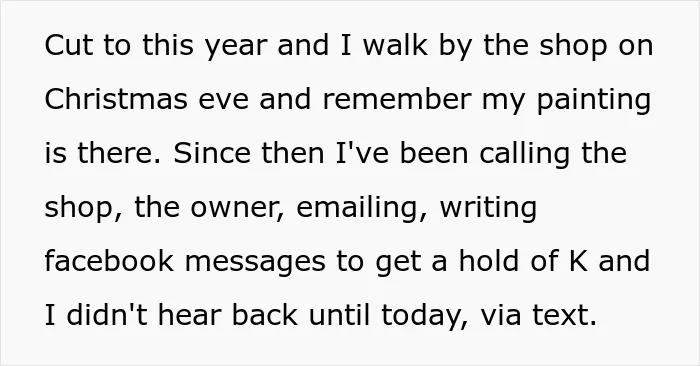

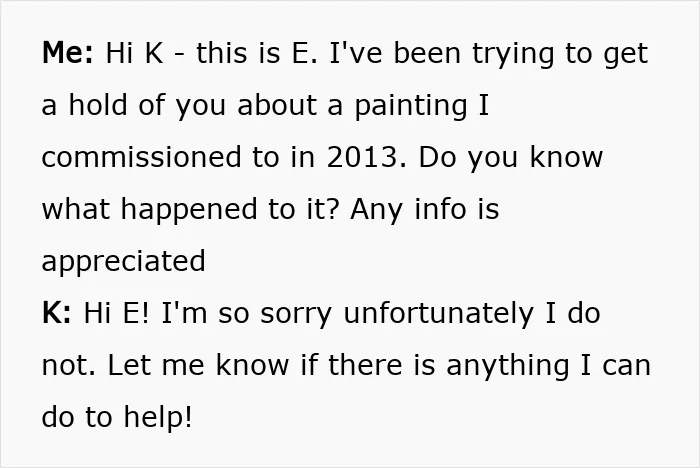
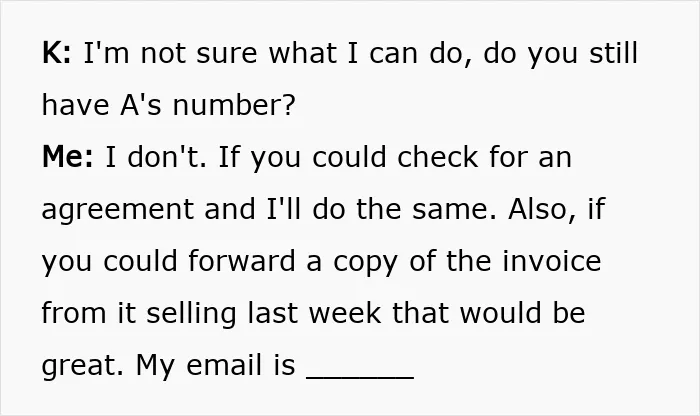
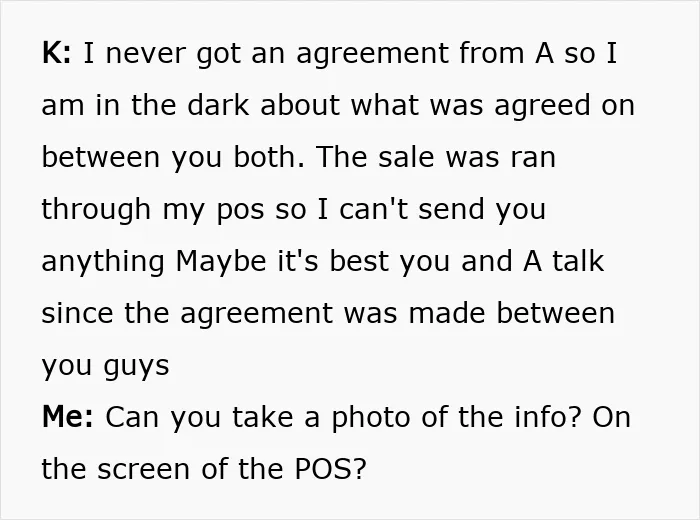
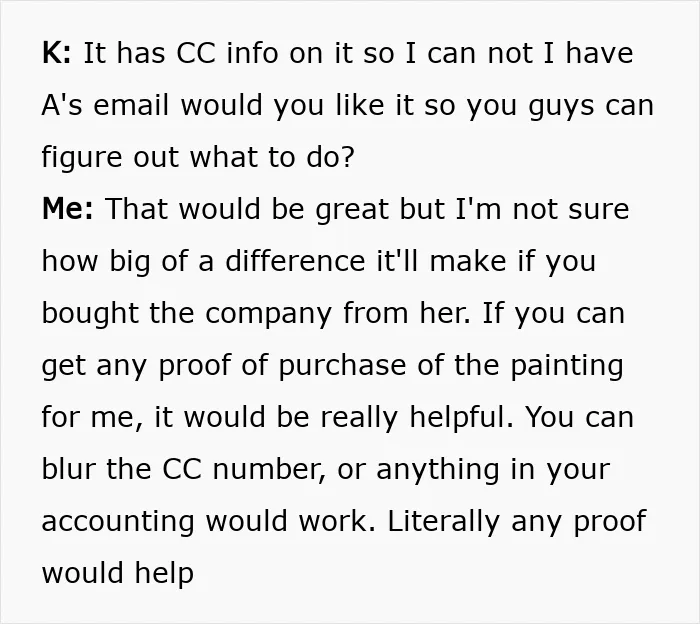

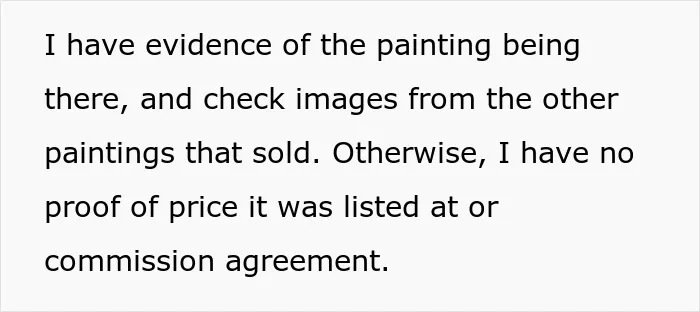

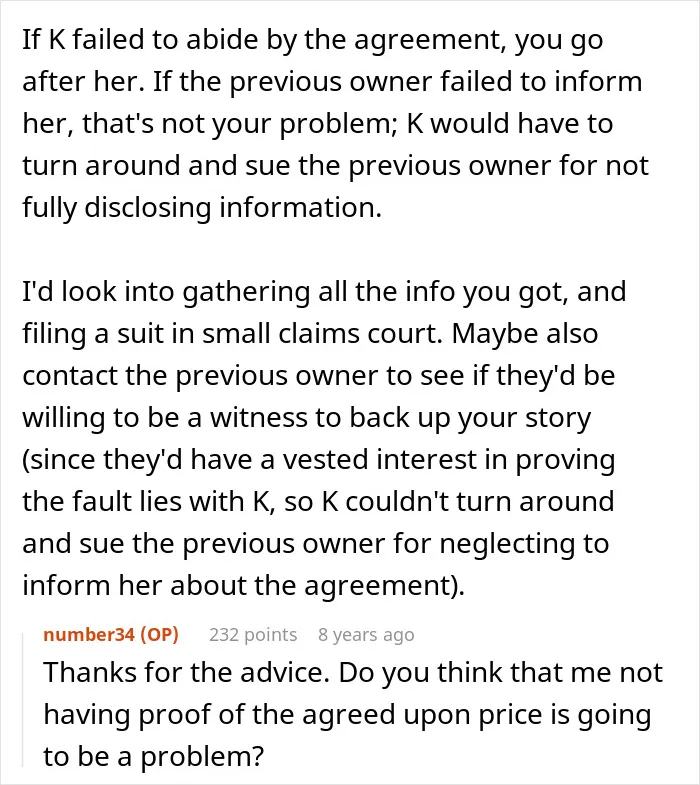
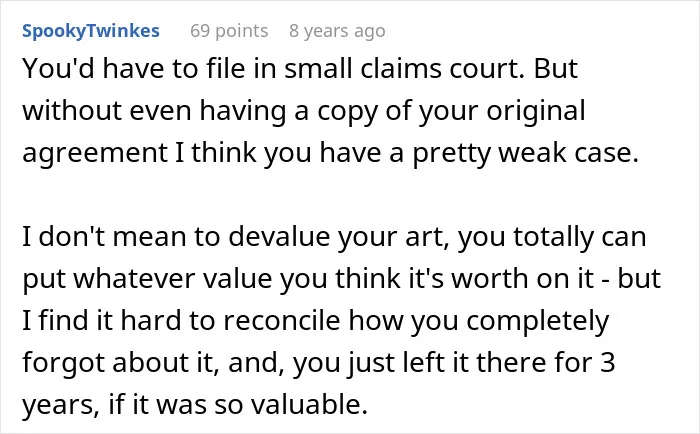
The lack of documentation could be an issue

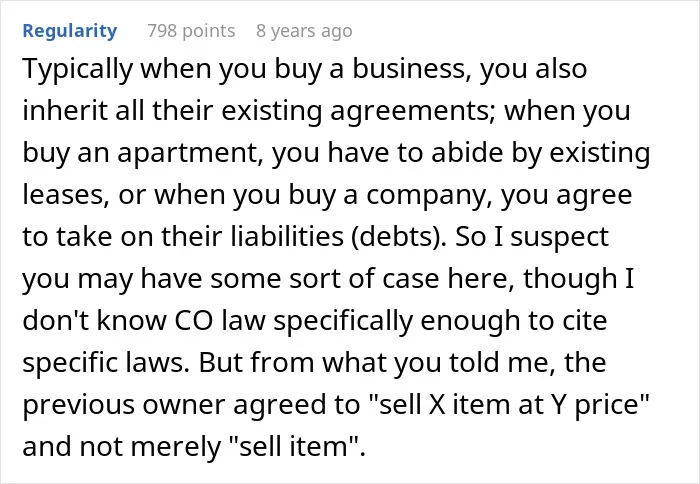
The artist must immediately secure the communication history by taking screenshots of the text messages before they are accidentally deleted. The next critical step involves contacting the original shop owner right away to see if the original contract still exists in a dusty filing cabinet or an old email attachment. An old email trail discussing the twelve hundred dollar price helps establish a factual baseline. Artists facing similar inventory disputes should absolutely check their specific state art consignment laws. Many states dictate that a gallery or shop holds an artwork in trust for the artist, meaning the shop is strictly liable for loss or damage.
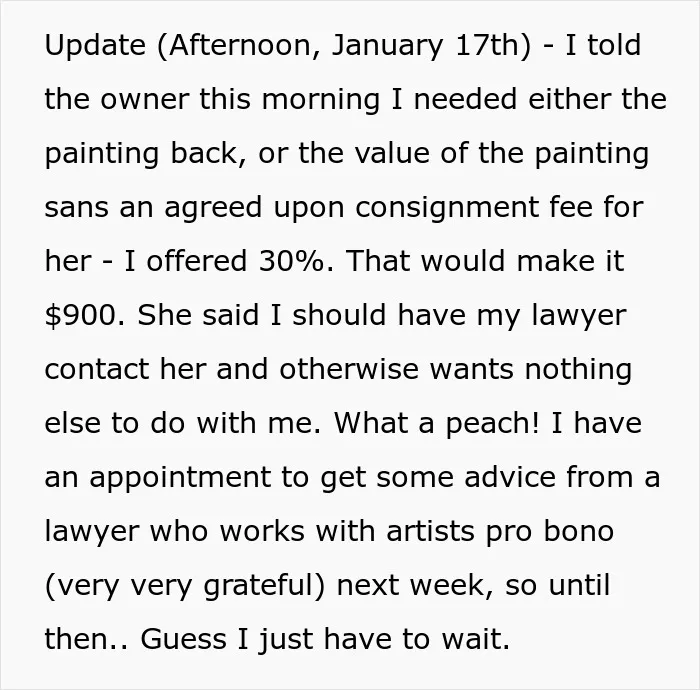
Moving forward, a formal demand letter serves as the next logical escalation. This document professionally outlines exactly what is owed and provides a firm deadline to return either the physical artwork or the proper funds. A demand letter shows the new shop owner the artist is serious and establishes the groundwork for a small claims court case. Small claims court is perfectly designed for retail disputes involving a few thousand dollars where hiring legal representation is financially impractical. Finding the original owner to provide a sworn statement about the original asking price will heavily support this case since the official paper trail vanished.
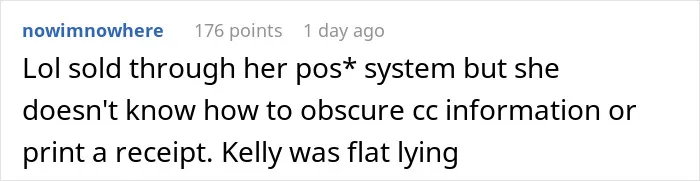
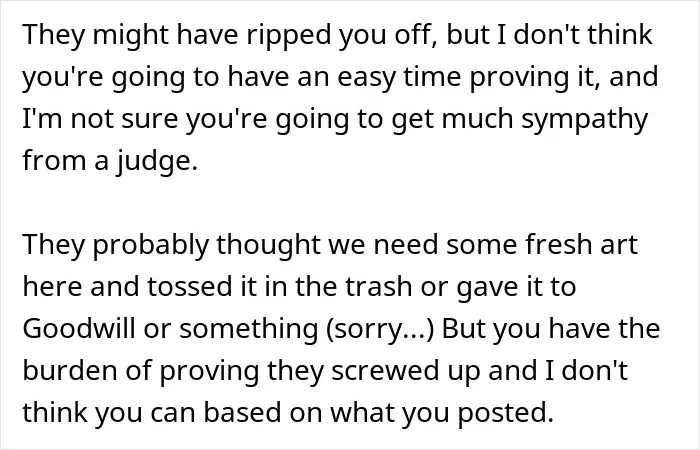
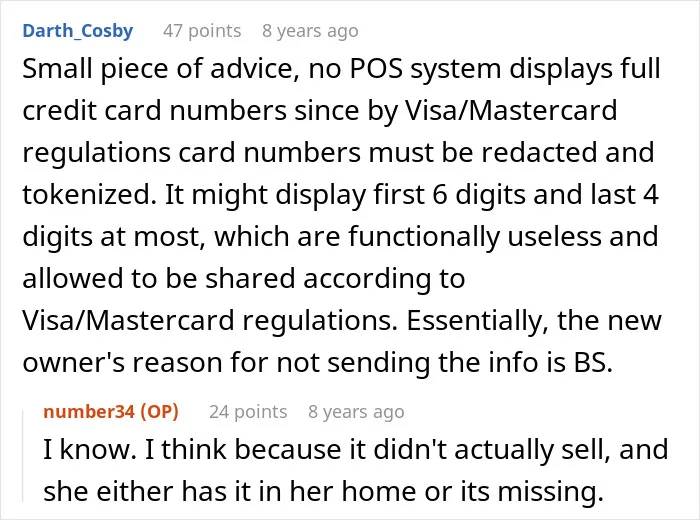
The specific claim that the painting sold for exactly one tenth of the asking price just a week prior to the artist reaching out is highly suspect and warrants intense scrutiny. The new owner stating they cannot provide a receipt due to credit card privacy regulations is simply false. Any modern commercial point of sale system can easily print or email a duplicate receipt with the sensitive payment details fully redacted. The artist has every legal right to demand this redacted proof of transaction. If the shop owner flatly refuses to provide proof of the sale or return the physical item, filing a police report for stolen property becomes a valid option. While local authorities might deem it a civil matter, having a police report on file creates an official record of the dispute.
There are lessons to be learned for really anyone here

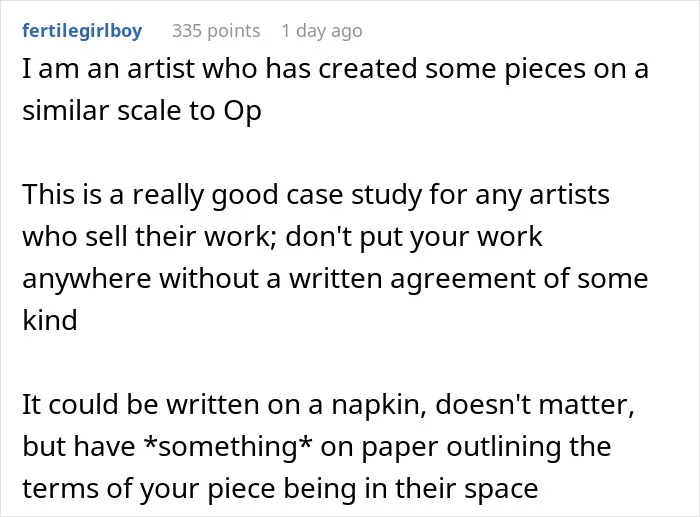
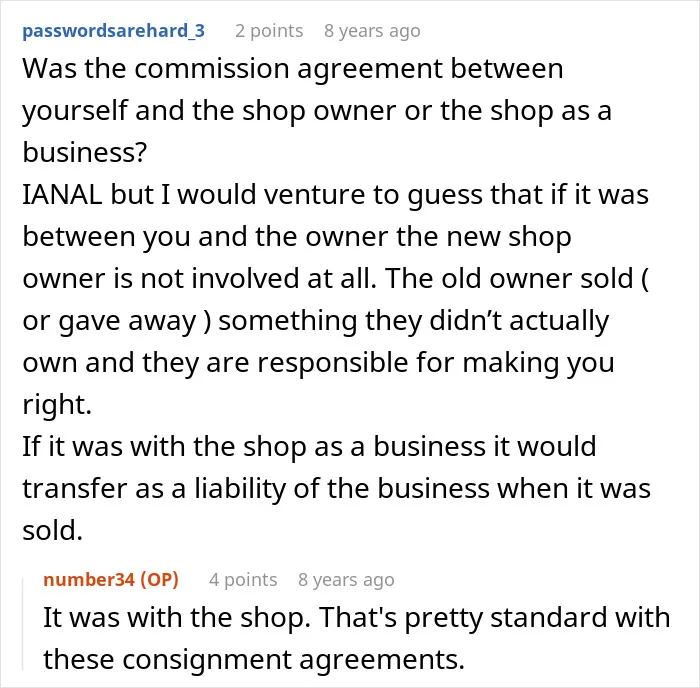
Looking back at how this situation unfolded reveals several crucial lessons for any creative professional placing work in retail environments. The absolute golden rule of independent business is to always keep a duplicate copy of every single contract. Storing signed agreements in a secure digital cloud folder guarantees they survive long distance moves and life changes. When the retail shop officially changed hands, the original contract became highly complicated. The artist should have immediately requested a brand new written consignment agreement directly with the new owner. Trusting a vague verbal agreement over the phone with a stranger who just bought a business is incredibly risky.
Leaving physical inventory in a retail shop for multiple years without regular check-ins essentially guarantees administrative confusion. An artist must treat their consigned physical work like active financial assets. Setting a recurring calendar reminder to check on the inventory every three months keeps the business relationship fresh and prevents the artwork from blending into the permanent background decor. If a business owner suddenly stops responding to calls, that serves as the immediate signal to go collect the artwork in person or send a trusted proxy to retrieve it. Assuming the artwork remains safe merely because a previous conversation went well ignores the chaotic daily reality of small retail business operations.
Building a sustainable art career requires balancing creative output with strict administrative habits. Paperwork might feel tedious compared to painting but it protects the countless hours invested in the canvas. Every piece of art leaving a studio requires a meticulous paper trail detailing the title, dimensions, retail price, and the exact percentage split to ensure the creator remains protected. Taking absolute control of the business side empowers artists to avoid these stressful retail confrontations and ensures they receive fair financial compensation for their unique creative talent and hard work.
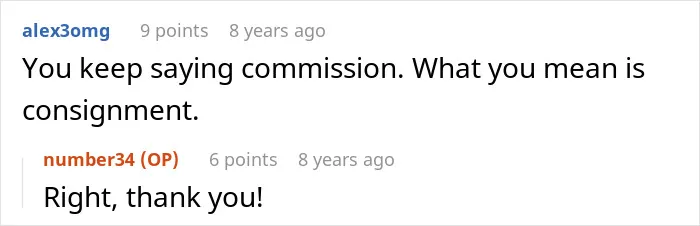
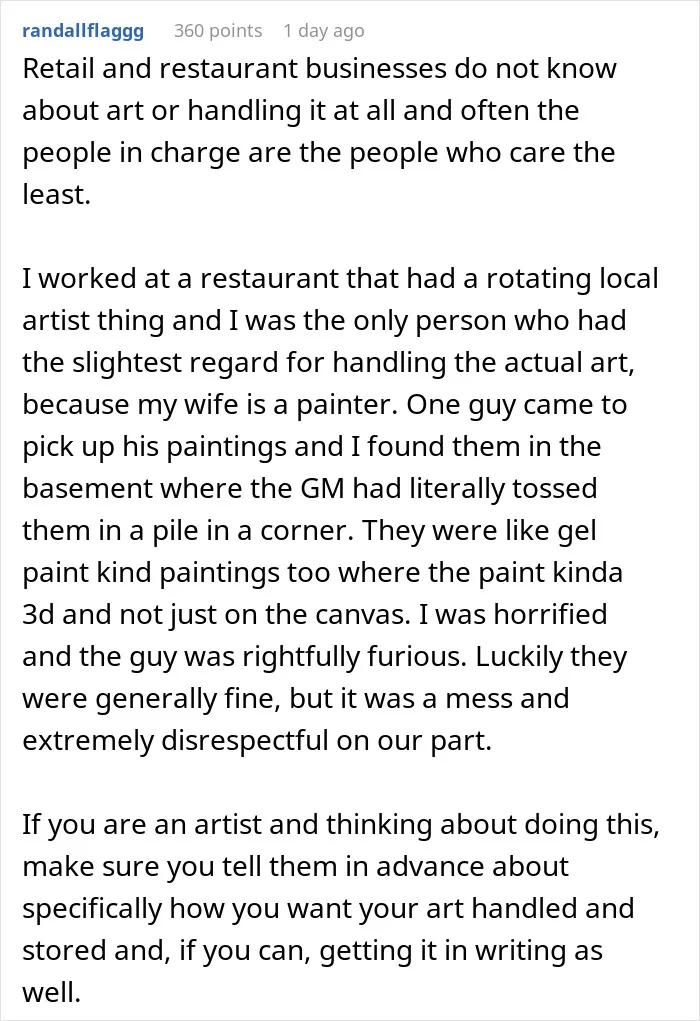
The artist chatted with some of the commenters

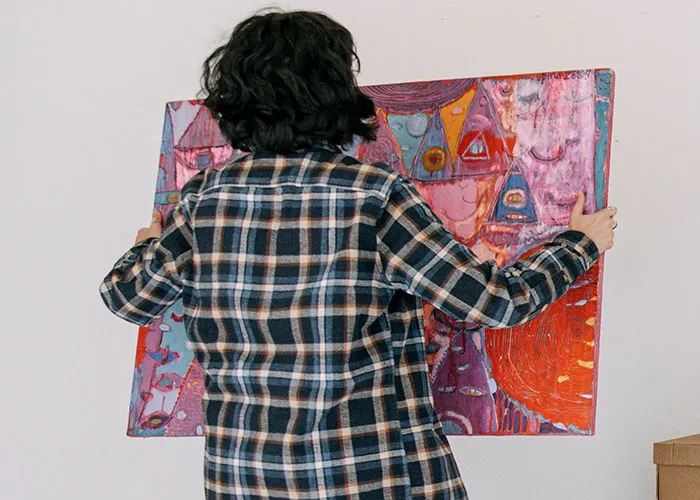
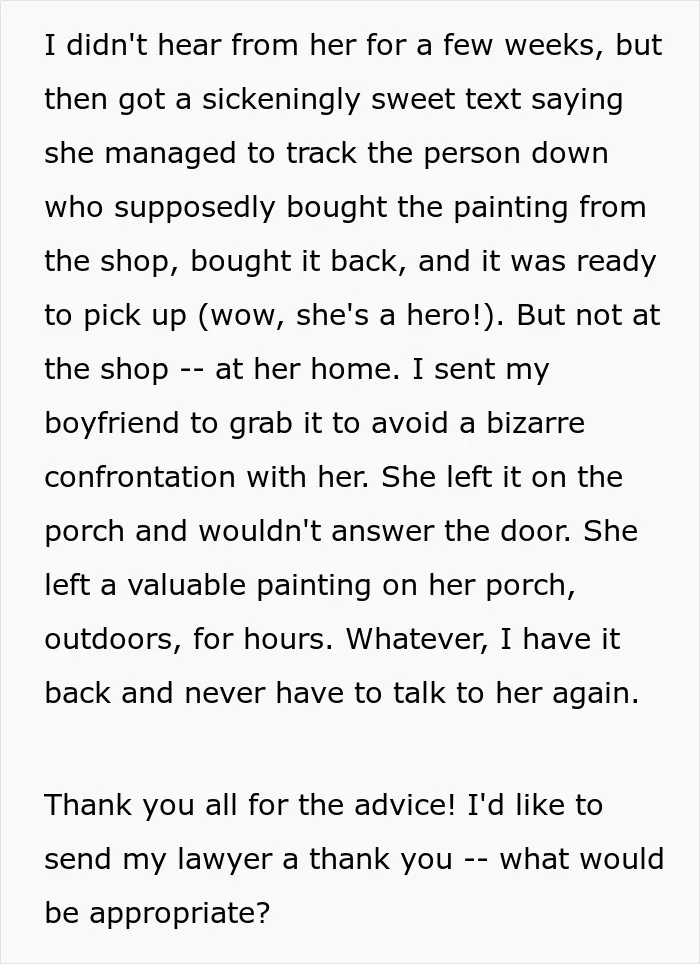
Later, they shared an update
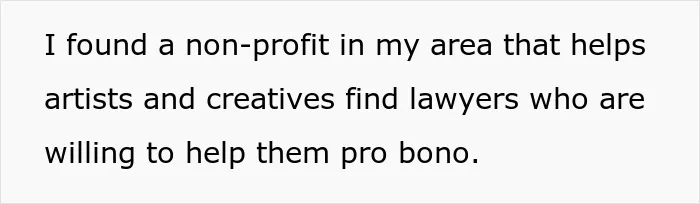
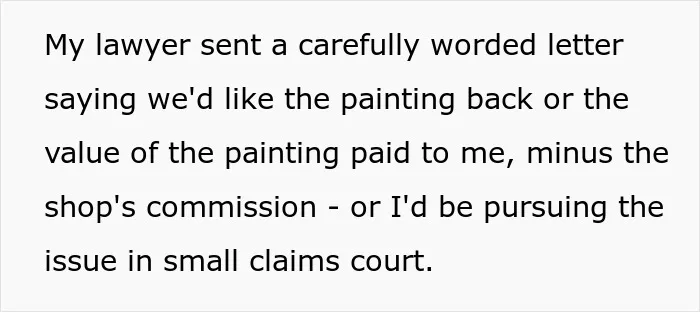
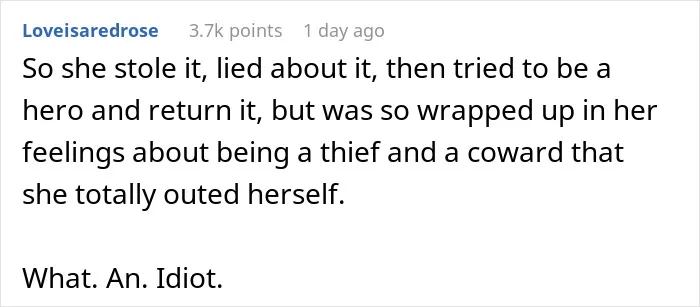
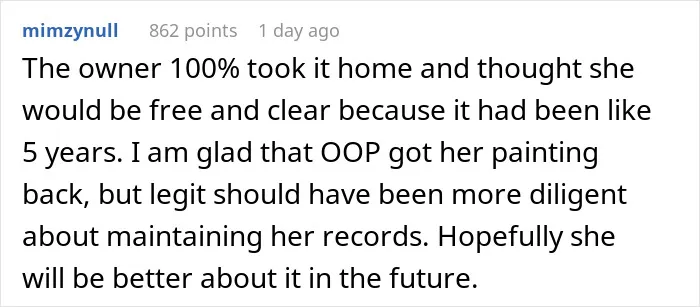
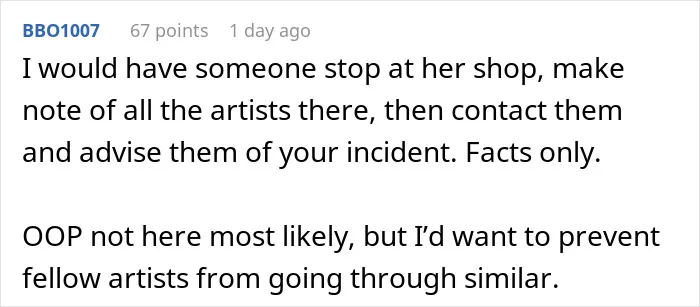
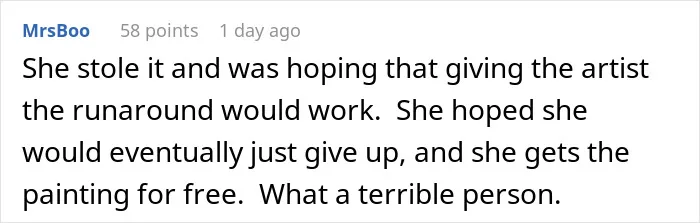
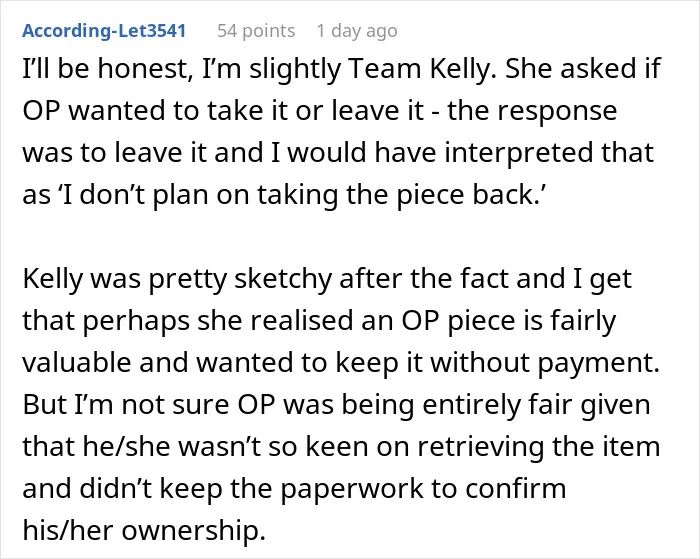
Readers had some ideas about what happened