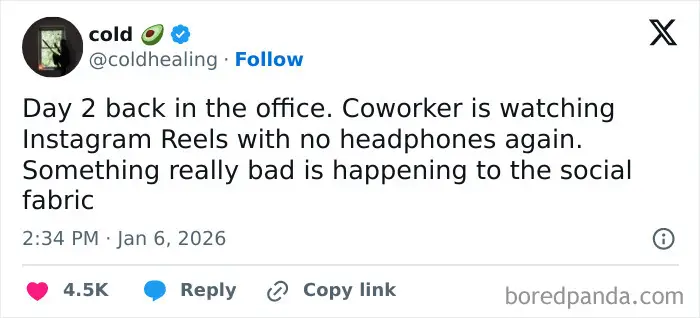

#1 Co-Worker Thought This Was A Harmless Prank

#2 My Coworker (Also A Dishwasher) Leaves Me Really Gross Dishes Overnight When I Never Do That To Him

#3 Increasing Keychain Size Until Coworkers Stop Going Home With Keys Needed On Other Shifts

A lot of people deal with such nuisances at work on a daily basis.
A recent survey found that 85% of workers have faced an annoying colleague at some point, and 58% say these behaviors hurt their productivity.
Over time, even one difficult colleague can lower your morale and impact your work.
#4 Told My Colleague To Receive 19 Bicycles And To Place The Boxes Upright But I Got This Instead

#5 Let A Coworker Borrow My Multi-Tool. Came Back Broken

A coworker’s toxic behavior can stress you out, making it harder for you to regulate your emotions and read social situations correctly.
“When you’re feeling overworked and overwhelmed, your tolerance for dealing with difficulties at work really goes down. You can experience only so many daily stressors, spikes in blood pressure, and spikes in cortisol. Eventually you get what’s called a dampened response. You shut down,” says Tessa West, author of ‘Jerks at Work: Toxic Coworkers and What to Do About Them.’
You may underperceive or overperceive a threat. “If you’re a boss and you’re stressed, you might not pick up on cues that a toxic team member is wreaking havoc on your team,” she adds.
Even simple annoyances then can start to feel unbearable — like someone knocking over your food in the fridge, playing videos without headphones in the office, or parking in a way that blocks everyone.



Selfishness in the workplace is contagious, and it can become ingrained in a company’s culture. When such behavior is tolerated for a long time, and no one speaks up, the whole workplace can feel like it’s toxic.
More and more people will start getting irritated and stressed, and there can be communication breakdowns and conflicts.
A 2025 Monster survey of about 1,100 US workers found that around 80% of employees say they work in a toxic environment, up significantly from the year before.
#9 Let My Coworker Borrow My Charger. He Finally Brought It Back A Week Later. How Does This Even Happen?

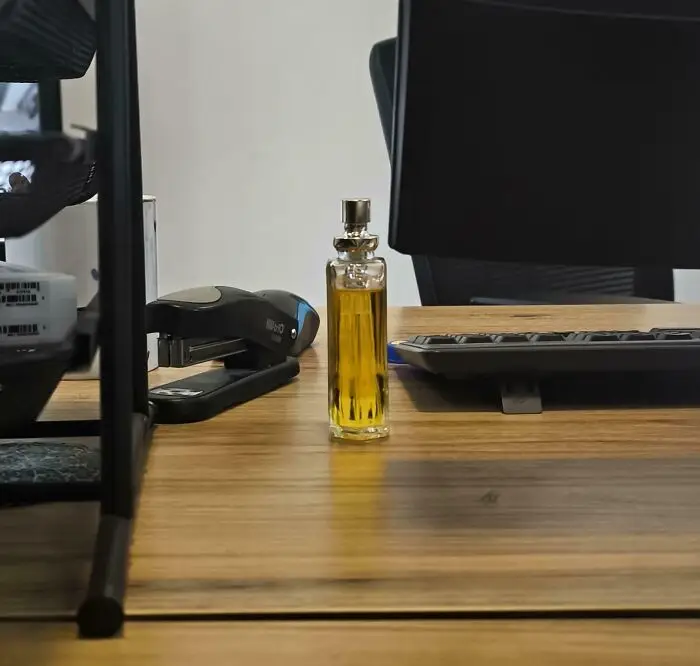
#10 My Colleague Uses Perfume In Our Shared Office
In addition to annoying behavior, surveys show rising trends in gossip, unprofessional communication, exclusion, and coworkers taking credit for others’ work — all signs of a workplace environment that puts individual egos ahead of the team.
#11 Today Was A Colleague's Last Day At Work And This Is How They Left Their Office

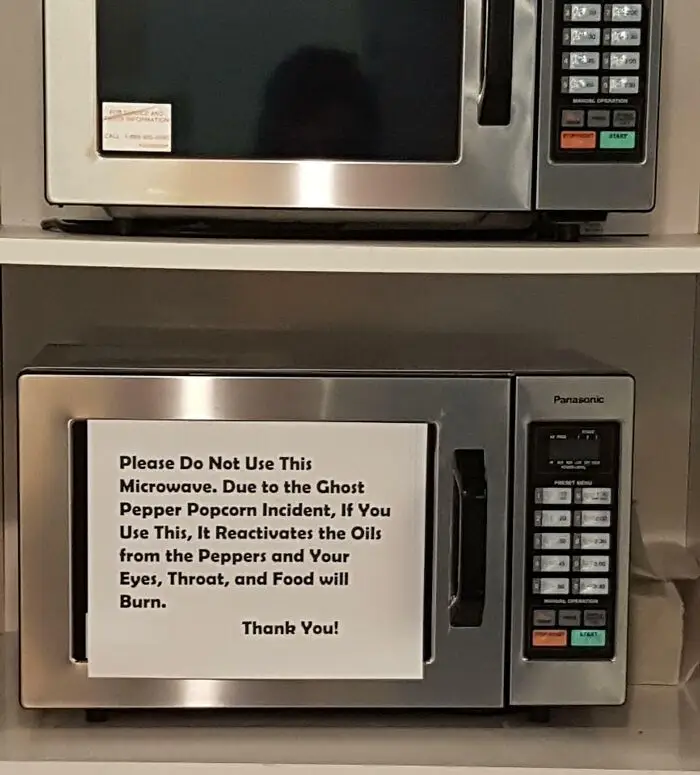
#12 Yesterday, This Guy Put Ghost Pepper Popcorn In Our Industrial Microwave At Work For Over 5 Minutes

Many people have reported mental health problems tied to workplace culture and poor management.
A recent poll revealed that three out of four workers say their mental health at work is negative, with 40% reporting ‘poor’ and 34% saying their mental health is just ‘fair.’
61% of workers said would rather quit, and 39% said they would rather get laid off from their job than work in a toxic workplace.
#14 Former Coworker Can’t Stop Badmouthing And Lying About Me

#15 Coworker’s Fundraiser

#16 How My Coworker Cuts Construction Paper. She Put These Back In The Stack Of New Construction Paper Too

When faced with annoying office behavior, many people tend to avoid confronting their colleague or reporting them to HR.
In a survey, only 25% of workers said they trust HR to address toxic behaviors, and over 65% said their complaints made no difference after reporting them.
“Most people think that if they’re being targeted by someone who’s toxic at work, other people know and don’t care. In fact, most people will tell me, ‘My boss knows. They’re just too busy to care.’ Chances are, your boss doesn’t know — at least not to the extent that it’s happening. You need to let people know,” says Tessa West.


#19 My Coworker Keeps Leaving These Things For Me To Find. I’ve Never Talked About Religion With Them, So It’s Based On Assumption

If you’re feeling stuck in a frustrating work situation, there are several ways to take control.
One approach is to share how you feel soon after an incident — within a day or two if possible — when the situation is still fresh and not blown up in your head. Waiting too long makes it easier for others to downplay the behavior since you didn’t bring it up right away.
Expanding your network at work can also help. When we only talk to the same two or three people every day, we miss the bigger picture, like who might be causing tension or what the unwritten rules are.
Basically, make allies in the workplace.
At the end of the day, dealing with a toxic colleague is almost like a rite of passage in any sort of workforce. If you’ve never dealt with one, you’re either incredibly lucky… or maybe you just haven’t recognized the signs yet.