





In our 24/7 news cycle, it’s easy to forget that just because something isn’t front and center in the media doesn’t mean it didn’t happen. As it turns out, things are being discovered and developed all the time, it can just be a bit hard to hear about.
Someone asked “Scientists, what's a discovery that should have blown people's minds but somehow got a collective shrug from the world?” and people shared their best examples. So get comfortable as you scroll through, upvote your favorites and be sure to add your own ideas below.
#21

I'm not a scientist, but I saw where scientists in Japan have found a way to grow teeth, which would eliminate the need for implants. In the not to distant future, you might see adults walking around with baby teeth.
36points
#22
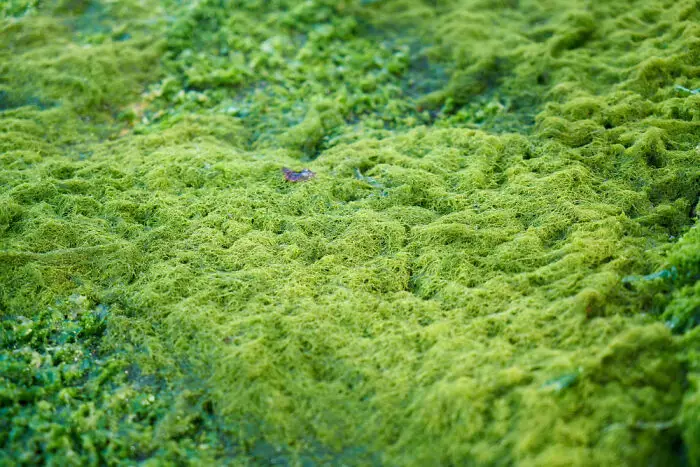
In the last couple of years they discovered an algae that had non-lethally absorbed a bacteria that produced nitrogen. It’s the birth of a whole new form of metabolism. The sprouting of a new trunk on the tree of life.
There are only 3 other known cases of an event like this in the history of life. And yet I barely heard anything about it.
The Japanese plastic eating bacteria got more coverage, but still not nearly enough.
There are only 3 other known cases of an event like this in the history of life. And yet I barely heard anything about it.
The Japanese plastic eating bacteria got more coverage, but still not nearly enough.
Report
36points
#23
Published in late 2024 was a study showing that silicates played a catalytic role in the formation of amino-acids and proto-cells, taking a huge step in validating abiogenesis as the origin of life.
Basically, they redid the Miller-Urey experiment (which already showed simple organic compounds could emerge from inorganic compounds in conditions similar to early Earth), with a difference : in order to avoid external interferences, they coated the container with teflon and put it in a dark room.
What happened was...nothing. No reaction occured, no new compound were formed, contrary to the original experiment. Since the container in the original experiment was glass, they decided to add a few silicate pellets in their container and redo the experiment.
The results were even better than expected :
- they obtained fully formed amino-acids, not just simple organic compounds.
- among these amino-acids were the five that make up DNA and RNA.
- fully closed phospholipid chains, aka empty proto-cells, were observed.
Report
35points
#24
GLP-1s. It's nothing short of revolutionary. Not only does it stabilize blood sugar in diabetics, and promotes weightloss for obese people who have no luck with other treatments. It also curbs addictions to alcohol, smoking, even shopping. It has been shown to be protective for cardiovascular health, used for kidney failure. It's a treatment for certain liver diseases. And that's just what we have confirmed so far. In my book GLP-1s are right up there with penicillin and pasteurization.
Report
32points
#25

# The fact that bacteria can communicate — and have their own "language."
**→** ***Quorum sensing***
Scientists discovered that bacteria aren't just single-celled loners they actually communicate with chemical signals, vote on decisions, and act collectively when they reach a "quorum" (like, "Okay, now there's enough of us, let's release the toxins / form a biofilm / light up like in bioluminescence").
It's like social media for microbes. Literal **group chats** for germs. And it’s been happening on Earth way before humans even existed.
And we just… shrugged?
This has massive implications from understanding infections to rethinking antibiotics to designing new bioengineered systems. It’s like realizing ants build cities… but on a *molecular* scale.
Report
29points
#26

It seems relevant to this thread to inform everyone that in 1994, the invention of the year went to the widget in a can of Guinness that help carbonate a Guinness only when you opened it.
Second place was The Internet.
Sometimes the world doesn’t care because they don’t really understand.
Second place was The Internet.
Sometimes the world doesn’t care because they don’t really understand.
27points
#27
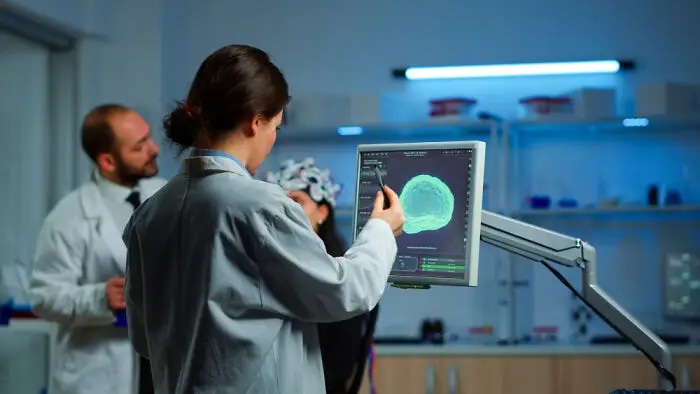
Back in 2016, when the results of the CTE brain analysis on former football players went up in JAMA and showed just how extensive and common these injuries are, it should have caused an uproar. And people were aware of it, to be sure, but it seems like most have chosen to just ignore it and assume it's someone else's problem, along with hollow justifications like "they knew what they were getting into" and "they get compensated well enough for that risk.".
Report
27points
#28
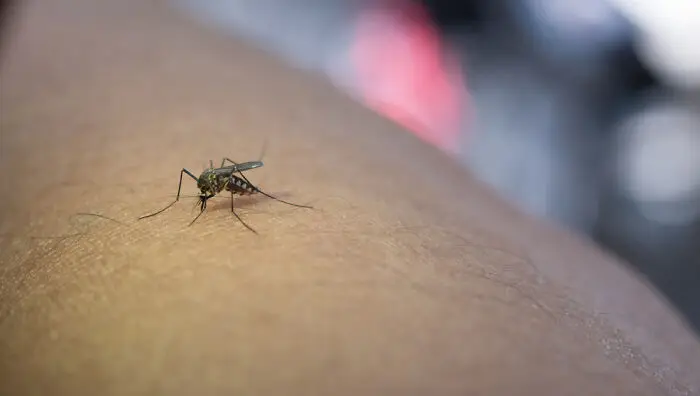
CRISPR-Cas9 is actual Jurassic Park s**t.
People who were born blind have had their sight regained due to genetic tinkering made possible by this biological tech.
Mosquitos can be eliminated, practically eradicating Malaria by editing the genes, which are then passed on to offspring, making them sterile.
Food can be, and has been, made more nutritious, as in the case of Golden Rice, producing more Vitamin A in impoverished countries.
It’s Gattaca in the flesh, and people just shrugged
Edit: A lot of people are asking "Why do I still have mosquitos? or Why hasn't this happened yet??" and I can say that this technology is still extremely nascent.
It's a massive achievement of humanity and another foothold in our ability to shape nature, but it is still inaccurate. Targeting specific genes in different species, let alone our own, is time-consuming and requires many trials to get right.
Targeting multiple genes, at the same time, is exponentially more difficult. Remember that genes are just DNA sequences at random events on the entire chain. And each sequence is rarely actually next to each other on the chain.
Some of you have also mentioned that we don't fully understand the effect this would have on not only one species but all those others that interact with whichever we were trying to alter.
In short.. It's incredibly high-tech, and with incredible technology comes incredible questions and incredible consequences that need to be considered before fully deploying.
Report
25points
#29
30 years ago, Japan developed a replacement for Saran Wrap or shrink wrap that was actually more durable and biodegradable. It failed test markers in America because 1) it was made out of shrimp shells 2) it had a pink hue 3) false belief that shellfish allergies would cause people to become sick 4) the packaging had shrimp 🦐 yes with the heads.
Report
25points
#30

Prion disease.
People don't really understand it and so they shrug it off to the point that I have seen people giving away deer meat that was chronic wasting disease positive and someone picked that meat up to consume. Then, I was banned from the group for freaking out about it.
People don't really understand it and so they shrug it off to the point that I have seen people giving away deer meat that was chronic wasting disease positive and someone picked that meat up to consume. Then, I was banned from the group for freaking out about it.
Report
22points