






We should all strive to be curious, open-minded, and seek to get as close to the objective truth as possible. However, this doesn’t change the fact that, well, the truth can often be pretty uncomfortable. You need a lot of emotional resilience to live with the knowledge about how the world really works.
Amateur and veteran researchers took to an online thread to share the scariest science facts that they know that might keep you up at night. We’re featuring some of the most powerful ones, and the odds are that you might wish you could unlearn some of them. Scroll down to shift your perspective on how you see the world.
#22
We are currently in the process of a mass extinction event. Many species, especially birds, are going extinct at an alarming level. We've had 5 mass extinction events throughout earth's history where up to 95% of all life on earth has [disappeared]. And that could very well be where we are headed. It just doesn't seem that serious because the worst mass extinction events happened over tens of thousands of years and humans can't really fathom life in that length.
Report
15points
#23

Scientists are warning that antibiotic resistance could make routine surgeries extremely risky again.
Crutation:
We know about antibiotic resistance. What people don't realize is that there no new antibiotics in the pipeline, and nobody is researching novel ones.
Why, because even if there is a new one researched and approved, it will be limited to only the most urgent cases, so it is impossible to break even.
So when antibiotics become useless, it will take years for new medications to be developed, tested, and approved.
14points
#24
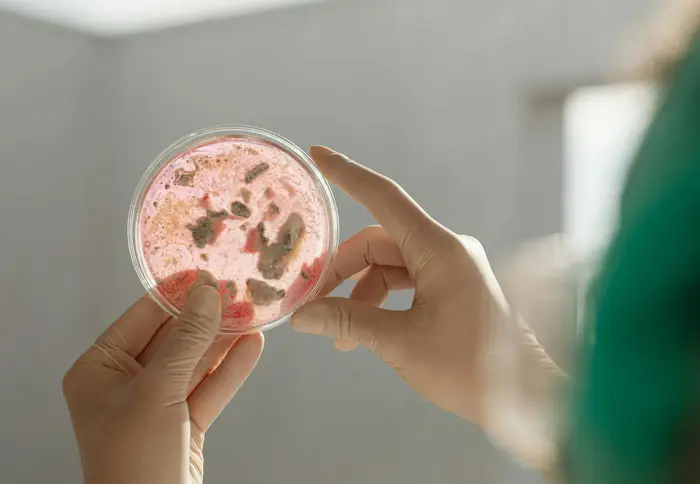
There are invisible bacteria in your gut that control your cravings, mood, and even some of your decisions.
14points
#26
A photon leaves a far-away star, and travels millions of light-years to get to us. When we see that star, we see it as it was all those millions of years ago, as if the information carried by that photon is millions of years old.
However, to the photon, the trip is instantaneous. If you could ride on the photon, it would seem that it was emitted and arrived at its destination in the same instant. One of the really weird consequences of relativity.
However, to the photon, the trip is instantaneous. If you could ride on the photon, it would seem that it was emitted and arrived at its destination in the same instant. One of the really weird consequences of relativity.
Report
13points
#27
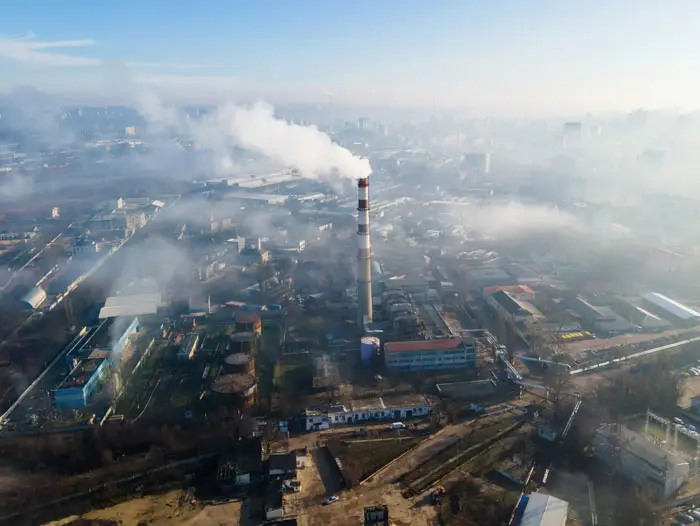
One of, if not the most problematic consequence of air pollution is not long-term climate change (the way you imagine it, at least).
A higher concentration of CO2 and CO in the atmosphere, as well as higher temperatures, is slowly turning the oceans more acidic. We're a few pH points away from oceans becoming too acidic to be hospitable for countless sea creatures, but most notable of all, various phytoplankton and algae. That is to say, we are obliterating the habitat of the creatures that *generate approximately 70% of the Earth's oxygen supply.*
My only hope is that they adapt or evolve fast enough.
Edit:
This is getting larger than i figured, so some probably needed further explanation:
1. It is unlikely we will all suffocate due to this.
2. When I say a few points of pH, I mean dropping from about 8 to 7.9 to 7.8 in 75 years. But this is still really bad because pH is a logarithmic scale.
12points
#28
Locked-In Syndrome is caused by severe damage to the brainstem (often through a stroke). This leaves patients fully conscious, aware, and able to feel pain, but completely paralyzed. They lose the ability to move any muscle except their eyes. These people are essentially trapped inside their own mind.
Report
12points
#29
Your biopsied flesh (and tonsils if you get them removed) will sit in storage for a decade before they're anonymized and sold to big pharma companies.
Source: I work at one of those companies and handle tissue samples every day.
Source: I work at one of those companies and handle tissue samples every day.
Report
12points
#30
The active cores from the Fukushima still uncontrolled and all they are doing is drenching them with water and when the tanks fill up with the radiated water they are simply dumping them in the sea.
"History shows again and again how nature points out the folly of man". "Go go Godzilla!".
"History shows again and again how nature points out the folly of man". "Go go Godzilla!".
Report
11points
#31
Atmospheric CO2 is increasing at such a rate that it's *weakening human bones*.
From that same 2026 paper: "If these trends continue, **blood bicarbonate values could be at the limit of the accepted healthy range in half a century**, and Ca and P will be at the limit of their healthy ranges by the end of this century. Studies indicate that, after this time, elevated atmospheric carbon dioxide, leading to CO2 accumulation in the body, has the potential to cause a range of adverse health effects. These findings highlight the urgent need for significant reductions in anthropogenic CO2 emissions to safeguard public health."
Nightmare fuel!
Report
10points
#33
Every metal object you touch today; such as a ring, a knife, fork, spoon, car door, iPhone case, deodorant can, pots and pans. Were once a star billions of years ago.
Chemical elements such as carbon, magnesium, iron, copper, gold, aluminium, lead, zinc, were only formed by the nuclear fusion that happens inside a star. Only hydrogen and helium naturally exited outside this stellar nuclear fusion
The star exploded, throwing out these chemical elements. The dust cloud eventually binded together to form planets.
Report
10points
#34
The aquifers that we depend on for major food production in both California and the central prairies are drying up and will be essentially gone within 30 years. A big chunk of the most productive agriculture in America will be wiped out.
Report
10points
#35
We genuinely have no clue whats in the ocean. It makes up 90 or so % of our earth but we have no clue what’s in there. Yes we know a lot but that’s merely the surface. There’s brine pools on the very bottom that can go 40 50 feet lower than the bottom and that’s already at a level where absolutely zero light can be seen. Not even if you look straight up at the surface. There’s creatures that have never even seen light. There could be creatures so big that they’re larger than humpbacks. There could also be alien life with a whole city and everything. We have no clue and no way of knowing. We can only go so deep now so who knows what we’ll find in the future. Hell there might still be aquatic dinosaurs from back then since all that water and stuff has the possibility to ‘slow down time’. Look at those one sharks who can live for over 500 years. We have zero clue.
Report
10points
#36
The richest (above 100 millions of wealth) pay 20 to 25% taxes, when the working and middle class pay 40 to 50%. Social science is science.
Report
10points
#37
PFAS, the "forever chemical" is EVERYWHERE. To give you an idea as to how ubiquitous it is, here's a little anecdote: PFAS can be detected down to parts per trillion. In the state of Florida, when drilling into soil or water to collect samples for PFAS, drillers have to decontaminate the drill stems between each boring. Decon involves scrubbing and pressure washing the drill stems with an environmentally friendly soap like Liquinox and clean water. Drillers usually bring the clean water with them into the field. It's gotten to the point where we can't find clean water that hasn't already been contaminated with PFAS to clean the drill stems and other sampling equipment.
Report
10points
#38
A massive solar storm—similar to the 1859 Carrington Event—could induce powerful electrical currents through modern long-distance power lines, potentially destroying global transformers and plunging continents into a months-long blackout.
Report
9points
#39
If the sea temperatures keep rising.. there will likely be a phytoplankton extinction event.
Report
9points
#40
So here's something I found out recently. Our bodies actually have a built in defense mechanism against the vast majority of fungal infections and it comes down to something super simple: our body temperature. Most environmental fungi literally cannot survive at 98.6°F (37°C), which is why most fungal infections in humans tend to stay on the surface. Think athlete's foot or ringworm - they live on the cooler parts of our skin on the extremeties. Mostly annying but not very dangerous. Comes from someone who's had to deal with a few of these, having lived in a humid city (Kolkata).
As global temperatures slowly rise, fungi are being subjected to a massive evolutionary pressure test. Adapting to higher heat. Scientists believe this thermal adaptation (fungi basically getting "trained" to survive at higher temperatures) is what's driving the sudden global emergence of deadly, multidrug resistant pathogens like Candida auris. Essentially - climate change is stripping away our primary biological defense against fungal infections. I sure hope the pace of science's progress with curing disease keeps pace. Rooting for Demis Hassabis to work his wonders.
As global temperatures slowly rise, fungi are being subjected to a massive evolutionary pressure test. Adapting to higher heat. Scientists believe this thermal adaptation (fungi basically getting "trained" to survive at higher temperatures) is what's driving the sudden global emergence of deadly, multidrug resistant pathogens like Candida auris. Essentially - climate change is stripping away our primary biological defense against fungal infections. I sure hope the pace of science's progress with curing disease keeps pace. Rooting for Demis Hassabis to work his wonders.
Report
9points
