







#21
It made me despair because I realised this generation is raised on p**n, with all the ridiculous expectations for real s*x that would bring.
Another useful tip is to jot down doubts before your appointment. “Patients often forget half their questions once they sit in front of the doctor,” she noted. “Keeping a small list ensures that all concerns are addressed during the consultation.” This not only saves time but also allows the doctor to see the full picture.
#22
I offhandedly mentioned to the first year doctor while he was checking me that I'd had this weird feeling that I couldn't shake, like something was going to go wrong, this heavy feeling deep in my chest.
I've never seen someone's head snap up that quick.
Turns out that an 'impending sense of doom' is an actual symptom, and can be a sign that you're about to have a heart attack or go into anaphylaxis.
I was fine, and that 'feeling of doom' went away as soon as I was put on biologic medication. Wild.
#23
The oldest patient was 10, the youngest was 2yo but most had been repeatedly assaulted and a****d since birth or most of their lives by one or more people, all family members. I can’t ever forget all of those kids and what they told me during sessions.
#24
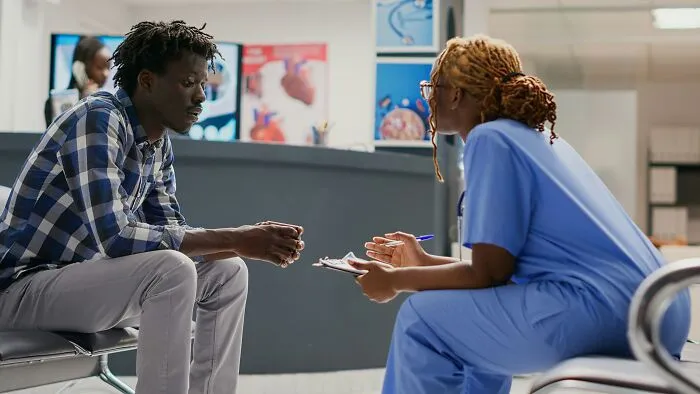
Plenty of times I have had patients with psychosis tell me they see a person in their room. This is never scary to me— I don’t attend to where their vision is (because it makes the hallucination more real to them), I just do a full assessment (figure out if they hear voices, if the voices are telling them to harm themselves or others), encourage them to engage in distractions, talk to them if that’s what they need at the moment, and give them whatever meds necessary. Freaks out other nurses tho.
Have had many dying patients say they see family members or “angels” in the room. The patients in those instances never seen scared— more like comforted. I actually encourage them to focus on those family members that they see if it brings them comfort. They usually pass shortly afterwards.
Finally, Dr. Pradhan reminded us that medical professionals are there to guide, not to judge. “Doctors are here to offer advice, not pass judgment on your habits or lifestyle choices,” she explained. Approaching consultations with openness and honesty can help patients receive the best possible care while building trust in the doctor-patient relationship.
#25
#26
I remember a couple mornings going into his room to do his vitals for his nurse and him telling me “you’re the only one who’s nice to me… everyone doesn’t like me here”. I knew this was happening as I would hear the nurses talking s**t about this man, sometimes for good reason but nonetheless not nice.
Anyways, this patient had an ostomy (Google if u don’t know) and I as a first year nursing student I knew absolutely NOTHING about them. We were literally learning how to wash our hands in school at this point. I did however notice that his ostomy pouch was always empty and never collected waste. I thought this was odd. I would feel his stomach and look and he was extremely distended. I told his nurse multiple times throughout the week and was always made to feel stupid because they were “already checking it”.
Long story short. I come in my next shift, he had a blockage, the waste built up so much that he was puking it out of his mouth and ultimately chocked and suffocated on his own waste. He was a DNR and was very sick to begin with but it was not supposed to be this way.
I think about him often and feel deep sadness when I think about how he felt abandoned at the hospital and this was the outcome.
#27

Looked over my shoulder the entire walk home.
Well, these posts reveal some of the strangest and creepiest things doctors have actually heard from patients. Which one of these surprised or shocked you the most? Share your thoughts in the comments.
#28
#29
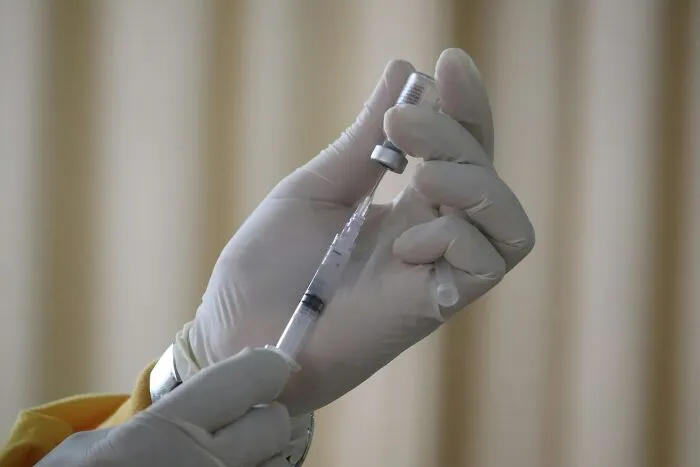
He didn’t like that the injection hurt.
He leapt out of bed, backed me into a corner, and threatened to “smash in [my] skull.” He reiterated he once k****d a police officer by beating him to death, and he wanted to do the same to me.
He was 6’2”. I am 5’0”.
I managed to deescalate the best I could (gave him his opioids, encouraged him to go for a walk off unit to let off some steam). It worked. But before he walked off unit he told our charge nurse he was going to k**l me.
Management, security, and the doctor did f**k all. Had to spent the next few shifts worried I was about to get my a*s beat.
#30
#31
#32
#33
Had an aggressive cancer. They said they would accept chemo but no transfusions so the chemo was reduced (the Team didn’t want him ostracized from his support network if things went bad- which was more likely than not even with full treatment )
Later that year it relapsed and came to me for palliative radiotherapy,
The dad looked at me and said “I would do anything to save my son….”.
#34
We didn't realize there was another patient there and we all kind of looked at each other and gasped in surprise. Then the guy says "I can *heaaar* you." Nothing else after that.
Definitely not as scary as some of these other stories, but somehow to my teenage mind, it was very jolting.
#35
I am a nurse now, but this is back when I was a phlepotomist. I went into a patient's emergency room and bent over the bed to introduce myself, and the look in his eyes scared me.
I backed away and walked out of the room and someone noticed I was in there and came rushing over to assist. She quietly told me that he had just bit someone pretty badly.
#36
still haunts me and he passed away 2 days after.
#37
Another eerie moment was a patient who came in after a traumatic accident. Right before surgery, they grabbed my wrist and said, “Don’t let me die, doc.” Their vitals were stable, but despite our best efforts, they didn’t make it through the operation.
The things patients say, especially in their final moments, can stick with you forever.
#38

Striking a balance between remaining honest and not adding extra trauma to her experience knowing it could possibly be something she carries with her for her entire life, without preparation (I was on a consulting team, not the primary team - so wasn't on the team 'designated' to discuss goals of care and overall expectations) was terrifying.
So I told her that I didn't know, and her dad was very very sick and it might take us a long time to know what would happen, but a whole team of doctors and nurses were going to keep trying their best to help him get better.
He died several days later.
#39
Had a 3 y/o patient come in with a heart rate in the 210s and nothing we did brought her heart rate back into an acceptable range. We’d deliver meds, her HR would normalize, then she’d flip back into SVT/tachycardia. She kept drifting off to slip, then jerking awake suddenly and screaming, clearly terrified, then would fight to stay awake until she nearly passed out from fatigue. This cycle repeated itself over and over. I had a terrible feeling about this patient and elevated my concerns to the team, so we weren’t completely unprepared for what happened. Close to change of shift, she sat up from a dead sleep, screamed, then collapsed. No pulse. Not breathing. Crashed to ECMO.
Another 3- or 4-month-old patient was fussy as soon as I started my shift one morning. Intractably crying, in and out of atrial tachycardia (which had previously been managed with meds), but otherwise doing well clinically. He’d had an IV leak a small amount of irritating fluid into the skin of his arm overnight, so I asked for a dose of pain medicine to make sure he wasn’t experiencing untreated pain. No change. Still screaming. I had two patients that day and remember going into the other patients room and giving meds/doing my checks and assessment as early as I could and warning the parent at the bedside that I might be getting busy next door. Just a gut feeling. Sure enough, as I’m finishing giving my happy, stable patient his meds, I look over and my other patient’s oxygen sats have dropped to the 60%s. Go over, throw oxygen on him, call a provider, and when I listen with a stethoscope, I realize that he’s lost the blood flow to his lungs. Nearly crashed to ECMO, managed to emergently intubate him and get him to the cath lab to stent/prop open structures to get blood to his lungs, and he discharged from the hospital a week later with no residual effects.
Panicky babies make me feel panicky.
#40
Second case was the cry/scream of a mother when their child died, because the day before their condition seemed to improve. Terminal lucidity I guess.
