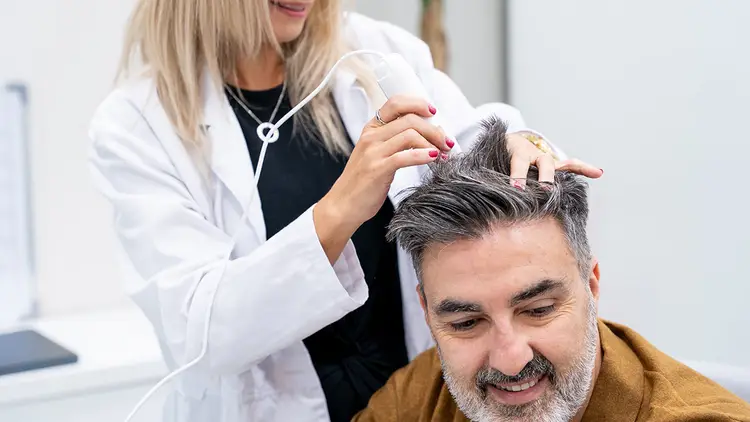
Rosemary oil has become a huge trend on TikTok, with 1.3 billion views, making this simple herb one of the most talked-about hair care ingredients online. People are using it in scalp massages and homemade treatments, hoping for thicker, fuller hair. But does it really work? As more people look for natural hair care options, rosemary oil has become a go-to choice for those with thinning hair or hair loss. Social media is packed with before-and-after photos and glowing reviews. Still, hair loss can happen for many reasons, and not every trending remedy is backed by solid science, as you may have already guessed. To understand what rosemary oil can actually do, we spoke with Holly Forbes, a Registered Dietitian Nutritionist (RDN) and founder of The Hair Loss Nutritionist, and Dr. Bijaya Laxmi Gurung, a Hair Transplant Surgeon at The Treatment Rooms London. Both specialize in hair health and hair loss, bringing complementary perspectives on the role of nutrition, scalp health, and evidence-based treatments. From the science behind rosemary oil to treatments with stronger evidence, there is more to consider than simply choosing a natural product. We also look at the potential side effects of popular hair growth methods and why understanding the reason behind hair loss is an important first step. Buckle up, because I know this concerns many of you. Lana_M / Envato (not the actual photo) If you notice a few hairs on your pillow, in the shower, or on your hairbrush, don’t panic! It doesn't always mean you're going bald. It’s a big scare, I know, but most adults lose about 50 to 100 hairs each day as part of the normal hair growth cycle. Old hairs fall out so new ones can grow, so losing some hair every day is normal. But normal shedding is not the same as real hair loss. Some people notice their hair gets thinner as they age, while others see a receding hairline, a wider part, or bald spots. These changes can have different causes, so it's important to understand what's going on before looking for ways to regrow hair. Genetics and changes in hormones are common reasons for hair loss, but there are others too. Stress, illness, childbirth, some medicines, and not getting enough nutrients can also cause more hair to fall out. For example, telogen effluvium happens when more hairs than usual go into the resting phase, so you might notice extra shedding a few months after a stressful event. Hair loss can also happen when the iHair loss can also happen if the immune system attacks hair follicles, like in alopecia areata, or if tight hairstyles pull on the roots over time. Some types of hair loss are temporary, but others can permanently damage the follicles. This is why it's important to find out the real cause: what works for one person may not help someone with a different kind of hair loss. TDyuvbanova / Envato (not the actual photo) Rosemary oil has attracted so much attention because some people believe it can do more than simply improve the condition of their hair. Some hope it can stimulate hair follicles and promote new growth. This interest goes beyond social media trends. Researchers have also studied whether rosemary oil could help with hair loss. A well-known study in this subject compared rosemary oil to 2% minoxidil, a common hair loss treatment. The study followed 100 men with androgenetic alopecia, a genetic type of hair loss, for six months. After three months, neither group saw much change in hair count, but by six months, both groups had an increase. These results might seem promising for people looking for a natural alternative to standard treatments. The researchers did not find a significant difference in hair count between the rosemary oil and minoxidil groups. Still, this does not mean both treatments work the same. The study only looked at these two groups, so it does not show that rosemary oil can reliably regrow hair for everyone or help with other types of hair loss. Dr. Bijaya Laxmi Gurung highlights another important distinction: reducing hair breakage is not the same as preventing hair loss. Oils help lock moisture into the hair shafts and lower friction when you brush, wash, or style your hair. This can make your hair feel healthier and less brittle, but it does not always stop shedding that begins at the follicle. Supporting scalp health is not the same as reversing hair loss. Rosemary oil has compounds with antioxidant and anti-inflammatory effects, and some may help with scalp circulation. However, these possible benefits do not guarantee significant new hair growth. More studies are needed to find out how well rosemary oil works and who might benefit from it. Luisbaneres / Envato (not the actual photo) When hair loss becomes noticeable, there are several treatment options beyond natural oils and homemade remedies. Minoxidil, which we mentioned before, is a common treatment for hereditary hair loss. You apply it to your scalp, and it can help with hair growth and slow down thinning. It usually takes six to 12 months to see results. Finasteride is another option. This prescription medication can slow hair loss and help new hair grow in men with hereditary hair loss. For women with female pattern hair loss, dermatologists might suggest spironolactone, which can reduce shedding and make hair thicker. The best medication depends on your health and personal situation. Dr. Gurung explains that minoxidil is often used by both men and women. It helps by making the hair growth phase last longer and the shedding phase shorter, which can improve hair density and thickness. She adds that some people might need stronger medicine, depending on their situation, and should see a doctor in person before starting any treatment. However, medication is not the only factor to think about. Holly Forbes points out that not getting enough nutrients or food can also lead to hair shedding. She especially mentions iron and vitamin D deficiencies, and notes that iron deficiency is linked to telogen effluvium, a condition that causes extra shedding. She also says it is important to get enough calories and protein, since hair growth needs enough energy and nutrients. Forbes suggests checking your nutrition before taking supplements. Tests like ferritin levels, a full iron panel, and a complete blood count (CBC) can show if you have low iron. If you are not getting enough iron, vitamin D, or protein, fixing those gaps may help your hair grow better. The American Academy of Dermatology also says to take supplements like iron, zinc, or biotin only if tests show you need them, because too much can be harmful. chormail / Envato (not the actual photo) Using rosemary oil instead of a conventional hair loss treatment might sound like a gentler option, but natural ingredients can also cause unwanted reactions. In a clinical trial with men who had hereditary hair loss, both the rosemary oil group and the 2% minoxidil group experienced more scalp itching. So, even plant-based treatments can be uncomfortable if used often. Indeed, essential oils such as pure rosemary oil should never be applied directly to the skin without dilution, as Dr Gurung warns. Using them undiluted can cause severe irritation and contact dermatitis. She recommends mixing them with a carrier oil to reduce the risk of these reactions. Minoxidil can also cause other side effects, like headaches, unwanted hair growth in places besides the scalp, and irritation. Some people get contact dermatitis, which is a skin reaction that leads to redness and itching. These problems can happen more often with stronger solutions. Finasteride’s side effects depend on how it’s used. Taking finasteride as a pill can cause sexual side effects, like lower sex drive and trouble getting an erection, as well as breast growth and mood changes. When used on the scalp, finasteride is more likely to cause local problems like itching, burning, redness, and irritation. These differences are important when picking a hair loss treatment. Natural products can still have side effects, and prescription drugs affect everyone differently. Learning about the risks, talking to a healthcare provider, and choosing a treatment that fits your type of hair loss can help you make a better choice. seventyfourimages / Envato (not the actual photo) If you notice your hair is getting thinner, it can be tempting to try different products and hope for the best. But buying rosemary oil, changing shampoos, or taking supplements without knowing the reason for your hair loss can waste both time and money. It's better to start by finding out what's causing the problem. Dermatologists look into hair loss by asking when it began, how fast it has progressed, and if there is a family history of similar issues. They also check the scalp and hair for signs that might explain the problem. If they think a vitamin deficiency, hormone issue, or infection could be involved, they might suggest blood tests or a scalp biopsy to learn more. Nutrition also plays a role in hair health. Forbes says that checking iron stores, vitamin D levels, and your overall diet can help find out if nutrition is causing hair shedding. She suggests looking at ferritin, a full iron panel, and a complete blood count if iron deficiency is suspected. It's also important to get enough calories and protein, since hair growth needs enough energy and nutrients. Getting the right diagnosis can help you avoid spending time on treatments you don't need. Some people lose hair temporarily after childbirth, a serious illness, or major weight loss, and their hair can grow back without medicine. Others may need ongoing treatment to stop more hair from thinning. The American Academy of Dermatology also points out that there isn't one solution that works for everyone, and it can take several months to see results. So, in the end, Rosemary oil might be worth exploring, but it shouldn't be treated as a miracle solution for hair loss. The best approach starts with understanding what the hair and scalp actually need. Rather than following the latest viral trend, finding the right treatment for the underlying cause can make all the difference.