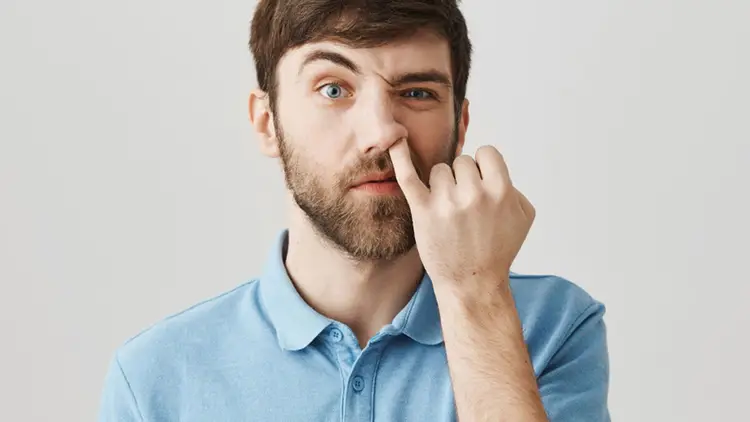
It might be slightly difficult to explain why you suddenly find something unattractive about a person you were once completely smitten with. And it's often been said that sometimes what attracts you just might turn around to be the very thing that irritates you. Or maybe it's not even something that once attracted you to them. For example, you might just think they're charming, funny, and incapable of doing wrong in your eyes, until you watch them run to catch a bus and wonder why their legs move like that. Maybe it's the way they chew, the baby voice they use when talking to pets, or the way their mouth hangs open when they sleep. Whatever it is, something has changed, and you can't quite explain why. This experience has become known as getting "the ick", a term that has taken on a life of its own across TikTok and Instagram. People regularly share the surprisingly specific things that have made them lose interest in someone, with some triggers being so insignificant that they sound almost impossible to take seriously. Yet the phenomenon isn't limited to people who have just started dating. Even couples who have spent years together can suddenly find themselves irritated, embarrassed, or inexplicably put off by behaviors they once barely noticed. And now, psychologists have explored several possible explanations for why this happens, and it goes way beyond falling out of love, losing attraction, or just becoming too familiar. In fact, the feelings behind them can be considerably more complicated. Polina Zimmerman / Pexels (not the actual photo) The modern dating world has developed an impressive vocabulary for describing the many ways attraction can go wrong. We now have terms like ghosting, breadcrumbing, love bombing, and situationships that have all become familiar, but few are as amusingly specific as "the ick". Unlike a straightforward loss of interest, which might happen because of incompatible values or a lack of chemistry, "the ick" often involves a surprisingly ordinary behavior that suddenly changes how someone feels about another person. Social media has helped turn these experiences into a shared cultural phenomenon. On TikTok, people have described losing attraction because someone ran for a bus, used an overly childish voice, chewed food loudly, or displayed an awkward mannerism. Other examples involve watching someone dance, seeing them become overly enthusiastic about something, or noticing an outfit that suddenly makes them appear completely different. The humor comes partly from how difficult these triggers can be to justify. A person might genuinely like someone and have no major complaints about their personality, appearance, or treatment of others, only to experience an unexpected wave of embarrassment or discomfort over something relatively harmless. However, the phenomenon becomes more complicated when it moves beyond the early stages of dating. When two people have been together for years, they have usually seen each other in countless unglamorous situations. Yet some people still describe experiencing a sudden shift in attraction long after the initial excitement of a relationship has settled. This raises an important distinction. Not every irritation is an ick, and not every moment of reduced attraction means someone has stopped loving their partner. People can find their partners annoying without questioning the entire relationship. The interesting part is when a seemingly insignificant detail produces a much stronger emotional response than the situation would normally justify. Now, that is where psychologists' explanations become particularly relevant. Rather than treating every ick as an isolated dating preference, researchers have considered how emotions, learned associations, and individual differences might influence the way people respond to potential or existing partners. Universal Pictures One proposed explanation for the ick involves disgust, an emotion that is generally associated with avoiding things we perceive as unpleasant, contaminated, or potentially harmful. While people often associate attraction with positive feelings such as excitement and affection, the opposite response can also influence whom they find appealing. Psychologists have explored the idea of sexual disgust, which is sometimes discussed in evolutionary explanations of human attraction. Now, under this hypothesis, disgust may have developed partly as a protective mechanism, helping people avoid potential partners or situations associated with undesirable reproductive or health-related risks. From this perspective, "the ick" could be understood as an exaggerated version of an emotional response that influences partner preferences. Certain behaviors, appearances, or habits might trigger discomfort because they are interpreted as unattractive or undesirable, even when there is no obvious threat involved. Of course, this explanation has significant limitations. The evolutionary perspective has traditionally placed considerable emphasis on reproduction and mate selection, but relationships are not exclusively formed for that purpose. People pursue companionship, affection, emotional intimacy, and many other forms of connection. The theory also cannot fully explain why people of different genders and sexual orientations experience the ick, or why individual triggers vary so dramatically. Still, the connection between disgust and attraction offers an interesting way to understand why certain reactions can feel so immediate. Disgust is not necessarily a carefully considered judgment. Someone might not consciously decide that their partner's behavior is unacceptable; instead, they simply experience an unpleasant emotional response before they have had time to think about it. This also helps explain why the intensity of the reaction can seem disproportionate. Watching someone eat with their mouth open might be mildly irritating to one person but genuinely off-putting to another. The behavior itself hasn't changed, but the emotional response to it can differ significantly. It is important, however, not to confuse the ick with a universal biological warning system. There is no established evidence that every sudden loss of attraction is the result of an evolutionary mechanism. Sexual disgust is one proposed explanation, not a definitive answer, and it cannot account for every experience people describe. David Palma / Unsplash Attachment theory explores how people form emotional connections and how their experiences and expectations can influence the way they behave in relationships. According to psychologists, another possible explanation of "the ick" involves attachment styles, particularly avoidant attachment. People with avoidant attachment tendencies may feel uncomfortable with too much emotional closeness. Although they can want romantic relationships, increasing intimacy may sometimes create anxiety or a desire to regain independence. They might find it difficult to rely on another person, express vulnerability, or feel comfortable when a relationship becomes particularly serious. In this context, the ick has been proposed as a possible psychological defense mechanism. When someone begins to feel emotionally exposed, focusing on their partner's irritating habits or unattractive qualities could provide a way to create distance. Instead of confronting discomfort surrounding intimacy, they might become increasingly preoccupied with the other person's imperfections. Wolf Art / Pexels (not the actual photo) For example, someone might initially enjoy spending nearly every evening with their partner. But as the relationship becomes more serious, they begin noticing little things that previously didn't bother them. The way their partner speaks, dresses, laughs, or behaves around friends suddenly becomes irritating. Creating emotional distance might feel easier than acknowledging that closeness itself has become uncomfortable. This does not mean everyone who experiences "the ick" has avoidant attachment. Attachment styles are not diagnoses, and finding something unattractive about a partner is not enough to determine someone's attachment pattern. People can also have different attachment tendencies depending on their relationship experiences and circumstances. Nevertheless, the theory raises an interesting possibility, particularly for couples who experience sudden changes in attraction after years together. Sometimes, the timing of the ick might be just as important as the behavior that triggered it. If the feeling appears around major relationship milestones, increased commitment, or periods of greater emotional vulnerability, it may be worth considering whether something beyond ordinary irritation is happening. The distinction matters because the behavior that seems to cause the problem might not be the actual source of the discomfort. Someone might believe they're suddenly bothered by their partner's habits when what they're struggling with is the increasing emotional closeness of the relationship. Ahmet Kurt / Unsplash (not the actual photo) Not every ick needs to be explained through attachment or evolutionary psychology. Another possibility involves past experiences and the associations people develop between particular behaviors and unpleasant feelings. In fact, classical conditioning provides one way of understanding this. It describes how people can learn to associate a particular stimulus with an emotional response after repeatedly experiencing them together. Over time, the stimulus itself may be enough to trigger that reaction, even when the original situation is no longer present. Consider someone who previously dated a person with an irritating habit, such as constantly picking their nose. If that behavior became associated with unpleasant memories or negative feelings during the relationship, they might later experience discomfort when a new partner displays something similar. The current partner may have done nothing wrong, but the familiar behavior brings back an unwanted association. cookie_studio / Magnific (not the actual photo) This can happen with much smaller details, too. A particular expression, tone of voice, mannerism, or even the way someone laughs might remind a person of an unpleasant experience. They may not immediately recognize the connection, which can make their sudden reaction seem confusing. Sensory sensitivities offer another explanation for some common ick triggers. Misophonia, for instance, involves strong negative emotional reactions to particular sounds. Chewing, swallowing, lip-smacking, and other repetitive noises can be especially distressing for people who experience it. For someone with misophonia, loud chewing might provoke genuine irritation or discomfort rather than simply being an unattractive habit. This is an important distinction because the reaction may have much more to do with how their nervous system responds to certain sounds than how they feel about the person making them. It also shows why people shouldn't automatically interpret every unusual reaction as a relationship problem. A partner's habit might trigger an emotional or sensory response that has little to do with their compatibility as a couple. These explanations are not interchangeable, either. Classical conditioning, misophonia, and attachment-related discomfort describe different processes, and one person's experience may not fit neatly into any single category. The same behavior can also have different meanings depending on the individual, their history, and the circumstances in which it occurs. Tim Samuel / Pexels (not the actual photo) Perhaps the biggest question surrounding the ick is whether people should take it seriously. After all, there is a considerable difference between finding a partner's occasional habit irritating and feeling persistently repulsed by someone you once found attractive. A sudden reaction does not automatically mean a relationship is unhealthy or approaching its end. Long-term relationships naturally involve changes in attraction, familiarity, and emotional dynamics. Partners become more comfortable around each other, see less polished versions of one another, and discover habits they might not have encountered during the early stages of dating. Sometimes, the initial excitement simply gives way to a more realistic understanding of another person. The qualities that once seemed charming may occasionally become irritating, particularly when couples spend a lot of time together. That does not necessarily mean affection has disappeared. However, persistent feelings of disgust or a growing sense of emotional distance may deserve more attention. If someone finds themselves increasingly irritated by almost everything their partner does, it might be worth looking beyond the individual triggers. Unresolved disagreements, unmet emotional needs, declining satisfaction, or doubts about compatibility could all contribute to a broader change in how they perceive the relationship. August de Richelieu / Pexels (not the actual photo) The important thing is to avoid treating the ick as a definitive verdict. A single uncomfortable moment cannot tell someone whether they should stay with their partner, just as one irritating habit cannot explain the entire state of a relationship. Can the feeling be undone? Potentially, depending on what is causing it. If the reaction is connected to a temporary irritation, an unpleasant association, or a particular relationship dynamic, understanding the trigger may help people respond to it differently. Honest communication can also help when the underlying issue involves a behavior that genuinely affects the relationship. For example, if a partner's habit is creating repeated frustration, discussing it respectfully may be more productive than silently allowing resentment to build. If the discomfort is connected to emotional closeness, recognizing that pattern could help someone understand why they are pulling away. And if a sensory sensitivity is involved, finding practical ways to accommodate it may reduce unnecessary tension. But there is no guaranteed method of making attraction return. Sometimes, the ick reflects a bigger change in someone's feelings or a realization that the relationship is no longer meeting their needs. Trying to force attraction back without understanding the underlying problem is unlikely to be helpful. Ultimately, psychologists' proposed explanations suggest that "the ick" is more complicated than a collection of amusing dating deal-breakers. Disgust, attachment tendencies, learned associations, and individual sensory differences may all contribute to the experience, but none offers a universal explanation. The next time a partner does something that suddenly makes you question your attraction, it might be worth looking beyond the questionable shoes or unusual chewing habits. The behavior itself could be the problem, but it could also be drawing attention to something happening beneath the surface. And understanding that difference may be much more useful than simply adding another entry to your personal list of icks. Vera Arsic / Pexels (not the actual photo)