


But ideally, that shouldn’t be left entirely on the shoulders of the person on the business end of the counter. Creating a good customer experience also means making sure employees have the tools, information, and support they need to handle difficult situations. DuRose points to research from Gallup, MIT, PwC, and elsewhere showing a strong link between employee engagement and customer satisfaction, noting that “When employees feel valued, supported, and equipped to succeed, they will bring that same level of care to interactions with customers.”
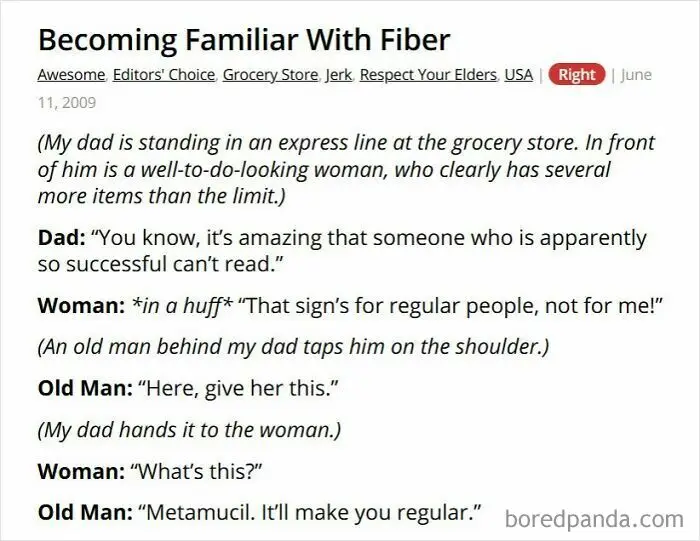
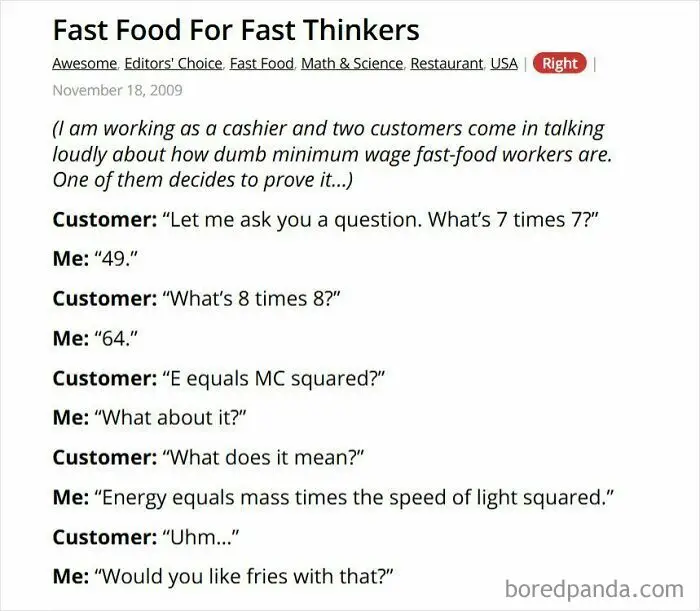
DuRose also recommends training employees in “empathy, listening, and problem-solving skills,” giving them the autonomy to solve customer challenges, and celebrating employees who go above and beyond.
But that’s not to say that employees should be expected to bend over backward for every person who walks through the door. Giving customers a good experience, in fact, means giving employees the tools, information, and boundaries they need to handle difficult situations.

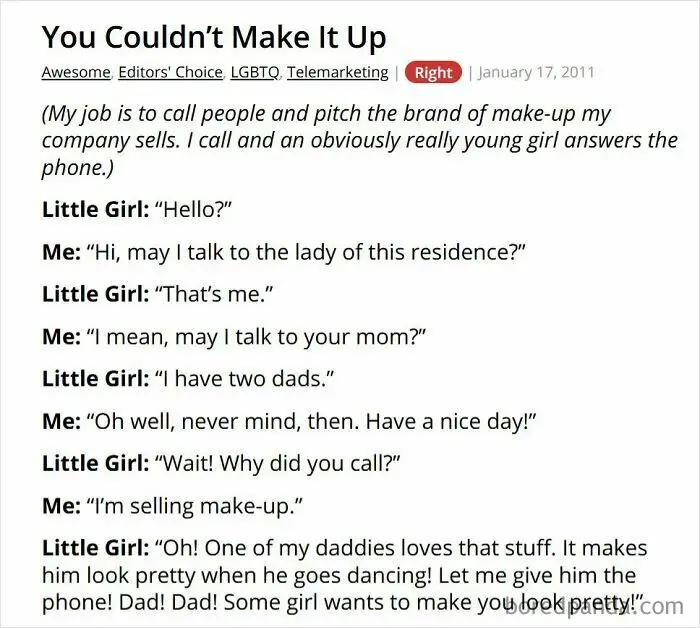
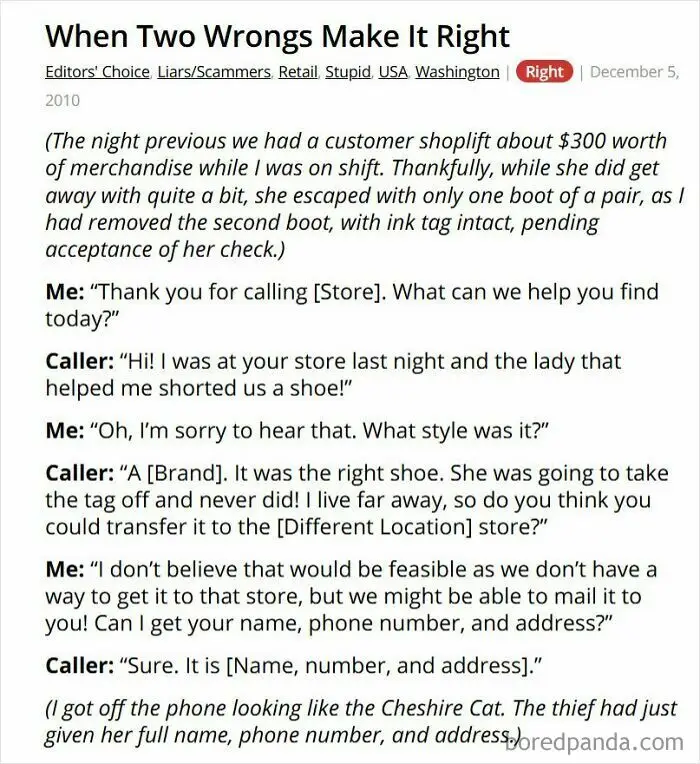
DuRose argues that this kind of support benefits everyone: “Not only will you win customer loyalty—you’ll see greater loyalty, job satisfaction and stronger commitment from your employees.” Without the right tools, training, and support, however, “the customer is always right” can quickly become less of a customer-service philosophy and more of a recipe for frustrated workers.
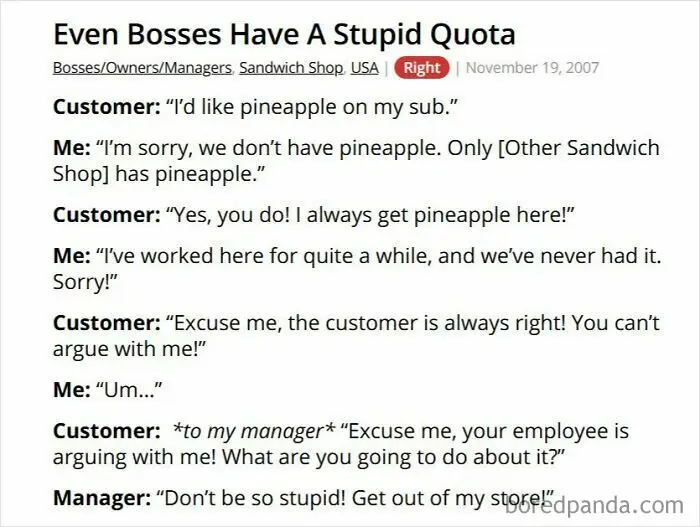
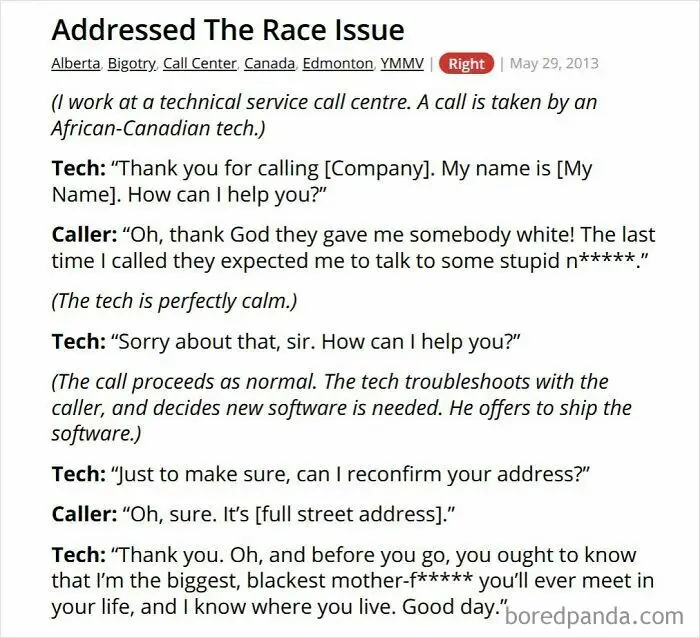

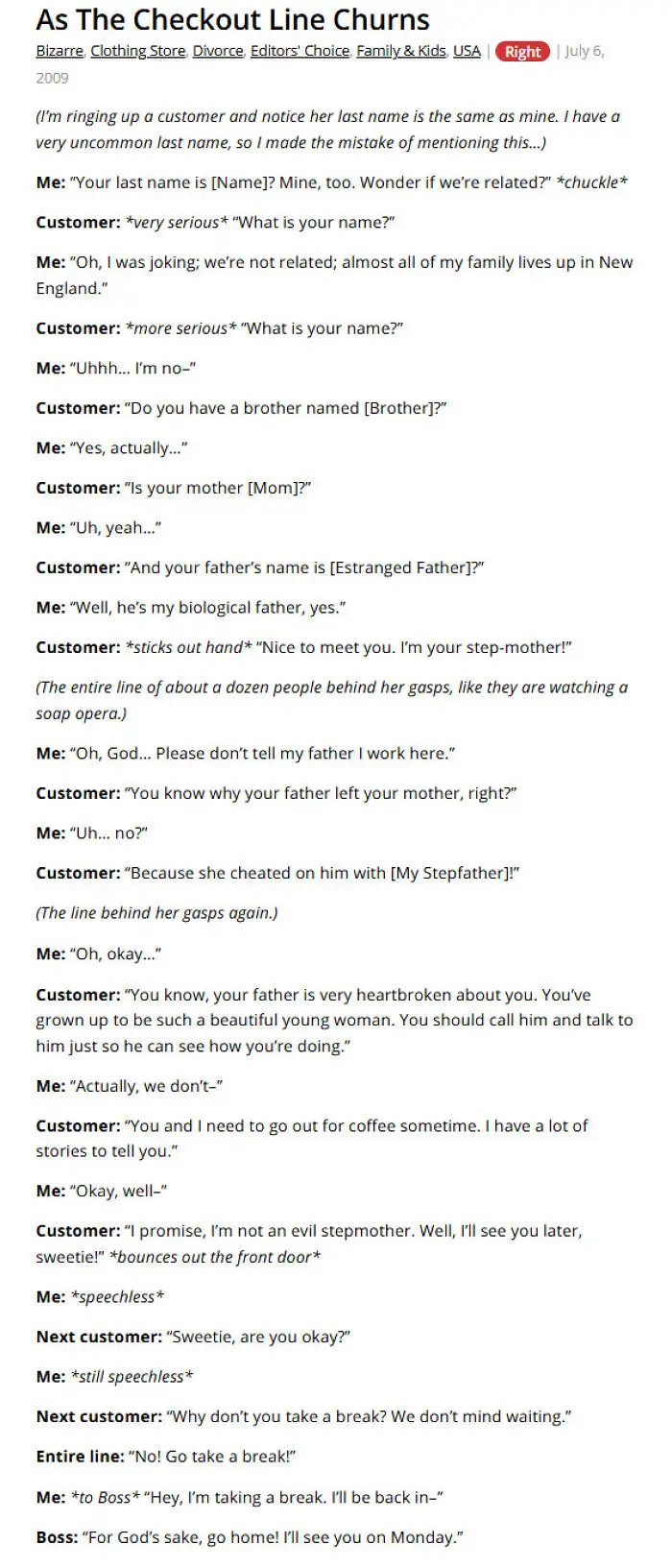
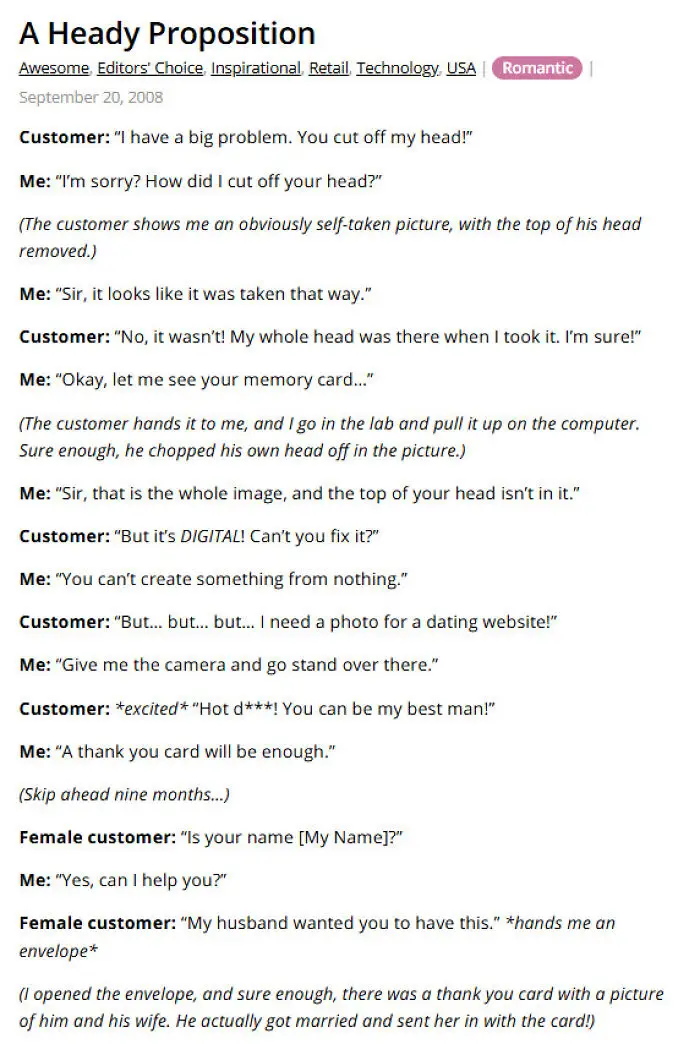
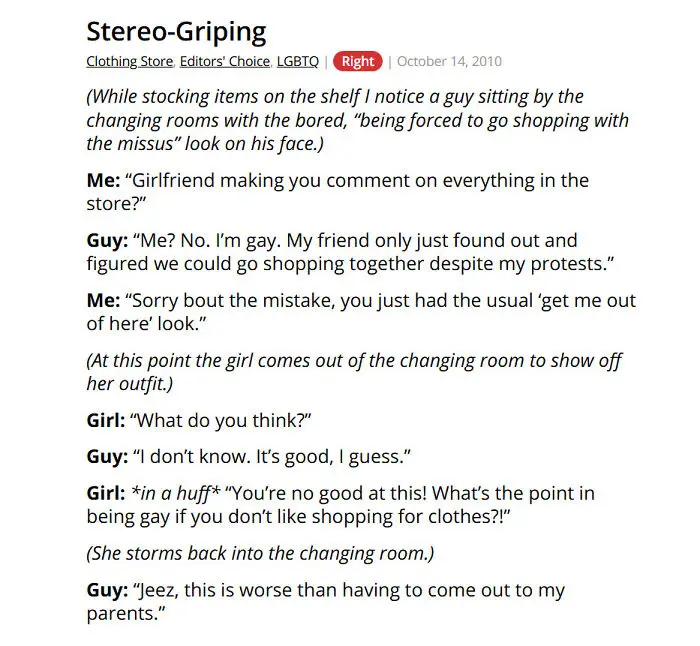
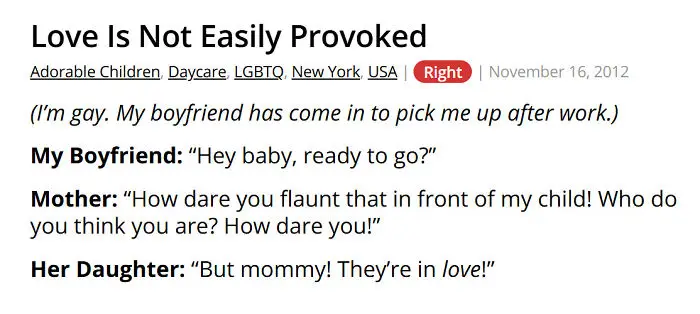
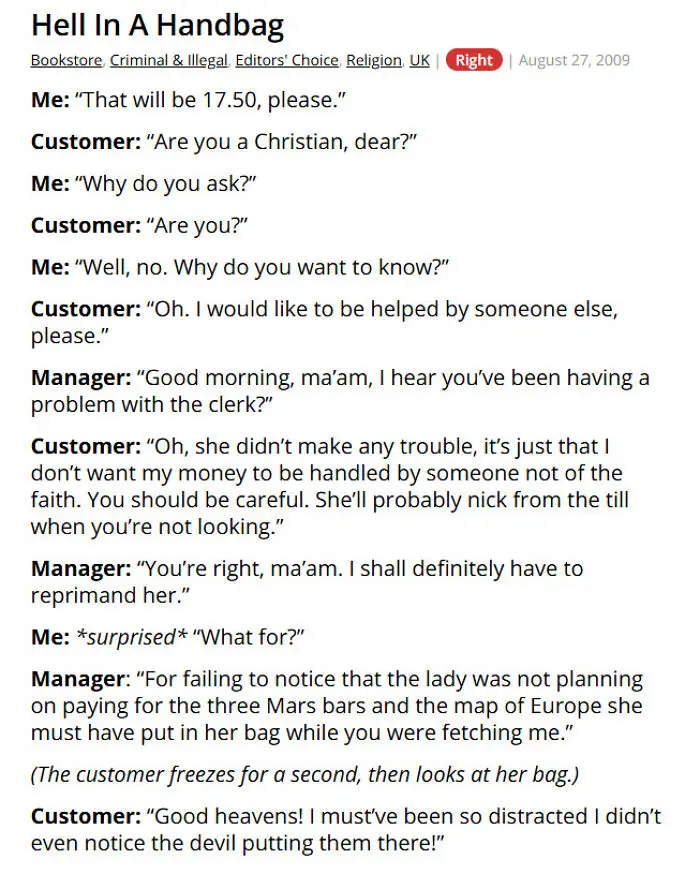
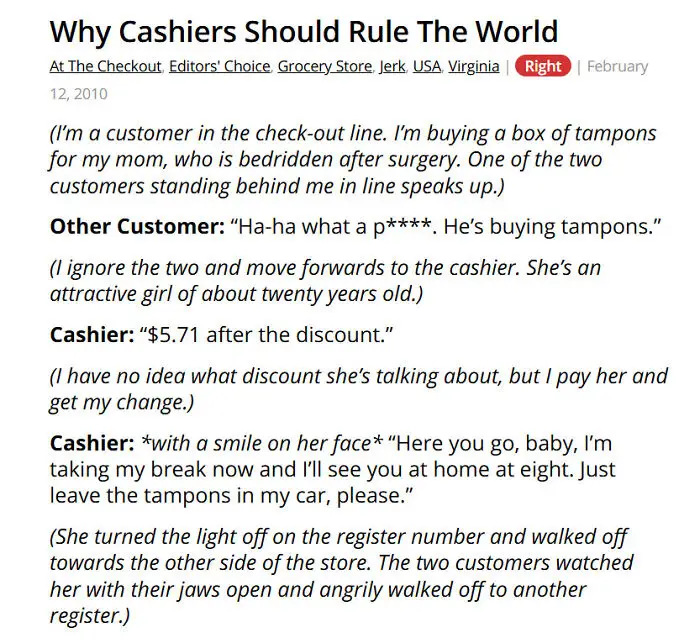
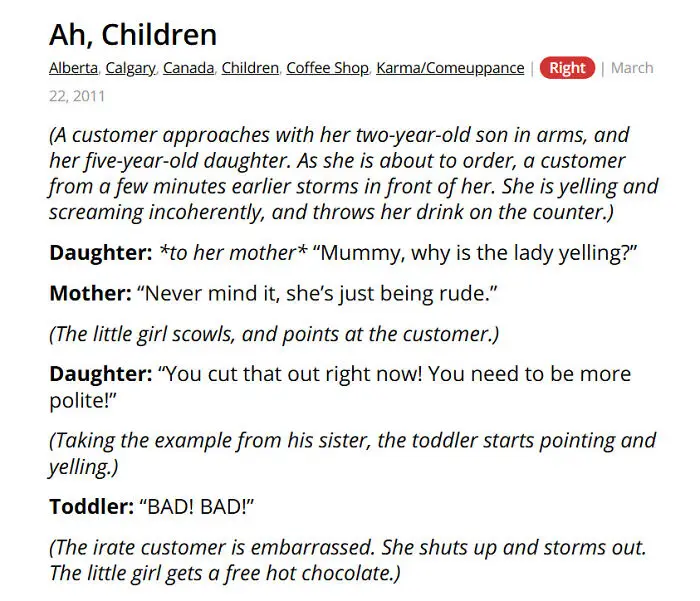
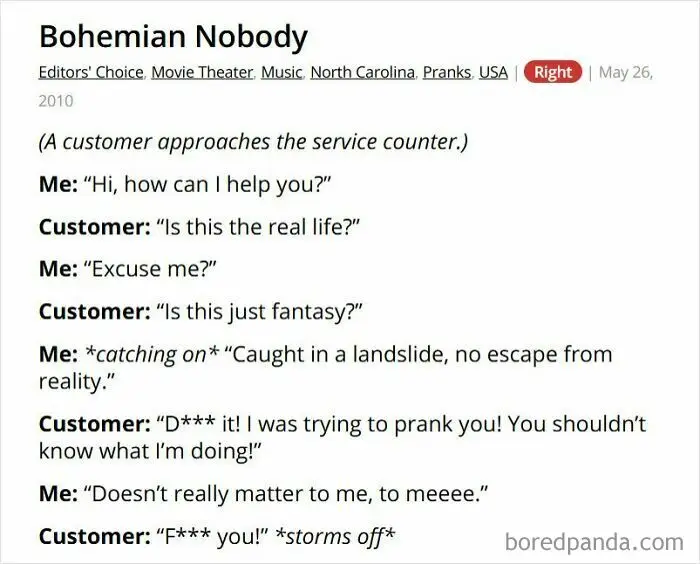
Which is exactly why moments like these tend to stick with us. Some of the customers featured here are simply funny. Others are wonderfully strange, unexpectedly wholesome, or so baffling that you can practically hear the employee thinking, Wait, what? And then there are the more infuriating interactions that really do make you appreciate just how much patience some customer-facing workers must have.
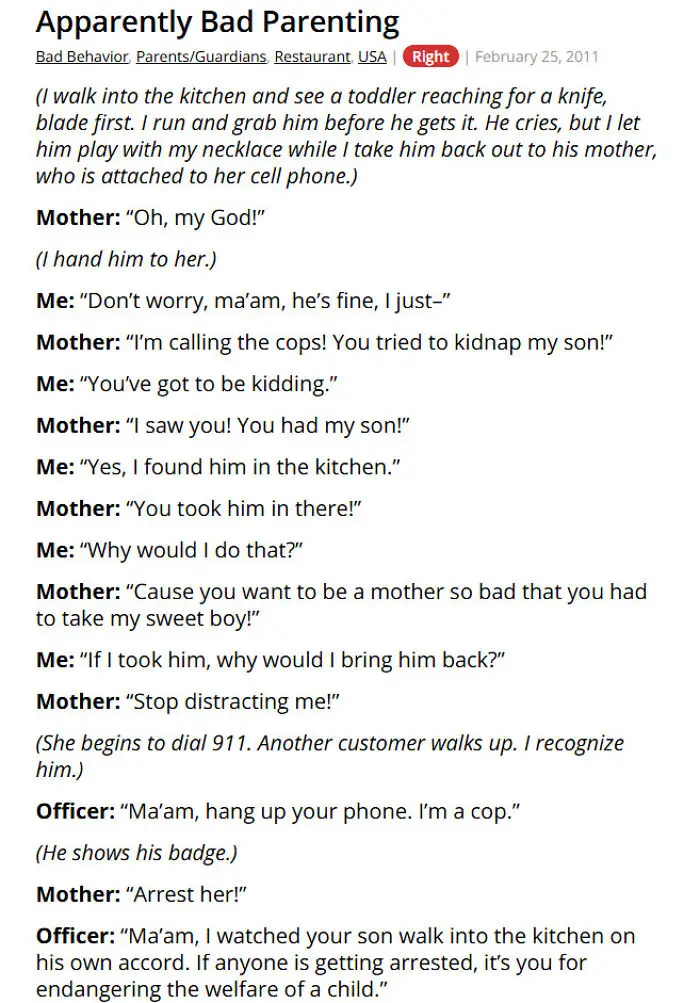
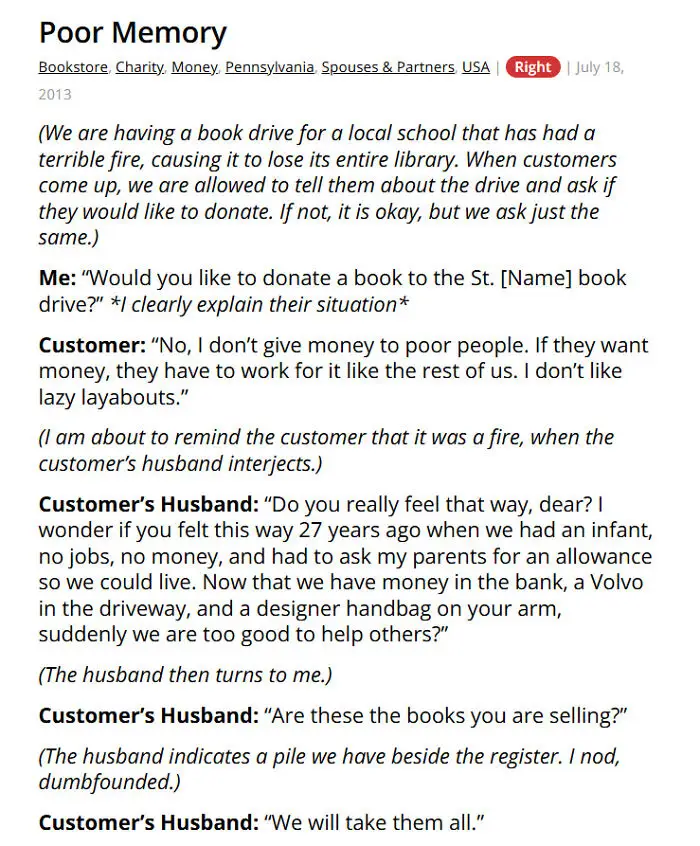
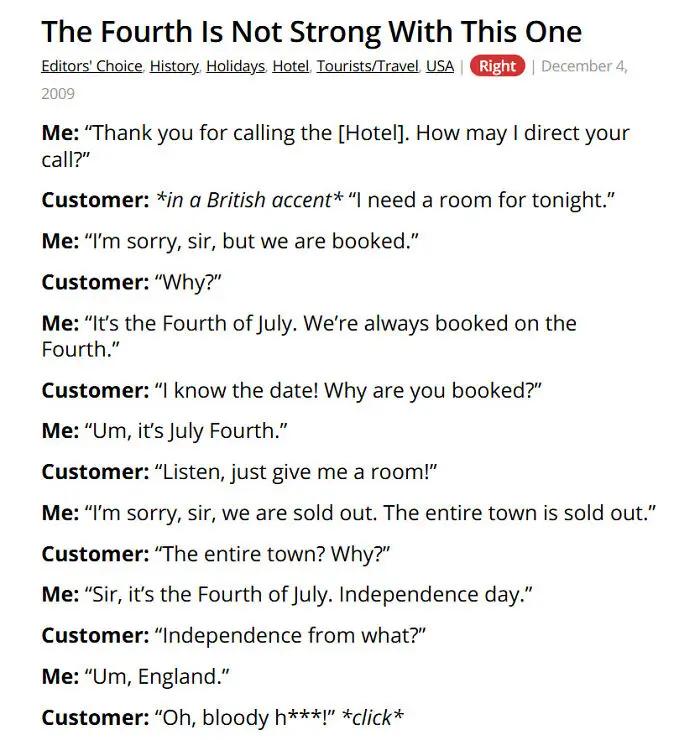
Not every customer is going to be right, and not every interaction is going to end with everyone walking away happy. But there’s something satisfying about seeing these employees share the moments that made them laugh, scratch their heads, or wonder how what could have been a perfectly ordinary interaction managed to go so spectacularly off the rails. Not Always Right calls them reminders “that real life is stranger than fiction.”
And if you’ve ever clocked a shift in a customer-facing job, you probably know exactly the feeling. Sometimes, all you can do is tell the story afterward—and hope the next customer is a little easier to deal with.