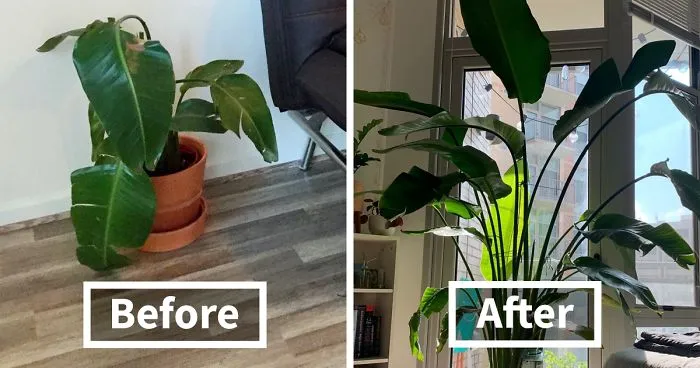


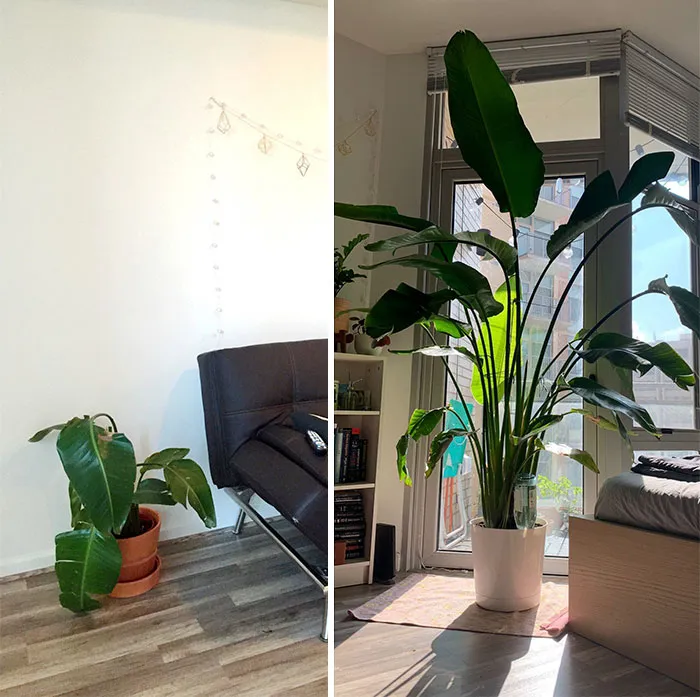
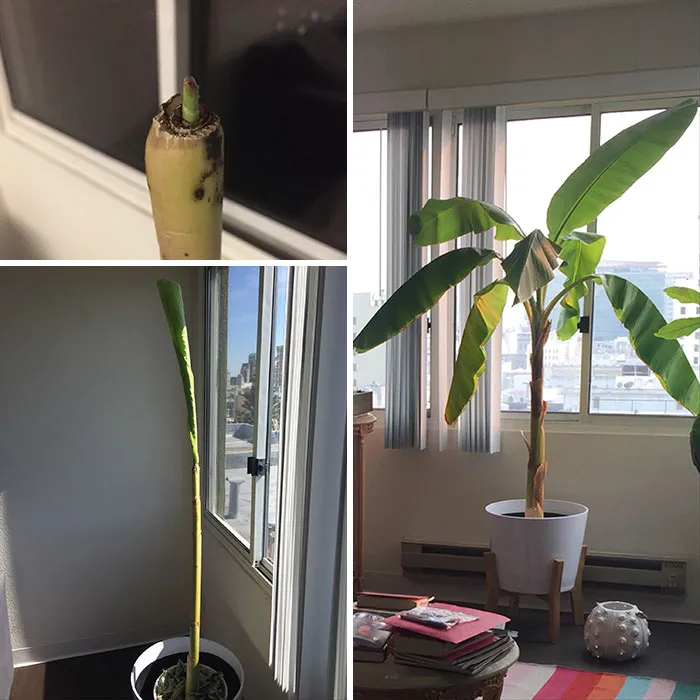
#1 Rescued From The Trash 2.5 Years Ago To Nearly Outgrowing My Apt Today
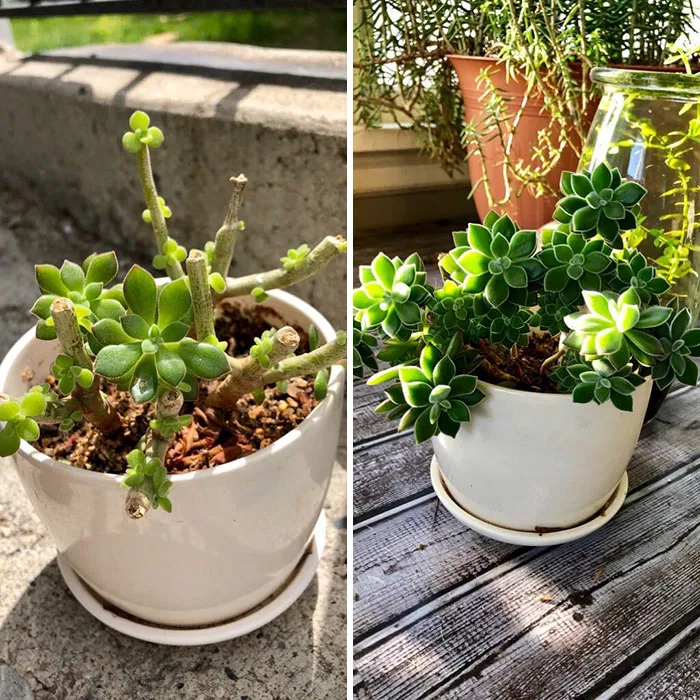
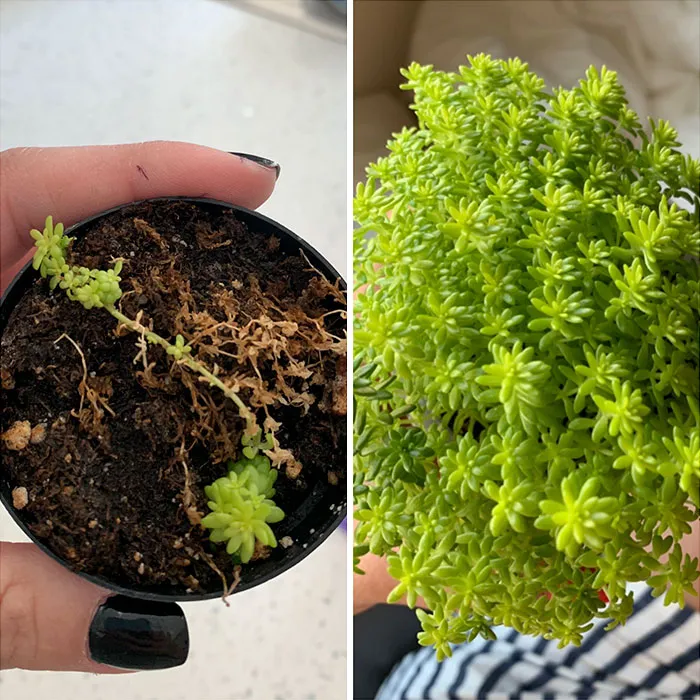
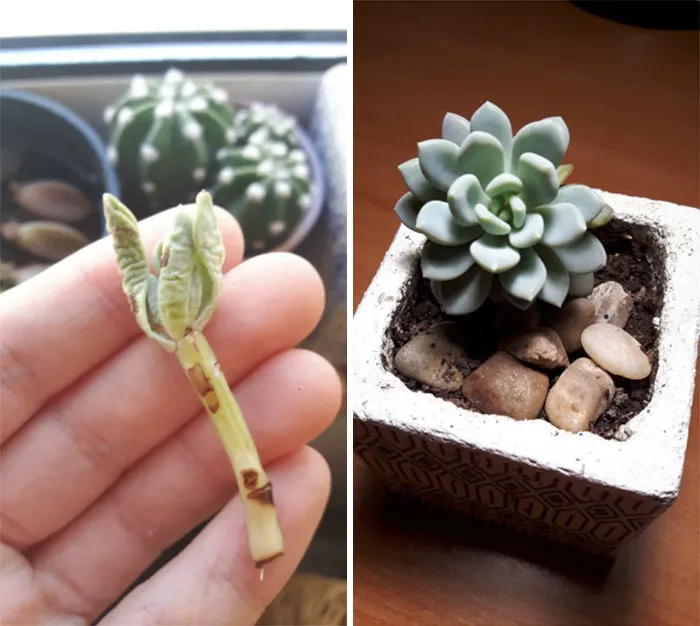
#2 I Took In My Partner’s Neglected Succulent, And Here We Are Two Months Later! 03.18.19 // 05.24.19
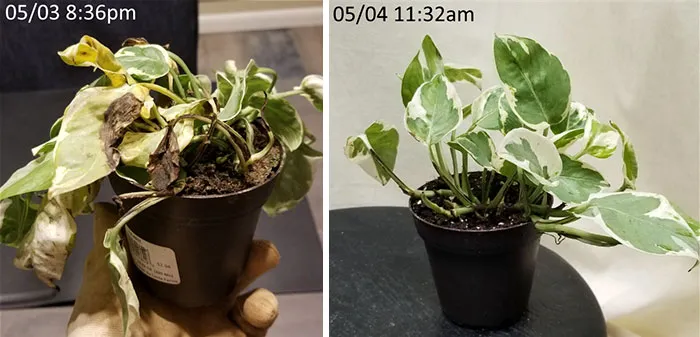
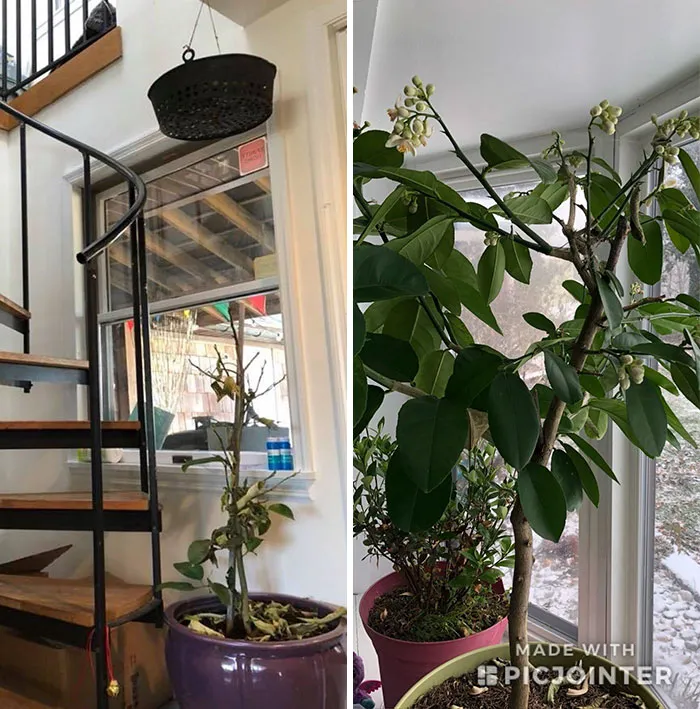
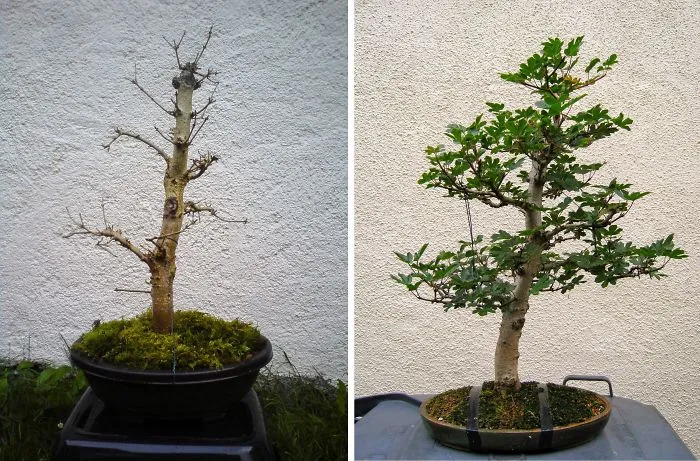
#3 Found This Guy Underneath The Discount Table At Walmart. The Cashier Asked Me Why I Was Buying A Dead Plant. 15 Hours Later...
According to ProFlowers, it’s always better to underwater your plants than to overwater them. That’s because they recover more quickly from the former than the latter. In other words, an overwatered plant needs way more care and attention from you. And it’s a great metaphor for how an excess of a good thing can sometimes be worse than a lack of it. [Writer tries very hard to justify forgetting to water some plants by pretending to be wise.] But it seems that overwatering is a very common mistake!
Kamilė, who co-owns the 'Kambarinės gėlės' plant shop in Vilnius, told Bored Panda that the most common problems that her clients face are related to just that—overwatering. 9 times out of 10, it’s the main issue they need help with.
“People show their love for plants with too much attention and with too much water. Without knowing the subtleties related to the care of particular plants, it’s difficult to know how little water some of them require,” she told Bored Panda. “People show their love with water, so ironically, they kill their plants with their love.”
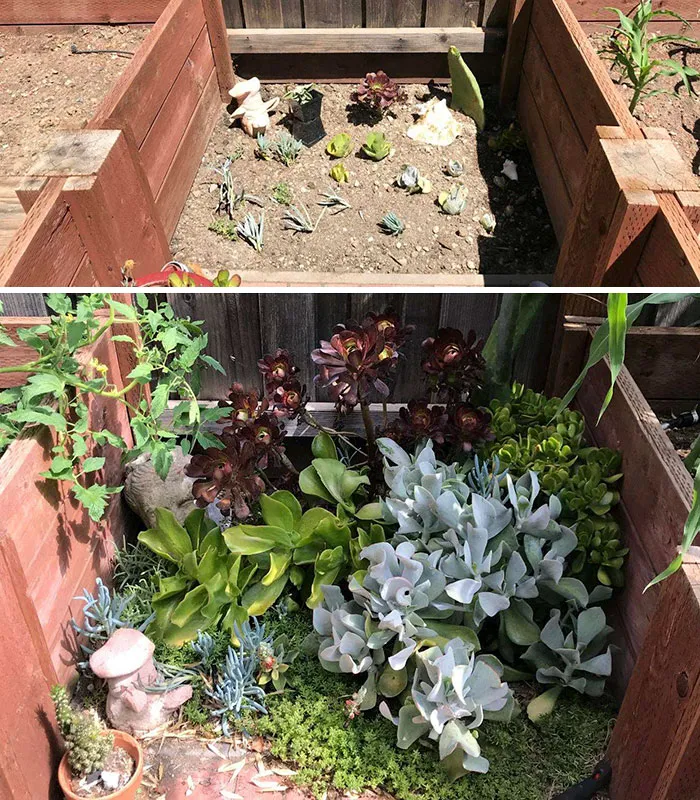
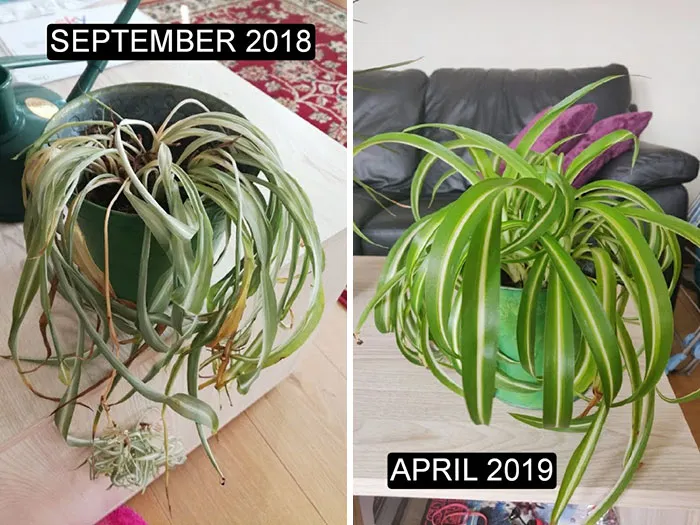
#5 Anyone Who Says They Don't Have Favourites Is Either Lying To Themselves, Or You. Six Months Progress
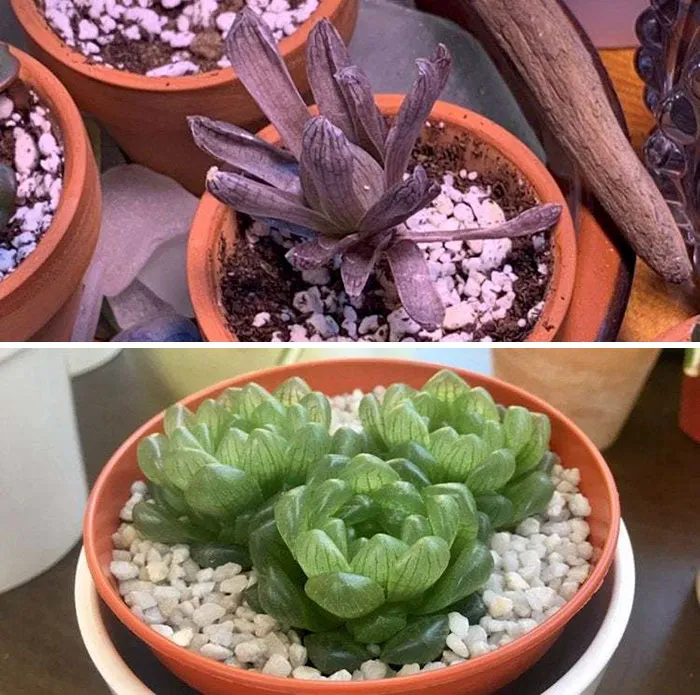
#6 The Difference A Year Makes! I Rescued This Little Guy In June 2018 And He’s Thriving Now!
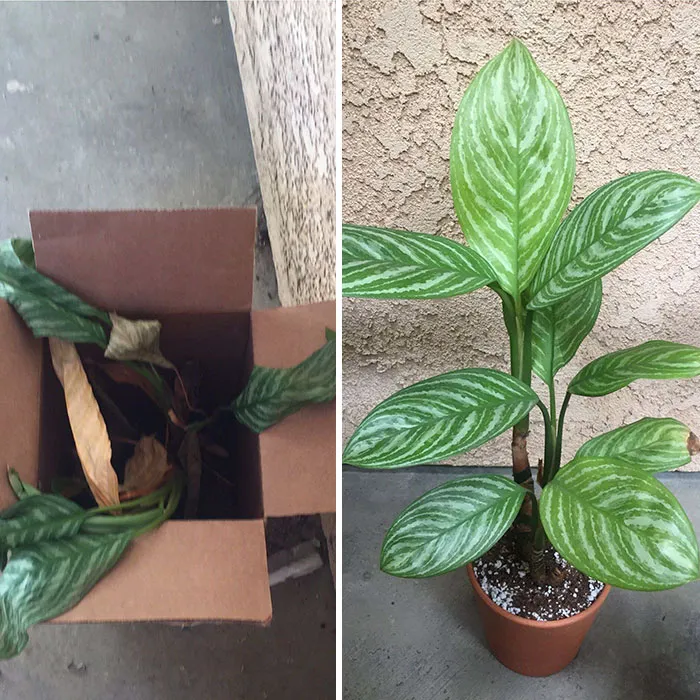
The plant expert confirmed that plants have a very difficult time recovering after getting too much love--I mean, water. “Root rot sets in and it’s hard to save plants that it affects.” Kamilė also pointed out that it’s harder to overwater plants if you happen to live in the sunnier parts of the world. Meanwhile, those of us who live in colder climates always need reminding us to hold our ho(r)ses. (Pun very much intended.)
After the first few instances of being “victims” of overzealous watering, houseplants and greenery tend to find themselves more neglected by their owners. But this is actually in the plants’ best interest.
“I recommend getting to know each plant you grow. The recommendations to water a plant X times every Y weeks are usually ineffective because they don’t take into account the unique conditions in your home. So don’t spoil houseplants with too much water from the get-go. Usually, a plant tells you what it needs: if the leaves curl up, it wants water; if the plant becomes droopy and there are brown spots on the leaves, you’re giving it too much water,” Kamilė told us.
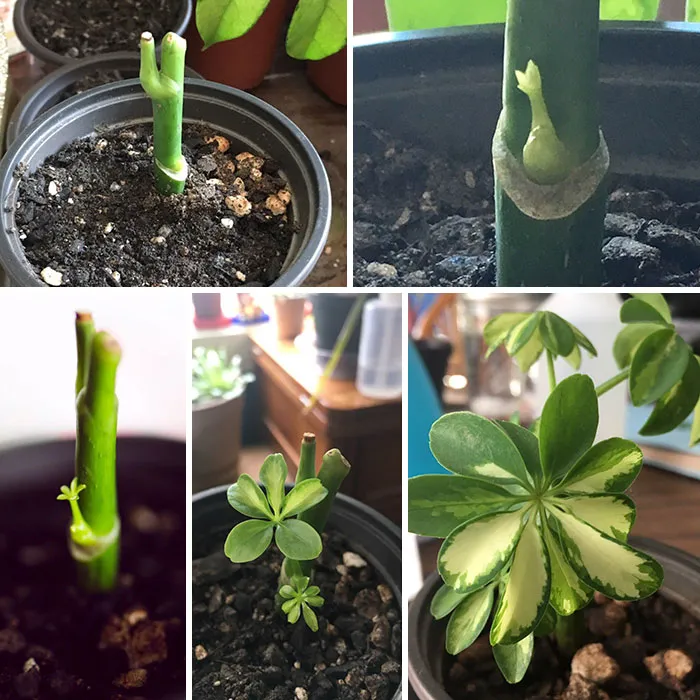
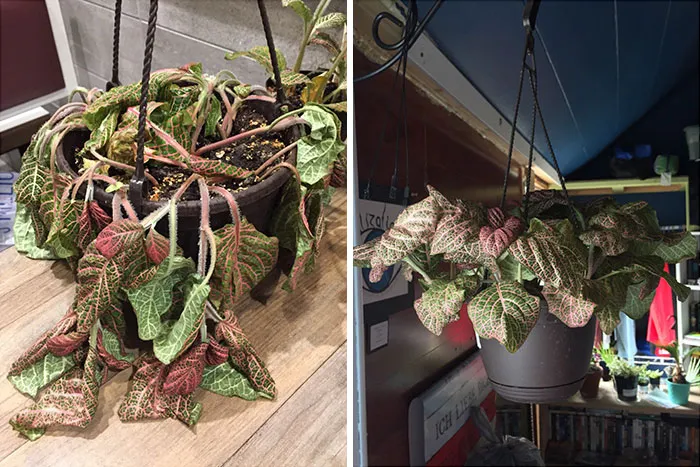
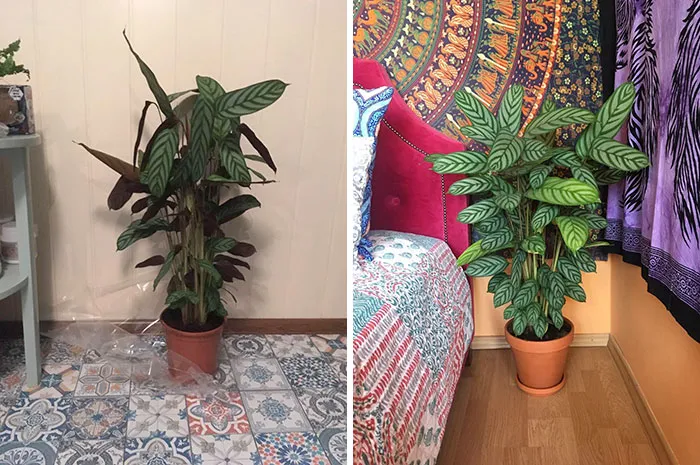
#8 My Ctenanthe Setosa - Left Pic Is When I Brought It Home, Right - 3 Weeks Later
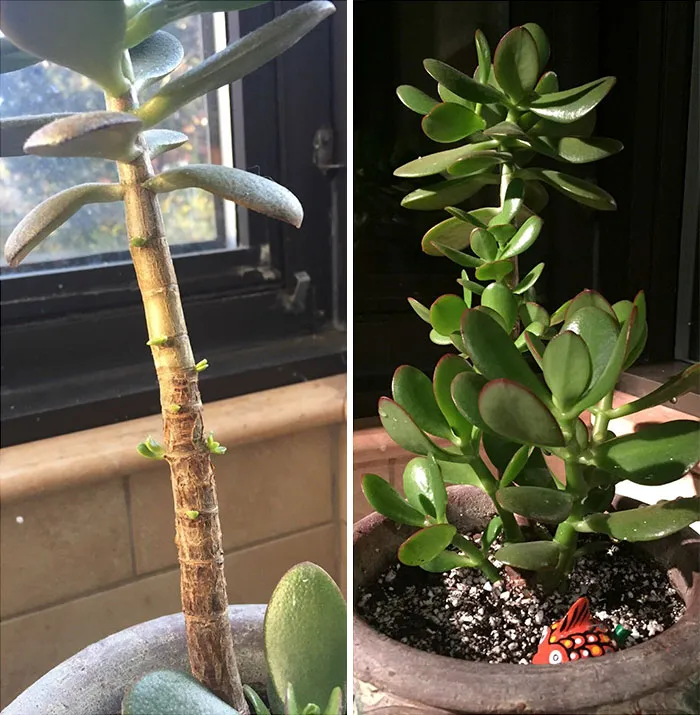
#9 Adopted This Sad Jade Plant From An Old Coworker. Look At It Now, Less Than Six Months Later!
We were also interested to find out what amateurs (like me) should know about using fertilizer. Well, the plant expert told us that plants can survive without any fertilizer but their ‘health’ will deteriorate the longer they go without it.
“Potted plants get all of their nutrients from the soil we plant them in. They grow in a very constricted space, unlike in nature, where complex nutritional trades occur between different organisms. Every time you water a house plant, some of the nutrients get ‘rinsed out,’ and used up” Kamilė pointed out that if you want your plants to be healthy and to look great, using some type of fertilizer is a must. She also said that fertilizing house plants is a very different thing from taking care of fruit-bearing plants like tomatoes or cucumbers in hothouses.
The expert noted that universal, all-purpose fertilizers exist for a reason and contain the 3 primary elements needed by house plants: Nitrogen, Phosphorus, and Potassium.
“Each of these nutrients has a different function. You can pick different fertilizers that contain varying proportions of these minerals to obtain different results. For instance, fertilizers with more Nitrogen will make plants bear more leaves. While more Phosphorus means more blossoms. But these considerations are secondary: all-purpose diluted synthetic or organic fertilizers do the job they need to do.”
#13 I Found This Little Cutting About A Year Ago, Now It Is Thriving On My Window!
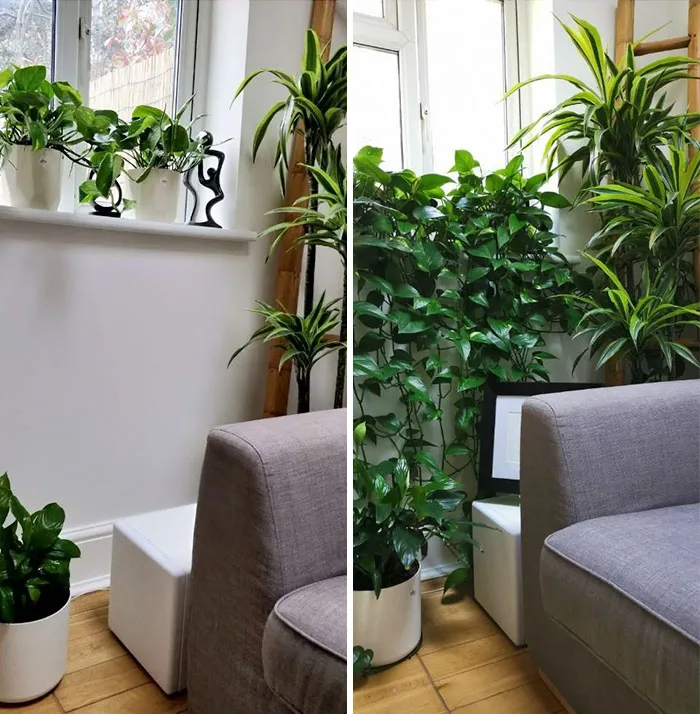
#14 1 Year Progress. The Plants Seem To Like That Corner And So Do Our Guests (And Us Of Course)
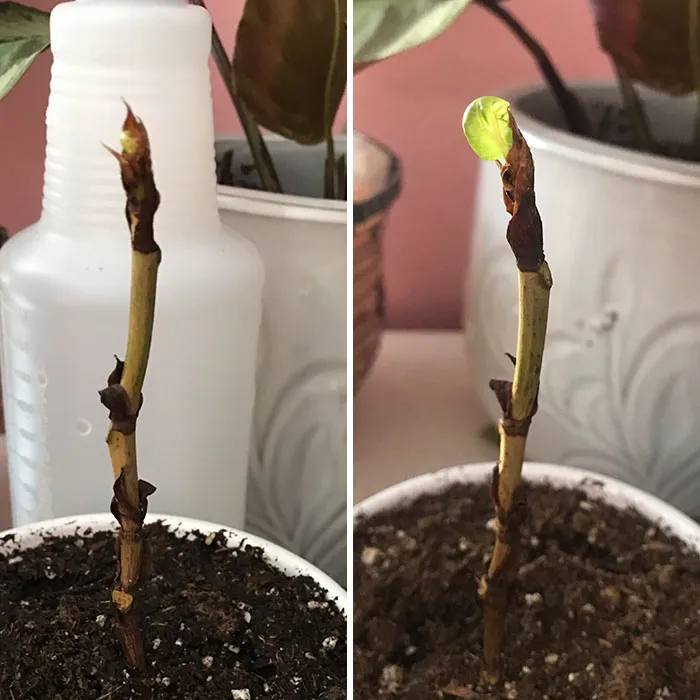
#15 Pierre, My Fiddle Leaf Fig, Sprouted His First Leaf After Losing All Of His Old Ones. I’m So Over The Moon!
Kamilė noted that growing plants at home means different things for different individuals. For some, they’re decorations. For others—they’re living organisms that need care and attention because if you treat them well, they reward you by growing and becoming more beautiful. And that brings joy to gardeners, whether they’re amateurs or grandmasters. Or Ents.
“However, if you’re having difficulties taking care of your plants, watching them wither can be a source of stress. Fortunately, in most cases, plants bring us joy. Especially in modern times when we find ourselves further from nature,” Kamilė said.
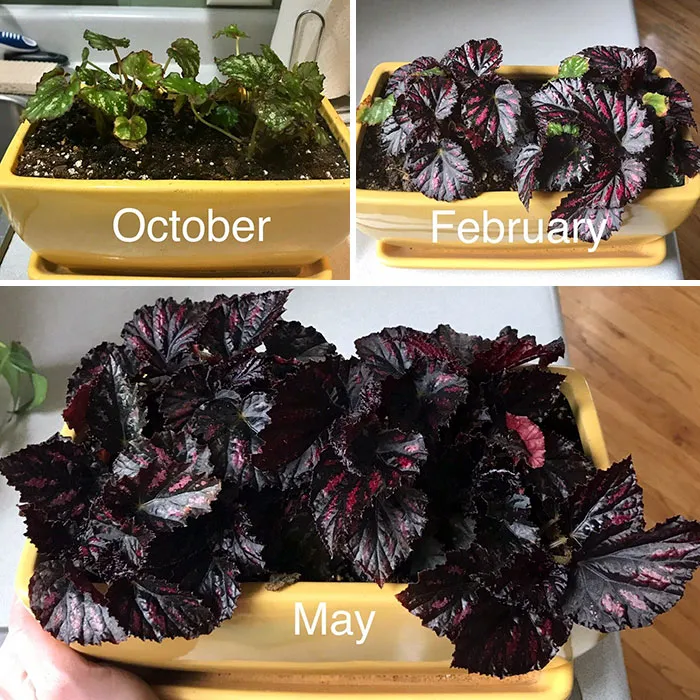
#17 For Some Reason This Begonia Has Been One Of My Most Successful Saves From Home Depot. I Love The Color Change!
According to her, studies show that having some form of greenery at home calms us and reduces our stress levels. What’s more, taking care of plants can be a form of meditation that helps us get away from our jobs and routines.
Kamilė pointed out that because she collects rare plants, her hobby eats up large chunks of her time. However, she finds the caretaking process soothing and she can’t imagine her day-to-day life without it.