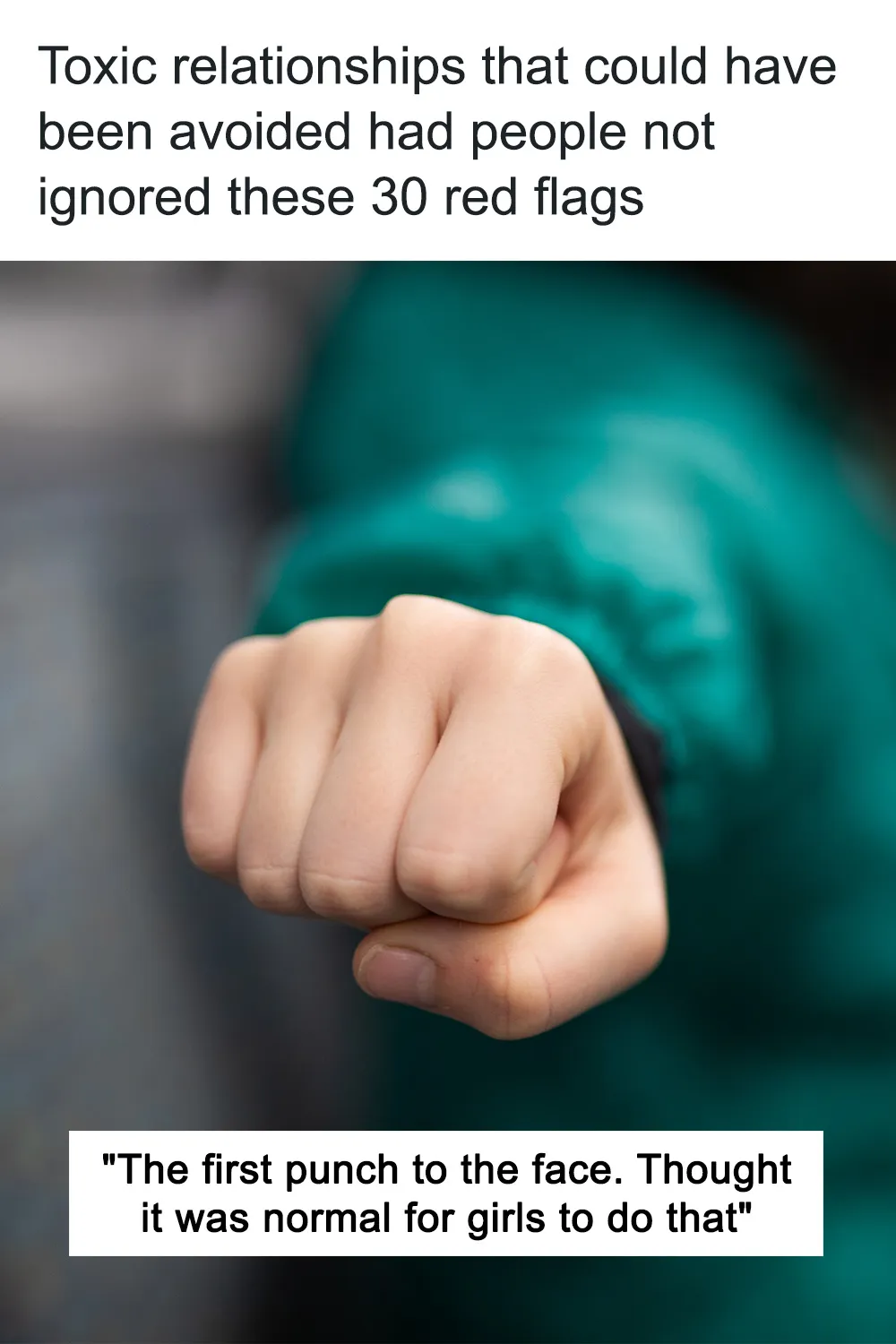


#21

But if you've been in a situation like this before, you can use your experience to help form healthier relationships in the future. "Getting out of a toxic relationship often offers valuable insights into which red flags to be vigilant about," Nia says.
"Here are strategies to increase awareness and avoid repeating unhealthy patterns: Reflect on past relationships. Identify specific behaviors in past partners that led to distress or toxicity," the therapist shared. "This could be lack of respect, emotional manipulation, or any other red flags that compromised your well-being. Many people who leave toxic relationships benefit from writing down and analyzing these red flags to stay mindful of them in future connections."
#22


#24

Nia also recommends focusing on green flags in future relationships. "A healthy relationship involves mutual respect, trust, open communication, and empathy. Look for a partner who demonstrates accountability, actively listens, and respects your individuality. Positive psychology research shows that partners with these traits have stronger, more resilient relationships."
And always remember to trust your gut. "Research shows that people are often aware of red flags early in a relationship but may dismiss or rationalize them. Studies on the 'halo effect' demonstrate that we sometimes overlook red flags due to attraction, which can impair judgment," Nia shared. "Practicing mindfulness can help you stay connected to your instincts and notice when something doesn’t feel right."

#26

#27

And when looking for a partner, take your time. "The early stages of dating are essential for observing red and green flags. Taking time to assess your partner without rushing into a commitment allows you to evaluate compatibility and recognize any concerning patterns," Nia shared. "According to Dr. John Gottman’s studies, couples who slowly build a foundation of trust and friendship are more likely to have successful relationships."
#28

She never put me first, and always seemed to care more about other people's problems and feelings way more than mine.
#29
Finally, Nia says that recognizing and addressing red flags is a skill that develops over time. "People often carry emotional scars from past relationships, but by understanding red flags, we gain tools for building healthier, more fulfilling relationships in the future," she explained. "If you ignore red flags, it can destroy your self-esteem when you have a series of negative relationships. Try to keep an eye out for red flags to protect your heart and your mental health also."
#30