


I take meal prep pretty darn seriously. In my household, Sunday afternoons are sacred: containers out, oven on, podcast playing. It saves money and helps me eat better, but the biggest perk is knowing my meals are lined up, leaving me with one less thing to think about during a busy week.
Nothing shakes that peace of mind quite like a plan falling apart midweek. So you can imagine my vicarious frustration reading this 31-year-old woman’s story. She’s working full-time while studying for a professional certification in the evenings, which is no easy feat. To lighten her load in the kitchen, she and her husband agreed on a “leftovers arrangement” at dinnertime. In theory, it should have made life easier. But here’s how things actually played out.
A woman studying while working full-time thought she’d found a way to save time in the kitchen

But despite agreeing to the plan, her husband seemed to have other ideas
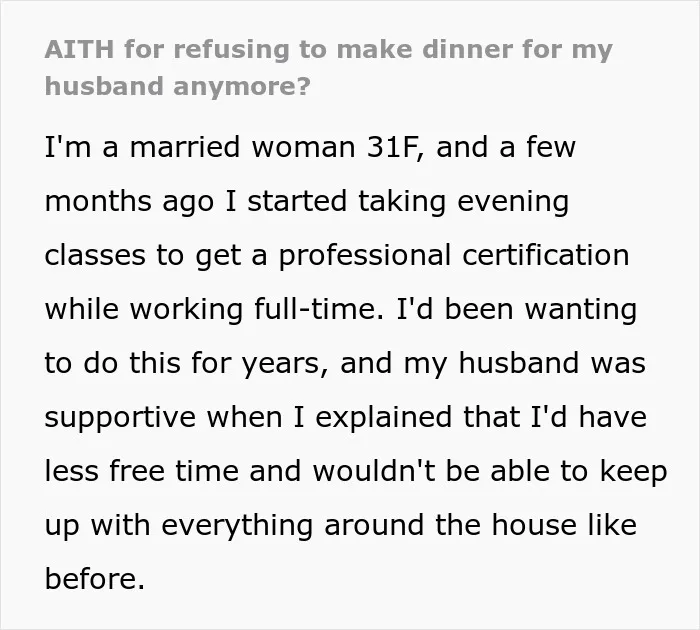
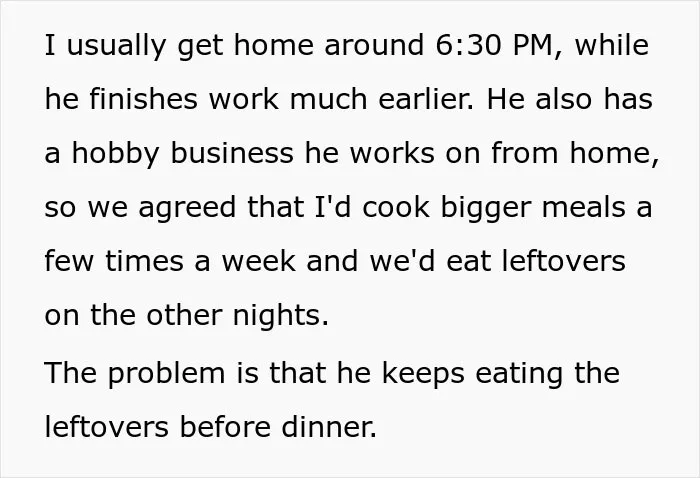

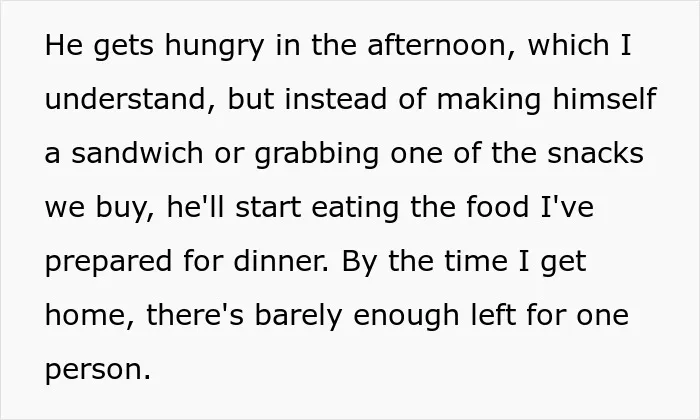
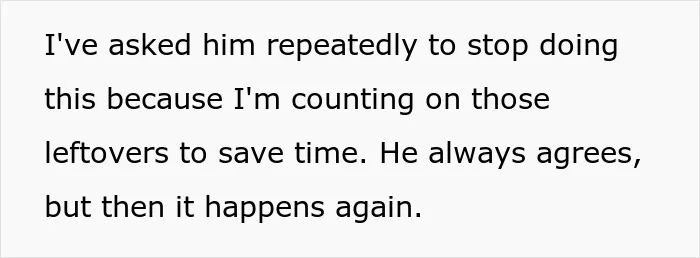



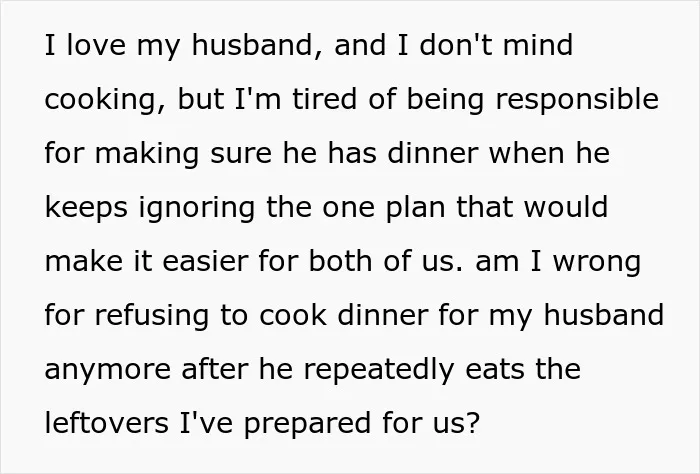
Some commenters suggested the husband start cooking his own meals, and the poster agreed it was “probably the best solution”
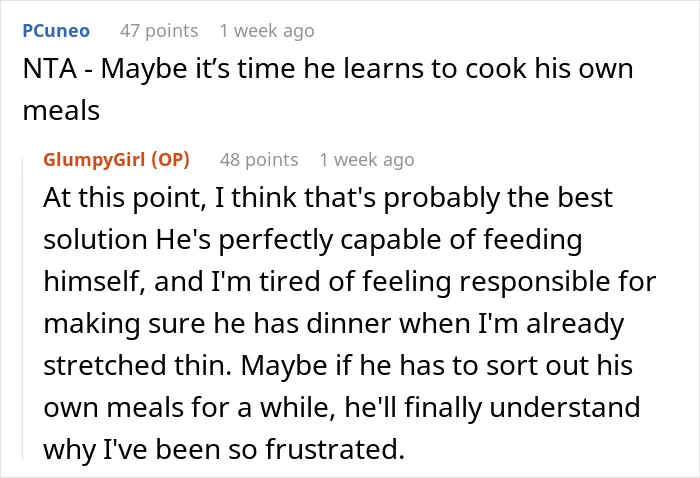
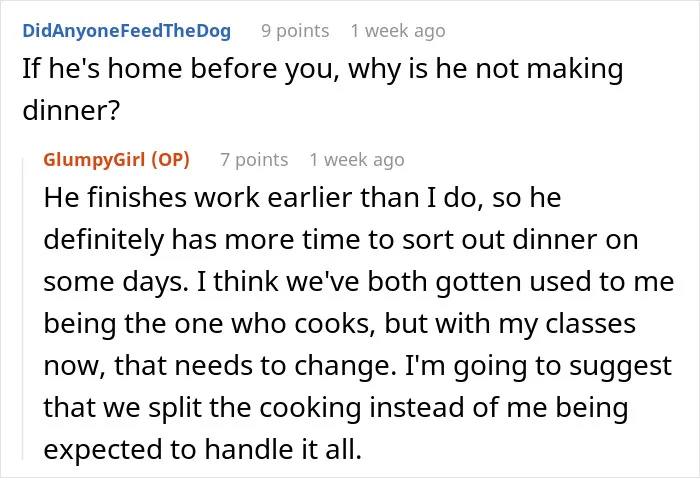
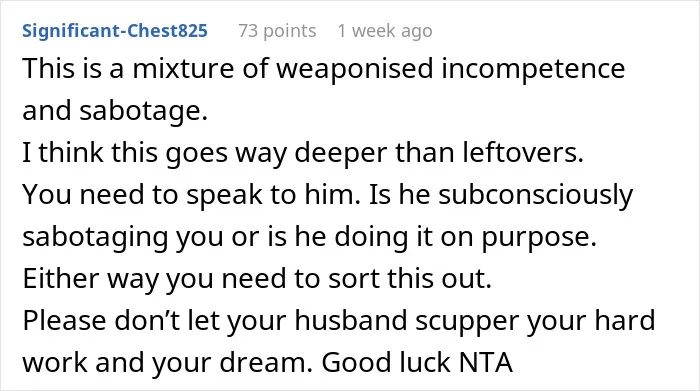
Others called the husband childish and selfish, and some even suspected sabotage

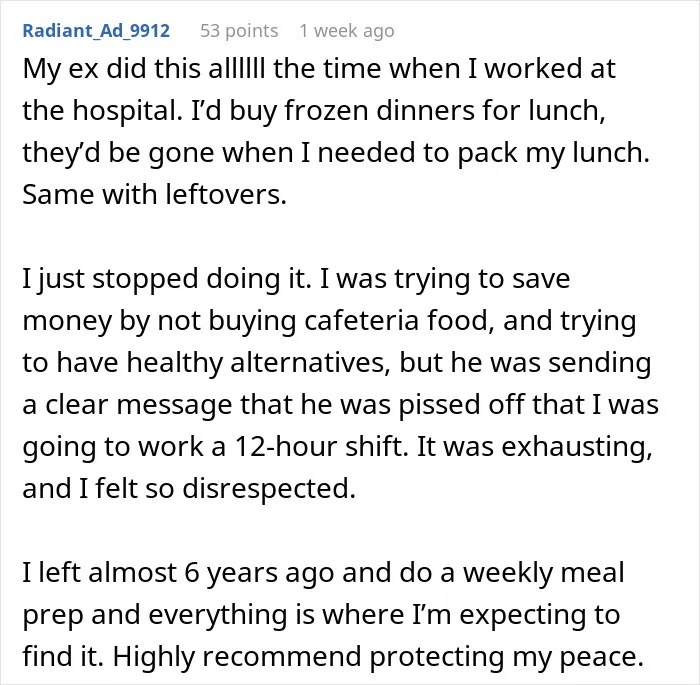






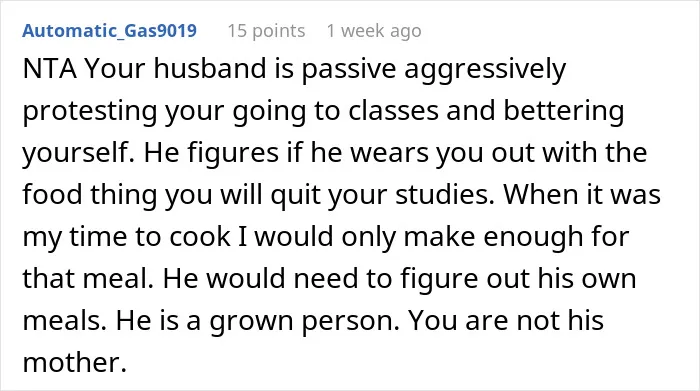



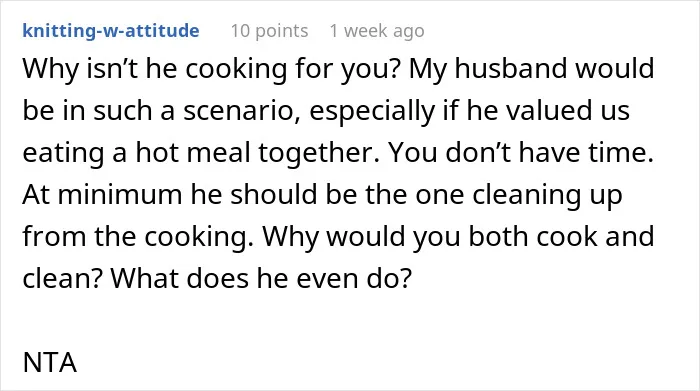




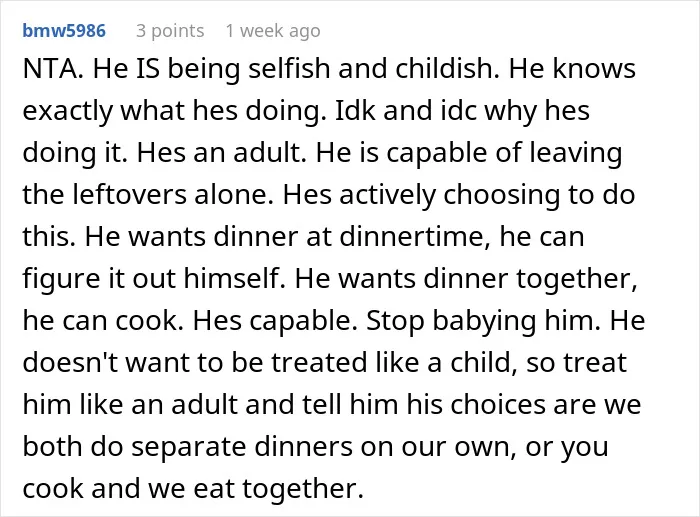


Ten days later, the poster shared an update
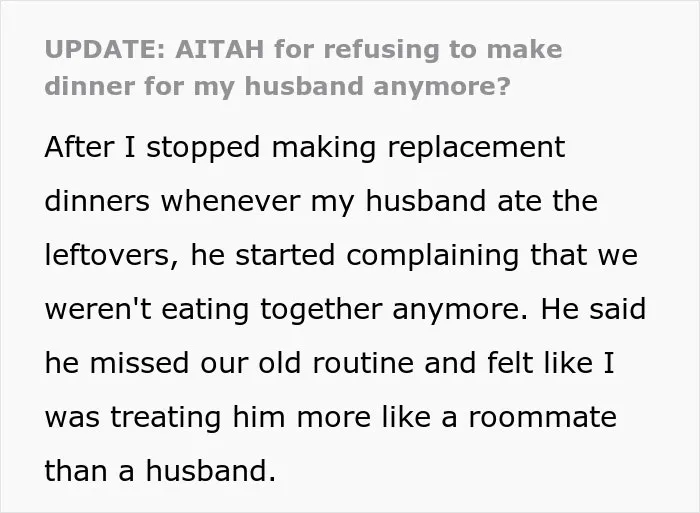
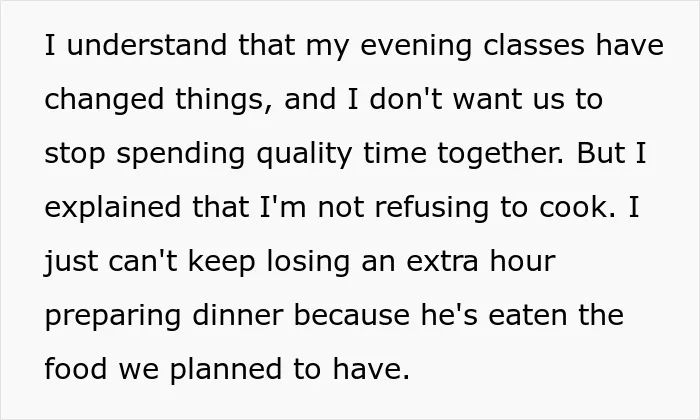
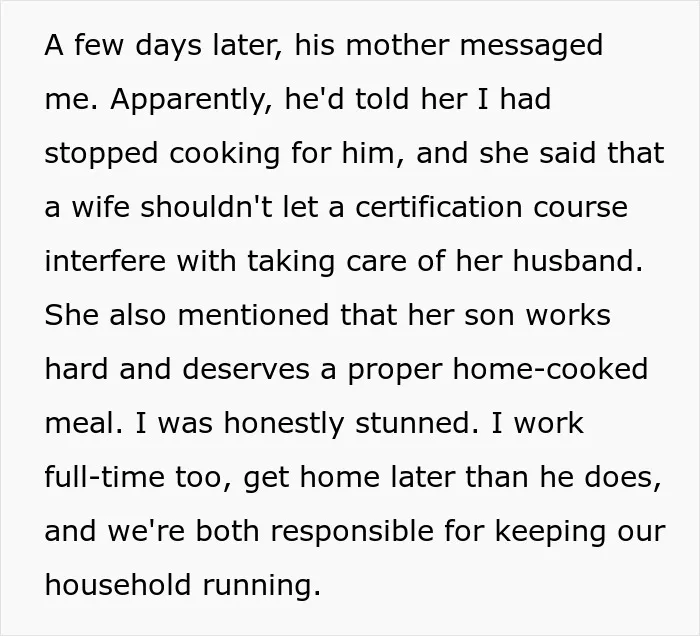


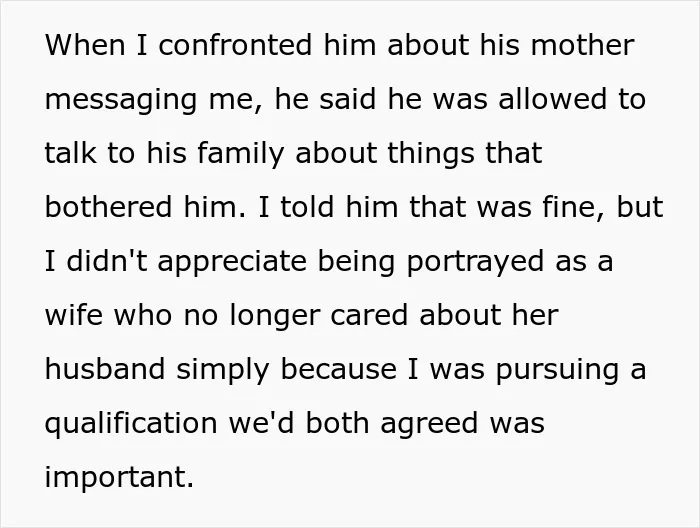

Sharing a life means sharing the load, not just the leftovers
Couples share a lot of things. Just ask anyone currently paying the singles tax. But sharing a life goes beyond a mortgage, a bank account, or a Netflix subscription. Sometimes, what makes or breaks a relationship comes down to who does the dishes, who takes out the trash, and, in this case, who makes dinner. And it’s not only about the actual doing, either. It’s also the planning, tracking, and remembering that keep a household running, often referred to as the mental load. When one person quietly ends up carrying more of it, even something as small as a container of leftovers can become a much bigger deal.
That’s what makes this story so frustrating, whether you’re an avid meal prepper or not. Because it was never really just about the food. On paper, the couple had a fair arrangement designed to give the poster more time to study. But her husband kept breaking it, and she kept stepping in to make sure he was fed. Every time she got home to find most of the dinner gone, she sacrificed another evening to cook again. And when she finally stopped? He served up a guilt trip, called her selfish, and then even his mother got involved.
People who commented on the post didn’t mince words, with many comparing him to a child. And sure, that might be a little harsh. But could they have been onto something here?
Recognizing emotional immaturity in a relationship
Writing for Verywell Mind, psychotherapist Marni Feuerman, LCSW, LMFT, defines a man-child as “an adult man who lacks emotional maturity, acts irresponsibly, and avoids responsibilities.” When that man-child is your partner or husband, she says, you might slip into a parenting role without meaning to, inadvertently encouraging the childish behavior in the process.
Although we don’t know the couple’s full relationship dynamic, that sure sounds an awful lot like the poster’s situation. Each time she made a second dinner, she took on the consequences of his choices, and the whole thing happened all over again. And let’s not forget his reaction when she started setting her own portion aside. His complaint? That she was treating him like a child.
Feuerman also lists several signs of emotional immaturity, and a few seem particularly relevant here. For starters, she notes that some immature partners avoid everyday household tasks, like cooking. This husband finishes work much earlier than his wife, yet somehow, making sure he got fed was still her job.
Then there’s how he reacted when she stopped. According to Feuerman, an emotionally immature person may complain, insist they’re being treated unfairly, and act out when they feel their needs are being ignored. An evening of loud sighing, followed by accusations of selfishness, seems to echo that pattern.
And, of course, there’s his mom. Feuerman explains that some men stay overly reliant on their mothers well into adulthood. Telling his mom that his wife had stopped cooking for him and then letting her lecture his wife about it might not be enough to establish an unhealthy mother-son dynamic, but it does add another layer.
The good news is that the poster had already started putting two of Feuerman’s main strategies into practice. The first is to stop enabling. By refusing to cook a replacement dinner, she stopped shielding her husband from the consequences. The second is to set boundaries. Their new deal does just that: dinner together on set nights, leftovers on the others, and no second round of cooking.
But as any meal prepper knows, a plan is only as good as the people sticking to it. To his credit, her husband did admit he’d been feeling neglected, and the poster says he isn’t always like this. Still, as she put it herself, supporting your partner has to mean more than just saying you do. Here’s hoping her husband finally gets the message, respects their agreement, and leaves the leftovers alone.
“He sounds like an infant”: Commenters continued to criticize the husband
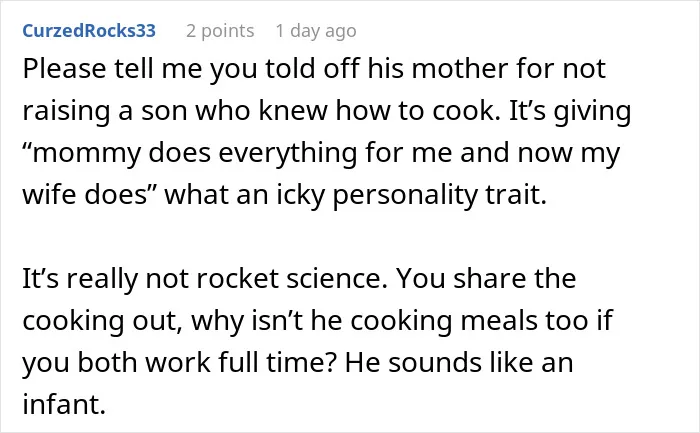
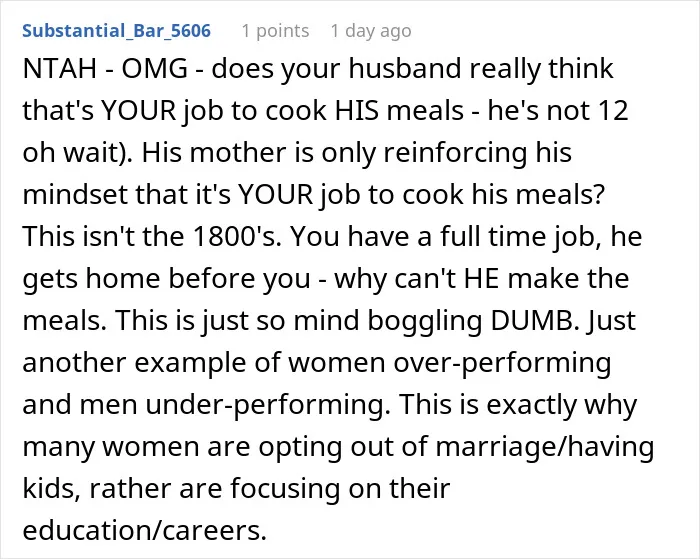



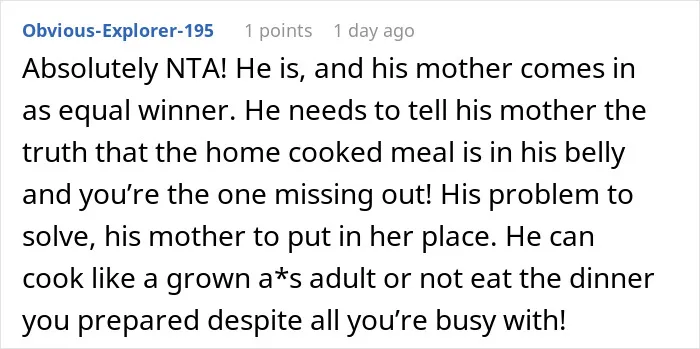


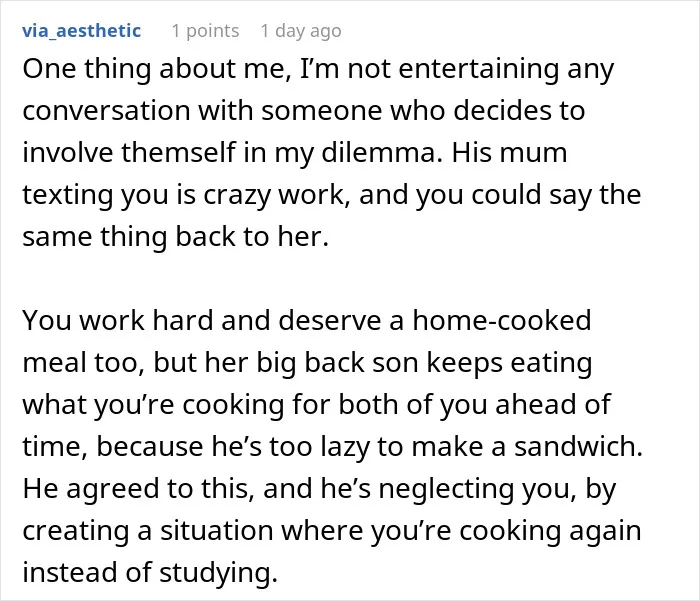


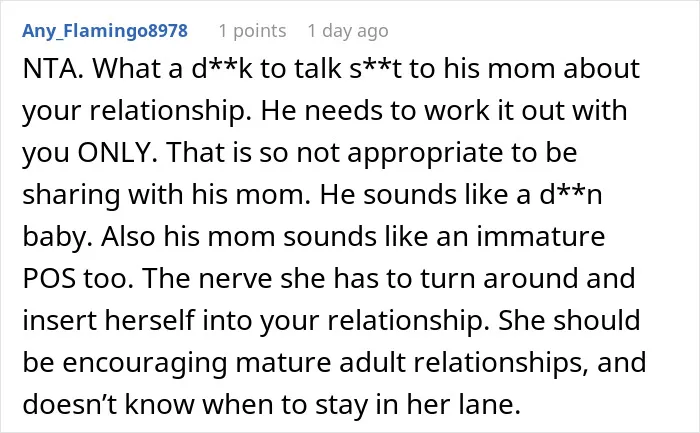
One commenter called the poster out for “coddling” him