

“We’ve been learning to work remotely either part or all of the time on the fly during this crisis,” Peter Cappelli, a professor at the University of Pennsylvania’s Wharton School of Business, said. “There’s a lot of moving parts that are difficult to manage, too, without being able to predict with full confidence what the consequences will be: What if employees don’t agree on what days to come in, or how do you equally measure the performance of people who are remote vs. in the office, avoiding proximity bias?”
Companies might consider, he added, either transitioning to be remote or in-office full-time to avoid such spots. "Moving toward a hybrid workforce is pretty complicated to figure out, and nobody knows quite how well it works for an organization because it’s still so new for most employers."
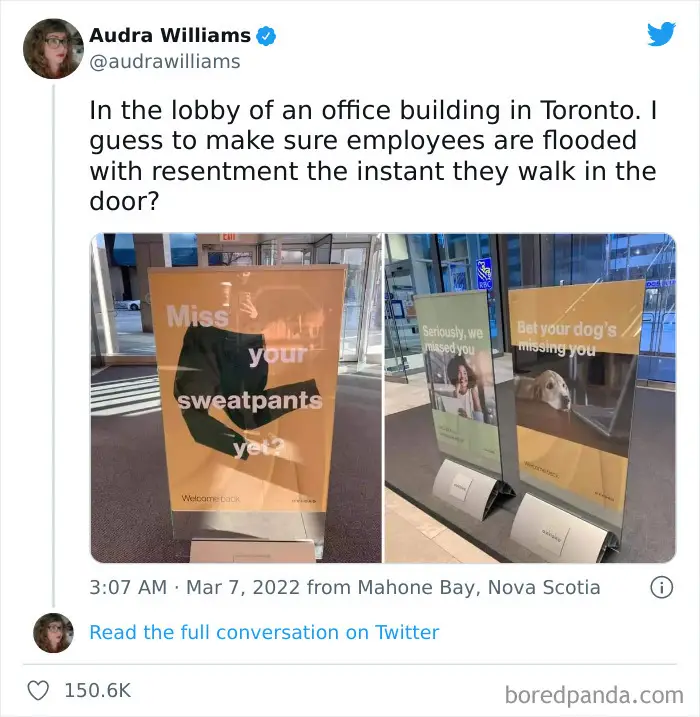
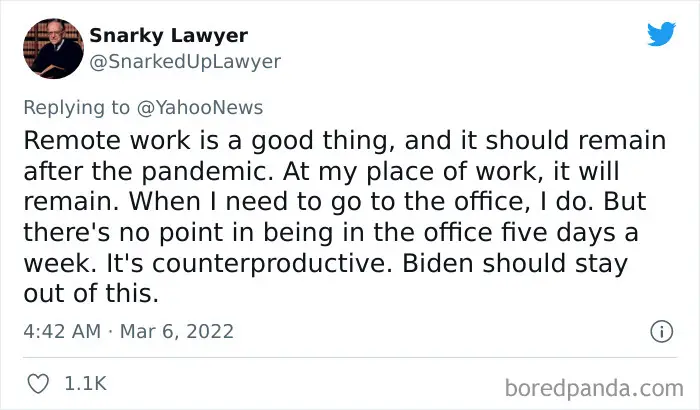
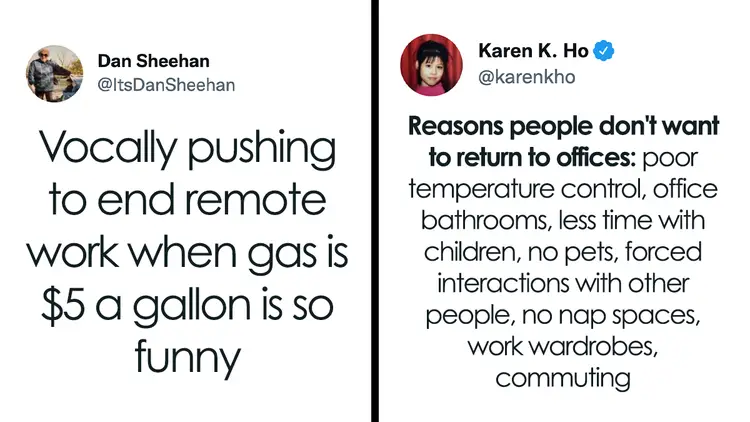
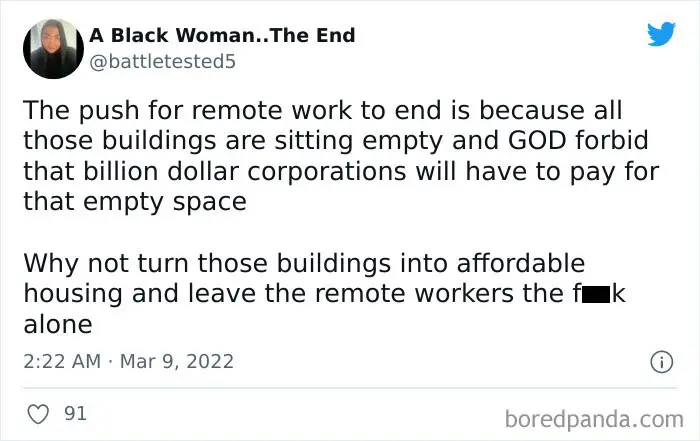
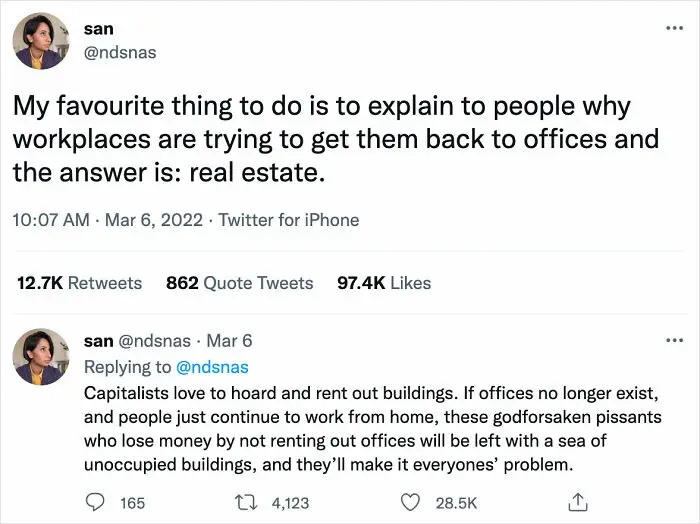
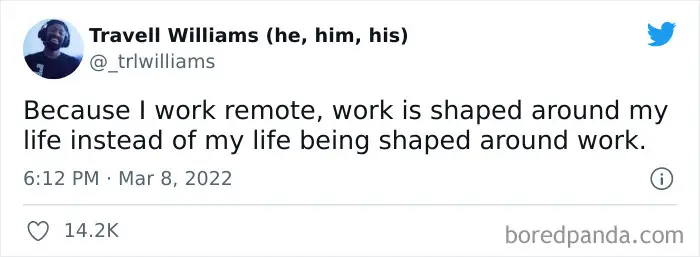
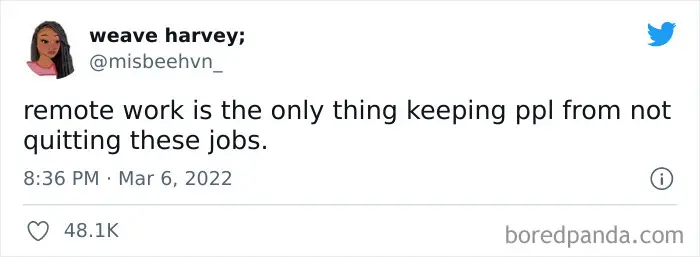
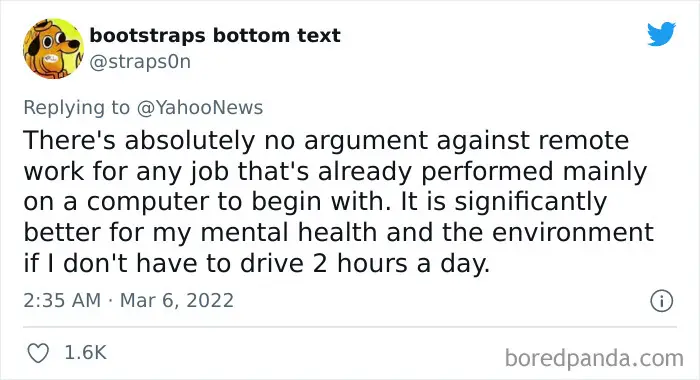
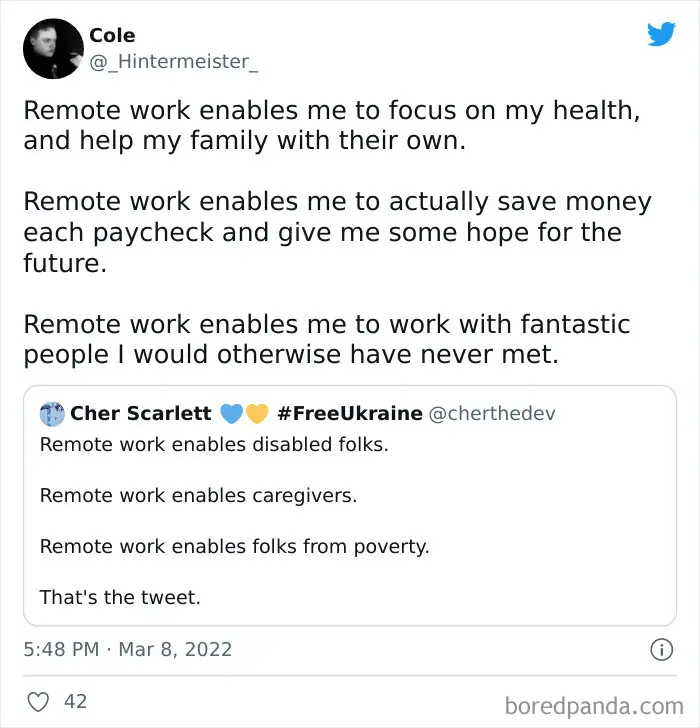
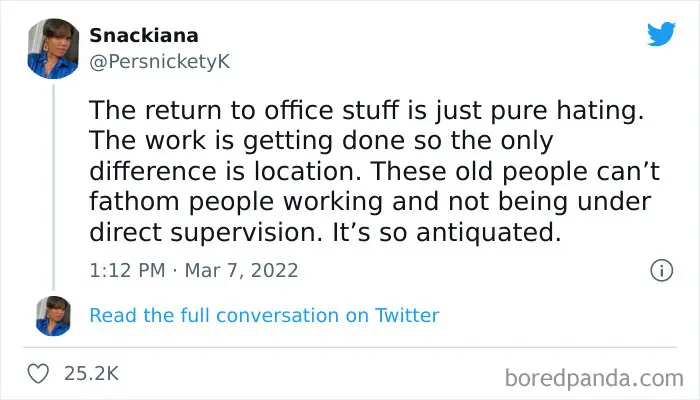
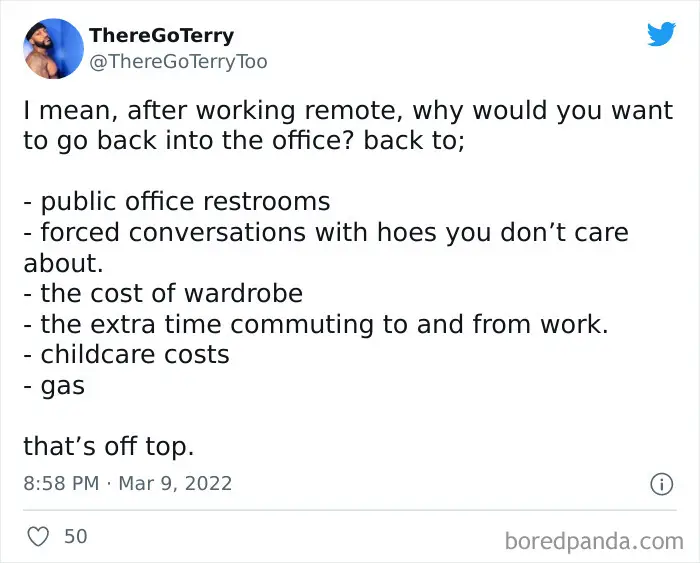
As we can see, people working from home have said it's helped them maintain a better work-life balance, manage childcare responsibilities and be more productive, among other benefits, but sadly, such praises might not be enough to prevent companies from pushing a return to the office.