





So does Sebastian believe that truth is stranger than fiction?
"Truth can sometimes be stranger than fiction, but often it’s just that truth is more complicated than fiction," he noted. "Reality is messy and tends to defy tidy narrative structures. But, ironically, the process of teaching history is often about finding narratives in the human story and using them as hooks."
"Most historical myths develop from people trying to make sense of a complicated mess of information," the host pointed out. "For instance, a tragedy like the sinking of the Titanic makes more sense if the ship was marketed as 'unsinkable,' the ship's owners purposefully skimped on lifeboats, and everyone involved committed the sin of hubris. The tragedy then becomes understandable using mythic logic—even the ancient Greeks knew that the gods punished hubris."
#22
But Sebastian says the true story is more complicated.
"The Titanic had the typical number of lifeboats for an ocean liner of the era, in fact it had more than most. The term 'unsinkable' wasn’t really used to promote the ship (although you can find passing examples hidden deep in promotional materials). The 'unsinkable' Titanic was seized on by the media after an official used the term after the ship had already hit the iceberg," the host explained.
"The truth is that the universe is chaotic. That chaos sometimes produces strangeness… but just as often produces messy situations that are difficult to fully understand."
#23
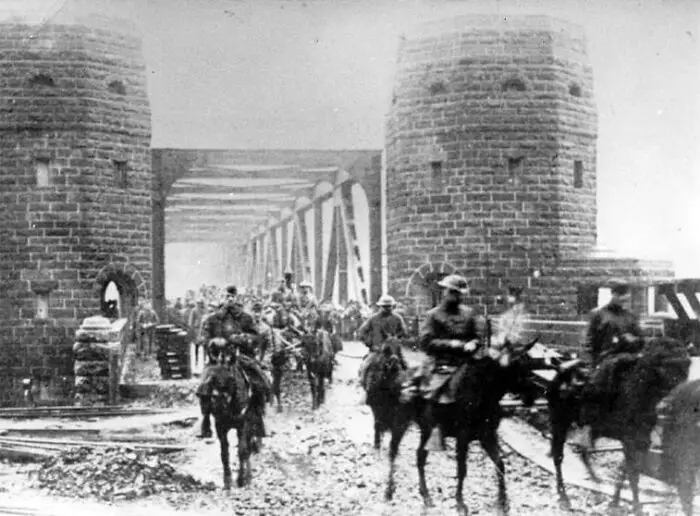
As the Americans closed in on Germany and reached the Rhine in the closing months of WW2, the Germans had successfully blown up every last bridge except for one that was already wired up and hours from demolition.
When Brig. General William M. Hoge was sent to liberate Remagen, he was shocked to discover the Ludendorff bridge still intact.
It was generally accepted that there would be no bridges left, but Eisenhower believed that in the off chance there was a bridge left, it should be captured.
Hoge then decided to defy a direct order to link up with Patton further south and sent his men on a s******l charge to capture the bridge.
At the very same time, N**i troops that had fled across the bridge to escape the allied advance were frantically trying to set off the detonation charges and drop it into the Rhine.
While some of the charges actually went off and badly damaged the structure, the bridge still stood because a lucky hit from an allied artillery shell severed the wires to the detonation charges before they could be triggered.
After a valiant effort the bridge was captured, opening an Allied beachhead into Germany.
The first man across, Alexander A. Drabik, spoke about it.
*"While we were running across the bridge – and, man, it may have been only 250 yards, but it seemed like 250 miles to us – I spotted this lieutenant, standing out there completely exposed to the machine gun fire that was pretty heavy by this time...He was cutting wires and kicking the German demolition charges off the bridge with his feet! Boy that took plenty of guts. He's the one who saved the bridge and made the whole thing possible – the kinda guy I'd like to know."*
Incidentally, Sgt. Drabik became the first man to successfully cross the Rhine and capture German territory since the time of Napoleon.
With the tireless work of the Army Corp. of Engineers, the bridge survived German mortar attacks, artillery barrages, and hundreds of air raids (Defended by the single largest AA battery arranged in the entire war)
It was almost obliterated by a near miss from a railroad gun, SS Frogmen who tried to float downstream during the night and sabotage the bridge were spotted by special spotlights mounted on tanks, naval mines sent downstream were caught by nets, and the Nazis even tried to blow it up with V2 rockets (But missed).
After 10 days the Ludendorff bridge collapsed on its own (K**ling several engineers trying to keep it standing), but its capture allowed six divisions to cross and establish a beachhead in German territory, and likely shortened the entire war by weeks or even months.
#24
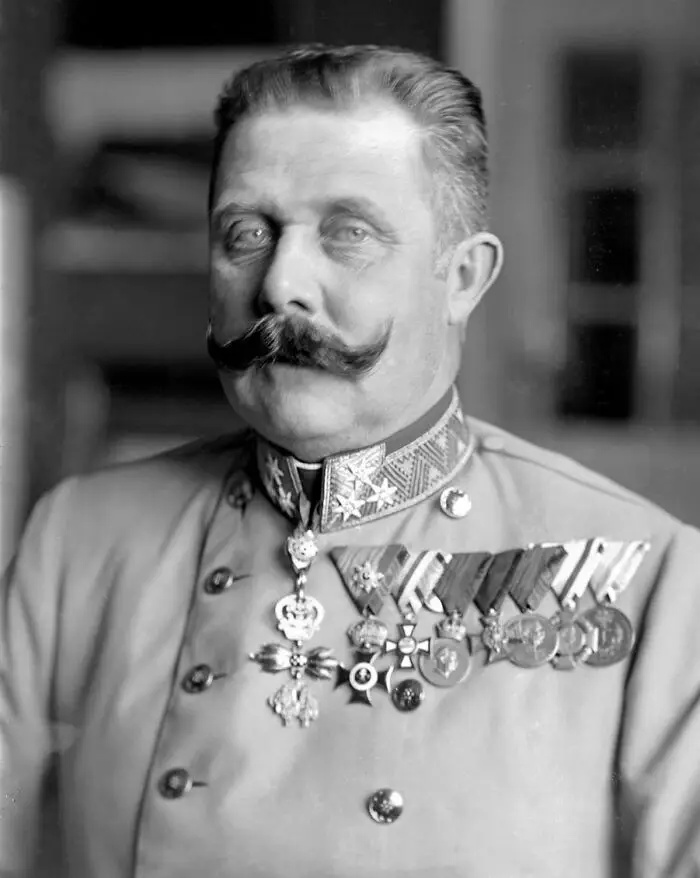
The failed first attempt, the car taking the route that it did, the car stalling right in front of Gavrilo Princip then the aftermath of that event being so catastrophic.
It sounds like sensational Hollywood writing.
#25

If you're interested in hearing more crazy yet true stories, be sure to check out Sebastian's podcast Our Fake History.
"On that show, I explore stories that people think are true but are likely legends (Did Napoleon Shoot the Nose off the Sphinx?). I also look at events or figures many people believe to be purely legendary (The Trojan War, King Arthur, etc.) and try to determine if there is a kernel of historical truth at the heart of the story!" he shared. "We have 10 seasons and over 200 episodes. Find it on Apple Podcasts, Spotify, YouTube, or wherever you listen to podcasts."
#26
#27
#28
#29

-The eccentric rich Danish man who invited a reporter to his submarine and ended up m*******g and cutting her body into pieces. Like wtf who does that? Would probably get rejected as a movie script for being too weird.
-9/11.
#30
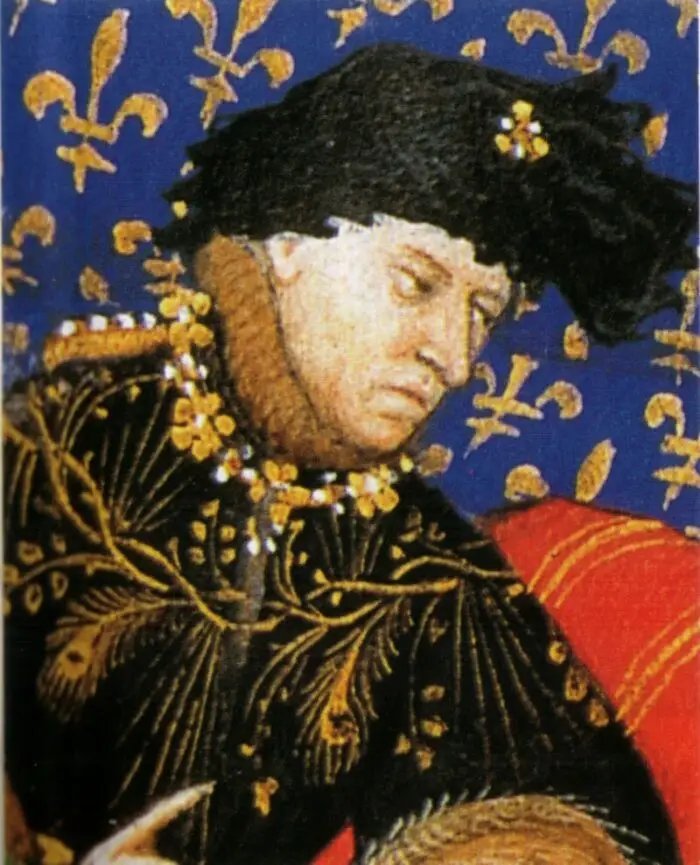
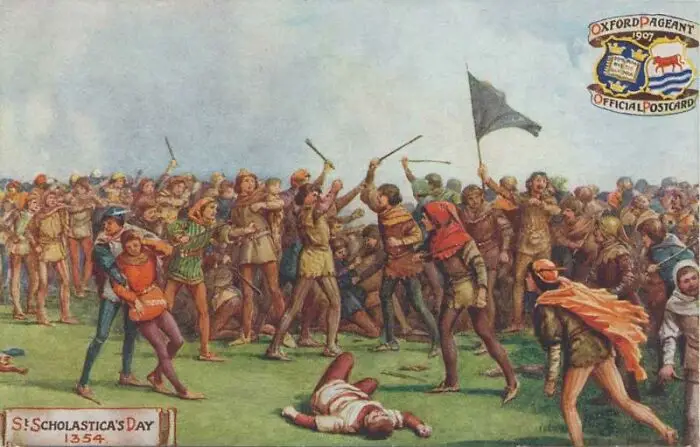
Their relatives then responded by deciding to fight each other over the regency. Much of the animosity was provoked by already existing tensions between two members of the royal family. In Charles' case, it was his brother, Louis, Duke of Orléans and his cousin, Jean the Fearless, Duke of Burgundy. In Henry's, it was two of his cousins, Richard Plantagenet, 3rd Duke of York and Edmund Beaufort, 2nd Duke of Somerset.
Charles and Henry's respective wives, Isabeau of Bavaria and Marguerite of Anjou, were both slandered as evil and greedy foreign harlots who were cheating on their mad husbands with other men, who just so happened to be their main political supporters.
Louis of Orléans and Edmund Beaufort were both basically m******d by the rivals and their sons' swore vengeance. Then the respective commissioners of those m*****s, Jean the Fearless and Richard Plantagenet also got k**led violently by their enemies and their sons were also like, "VENGEANCE IS MINE!!!"
Charles and Henry's immediate family members eventually took sides in the rivalry between the two members of the extended royal family. Charles' only surviving son surrounded himself with members of the Armagnac-Orléans faction and Henry's wife and only son surrounded themselves with Beauforts.
Charles and Henry both died insane and it's not certain how much they knew was going on. One kind of hopes that they didn't actually know that much about the state of their family and kingdom, because talk about depressing. However, the methods of their deaths were different: Charles died of natural causes while Henry was secretly m******d.
There's so many parallels it feels like this was a TV show where the writers got bored and decided to just recycle old plots.
#31
Xenia is another one like that, there was a moment in that storm where students fled their school seconds before a bus smashed through the wall behind them. Very scary stuff. I've been honestly floored at how many true tornado moments sound like something people would say are over the top and unrealistic if you included in a movie about said tornado.
#32
The numbers would put any crazy Indian movie to shame 😂. So they decided to make a movie out of it as well.
#33
#34
#36
2. I don't remember this quite often but some say that while Desmond Doss was running (or rescuing I'm not sure), the Japanese Soldiers' guns malfunctioned while trying to fire at him. This did not make it to the movie "Hacksaw Ridge" however, because of how many people or watchers will find this unbelievable.
Needless to say Desmond Doss is a believer of God.
#37
Of course Paris and Norte Dame looked very different at the time. Barely a small city and a half-built church BUT HOW IS THIS NOT A MOVIE ALREADY?!