

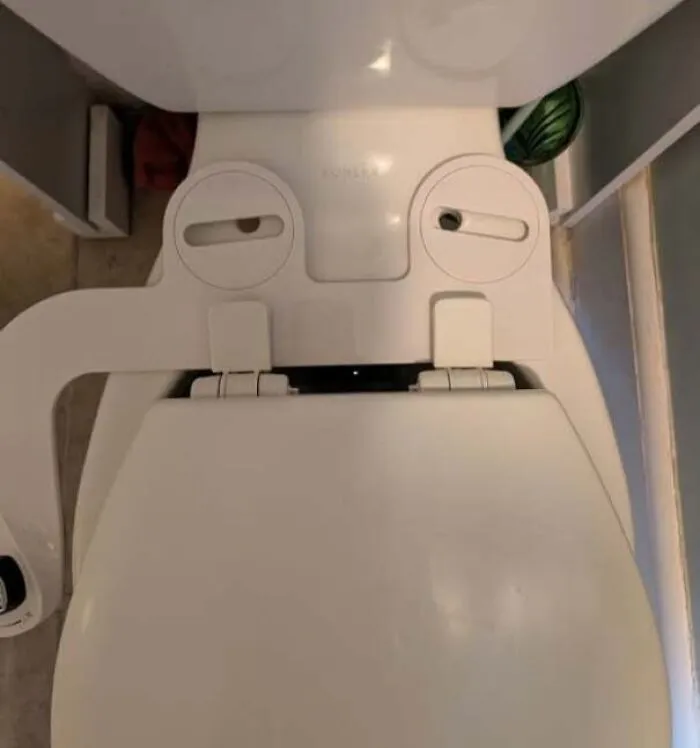
#1 I Bought A Bidet Attachment For The Toilet. It Didn't Look Excited To Be Installed And Starting Its New Job
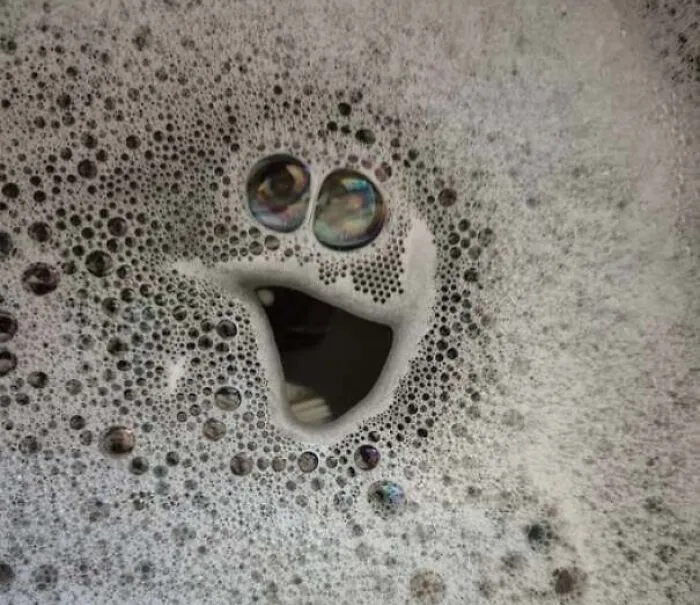

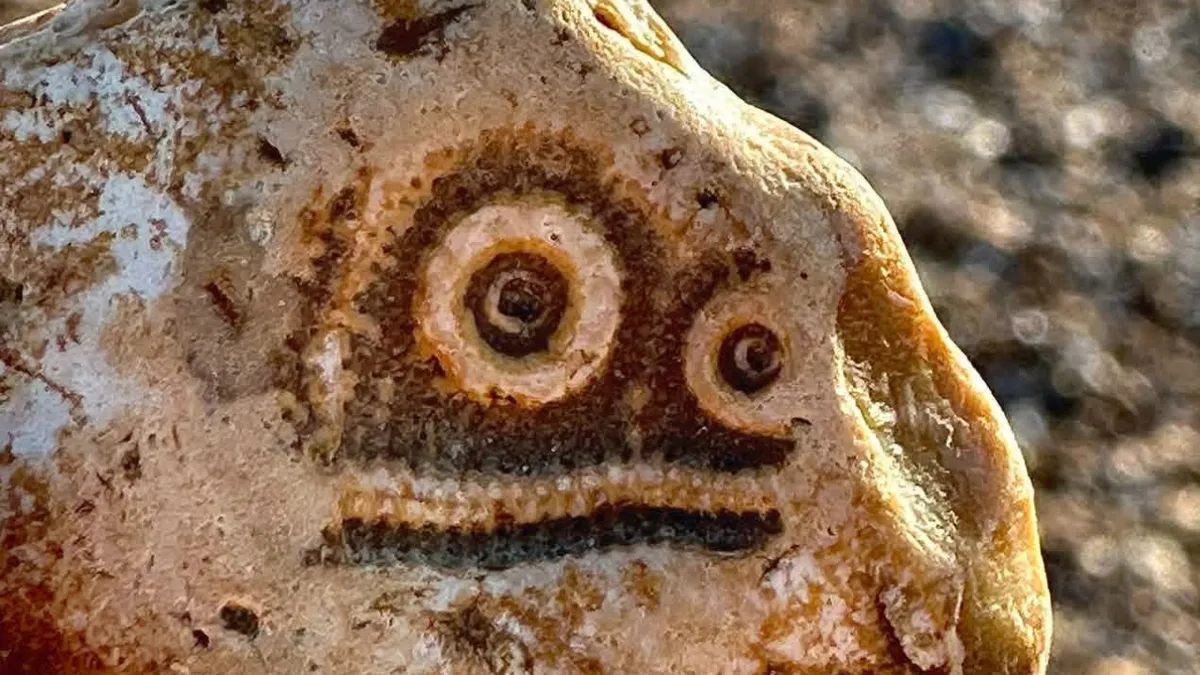
Scientists call this delightful quirk pareidolia, and it simply means spotting faces where none exist. A wall socket with a startled expression. A car that looks permanently grumpy. Two buttons on a coat that seem to be gossiping. Once your brain has noticed them, there is no going back, and it is not even a little bit sorry.
So why does it happen? One popular explanation is that your brain would rather be safe than sorry. Pareidolia is technically a false positive, a bit like a smoke alarm that goes off whenever someone makes toast. For social creatures like us, spotting a friendly face quickly is far more useful than occasionally mistaking a teapot for one, so the system errs on the side of enthusiasm.
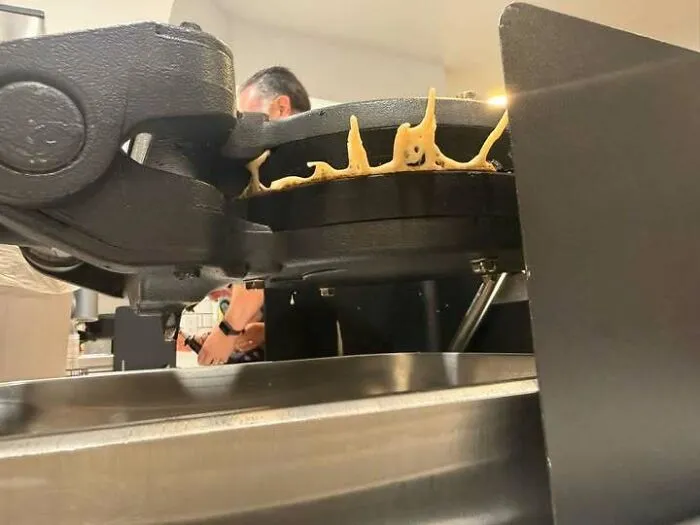
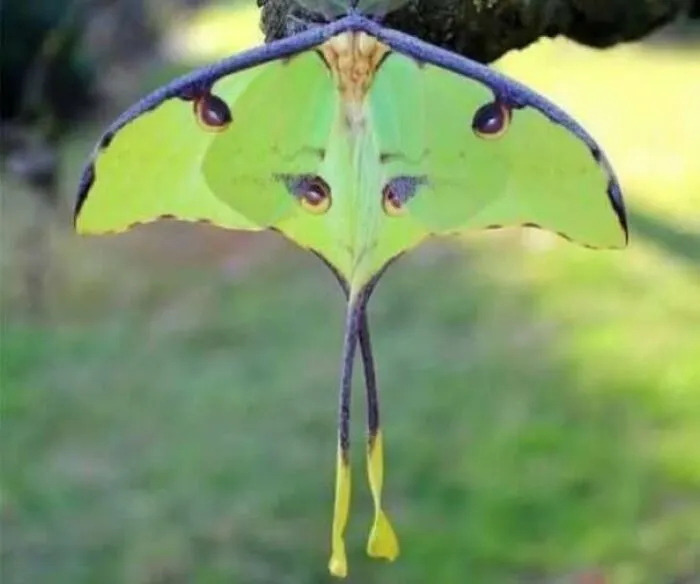
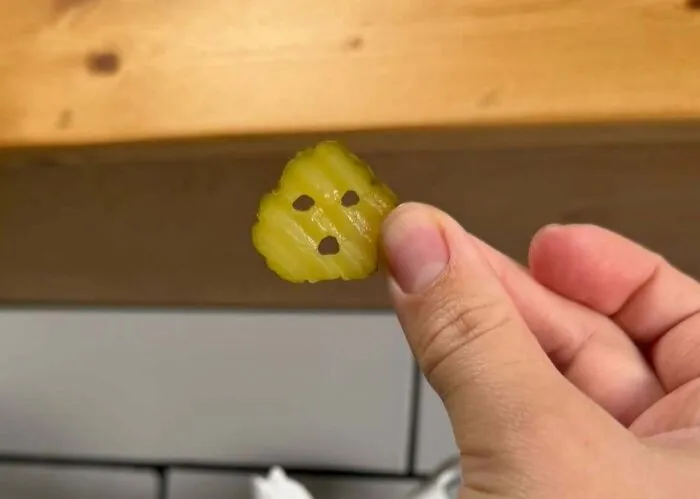
#6 In Honor Of This Month Being Halloween Enjoy This Pickle I Pulled Out Of The Pickle Jar
The speed is the really wild part. Brain imaging studies show that objects people perceive as faces switch on the same region that handles real faces, an area called the fusiform face area. In one study that reaction showed up around 165 milliseconds after the picture appeared, which is a tiny fraction of a second. Objects that nobody saw as faces did not get the same treatment. Another finding is that the more face like an object seemed, the harder that brain region worked. So when you declare that a pepper looks delighted, your brain is genuinely rolling out the welcome mat.


Humans are not the only ones who fall for it either. In a 2017 experiment, researchers showed five rhesus monkeys pairs of pictures and found that the monkeys looked longer at objects that humans see as faces. Their gaze even landed on the spots that looked like eyes and a mouth, much as it does with real faces.



That hints that pareidolia is not a product of cartoons or modern life, but something shared across the primate family tree. It is fun to picture a monkey squinting at a coconut and feeling mildly judged. Sometimes the faces get truly enormous. In 1976, NASA’s Viking 1 orbiter photographed the Cydonia region of Mars and captured a rocky formation that appeared to be a stern face staring up at the sky.



The mission’s chief scientist brushed it off as a trick of light and shadow, but public curiosity grew so loud that a newer spacecraft was pointed at the spot in 1998. The sharper pictures revealed an ordinary hill, a lovely reminder of how a convincing face can capture the public imagination. Space has plenty of other lookalikes too, and astronomers have been naming things after familiar shapes ever since the telescope was invented.
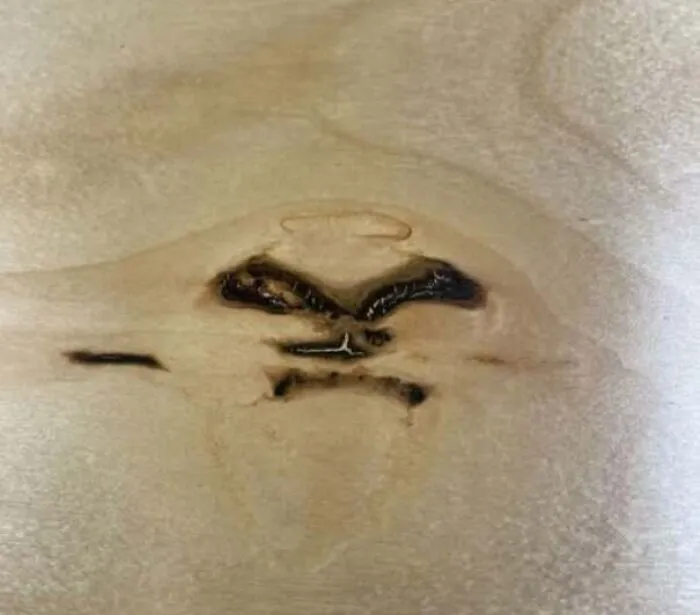

Then there is the Moon, which has been wearing a face for as long as anyone can remember. Researchers often point to the Man in the Moon as the classic example of an illusory face, and one brain study concluded that our face detecting machinery is broadly tuned rather than fussy. In other words, it is less of a strict doorman and more of a friendly greeter who waves everybody in.

#20 They Were All Looking At Me Edit: I Finaly Found My Wigletts, LOL While Other People Point Out The Mad Palm Tree Hidding Behind The Lightpole, Or The Skull With Itthe Skull(Tail Light)