






#1

#2

#3

Workplace culture extends far beyond official policies, job descriptions, and company values. According to the Nasscom Community, every organization has an invisible layer of expectations that employees gradually discover by observing their colleagues, receiving feedback, and noticing which behaviors are rewarded or discouraged.
These unwritten rules can influence everything from professional relationships to career advancement, often determining who earns trust, gets included in important conversations, and receives recognition. While some expectations are relatively straightforward, others can take months or even years to understand, particularly for people entering an unfamiliar profession.
#4

Meanspirited jokes are generally not accepted, though.
#5

#6

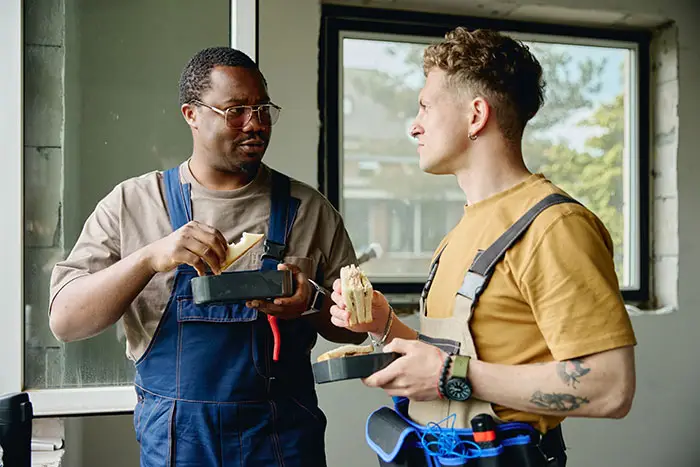
These hidden expectations often concern seemingly minor details, such as how employees should communicate with managers, whether colleagues are expected to respond to messages outside working hours, and how disagreements should be handled. Even decision-making can follow informal patterns, with some workplaces expecting employees to seek approval before taking action while others value independence and initiative.
Newcomers might initially struggle to understand these differences, especially when the official employee handbook doesn't explain them. Those who have been around longer, however, often recognize these expectations instinctively, having learned through everyday interactions what is considered acceptable and what could create unnecessary friction.
#7

#8

#9

Putting the item up for sale is not a good option because museum's are not going to deaccession a valuable item, so it won't bring in money to sell it. And it looks bad for a museum to be selling items from the collection which could hurt its PR and scare away potential item donors.
Giving the items back to the original donor is hard to do because they're either gone or don't want it. You can't give it to random people because of the same perception reasons that selling it has.
So if you can't return it, give it away or sell it without negative perception. The best practice if it's not worth keeping in the collection anymore (which is often the case with less valuable or deteriorating items) is to simply destroy it and throw it away.
Edit: To all the posts assuming I'm referring to art museums and how the AAMD doesn't allow this. I'm not referring to art or art museums and did not say art once in my post. My post is more relavent to local historical societies and history museums.
Another reason people gradually adopt these behaviors is the natural tendency to conform to the groups they belong to. Psychology Today explains that every profession develops its own language and shared conventions because having common terminology and expectations makes complicated work easier to coordinate. Conformity is not simply about wanting colleagues to like you; it also helps people understand how to behave when they are uncertain.
In professional environments, this can mean adopting a team's communication style, dress code, meeting habits, sense of humor, and understanding of what constitutes good performance. Over time, these shared practices become so familiar that employees may follow them without even realizing they have changed their behavior.
#10

We just super glue fossils back together. Everyone does it. Nbd. There's even special brands of special paleontologist super glue for this exact reason.
#11

#12

We can stop you for something as minor as a headlight violation when our real objective is to investigate something entirely different, like illegal firearms or illegal substance possession. That’s called a pretextual stop, and it’s legal as long as the initial stop is justified.
You also have every right to run your mouth at me. You can criticize me, curse at me, and tell me exactly what you think of me. That’s protected speech. But threats, physical interference, or conduct that crosses into harassment are a different story.
There’s a big difference between what people think cops can do, what cops actually can do, and what the courts have ruled we can do.
Having these common standards also serves a practical purpose. Imagine a workplace where every employee communicates differently, follows their own decision-making process, and has completely different expectations about teamwork. Even relatively simple tasks could become unnecessarily complicated. Shared conventions make colleagues more predictable, allowing them to coordinate their responsibilities and understand what others expect from them.
There is also a social element involved, as people generally want to feel accepted by their peers and avoid being excluded. Consequently, employees may adjust their behavior to fit in, even when they privately disagree with certain workplace habits. Someone new to a profession might therefore find themselves learning not just the technical responsibilities of the job but also an entirely new set of social expectations.
#13

#14

There is always a hot mic, and the truck hears EVERYTHING.
#15

However, not everything people learn about their profession comes from formal education or employee training. HR Leader highlights that practical experience teaches lessons that classrooms and training manuals cannot fully reproduce. Training can explain procedures, theories, and recommended practices, but real working environments introduce uncertainty, competing priorities, and consequences that require people to exercise judgment.
Employees eventually discover when a particular procedure should be followed, when circumstances call for a different approach, and how to respond when several problems arise simultaneously. This is particularly important in professions where even relatively small decisions can have significant consequences.
#16

If it isn't going wild at work for once, don't you dare use the "Q" word out loud, or you'll jinx it.
#17

#18

First names are for lovers
when you first meet someone it's "title, last name"
after you've known them for awhile it's "last name"
once you're friends it's "nickname based on last name"
I worked for one guy for 3 years, we were friends. we hung out outside of work. someone introduced themselves to me as "jerry's daughter" and i replied "jerry who".
Real-world situations also provide immediate feedback that makes certain lessons difficult to forget. A customer might react badly to an interaction, a process could unexpectedly fail, or a colleague might lose confidence in someone's decisions.
These experiences help employees understand the practical implications of their actions in ways that hypothetical examples rarely can. With repeated exposure, experienced workers also become better at recognizing patterns and noticing details that newcomers might overlook.
A seasoned nurse, for instance, may recognize subtle signs that a patient's condition is deteriorating, while an experienced manager might sense that a project is falling behind before the schedule reveals a problem. These instincts develop through observation, mistakes, feedback, and the gradual accumulation of professional knowledge.
#19
#20

It's much more often finding people for jobs.
