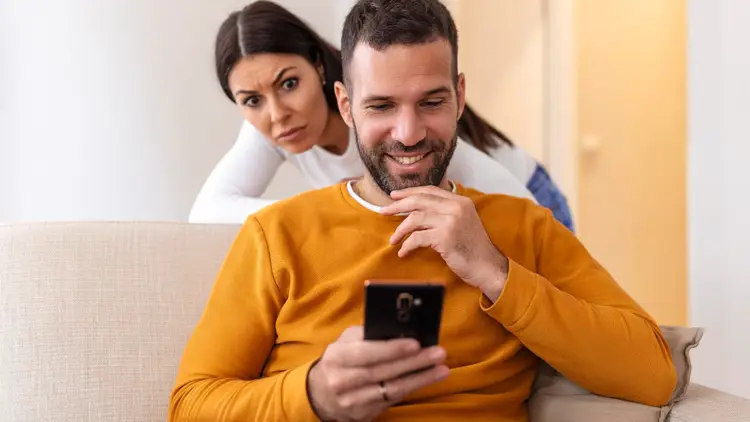
It's quite interesting to feel lonely while sitting right next to someone you love. Of course, you're individuals, and being together doesn't mean you suddenly become one person. Still, it's strange to share a sofa, eat dinner at the same table, or get ready for bed, yet somehow, you don't feel like you're really spending time together. Sometimes, one partner's attention is elsewhere, their eyes rarely leave the screen, and even when you try to start a conversation, you find yourself competing with whatever is happening on their phone. It might take only a few seconds for them to check a notification, but when those seconds add up, the experience can become surprisingly frustrating. Most couples probably wouldn't consider occasional phone use a relationship problem. After all, smartphones have become part of practically everything we do. We use them to organize our schedules, keep up with friends, respond to work messages, and entertain ourselves whenever there's a spare moment. But there's a difference between using a phone while your partner is nearby and repeatedly making them feel like they're not quite worth looking up for. Psychologists have a name for this increasingly familiar behavior, and it's called phubbing. Researchers are beginning to uncover just how much it can reveal about modern relationships, and what's particularly interesting is that the problem may extend well beyond the occasional disagreement about screen time. So, when does checking a phone become more than an innocent habit? Research into phubbing and digital boundaries offers some interesting explanations. DC Studio / Magnific (not the actual photo) The word phubbing might sound like another internet expression, but the behavior it describes has become an increasingly important subject in relationship research. The term combines "phone" and "snubbing" and refers to directing attention toward a mobile device instead of engaging with someone who is physically present. In a romantic relationship, this might mean scrolling through Instagram while your partner is telling you about their day, answering messages during a date, or repeatedly checking notifications while watching a movie together. It is important to distinguish "phubbing" from "technoference", although the two concepts are closely related. While phubbing specifically describes the experience of being ignored in favor of a phone, "technoference" is a broader term for everyday interruptions to interactions caused by technology. For example, a phone ringing during dinner, a work notification interrupting an important conversation, or a smartwatch repeatedly demanding attention can all create technoference. Neither behavior necessarily involves malicious intentions, but repeated interruptions can change the quality of the time couples spend together. According to Verywell Mind in its article Are You Phubbing Your Partner?, the behavior can leave partners feeling unimportant, resentful, and disconnected. The publication also highlights how smartphones have become so integrated into everyday routines that people may not recognize how often they turn to their devices when others are present. And this isn't simply a theoretical concern. A 2025 study published in Human Behavior and Emerging Technologies attempted to measure how frequently people actually used their phones around their partners. Rather than relying entirely on participants remembering or estimating their habits, researchers tracked smartphone use among 247 adults over eight days and combined the data with daily time diaries. seventyfour / magnific (not the actual photo) The results were revealing. Participants used their smartphones during approximately 27% of the time they spent around their partners. Additionally, 86% used their phones at least somewhat every day while in their partner's presence. The researchers found that phone use around a partner predicted lower relationship satisfaction and lower co-parenting quality, although these associations were statistically significant only among women in the sample. General phone habits were also associated with greater depression and lower life satisfaction, with some effects appearing stronger among women. These findings don't establish that phones directly cause relationship problems, but they do suggest that how we use them around loved ones deserves attention. Other research has reached similar conclusions. A 2025 meta-analysis published in Frontiers in Psychology examined 52 studies involving almost 19,700 participants. It found that partner phubbing was associated with lower relationship and marital satisfaction, reduced intimacy, weaker emotional closeness, and more relationship conflict. The analysis also identified problematic media use, loneliness, and certain attachment-related difficulties as factors associated with phubbing behavior. Of course, this doesn't mean every person who checks their phone during a conversation is damaging their relationship. Sometimes a message genuinely needs attention, a work situation cannot wait, or a partner simply wants to look something up. The distinction is often whether phone use becomes a repeated pattern that leaves one person feeling as though they are competing with a screen for basic attention. When that happens regularly, the effects can become much more significant than either partner initially expects. Przemyslaw Marczynski / Unsplash (not the actual photo) One reason phubbing can be particularly upsetting is that it changes the meaning of an ordinary interaction. When someone speaks to their partner, they're usually hoping for some form of acknowledgment, whether that's eye contact, a response, or simply an indication that the other person is listening. When their partner turns toward a screen instead, that small attempt to connect can feel unsuccessful. Psychologists often discuss the importance of perceived partner responsiveness in romantic relationships. This refers to the feeling that a partner understands, values, and cares about you. It's not necessarily about agreeing with everything the other person says or giving them constant attention. Rather, it's about feeling that your thoughts and emotions matter to someone who is important to you. A 2021 study explored this connection in two surveys involving 507 and 386 participants. They found that the relationship between partner phubbing and lower relationship satisfaction was explained partly by feelings of exclusion, reduced perceived partner responsiveness, and lower intimacy. In other words, the problem isn't necessarily that someone has picked up their phone. Rather, it's what the other person experiences during that moment. They may feel excluded from an interaction, less important to their partner, or uncertain whether their attempts to communicate are being taken seriously. When this happens repeatedly, the experience can gradually affect how connected they feel. Attachment patterns can also influence how someone responds to being ignored. A person with higher attachment anxiety, for example, may be particularly sensitive to signs that their partner is emotionally unavailable. A glance at a phone that another person barely notices could feel much more significant to someone who already worries about rejection or losing closeness. Another 2021 study found that partner phubbing could increase romantic jealousy, greater resentment, and lower self-esteem. Of course, this is not to say that someone who feels hurt by phubbing is automatically insecure, or that the person checking their phone is intentionally rejecting them. It shows that the same behavior can be experienced differently depending on someone's emotional needs and relationship expectations. For some, it might be a minor annoyance. For others, repeated interruptions can touch on deeper concerns about whether they're valued and emotionally supported. stefamerpik / Magnific (not the actual photo) The effects of phubbing don't necessarily end when the phone is put away. When someone repeatedly feels ignored, they may start changing how they interact with their partner. They might stop sharing small details about their day, become less enthusiastic about conversations, or eventually reach for their own phone rather than continuing to seek attention. This can create a frustrating cycle where one person withdraws into their phone, the other feels dismissed and does the same, and both end up spending time together without actually interacting. Instead of resolving the original problem, they gradually become accustomed to a pattern in which neither person makes much effort to engage. Research into this pattern was published in Computers in Human Behavior in 2022. In a daily diary that examined how people responded to perceived phone snubbing over ten consecutive days, it was noted that due to lower relationship satisfaction, lack of trust, anger, frustration, and resentment, partners were more likely to engage in retaliatory phubbing themselves. In some cases, this involved reaching for their own phones to seek support or approval elsewhere. This reaction can be understandable. If someone feels that their partner isn't interested in engaging with them, turning to social media, friends, or other online activities may provide an immediate distraction. However, it doesn't address the underlying dissatisfaction. Both people may end up feeling disconnected, even though neither has necessarily intended to create distance. These findings don't establish that checking a phone will inevitably damage a relationship. However, they help explain why repeated phone-related interruptions can become more significant than a disagreement over screen time. When someone consistently feels overlooked, they may begin questioning how much attention and consideration they can expect from their partner. It's also worth considering that technology itself isn't inherently harmful to relationships. The distinction is between using technology to strengthen a connection and allowing it to interfere with time spent together. Messaging throughout the day, sharing experiences, and coordinating plans can support a relationship. The problem arises when digital activities repeatedly take priority over the interactions happening in front of us. Drazen Zigic / Magnific (not the actual photo) Changing phone habits doesn't necessarily require a dramatic digital detox. In fact, simply telling someone to spend less time online may not address the reasons they keep reaching for their device. A more useful starting point is to recognize when phone use is interfering with something important and decide which habits are worth changing. The first step is having an honest conversation about how technology affects the relationship. Rather than accusing a partner of being addicted to their phone or never paying attention, explain which situations feel frustrating. Someone might say they would appreciate having dinner without interruptions or that they feel disconnected when their partner checks messages during important conversations. Being specific makes it easier to agree on practical changes. Couples can then establish a few shared expectations. For example, they might agree to put their phones away during meals, avoid checking social media while discussing something important, or keep devices out of reach during a planned date. These arrangements don't have to apply every minute of the day. The point is to protect certain moments when both people want to be present. Tima Miroshnichenko / Pexels (not the actual photo It can also help to examine individual phone habits. Do you automatically reach for your device whenever there's a pause in conversation? Do you check notifications even when you have no particular reason to use your phone? Are you scrolling because you're bored, stressed, or avoiding something uncomfortable? Understanding these triggers can help people recognize when phone use has become automatic rather than intentional. In Premier Health's article on phubbing, they recommend examining the reasons behind excessive phone use and making small adjustments, such as keeping devices out of sight during shared activities. If someone finds it particularly difficult to change their habits, professional support may also help them identify triggers and develop healthier routines. Another option is to reconsider notification settings. A 2025 study published in Media Psychology tested a one-week notification-disabling intervention involving 205 participants and found that, interestingly, switching off notifications did not significantly reduce overall screen time or the frequency of phone checking. However, participants reported a decrease in the strength of their habitual checking, suggesting that their phone use felt more intentional. This is a useful reminder that turning off notifications isn't a complete solution. People may continue opening their phones out of habit, even when nothing is alerting them to do so. Other adjustments, such as moving distracting apps away from the home screen, setting specific periods for checking messages, or leaving a device in another room during certain activities, may also help create more deliberate habits. Quilia / Unsplash (not the actual photo) Finally, couples can make an effort to build shared experiences that don't revolve around screens. Going for a walk, cooking together, playing a board game, or simply talking about the day can provide opportunities to reconnect without needing to plan anything elaborate. Technology can still have a place in these activities, but it doesn't need to dominate them. The aim isn't to make phones the enemy or expect partners to be available to each other every second. It's to recognize when technology is taking attention away from something both people value and make adjustments that feel fair to everyone involved. If disagreements about phone use become part of a wider pattern of mistrust, resentment, or controlling behavior, a couples counselor may help partners work through the underlying issues. Ultimately, being more intentional with technology is less about counting screen-time minutes and more about deciding when a device deserves your attention. Smartphones make it easier to stay connected with people across the world. However, the person sitting beside you shouldn't have to compete with everyone else for a few moments of your attention.