







My name is Marcin Zajac and I'm a landscape photographer from Poland, currently based in the San Francisco Bay Area in California.
One of my favourite type of images are nightscapes which include the night sky as a prominent part of a landscape. It's exhilarating to see the Milky Way arching overhead in a dark location and I find it to be a fascinating subject to capture especially because modern camera sensors can 'see' much more than our eyes.
Here's a selection of my favourite night images I've taken over the last 2 years.
#21 Secret
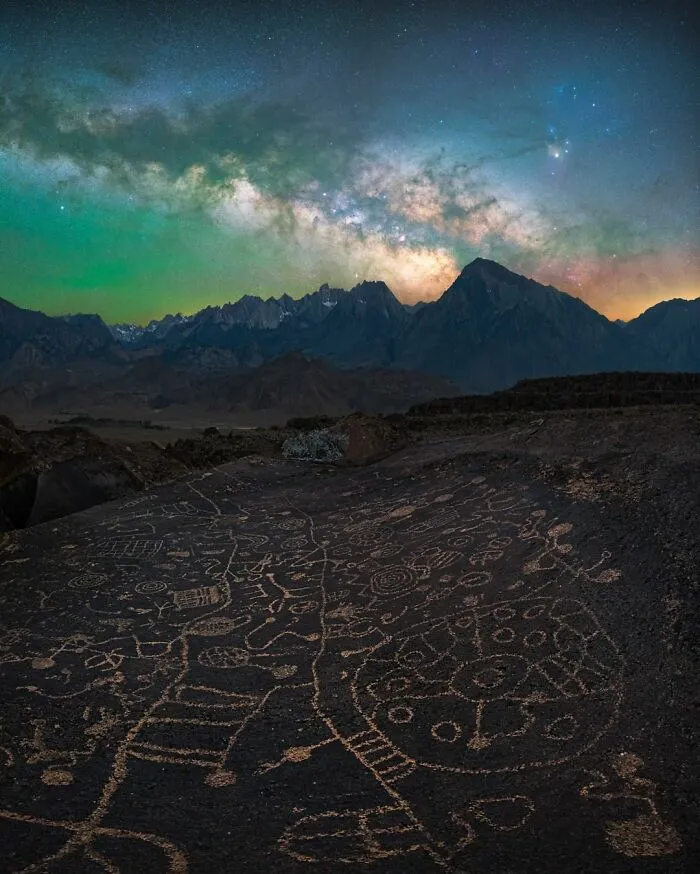
These petroglyphs were carved into a large volcanic boulder by Native Americans who inhabited this part of Eastern California thousands of years ago. By chipping away at the dark surface of the rock, they exposed the lighter rock underneath. What's unusual about this panel is that it faces upward towards the sky, enabling some interesting compositions that include the Sierra Nevada mountains and the night sky in the same frame. The location of this petroglyph is a carefully guarded secret to avoid vandalism of this unique and sacred place and finding it was an adventure on its own. For that reason don't ask me how to find it.
28points
#22 Shark Fin Cove
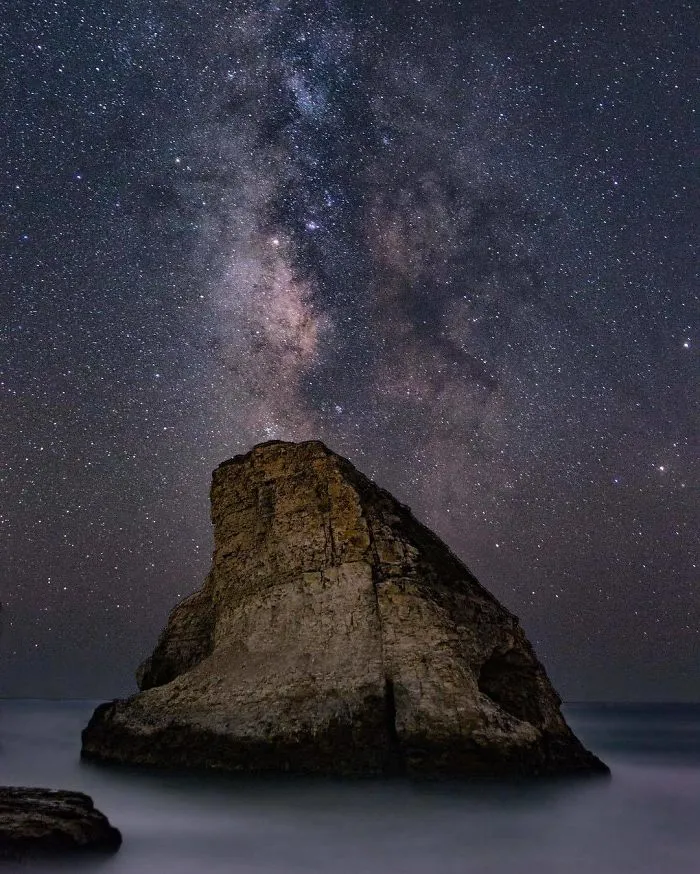
Milky Way rising over Shark Fin Rock on a beach near Santa Cruz.
This image was blended with 1 shot for the sky (F2.8, 20", ISO 3200) and 1 shot for the foreground (F2.8, 3 mins, ISO800).
25points
#23 The Remnants

Built in the 1860s the Davenport Pier was a platform used for transporting timber north towards San Francisco. Long abandoned since then the wharf eroded and today only the concrete arches that once held the pier have survived the test of time.
24points
#24
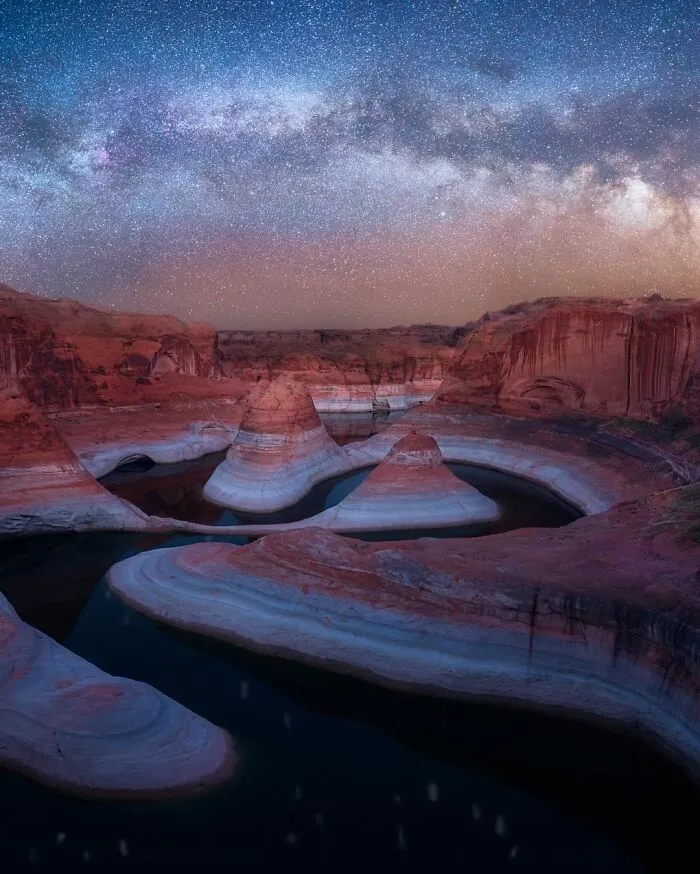
This is the most remote location I've had a chance to visit, photograph and spend the night at. It might also be one of the most beautiful. Getting here was a challenge - the last 50 miles of the drive to the trailhead is a badly washboarded dirt road that took over of 2 hours of careful driving to complete. Don't tell Hertz. (Name of rental agency may have been changed to protect the not so innocent). After that catch some sleep in my car at the trailhead and start the 20 mile round trip hike in the morning. The fun part? There's no access to water on the way, so I had to carry 8 liters of water for the 2 day trip in addition to food, a tent, sleeping bag and all my photo gear. Overall 20kg on my back. But once you get to the lake you know it was worth it, especially when late at night the Milky Way arch rises above the lake that fills the s-shaped canyon.
22points
#25
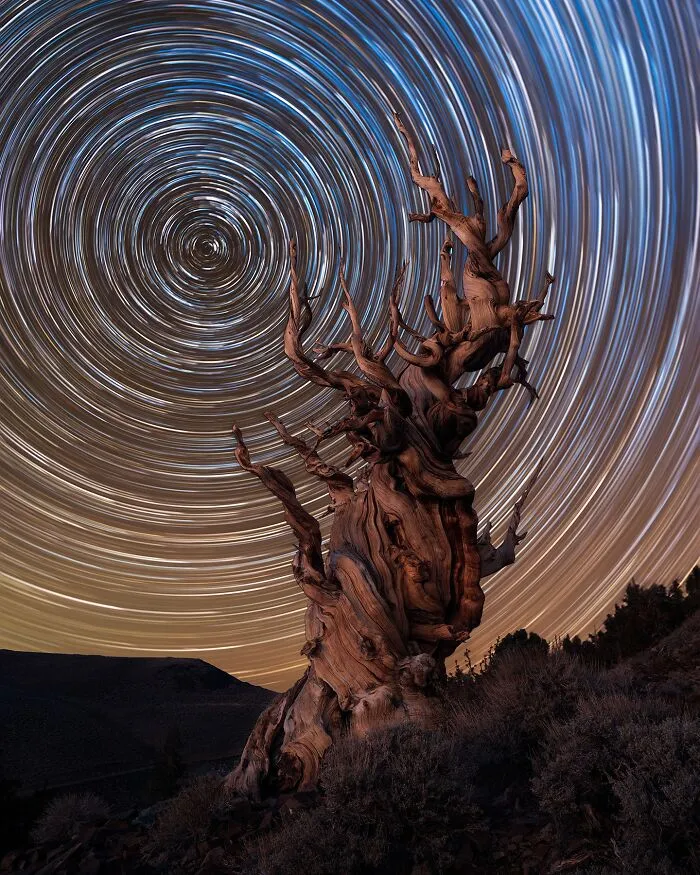
This gnarly tree is an ancient bristlecone pine growing in the White Mountains of Eastern California at elevation of over 10,000ft (3200m). These trees are the oldest living non-clonal organisms in the world and some of them have been dated to be nearly 5,000 years old. That means they have been alive when the pyramids were being built in Egypt! Conditions in these remote mountains are very harsh, with cold temperatures, a short growing season, high winds, and barren soil. And yet bristlecone pines thrive in these conditions and attain their great age, not in spite of their harsh environment, but because of it - the pines grow very slowly which makes their wood very dense and resistant to insects, disease, and erosion.
21points
#26 Drive
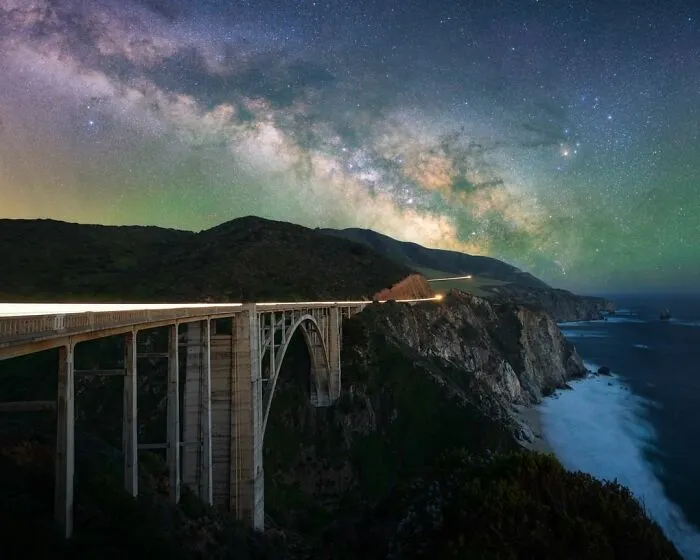
Milky Way over the historic Bixby Bridge in Big Sur. This stretch of the California coast features steep cliffs, hidden beach coves, and one of the most spectacular drives one can take anywhere in the world. Thanks to being almost completely undeveloped there is no light pollution here which makes this a perfect destination for stargazing.
17points
#27
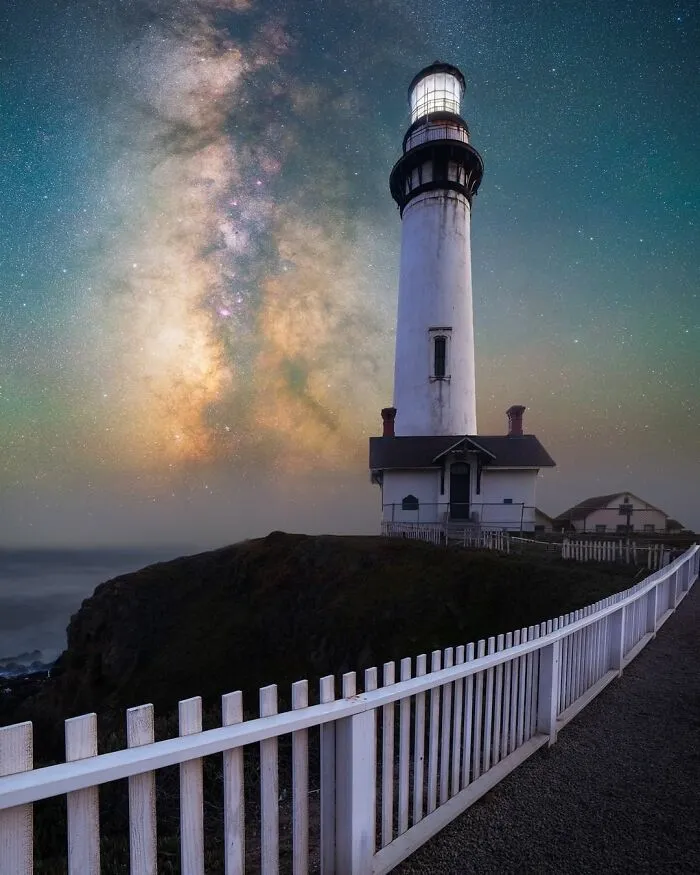
At 115ft (35m) Pigeon Point is the tallest lighthouse on the West Coast of the United States. Located between Santa Cruz and San Francisco it has been guiding ships navigating this stretch of the Pacific coast since 1872. Before then many vessels have been wrecked in this area because of the dense fog making it impossible for the mariners to see the land. The frequent fog also makes it hard to see the stars here as virtually all summers nights are fogged in. But as autumn started, and the fog relented for a few days, I had a chance to see the vertical Milky Way in tandem with the lighthouse.
17points
#28
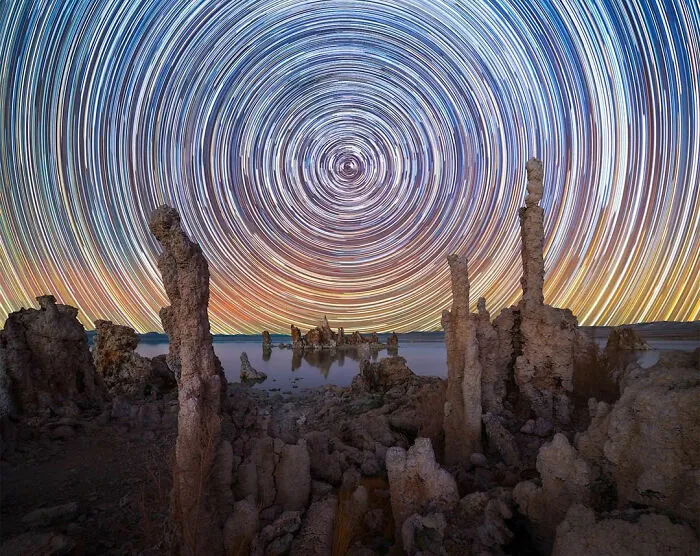
Dizzying sky over Mono Lake located on the eastern slope of the Sierra Nevada. If you're not sure what's happening in this photo - this is a result of letting my camera take photos continuously for 3 hours, capturing the apparent movement of the stars due to Earth's rotation. When facing north the stars appear to be circling around the North Star.
Mono Lake is one of the oldest and saltiest lakes in North America (it's 3 times saltier than the ocean!). But its most unusual features are the dramatic tufa towers emerging from the surface. These rock towers form when underwater springs rich in calcium mix with the waters of the lake, which are rich in carbonates. The resulting reaction forms limestone. Over time the buildup of limestone formed towers, and when the water level of the lake dropped the towers became exposed.
14points
#29
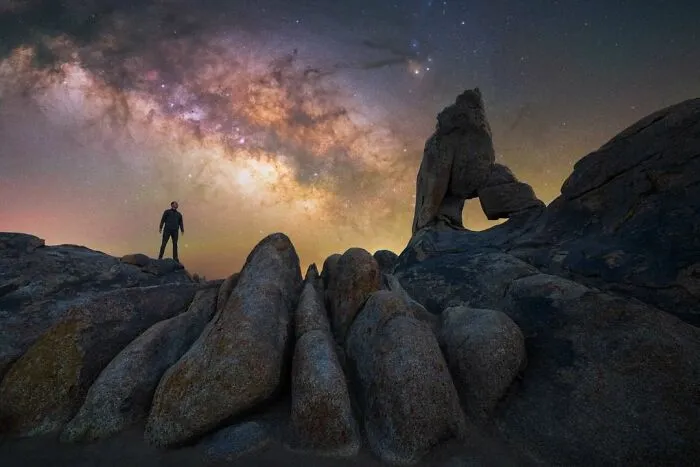
Hard to beat warm summer nights in the desert! In this image the Milky Way is seen next to Boot Arch in Alabama Hills, a range of hills and rock formations near the eastern side of Sierra Nevada in California. If like me at first you don't see where the name Boot Arch comes from - look inside the arch.
12points
