





One can find a lot of quotes about the power of photography and its eloquence. With the help of images, one can reveal his or her thoughts, ideas and ways of seeing the world. It is indeed a mighty tool capable of freezing a moment for years to come. That's why we're very excited to present the winners of the One Eyeland Photography Awards 2021. The selected photographers and graphic designers demonstrated their extraordinary skills and mastery of capturing our world for a very generous prize!
One Eyeland is a photo-sharing site that features works of professional and amateur photographers and visual artists around the world helping them to promote and sell their works. This year, they've selected winners from over 3300 images from 56 countries. The photographs were chosen from a multitude of categories, ranging from commercial, advertising, fashion, automotive, product, portraits, and beauty to landscapes and much more.
If these photos didn't suppress your hunger for art, we recommend checking out our previous article featuring the winners of the One Eyeland Photography Awards 2020.
#22 "Rebirth Of A City" By Brandon Ralph. Silver In Fine Art, Nudes
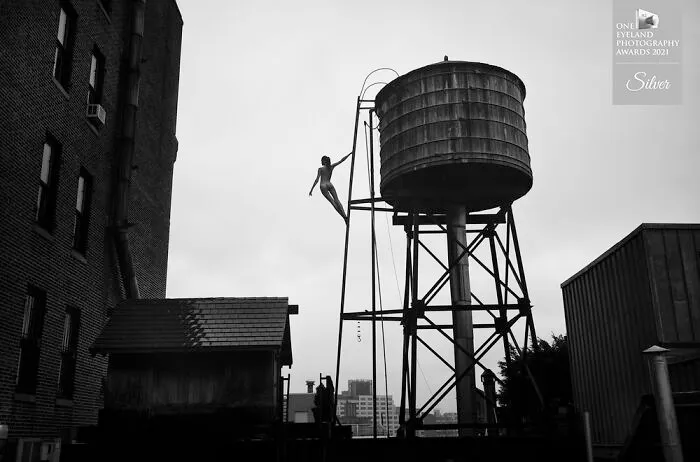
"In reBirth of a City, we find the ever-changing architectural skyline of New York which is sprinkled with wooden water towers. These photos hold on to the one consistent object of New York and for a moment adding the female form subtly softening the skyline."
Report
36points
#23 "Ethiopia: The Ethnic Earth" By Jatenipat Jkboy Ketpradit. Gold In People, Portrait
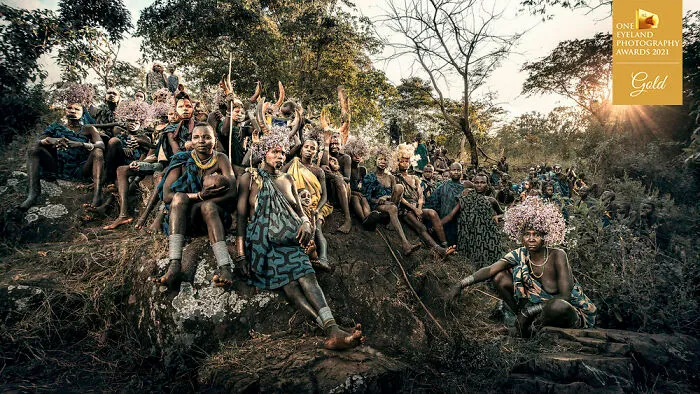
"The Omo Valley of Ethiopia is home to different tribes who have lived there for centuries. Each of the tribes in this region has a unique culture and way of life. Almost all of the tribes differ in language, clothing, food, and traditions, all of which have developed over millennia."
Report
30points
#24 "Bronc Pickup #1" By Bev Pettit. Bronze In Sports, Other
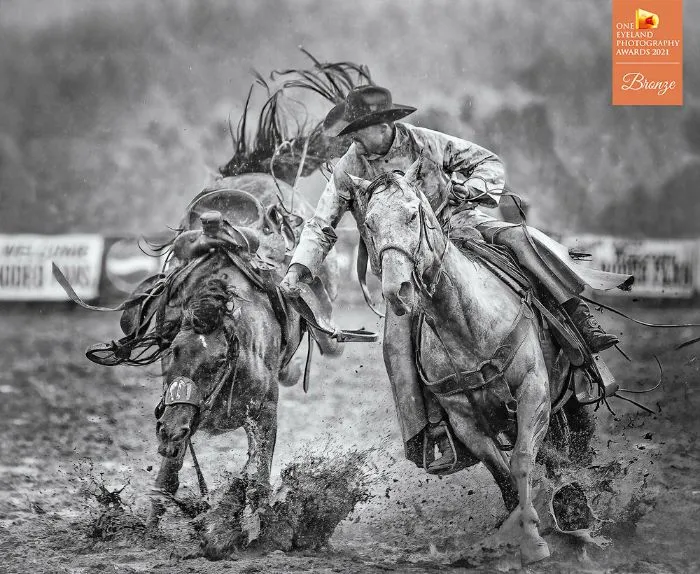
"Pickup Cowboy, Carter Williams, attempts to catch a loose horse at the Cowpunchers Annual Reunion Rodeo in Arizona, USA."
Report
29points
#25 "Ezo Red Fox" By Yuta Doto. Brozne In Nature, Wildlife
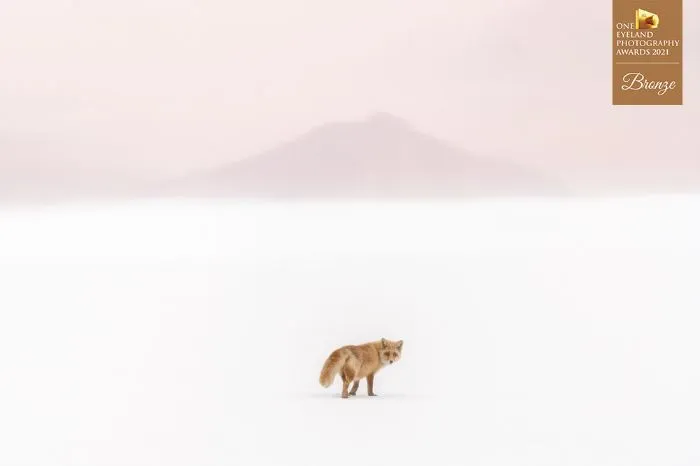
"Taken in Biei, Hokkaido, Japan. The fox walking in the snowfield looked back."
Report
29points
#26 "The Man Against The Power Of Nature" By Růžena Bendová. Bronze In Nature, Landscapes
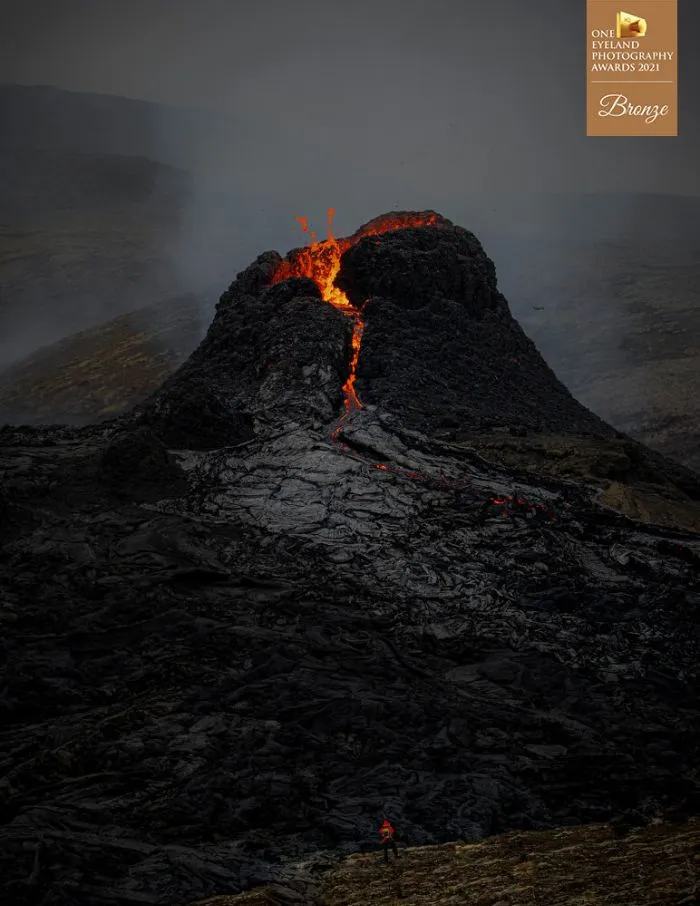
"Comparison of a man with the real power of nature."
Report
28points
#27 "Cccp - Underground" By Frank Herfort. Silver In Architecture, Historic
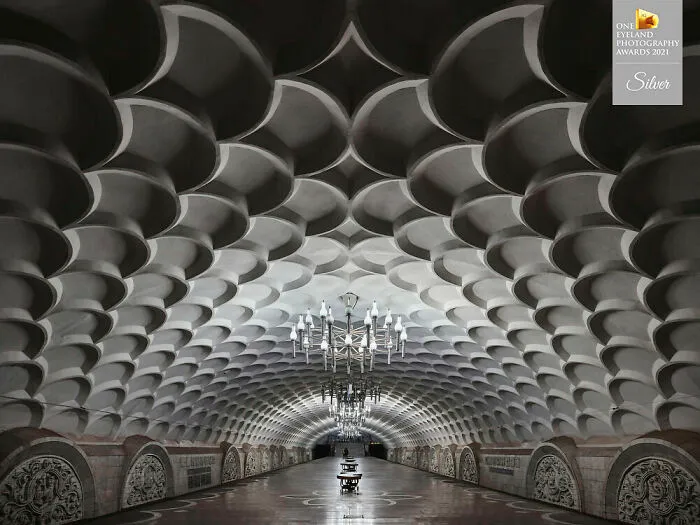
At the beginning of the 21st century, when a sophisticated viewer can rarely be surprised by a bold design or well-organized space, the Soviet metro, whose oldest stations will soon turn 85 years old, continues to amaze and, most importantly, live its own life.
Born almost 70 years later than the first metro in the world, the Soviet metro - as its creators called it - immediately eclipsed its foreign 'older brothers'. The young Land of Soviets, which is getting on its feet after the First World War and the revolution, with the opening of the first metropolitan subway in May 1935, as if announced to the whole world about the talents of its engineers, architects and builders, who created not only a modern comfortable transport system but also the greatest work of art. As we did 80 years ago, going underground - in Nizhny Novgorod, Kyiv, Tbilisi or Dnepropetrovsk - we find ourselves in a completely different world, continuing to live our own life, hidden from the sunlight. A world in which, as in the cultural layer of archaeological monuments or medieval chronicles, a vivid kaleidoscope of the history of a huge, long disappeared and turned into a contradictory legend of a great country, national motives of ancient cultures of different republics, events of a state and local scale was captured. The artistic solution of these underground halls is not an exact fixation on past events, but an artistic rethinking of reality through the most complex and polyphonic art form - architecture.
The game of geometric volumes of the free era of constructivism, refined Art Deco lines, bitterness and zeal for the victory of wartime stations, the triumphant march of the post-war Empire style, the lightness and functionality of modernism - these are just generalized names of chapters of the long and complex history of Soviet art, the directions and trends of which were clearly manifested in images of underground structures.
In his work, Frank Herfort, for the first time refers not only to the stations of the world-famous Moscow Metro but also to the underground structures of 19 cities like St. Petersburg, Kyiv, Minsk, Baku, Kharkiv, Dnepropetrovsk, Yekaterinburg, Nizhny Novgorod, Novosibirsk, Samara, Tashkent, Tbilisi and of Yerevan. Objects located thousands of kilometers from each other, created in completely different hydrogeological and cultural-historical conditions, designed for different passenger flows and pursuing different propaganda goals in their artistic solution, are added in Frank's photographs into an integral artistic phenomenon of socialist art. Frank Herforth\'s new project is not just a fixation of the external and internal appearance of more than 560 Soviet metro stations, it is an independent work of art - the art of photography - inspired by the works of architects, and sculptors, artists and mosaicists of the last century.
The author's camera lens here acts not as a mechanism for fixing reality, but as an artist's brush, skillfully snatching elusive but truly precious frames from the whirlpool of everyday life. In Frank's works, famous figure skaters from the medallions of the capital's Dynamo station and cosmonauts from the ceramic panels of the Tashkent Cosmonauts station, the powerful columns of the Golden Gate in Kyiv stylized in the style of Old Russian architecture and the graceful pillars of St. era, revealing the unity of the roots and the originality of each artistic object. Filled with happiness and lightness, airplanes of the industrialization period greet the banner of Victory, full-blooded and well-fed babies of the 30s laugh in unison with their peers of the Thaw era minted from copper, and the pompous Empire chandeliers sparkling with gold and rubies seem to argue about the truth of the light they emit with the cold lamps of the sunset Soviet modernism.
Thanks to the sharpness of the author's eyes, the viewer reveals details invisible to the average person, surrealistic combinations, plots full of tragedy and, as if by a red thread, connecting the inhabitants of different cities and the utopian ideals of the collapsed empire that remained in marble and bronze."
Report
27points
#28 "Basic Geometry" By Ivan Muraenko. Silver In Architecture, Buildings
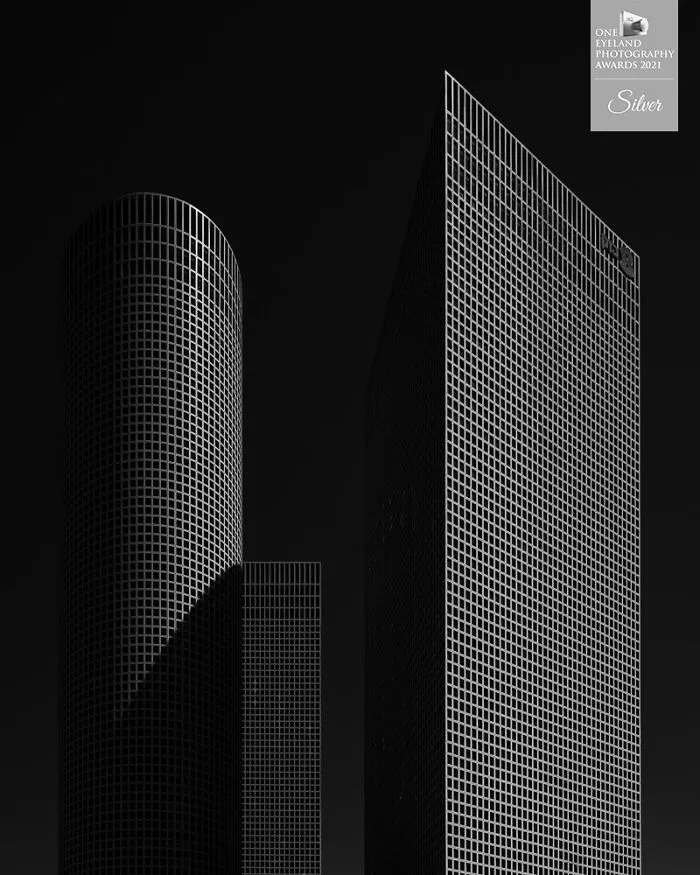
"Tribute to Bruno Munari: 'If the square is bound up with a man and his works, with architecture, harmonious structures, writing, and so on, the circle is related to the divine.'"
Report
26points
#29 "Tsaatan: The Reindeer People" By Jatenipat Jkboy Ketpradit. Gold In People, Culture
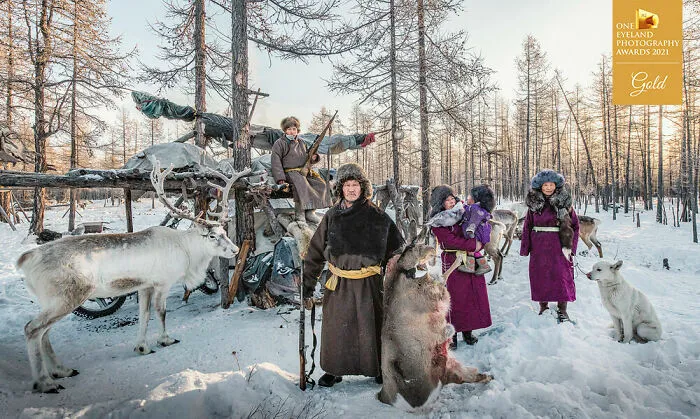
"The Tsaatan people are legendary reindeer herders who have lived in the snowy forests of Northern Mongolia for ages.
They are one of the last remaining groups of nomadic reindeer herders in Mongolia and have been maintaining their traditions for thousands of years. They seasonally migrate within the forests of the Taiga according to weather and food conditions. They migrate to better care for their reindeer, which they depend on for milk and transportation."
Report
22points
#30 "The Forbidden Door" By Jacopo Maria Della Valle. Silver In Editorial, Travel
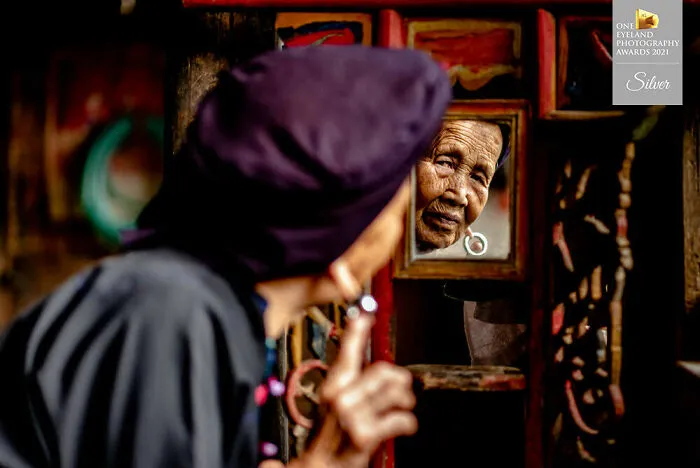
"In 2018 I embarked on a trip to southern rural China to learn about the characteristic local traditions that still survive globalization. I went to Guizhou and Yunnan provinces, the richest in ethnic diversity, to find evidence of the different cultural minorities. These regions combine breathtaking landscapes with fascinating typical cultural traditions that I have tried to capture and represent in their essence through my photos.
I started from the banks of the Li River, surrounded by limestone hills, where Mr. Huang was fishing with his cormorants on the typical bamboo raft. Cormorant fishing is a very old art that nowadays is being replaced by more modern techniques and there are only a few remaining fishermen in China. Cormorants are trained to stand perched until the fisherman, with a special command, sends them to dive into the water to get fish for him. At sunset, fishermen use a lantern to attract fish. I continued my trek along the peaceful dimension of rice fields, between local farmers and Yao villages. Mr. Pan and his wife invited me to see their characteristic wooden Yao house and showed me their daily typical lifestyle.
In the remote mountains of Guizhou, I met the Miao population, the largest ethnic minority in China. The Longhorn Miao tribes wear traditional costumes and characteristic headdresses on the occasion of their local festivals: they wrap their hair in wool, ancestral hair and black thread around a wooden horn with an embedded comb."
Report
22points


