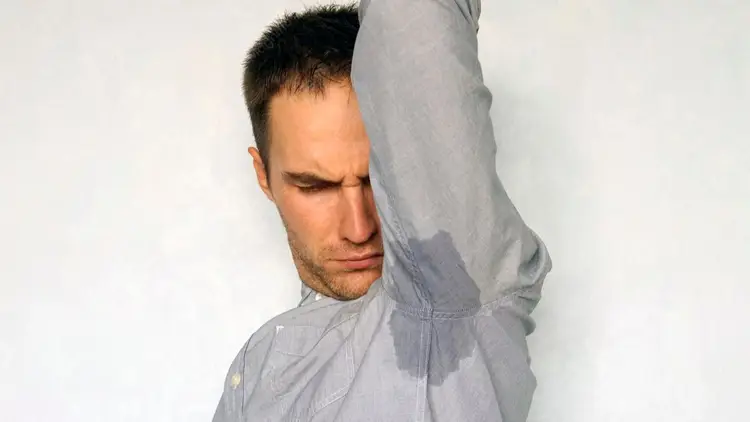
Somewhere on social media right now, a young man is explaining that the key to dating success is hiding in his armpits. He's stopped using deodorant, skips the shower before going out, and insists that his "natural scent" will do the talking. This is all part of a new dating strategy called pheromone maxxing, an offshoot of looksmaxxing, in which men stop washing in the hope that a natural musk will make them biologically irresistible. In the furthest corners of the trend, some posts even recommend drinking urine to remove toxins, though that sits well outside the mainstream. To see why it exists, it helps to know what “maxxing” means. The suffix traces back to gaming slang, where “max” is short for maximize and optimizing a character for the best possible outcome is a familiar goal. The doubled x may have been borrowed from “doxxing” for extra internet flavor. Online forums turned it into looksmaxxing, the sometimes extreme pursuit of a more attractive appearance, and then TikTok attached it to nearly everything, from sleep to personality. This fall, Dictionary.com even named maxxing its 2026 Word of the Year. Pheromone maxxing is one small, fragrant branch of a larger tree. What makes it worth a closer look is that it leans on a real scientific question that researchers have chased for decades. Do humans send chemical signals that steer attraction? The answer is more nuanced than any viral clip suggests, and it starts with a moth. MrDm / Magnific (not the actual photo) In practice, the routine is simple. Followers drop deodorant, shorten or skip showers before a date, and avoid scented soap, aftershave and cologne, based on the theory that these products wash away or mask a "natural signal." Some also wear the same clothes repeatedly so the fabric keeps carrying their scent. The people promoting the habit have picked up a nickname, stinkfluencers. Meanwhile, online retailers have long marketed pheromone fragrances that promise to make the wearer irresistible, a category chemists have been questioning for years. Not everyone is convinced, and plenty of the online reaction is humor. Many men in the comment sections of articles covering this topic are in on the joke, and others note that pheromone sprays have been sold to men for decades with roughly the same promise. Dermatologists have to reiterate that fresh sweat is largely odorless, and body odor develops when bacteria on the skin break down secretions, so skipping washing mostly gives those microbes more to work with. Ali Goode / Pexels (not the actual photo) In biology, a pheromone is a chemical messenger released by one member of a species that reliably triggers a response in another member of the same species. The first one was identified in 1959, when researchers isolated bombykol, a compound female silk moths release to attract mates. A male moth exposed to it beats his wings and heads upwind toward the source. His response is built in rather than learned, and that reliability is what defines the category. Mice, pigs and cats also release and sense pheromones, usually to find mates or mark territory. Humans are a harder case. Some people have a small vomeronasal pit, the structure many mammals use to detect pheromones, but studies suggest it has no nerve connections to the brain. No chemical has yet met the criteria to be classed as a human pheromone. Androstadienone, a steroid in male sweat that was the frontrunner for decades, was the subject of a 2025 review that called its status inconclusive, and an earlier review found no solid evidence for four steroids long promoted as human pheromones. magnific / Magnific (not the actual photo) None of that means smell is irrelevant to people. Body odor appears to carry information about health and emotional state, and researchers describe smell as a quick approach or avoid signal that helps us judge other people and places, often without conscious awareness. Infants seem drawn to their mother’s unique scent, and exposure to body odor can produce measurable responses in other humans. But a cue that conveys information is not the same as a signal that compels behavior. Much of what people label a good or bad smell is learned, and partners often find each other’s scent pleasant for reasons that may have more to do with attachment and familiarity than with chemistry. The trend’s defenders often point to one famous experiment. In 1995, male students wore a shirt for two nights without soap or deodorant, and female students rated the smell of six shirts each. Women tended to prefer the scent of men whose MHC genes, a cluster involved in immune function, differed most from their own. The logic was evolutionary, since genetically different parents may pass on broader immunity. However, among women taking a contraceptive pill, the preference reversed. Later research has been less tidy. A 2019 study of 883 couples found the pattern in Northern Europe, but a 2020 analysis pooling earlier studies found no overall effect and signs of publication bias, meaning positive results were more likely to be published. And even taken at face value, the 1995 result concerns how shirts worn for two nights were rated. It does not show that washing erases a signal, or that going longer unwashed strengthens one. rawpixel.com / Pexels (not the actual photo) Pheromone maxxing is not an isolated case. It belongs to a family of trends aimed at young men that promise a hidden biological lever, a way to become more attractive without doing anything harder. Researchers who study looksmaxxing link its appeal to a mix of pressures. One describes it as an expression of the “quantified self,” the idea that any part of life can be measured and optimized, and notes that many young men report a lack of control tied to loneliness and job insecurity. Another points to dating apps, which have made the dating market increasingly visual and encourage people to see themselves through other people’s eyes. Pheromone maxxing also adds a feature most of its cousins lack. Nearly every other looksmaxxing technique demands effort, money or even minor surgery, while this one asks for nothing at all and promises results anyway. That makes it easy to try, and it offers a simple, private explanation for why dating has not gone well, along with an apparent fix. Social media algorithms, which tend to reward extreme content, give a confident, viral video more engagement than a multi-page research paper. It also helps that much of the trend is delivered with a wink. One teenager interviewed in the UAE reads much of it as satire, and many commenters appear to be in on the joke, which makes it hard to tell how many followers are serious. The same teenager described the whole thing as a rebrand of skipping basic hygiene. So does it work? No. Research suggests that smell is a real and subtle part of how people perceive one another, but no study has identified a human chemical that reliably triggers attraction, and the best known experiment behind the trend has not held up well under later scrutiny. The authors of one recent analysis suggest that showering with soap and using deodorant remains the more dependable route to smelling appealing. Scientists are still exploring what our noses pick up, from health cues to emotional states, and future work may reveal more about this overlooked sense. For now, the claim that skipping a shower unlocks a hidden signal remains unproven, so please don't forgo a shower and just buy some deodorant.