

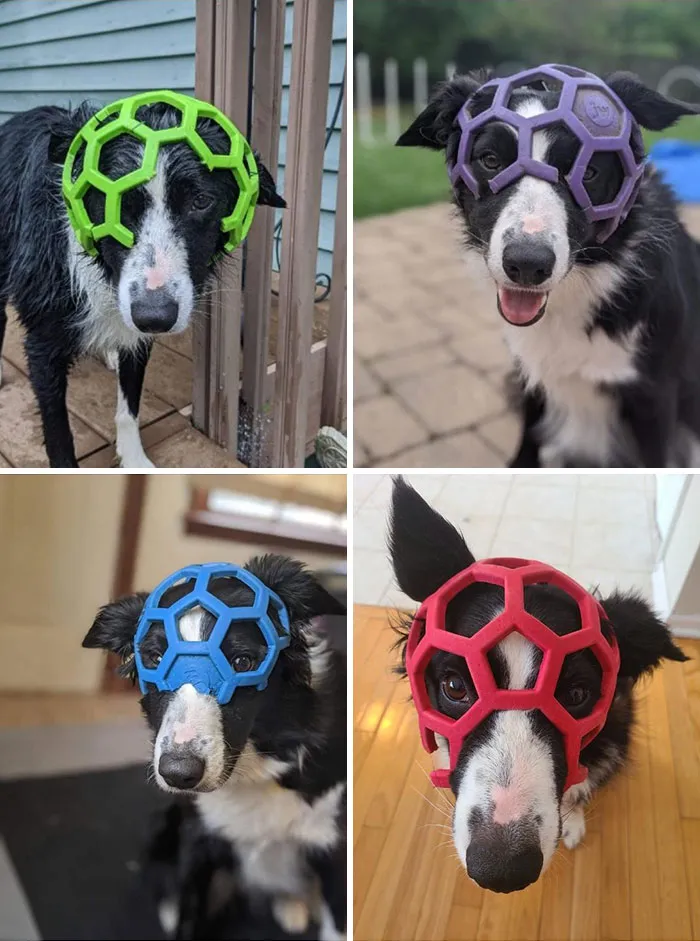
#21 She Chewed Up Her Red Holee Roller Ball And Now Our Mask Collection Is Complete. We Finally Got One In Every Color
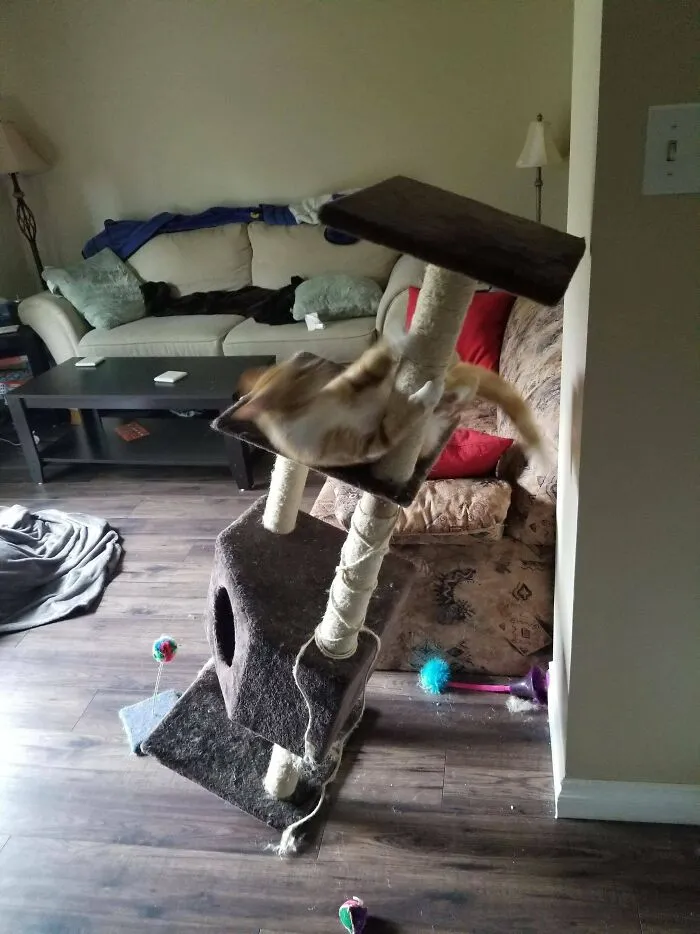

"Historically, destructiveness was something that prospective owners were understandably concerned about, and people would tend to try and keep the pet in an area they think prevents destruction of furniture and personal items," Wendy Kruger and Samantha Prior say. "For dogs, this used to be the kitchen; however, it’s actually one of the more expensive rooms to replace and repair the damage. Whilst it’s a good idea to minimize your pet’s access to things they may chew where reasonably possible, like picking up shoes and socks off the floor, it’s also important to provide things they can chew and play with to prevent mishaps."


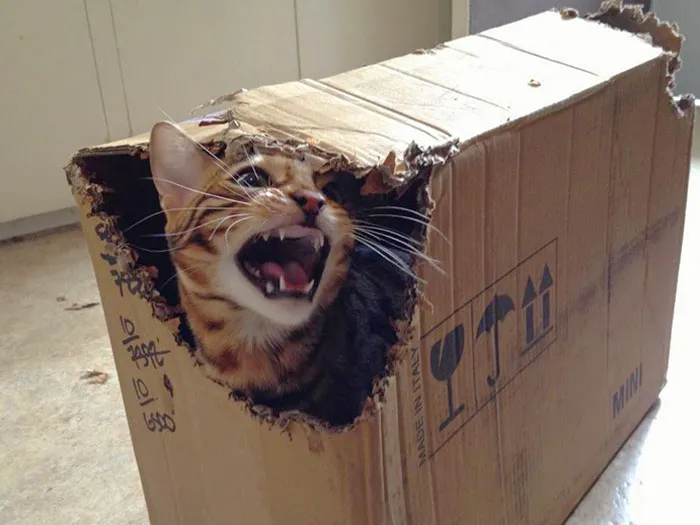
#26 Accidental Renaissance, Cat Edition: Destruction Of The Cardboard Tunnel

So the key to keeping your pets away from destroying your belongings is giving them alternative enjoyable items they can destroy. Yody Blass shares her experience:
"We want the pet to learn over time what is acceptable to chew on and what is not. It is important to provide chew items the pet will enjoy, as well as items that are safe, as some pets will ingest items that are not good for them. Some pets will do better with a faux fur toy that does not have any stuffing. Other pets will enjoy ripping out the stuffing, and as long as you supervise and make sure they don't ingest any of the toy (or the squeaker) they can have the empty shell to play with (hint: buy inexpensive items for this purpose)."



Wendy Kruger and Samantha Prior give tips for proud owners of the most common pets—dogs and cats.
"For dogs, pay plenty of attention to mental stimulation, exercise, and company. When it comes to preventing destructive behavior, chewing is probably the most important and under-utilized natural activity. Everybody seems to accept that puppies need chews, but dogs of all ages need an outlet for chewing! Who can blame them for chewing a shoe if this essential basic need is not being provided for? If your dog does get hold of something they shouldn’t have, don’t punish them or snatch it away. Instead, direct their attention and energy to something more appropriate—like a long-lasting chew or their favorite toy.
When it comes to cats, a safe and secure territory is essential. Make sure they have plenty of sturdy and appropriately-positioned scratching posts or mats. For example, if the sofa is getting scratched, place a large scratching post next to it to help them transition across."


With all that being said, correcting the unwanted behavior in pets comes down to the owner's motivation and willingness to spend time working on it, because in most cases, the destructive behavior can be solved with simple changes.
"For many species, chewing is a natural behavior and it’s generally not difficult to prevent them from destroying the ‘wrong’ things. In most cases, it can be resolved with some simple changes to the pet’s lifestyle. The most important thing is finding the motivation for the behavior and the emotion that drives it—for example, a cat needing an outlet for scratching, or a dog being bored and having nothing else to do," Wendy Kruger and Samantha Prior say.
With millions of suffering and homeless pets around the world, it's important to understand that owning a pet comes with a big responsibility and the moment you become a parent to a lovely animal, its welfare is completely is your hands.

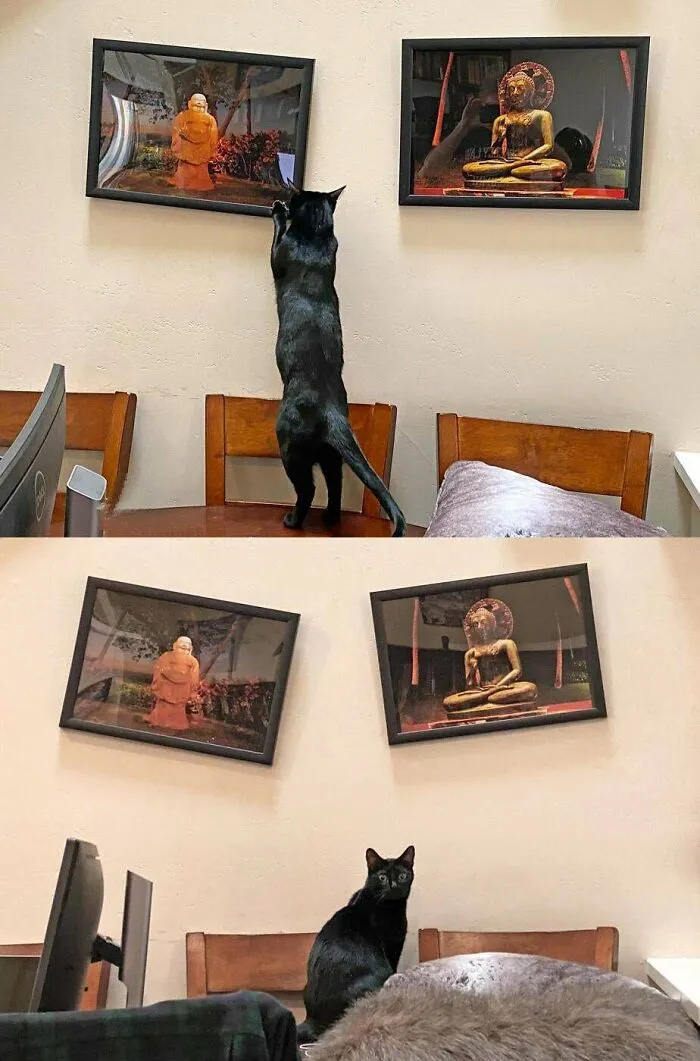

To balance out all the animals' documented crimes and give you hope after you possibly found a ruined piece of furniture today, here is a friendly reminder that pets can be wholesome and their role in our lives is beneficial for multiple reasons that go way beyond having a furry friend.
"Among the well-documented effects of HAI [Human-Animal Interactions] in humans of different ages, with and without special medical or mental health conditions, are benefits for: social attention, social behavior, interpersonal interactions, and mood; stress-related parameters such as cortisol, heart rate, and blood pressure; self-reported fear and anxiety; and mental and physical health, especially cardiovascular diseases," a 2012 study by Andrea Beetz, Kerstin Uvnäs-Moberg, Henri Julius, and Kurt Kotrschal in Frontiers in Psychology reveals.




#40 Ripped The Curtains Down, Looked Me Directly In The Eye - And Started Playing With Them