









If an objection does occur, however, the couple should do their best to respond appropriately. There’s no need for anger. Try your best to understand where the person is coming from (even if they are messing up your happy day). Whether they’re an ex-partner, a concerned family member, or someone riding in on a white horse.
"It's important to know that any objections are usually coming from a place of care and worry for either party to the union. Objections shouldn't be met with anger, hostility, or defense,” the experts stressed that the couple should try and keep their cool.
“Instead, it's important to meet them with kindness and love, and where possible, to try and understand where the basis of the objection is coming from,” they said that the couple shouldn’t have to start defending their relationship just because someone’s unhappy with it. It’s not the place nor the time for that.
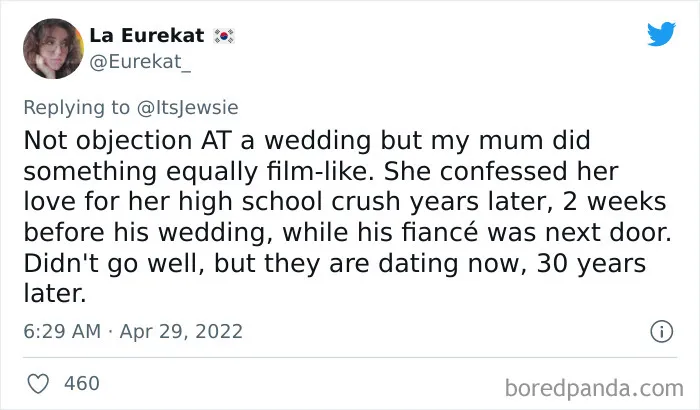
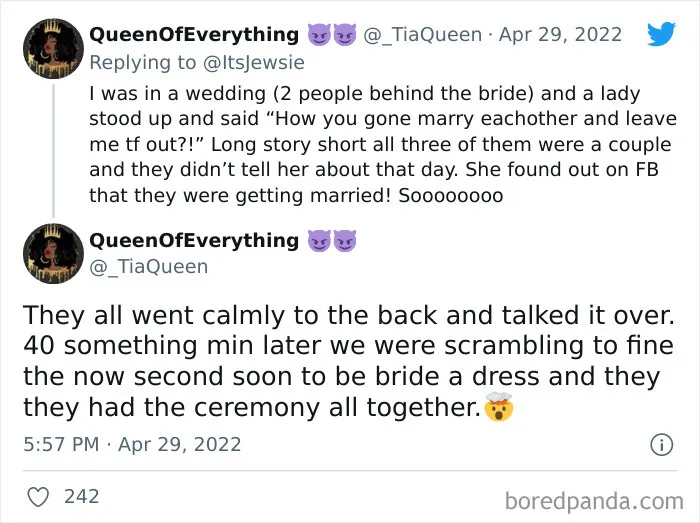
Way back in the 12th century, the Catholic Church introduced the custom of objecting during a wedding ceremony. The entire point of objections was to make sure that the union was legal.
“Grounds for objection included factors like a party already being married to another, pre-existing vows of celibacy or commitment to the church, being underage without parental consent, or close blood relations,” ‘Brides’ magazine explains.
If there were any objections (all given under oath, of course), the claims would be investigated. Meanwhile, the wedding would be suspended. It was all very serious business. A far cry from the objections we see in film plotlines where it’s not the legality of the union, but a person’s feelings that are prioritized, no?

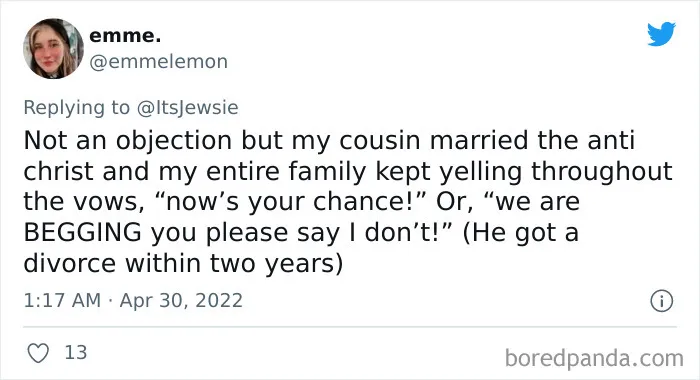
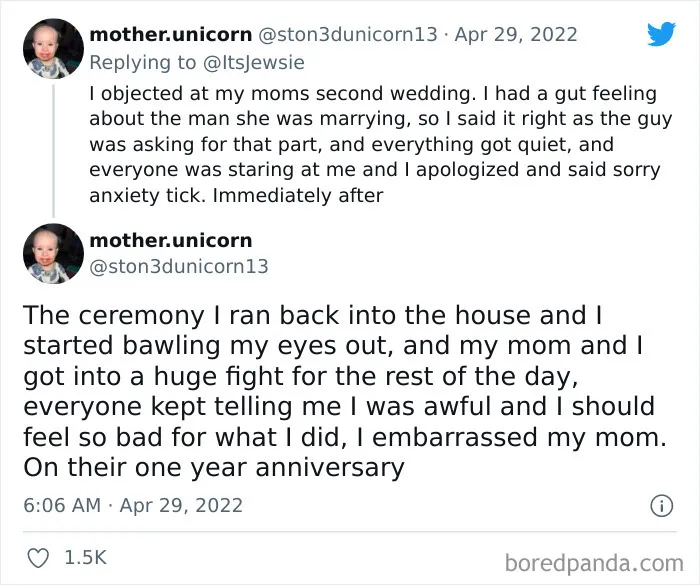
Any objections would be given under oath and the officiant would then investigate the situation while the actual wedding was suspended. In short, objections were a very big deal back in the day.
Nowadays, objections tend to be seen more often on the silver screen, in Hollywood movies, than in real life. They’re now less about the legal issues surrounding the marriage and more about one’s personal feelings regarding the union itself.
