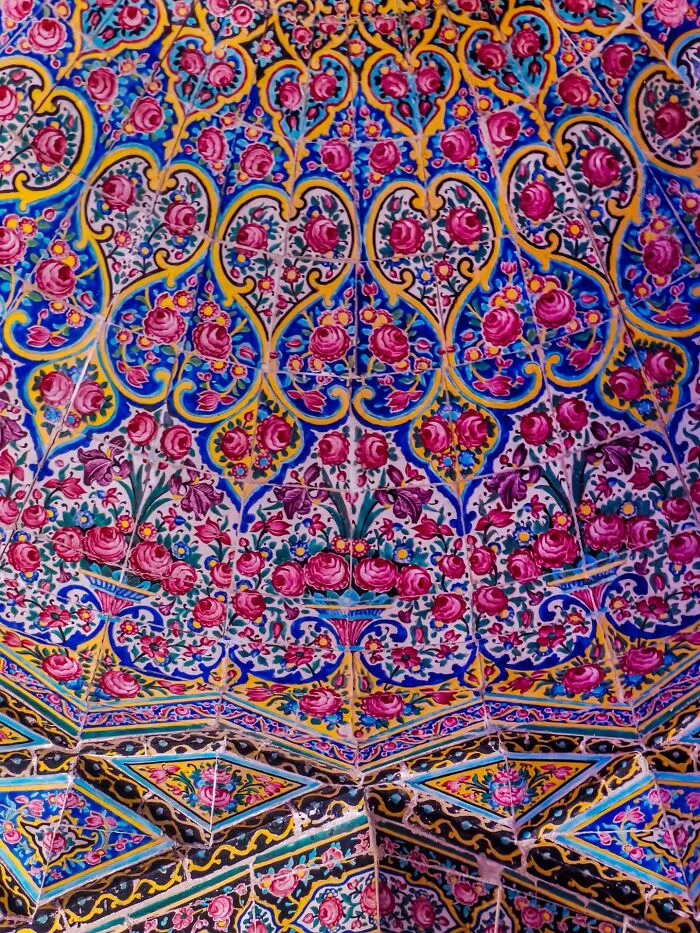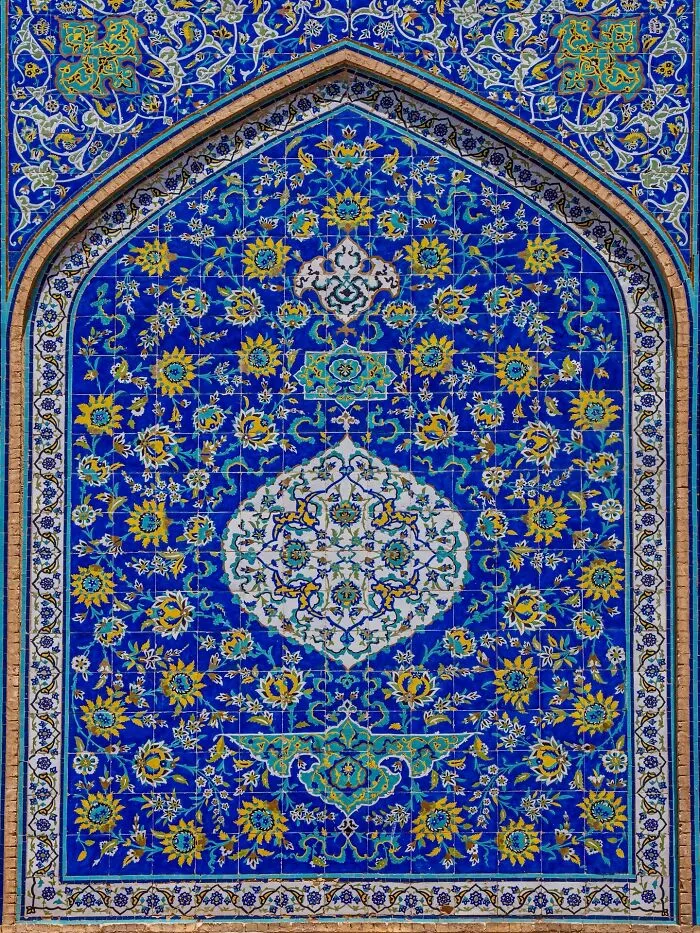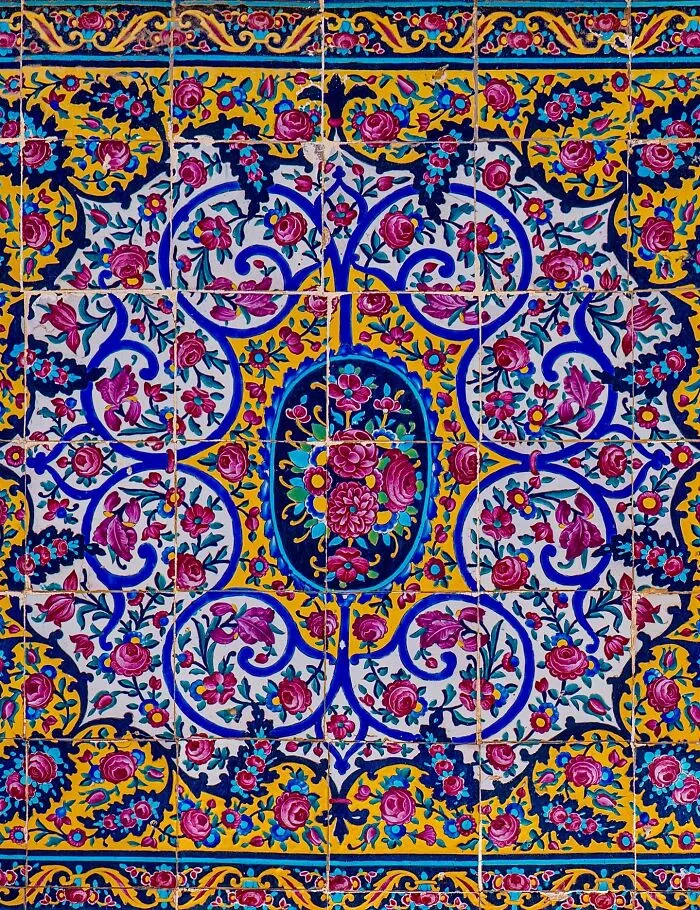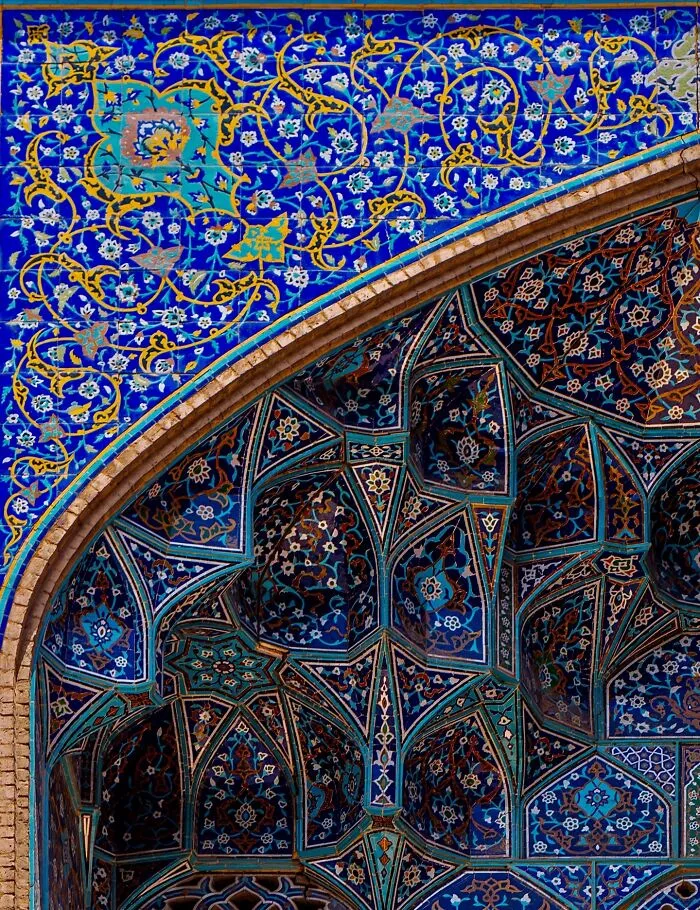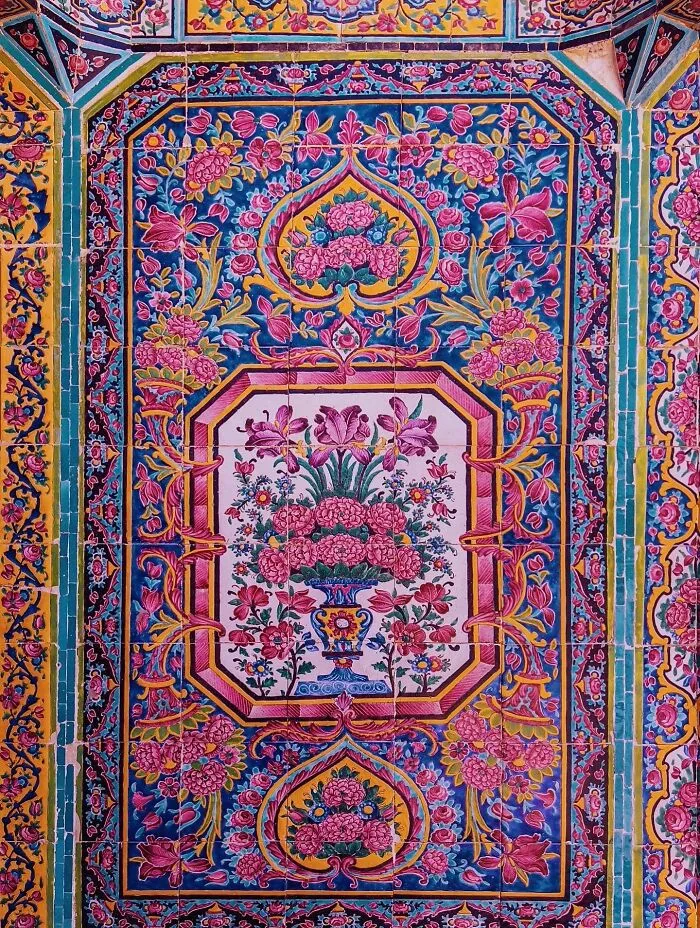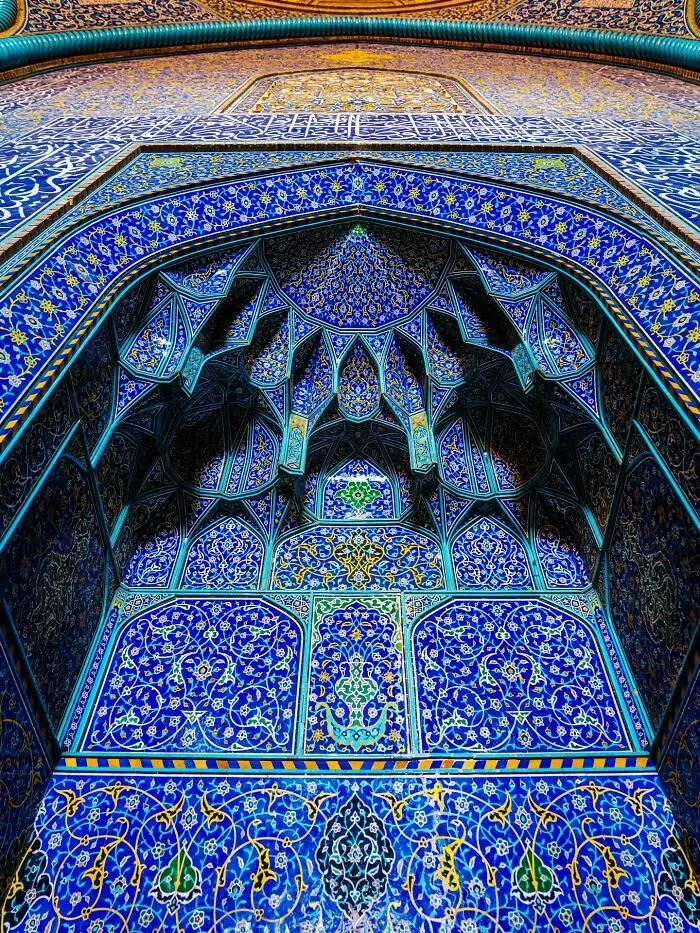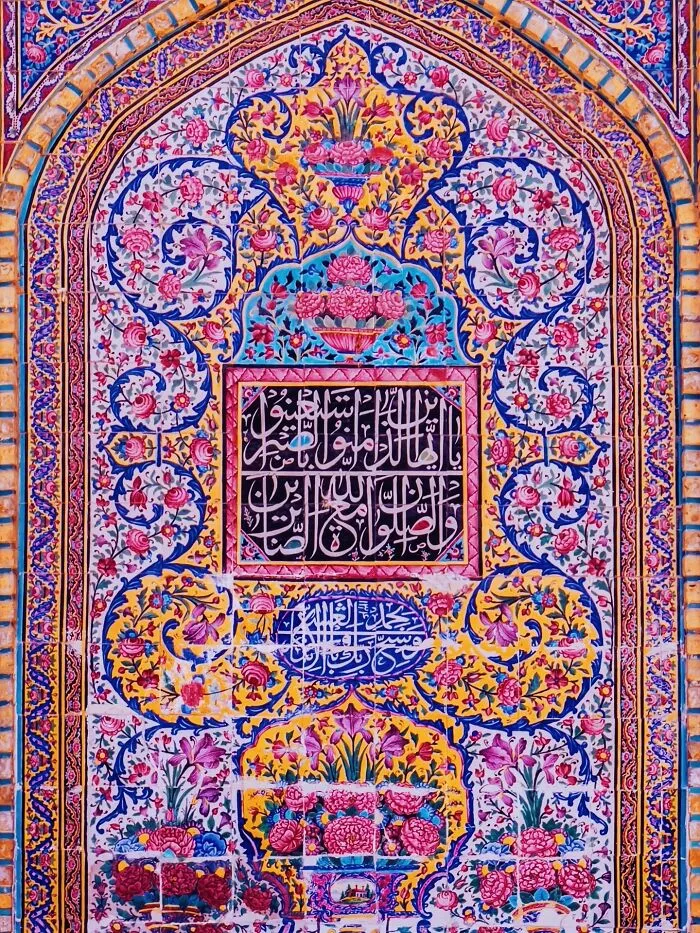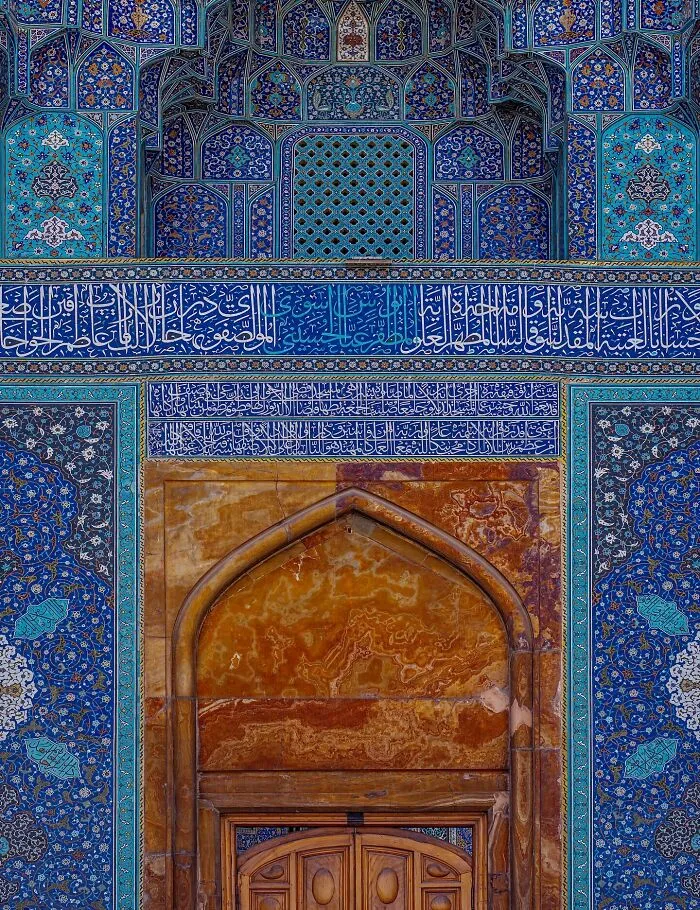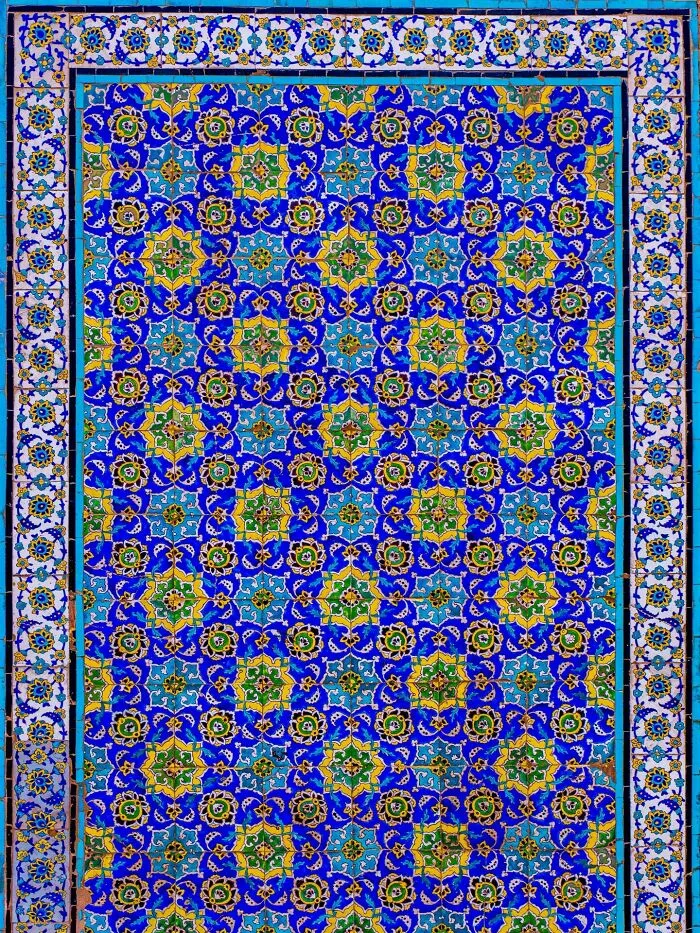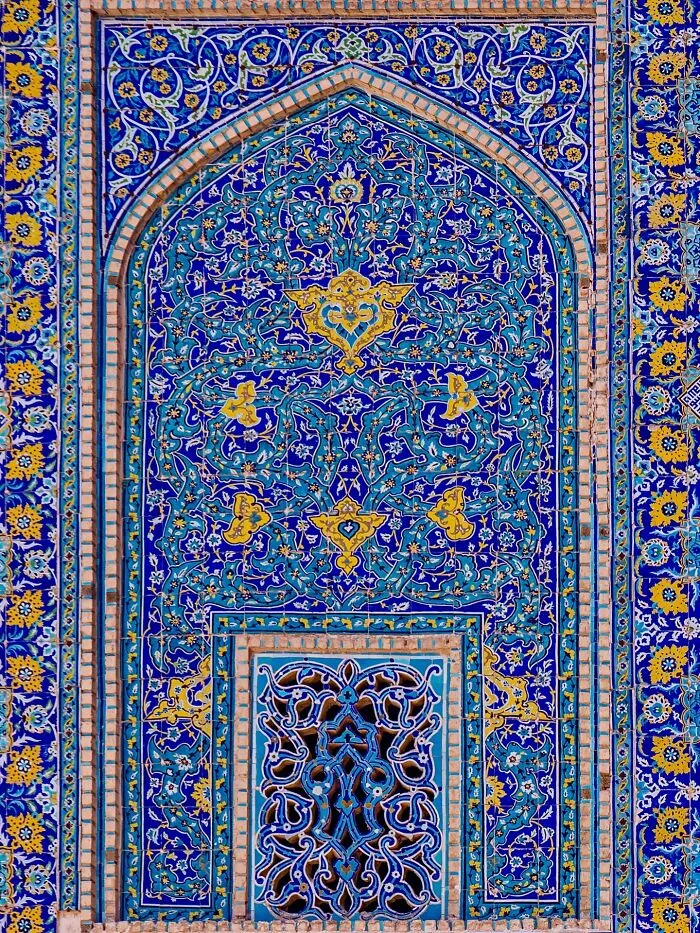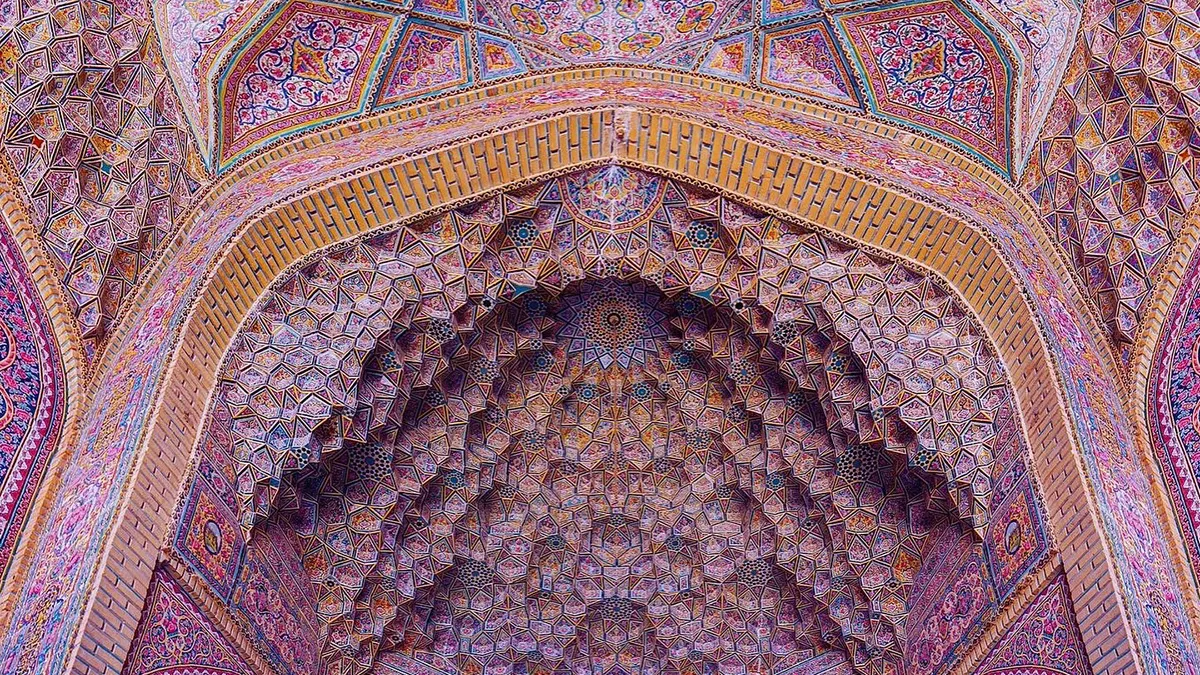


Tehran, Isfahan, and Shiraz form the backbone of what many travelers think of as "Classical Persia," a route that traces the cultural, artistic, and historical heart of Iran. Together, these cities tell a story that spans centuries, from imperial palaces and Safavid masterpieces to poetic gardens and some of the most celebrated examples of Islamic architecture in the world. While each city has its own character, they are connected by a shared visual language: an extraordinary tradition of ornament, geometry, craftsmanship, and color that has shaped Persian art for generations.
When I traveled through these cities, I found myself repeatedly looking upward. Iran's architecture has a remarkable way of drawing the eye away from the horizon and toward ceilings, domes, arches, windows, and walls covered in layers of geometry, calligraphy, floral motifs, and intricate tilework. What initially appears decorative quickly reveals itself as something much more complex. Across mosques, palaces, shrines, and historic houses, patterns are used not simply as ornament but as a visual language shaped by centuries of mathematics, spirituality, craftsmanship, and artistic innovation. From the royal architecture of Tehran's Golestan Palace to the breathtaking mosques of Isfahan and the kaleidoscopic interiors of Shiraz, every surface seems to tell part of a much larger story.