



#1

#2

Most people do not think of young adulthood as a time for chronic health problems. However, this has changed. In the U.S., 59.5% of adults ages 18 to 34 reported at least one of 12 chronic conditions in 2023, compared to 52.5% in 2013. Much of this rise is due to obesity and depression.
The trend is even more noticeable when people have more than one condition. The percentage of young adults with at least two chronic conditions went up from 21.8% in 2013 to 27.1% in 2023. This supports what doctors have noticed: more health problems are showing up earlier in adulthood. It also leads to the question of which conditions are most common.
#3

#4

Mental health stands out clearly in this data. In 2022, 26.4% of adults ages 18 to 34 reported having experienced depression, compared to 22.0% of those ages 35 to 49 and 15.3% of adults 65 and older. Frequent mental distress showed a similar trend, affecting 23.2% of the youngest adults.
These numbers match a longer trend in chronic conditions. Depression among U.S. adults ages 18 to 34 increased from 16.4% in 2013 to 25.0% in 2023. While this does not explain the reason for the rise, it helps show why mental health is such a focus when doctors compare younger people to earlier generations.
#5

Her theory is that it's energy drinks, but she doesn't really know. Something has changed though, causing younger people to get kidney stones than just a few decades ago at least. We are Swedish.
#6

Mental health is just one piece of the puzzle, since sleep is a central part of daily life. In 2024, 30.5% of U.S. adults got less than seven hours of sleep on average. Among adults ages 18 to 34, 18.3% had trouble falling asleep, but this problem was less common in older adults, dropping to 12.8% for those 65 and older.
Sleep problems are also closely tied to the chronic conditions discussed earlier. Poor sleep is linked to issues like obesity and depression, so it is more than just feeling tired. Sleep connects the mental health challenges doctors notice with the daily habits that affect younger adults’ well-being.
Did you know that before electric lighting transformed the night, people did not always treat sleep as one uninterrupted block? Historian A. Roger Ekirch documented references to a “first sleep” followed by a period of wakefulness and a “second sleep,” with people using that middle-of-the-night interval to pray, read, talk, or tend to household tasks.
#7


#9

While sitting up in the ICU with him one night, the RN and I got to talking. She told me that they’re seeing an abundance of 40-somethings come in needing the same surgery.
In other words, young folks have already clogged up their arteries by age 40+. .
Sleep isn’t the only daily habit that has changed a lot. Many younger adults now spend a lot of time sitting and looking at screens, which can affect their health. Sitting for long periods is linked to a higher risk of neck pain, especially when using phones and computers for extended times.
Using mobile phones is most strongly linked to neck pain, with computer use coming next. The risk goes up the more time people spend sitting. However, screens are not the only reason for neck pain. Posture, physical activity, work habits, and other factors also play a role in how much strain people put on their necks.
#10

#11

#12

Not surprising. But it sucks.
Another group of complaints often begins with something deceptively ordinary: stomach pain, bloating, constipation, or unpredictable bowel habits. Among adults ages 18–34, 6.9% meet the criteria for irritable bowel syndrome, compared with 2.3% of adults 65 and older.
Digestive problems can also appear relatively early in adulthood. Irritable bowel syndrome peaks around ages 18–34, while functional dyspepsia affects 9.5% of adults ages 18–35, compared with 3.9% of people over 65. Together, these figures show how common persistent digestive symptoms can be among younger adults.
#13

#14
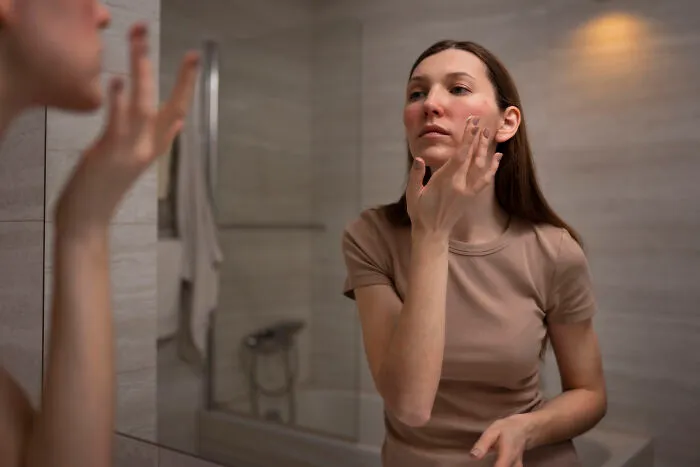
She has said a few times that she’s amazed at how many more younger women in particular have autoimmune and skin issues compared to women in their 30’s and older.

Now that we've looked at the numbers, let's go back to the original question: what does a doctor notice after years of seeing patients? Over time, doctors gain knowledge from seeing many cases, spotting patterns, and using their judgment. Evidence-based medicine values this experience and brings it together with the latest research.
A doctor might honestly see some complaints becoming more common among their patients, but this alone does not prove a trend in the whole population. Research helps check if these patterns show up in larger groups, while a doctor's experience can help researchers decide which questions to study.
Do you think doctors are really seeing different health problems in Gen Z, or could other factors explain the change? Which observation stood out to you the most? Share your thoughts in the comments!
#16

#17

#18

#19

Reasonably sure that we're putting complex medical labels on the wrong pathlogies.