

Experiencing parental favoritism can be extremely brutal. Since parents choose to have kids, they’re expected to love all their children equally. Unfortunately, we hear many stories of how their discriminatory behavior harms the unfavored child. But they don’t know it can harm the favored one, too.
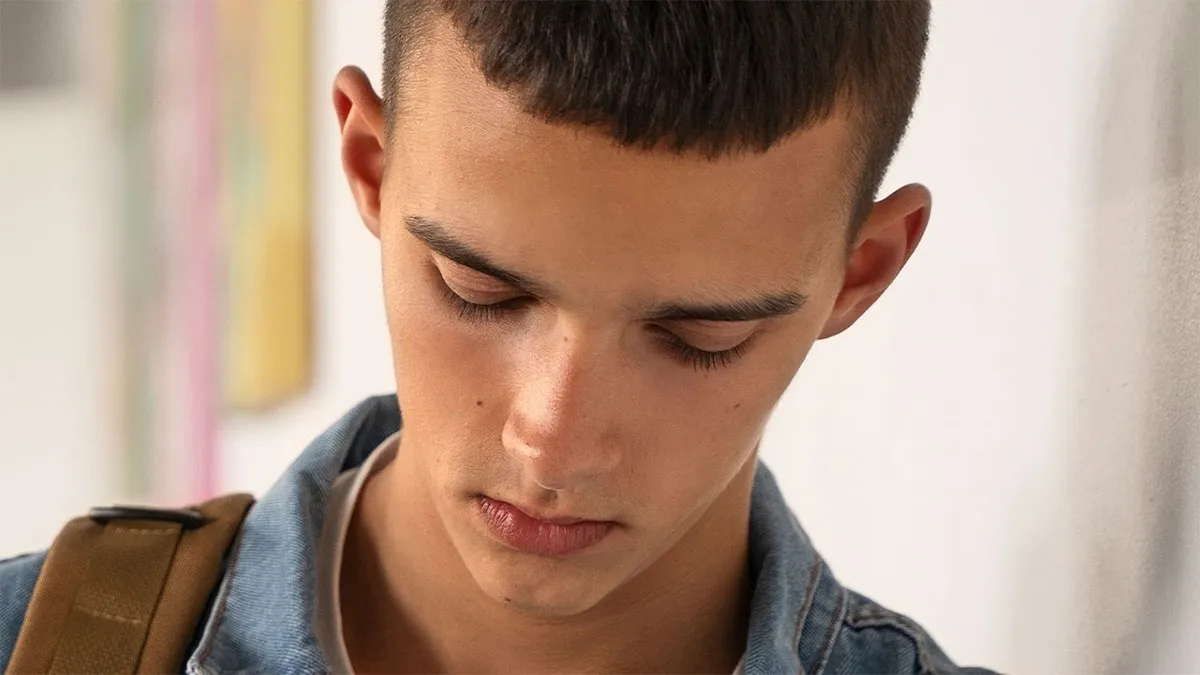
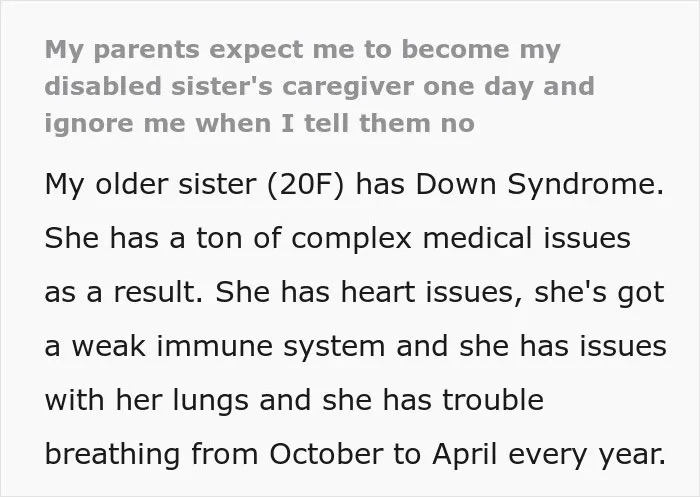
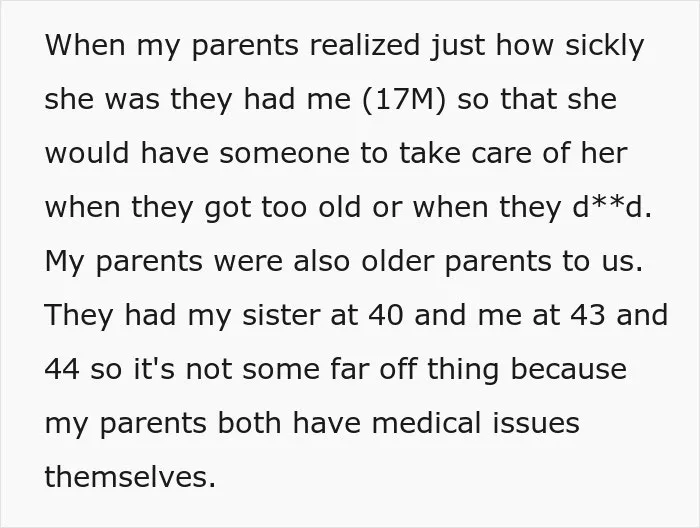
One teen shared online that his parents had him just so he could care for his disabled sister after they were gone. But she was extremely aggressive, and he feared her, though the couple always shut him down when he brought it up. Read on to uncover the drama that followed when he finally stood up for himself!
Parental favoritism can be extremely destructive for the unfavored and favored child
The teen author was sick of his parents demanding that he care for his aggressive, disabled sister, so he stood up for himself

Violence exposure can spark a range of mental health issues in kids
We might not realize it, but parental favoritism is surprisingly common and can be harmful. In fact, a 2020 study found parental differential treatment (PDT) in up to 65% of families. Moreover, it uncovered that PDT can harm children’s well-being across the lifespan, from childhood into middle age and beyond.
It is considered an important factor in a range of emotional problems people might face. Experts emphasize that kids become aware of such differential treatment at an early age. Sadly, it’s associated with low self-esteem in children, as well as childhood anxiety, depression, and behavioral problems, including risky behavior.
Moreover, they believe there may also be a knock-on effect on emotional well-being that leads to other, more indirect problems. This favoritism can also directly affect the sibling bond. It can spark tension and might even cause conflict. However, parents often fail to realize that they are also damaging the favored child.
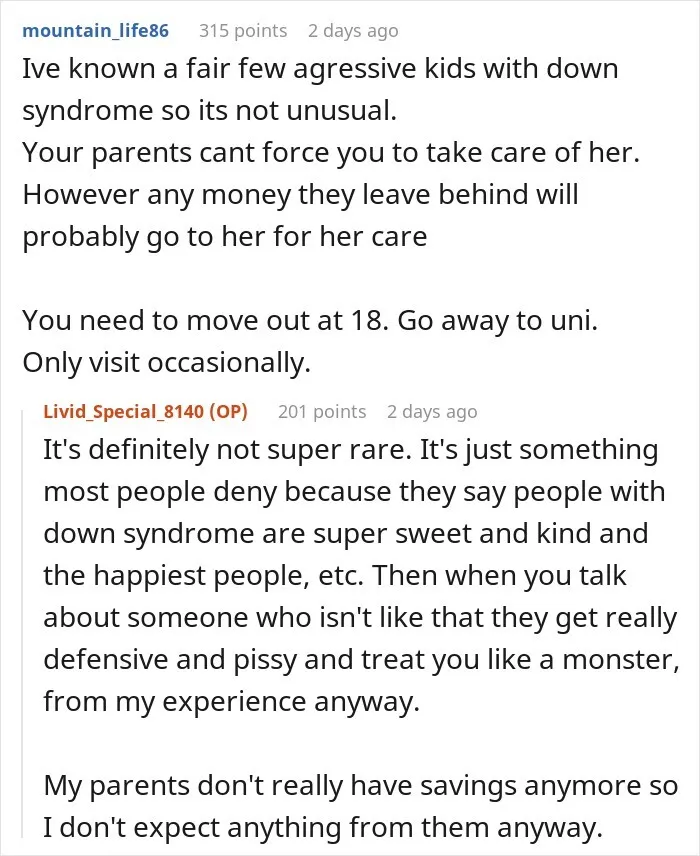
And let’s not forget that the favored child in this case has Down syndrome, and she was extremely aggressive. The poster had been a victim of her violence at a very young age. Not only didn’t he want to be her caretaker, but he was also extremely afraid of her violent outbursts.
According to the research presented by experts at Harvard University, exposure to violence is associated with elevated risk for a wide range of mental health problems in children and adolescents, including depression, anxiety, and PTSD.
When a child goes through so much trauma, it’s important to seek professional help. Unfortunately, the poster faced backlash every time he did. Not only did his parents try to shut him down, but even his school counselors called him a monster just for expressing his fears.
Sometimes, seeking external help is inevitable for folks with aggressive Down Syndrome
Aggression in Down Syndrome is less common than in other intellectual disability groups. However, researchers highlight that it can happen for many reasons. They believe the most common causes include frustration, confusion, and changes in the environment. If someone can’t express themselves well, they may get upset. They add that stress from life changes can also increase aggression.
They also explain that “sometimes, medical conditions like pain or sleep issues lead to irritability and outbursts. Mental health issues, such as anxiety or depression, can play a big role. Adults with Down syndrome are more likely to face these challenges than the general population. When these conditions go untreated or are misunderstood, aggression can follow.”
According to the experts at Caregiving.com, a site that offers support and advice for family caregivers, managing aggression in individuals with Down Syndrome isn’t merely about taming the outbursts. They explain that it’s about understanding the underlying causes, using practical de-escalation techniques, encouraging a positive environment through effective reinforcement strategies, and knowing when to consult professionals.
“There are times when turning to professional help becomes inevitable. If the aggressive episodes become frequent, or if they pose any physical harm, or if they induce considerable disruption in the family’s daily functioning, it’s time to seek external assistance,” they note.
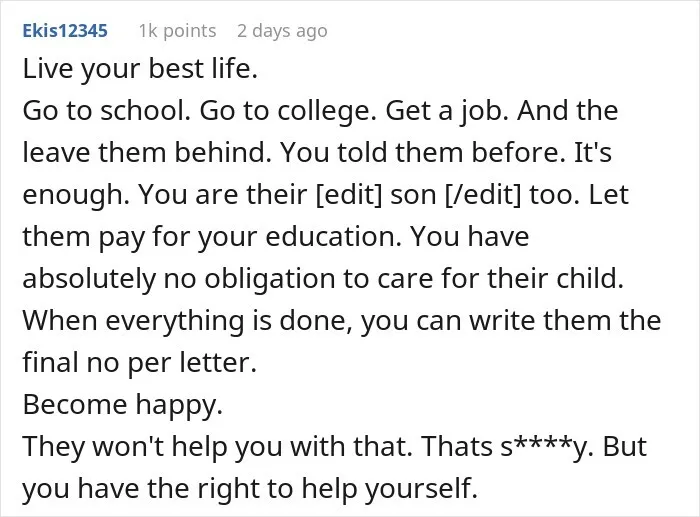
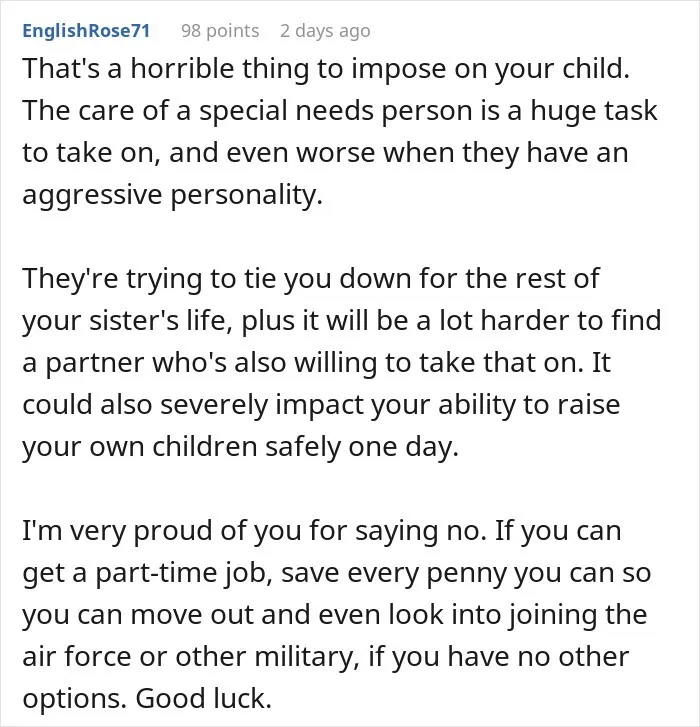
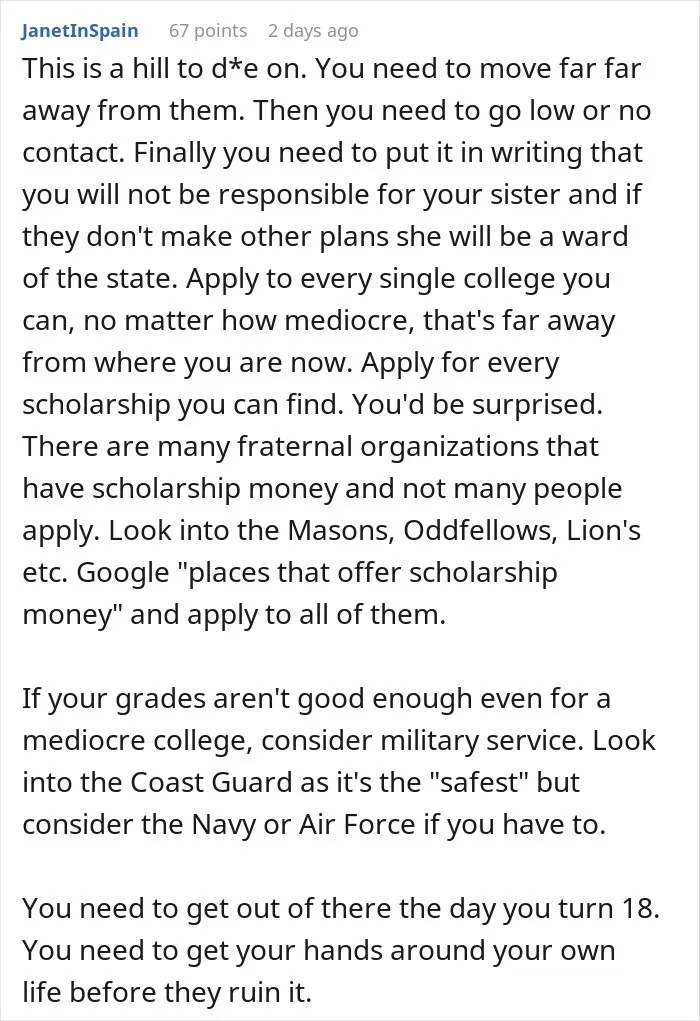
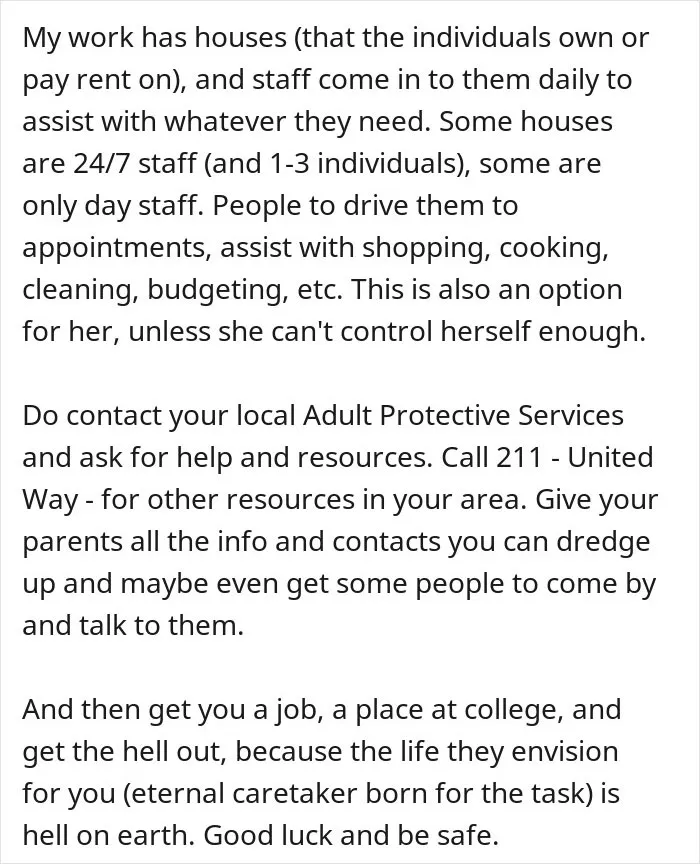
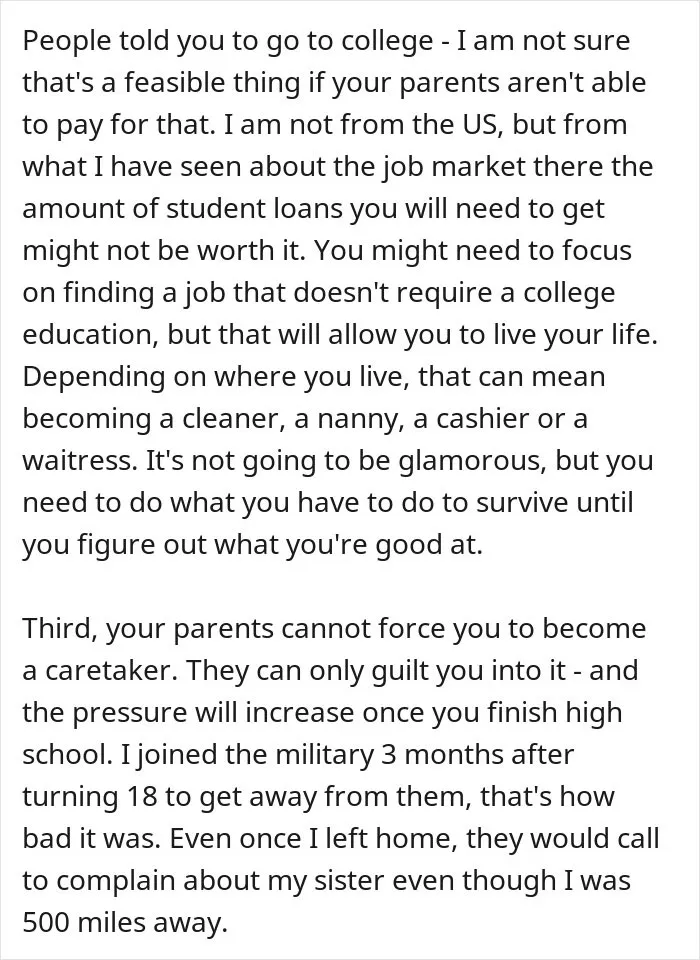
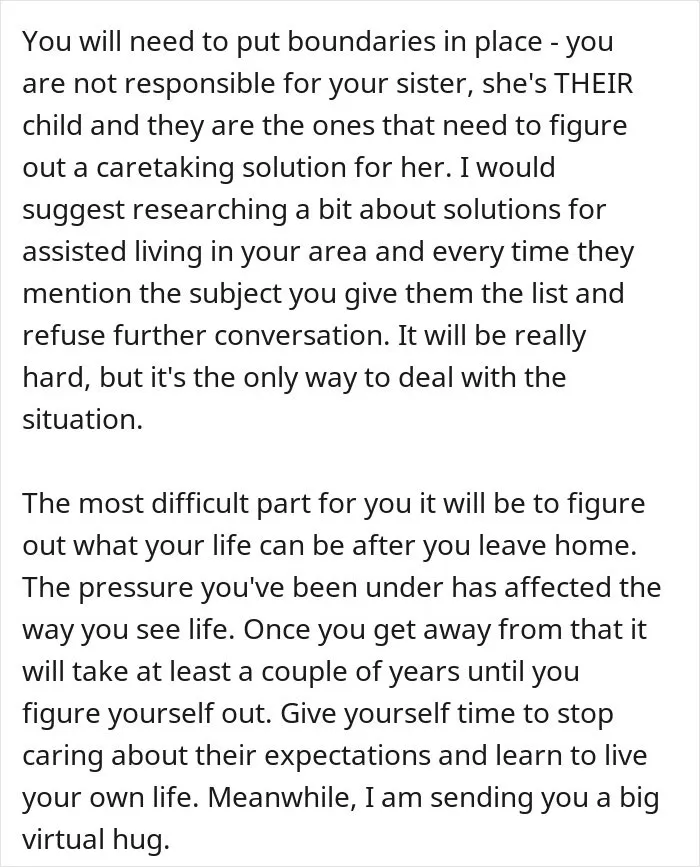
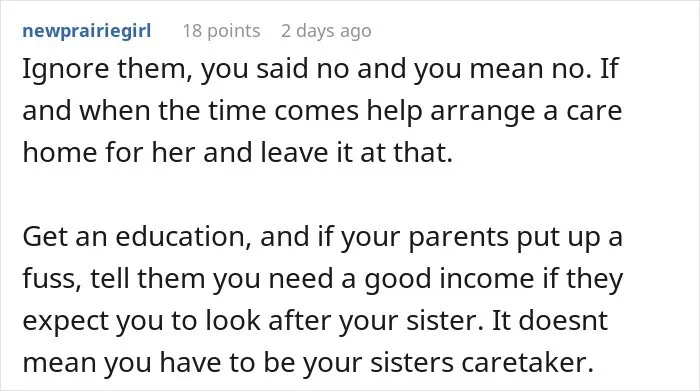
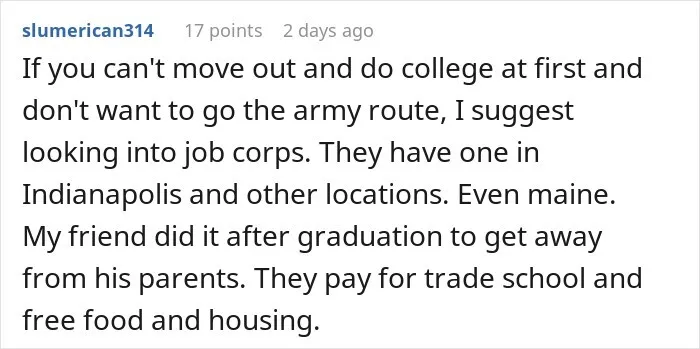
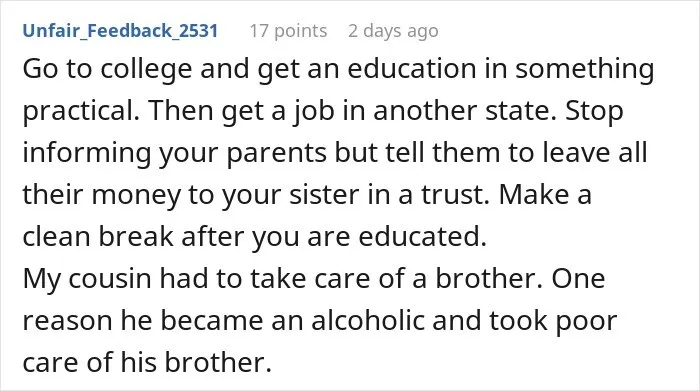
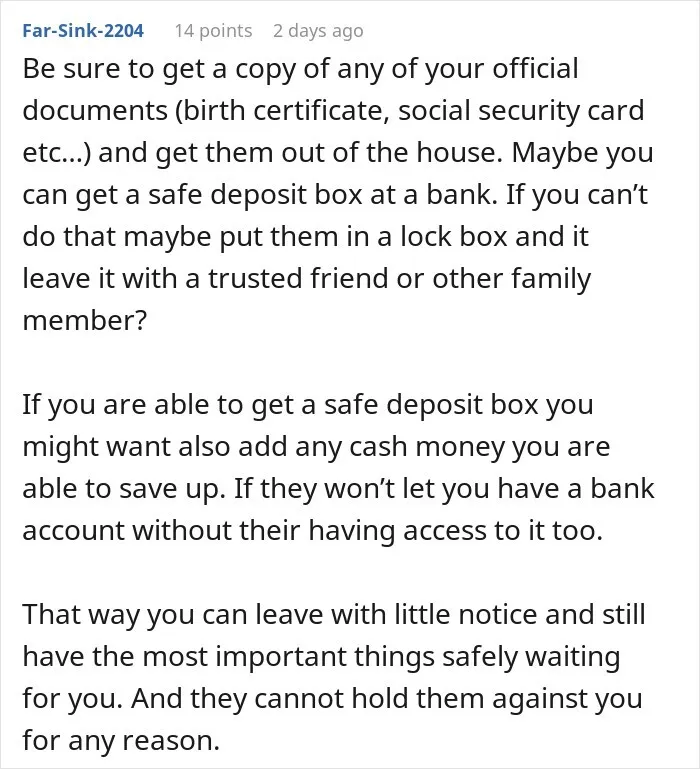
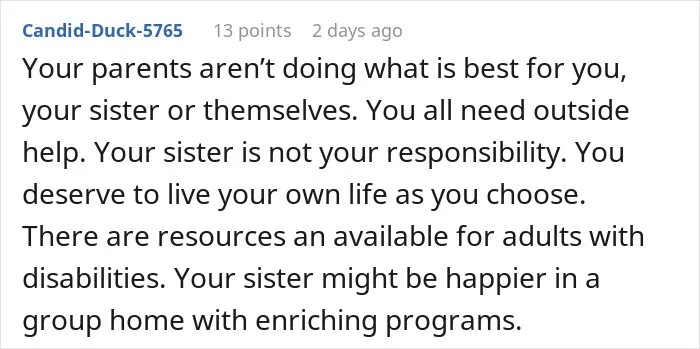
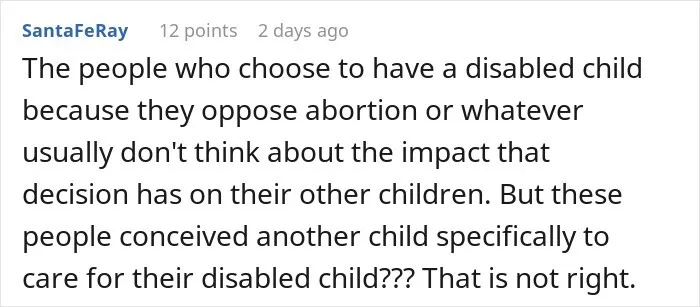
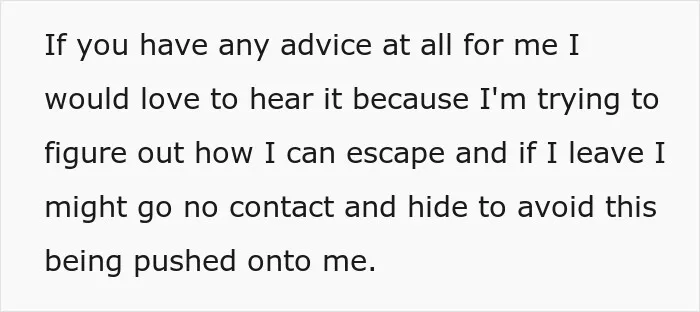
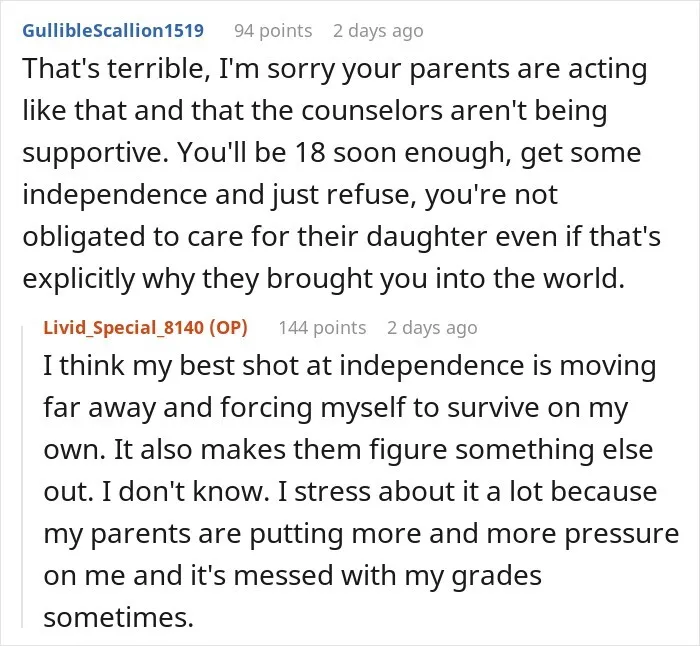
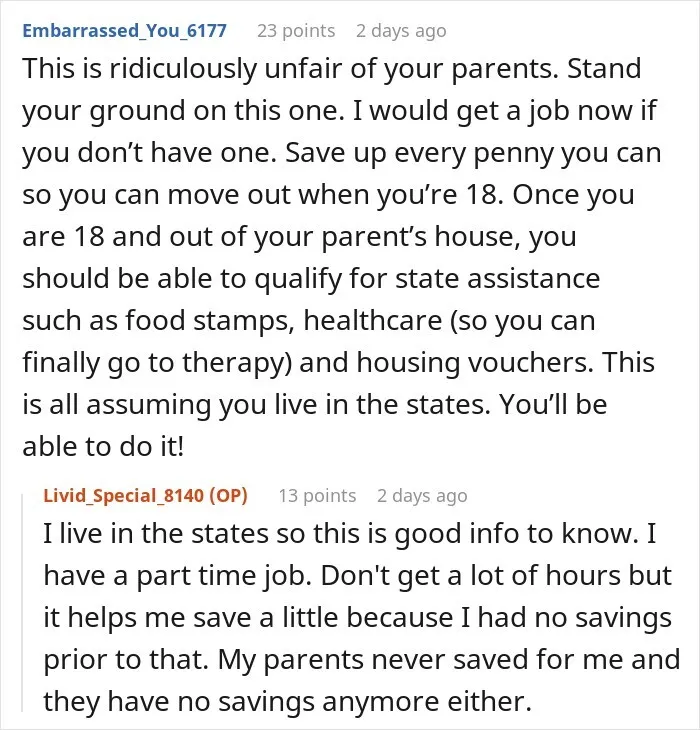
Based on what the poster described, it seems his sister needs external help. Also, it’s extremely unfair of his parents to expect him to be her caregiver. That’s why many netizens advised him to move out as soon as he turned 18 and go no-contact with his family. He commented that he was honestly considering it.
What would you do in such a situation? Let us know in the comments. Also, feel free to check out another parental favoritism story we covered previously.
He provided more details about his situation in the comments

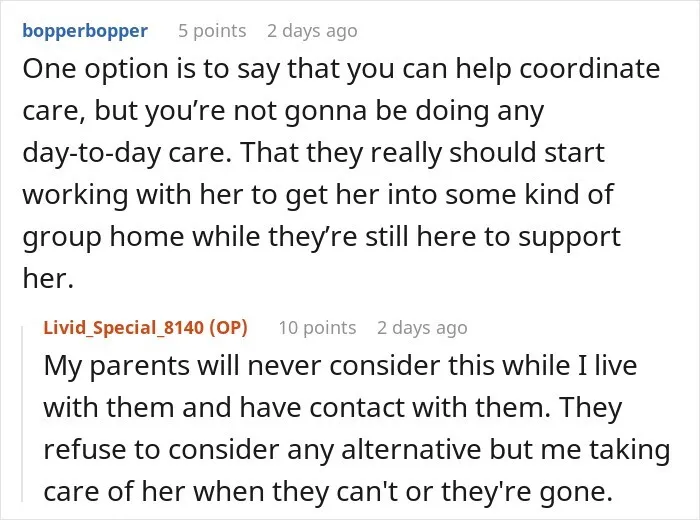
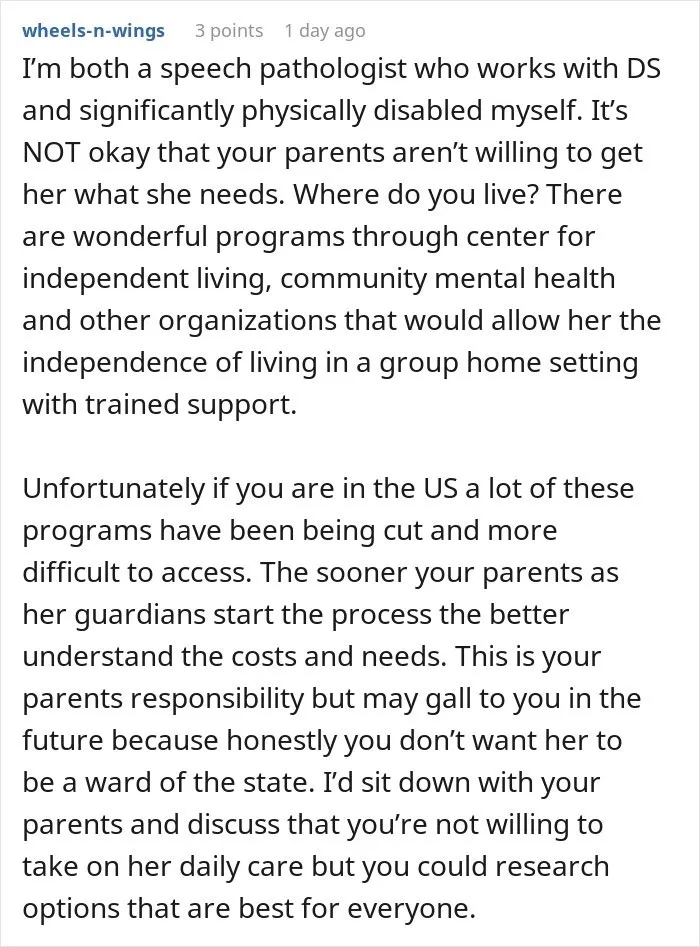
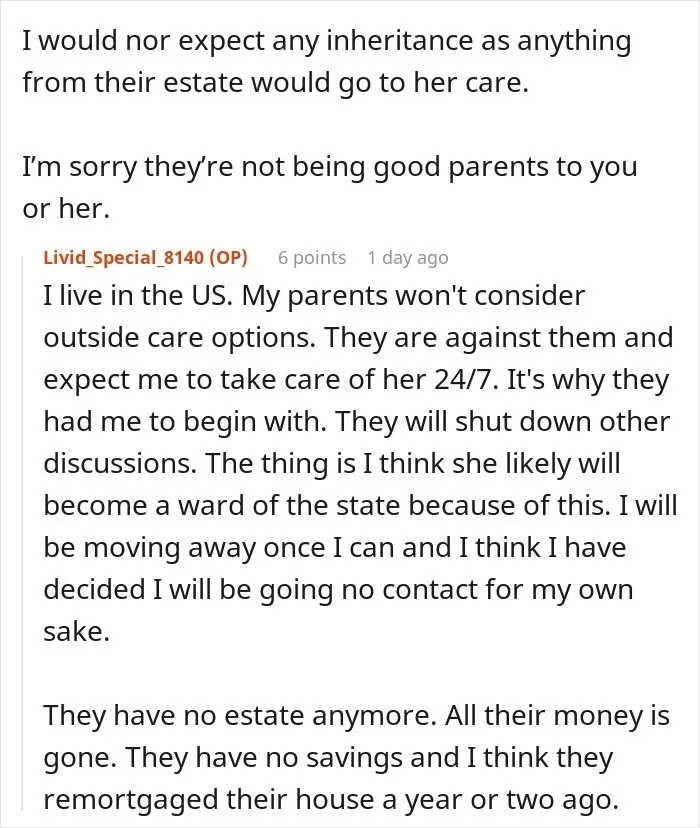
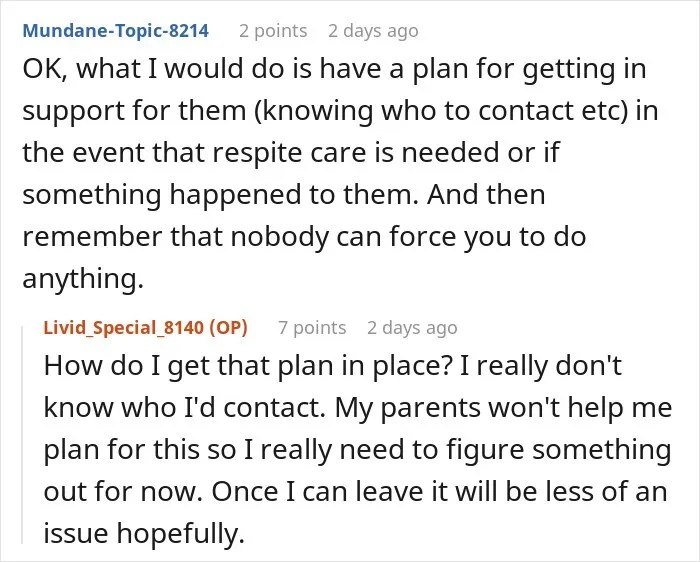
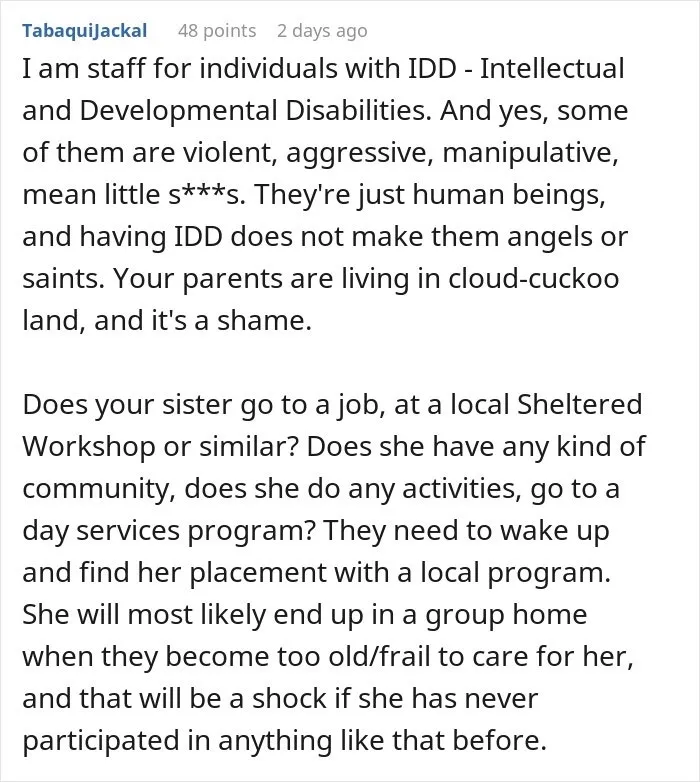
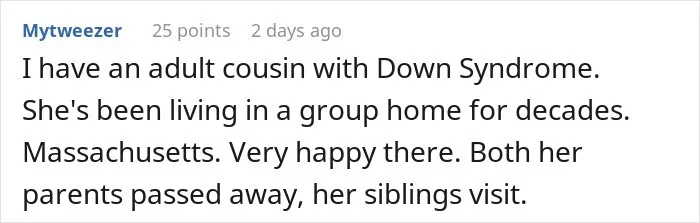
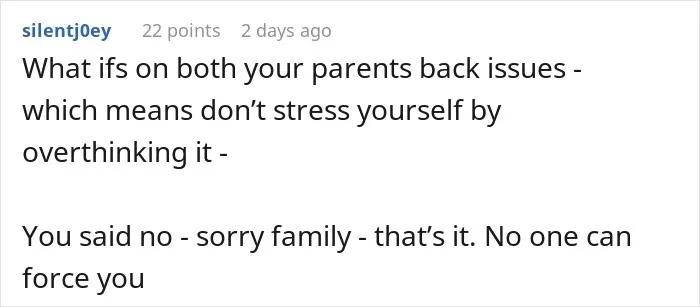
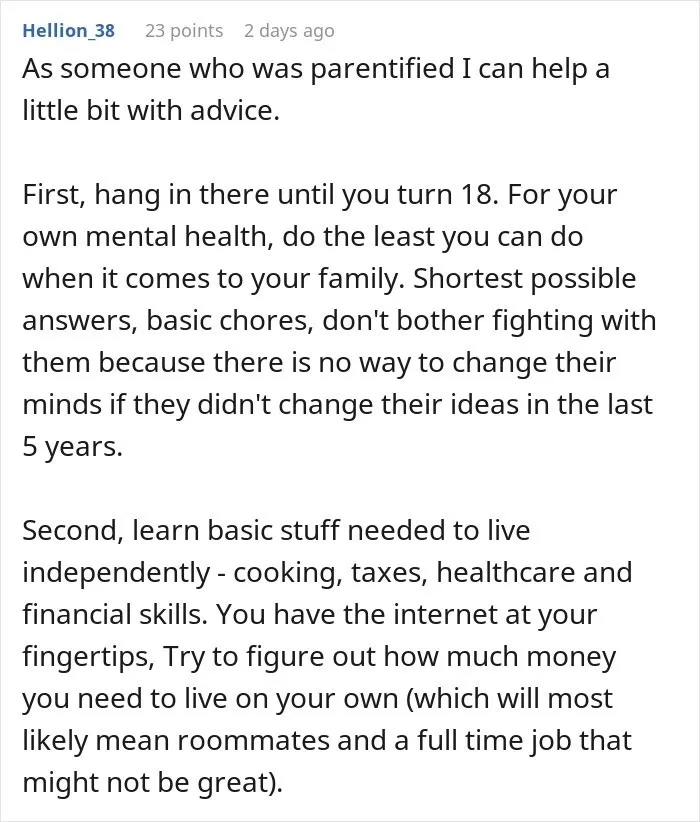
Shocked netizens reacted and also provided helpful advice