



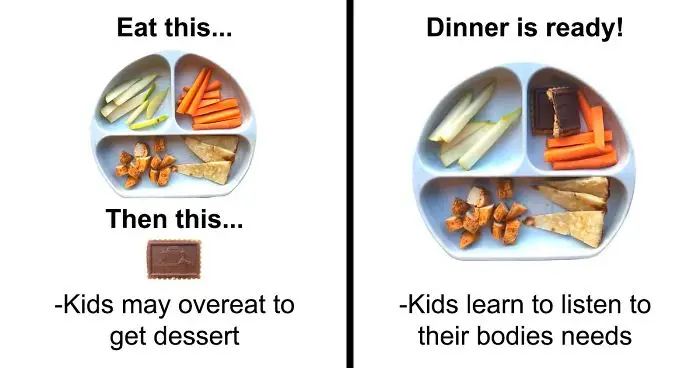


Leah Hackney is a registered dietitian who has always had a passion for pediatrics and helping families. When she was working at a children's hospital in Texas, Hackney realized that a lot of nutrition problems she was seeing could've been prevented or reversed if only parents had the right information.
With nutrition-related health problems on the rise, Hackney wanted to create a medium to help parents who really valued the relationship their kids have with food and their bodies. So, in 2019, she started an Instagram account.
"My Instagram feed is a judgment-free place where you can find easy tips on how to help your child add variety to their diet, implement mindful eating behaviors, mealtime strategies, and relevant information on feeding your infant, toddler or adolescent," Hackney told Bored Panda.
More info: Instagram
This post may include affiliate links.
#21
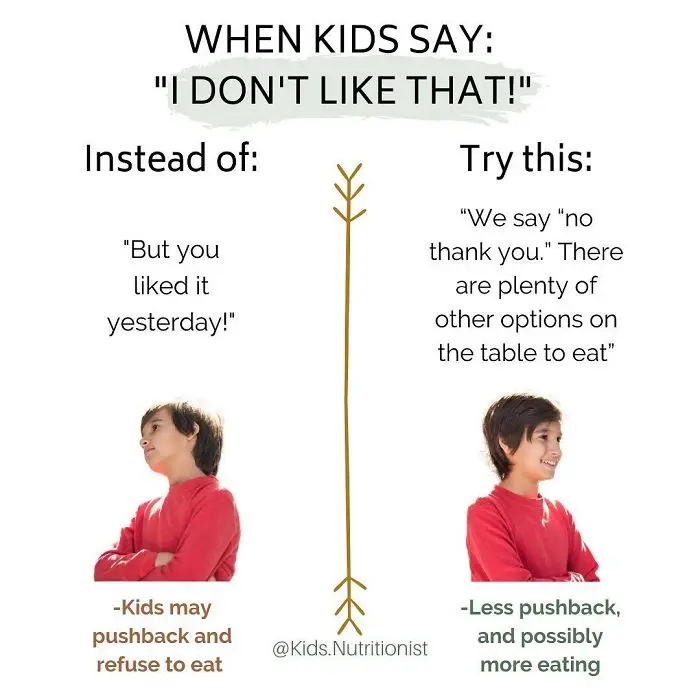
Parents and guardians, it is exhausting making multiple meals every day, for weeks on end. It’s even more tiring when it’s constantly met with resistance from a picky eater! It’s SO tempting to “remind” kids that they have eaten something before, or that they like a specific food. However, when they are saying “I don’t like that” that can be code for “I feel like I don’t have a choice.” If we meet their food refusal with “But you do like that!” for stubborn eaters, this may start a food battle. If they are stubborn enough, they may stand their ground and refuse to eat anything, just to feel like they have a sense of control over the situation. A way to acknowledge that they don’t have to eat it is: -Acknowledge their feelings, repeat what they said back to you starting with “I hear that you___” -Let them know what their options are -Always have one food on the menu you know they like or love The rest is up to them! More often than not, they just needed to feel like they have a sense of control. You provide the food on the table, and they get to choose what food they eat based on the options you provided. Letting them have control over how much they choose to eat, can feel scary at first, but in the long run helps them build a strong connection to their body. Picky eaters may even start to show an interest or curiosity around new foods, which can be a huge step towards normal eating!
Report
8points
#22
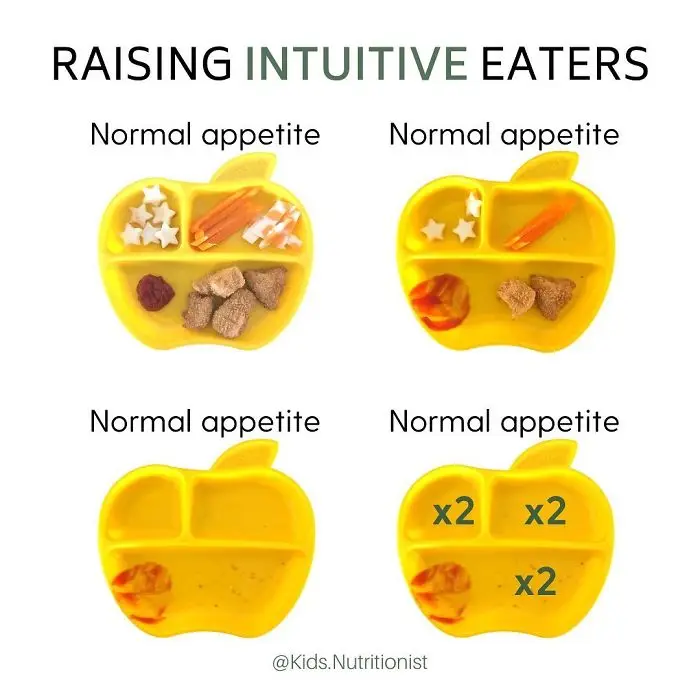
I recently had a stressed client say that their little one’s appetite seemed to vary so much. She said “he would have some really good days of eating, and then some really bad days, and I’m concerned about his growth.”Overtime we worked together to set realistic goals to support his eating at mealtime. We also adjusted how much she was offering, to make sure he wasn’t overwhelmed with how much food was on the plate.That mom I worked with felt so relieved to have a plan in place, so she could support her sons growth, and help him tune into his hunger/fullness cues!Kids’ appetites vary from day to day! This is NORMAL. Don't get so caught up on how much they eat at each individual meal. Most kids have the amazing ability to eat intuitively when we support them in helping them learn their bodies hunger and fullness around food. The key is for parents/guardians to build a trusting relationship with providing consistent eating opportunities. Parents roles are to provide the food, and kids roles are to decide if and how much they eat at that meal. That’s why if you ask me “is this TOO MUCH” or is this “TOO LITTLE”I have to say: “It depends”Kids have individual growth patterns, so every kid will have different appetites and eating patterns.If you are stressed about your child’s growth and eating patterns, and want to learn how to guide them to eat intuitively, apply to work with me.
Report
6points
#23
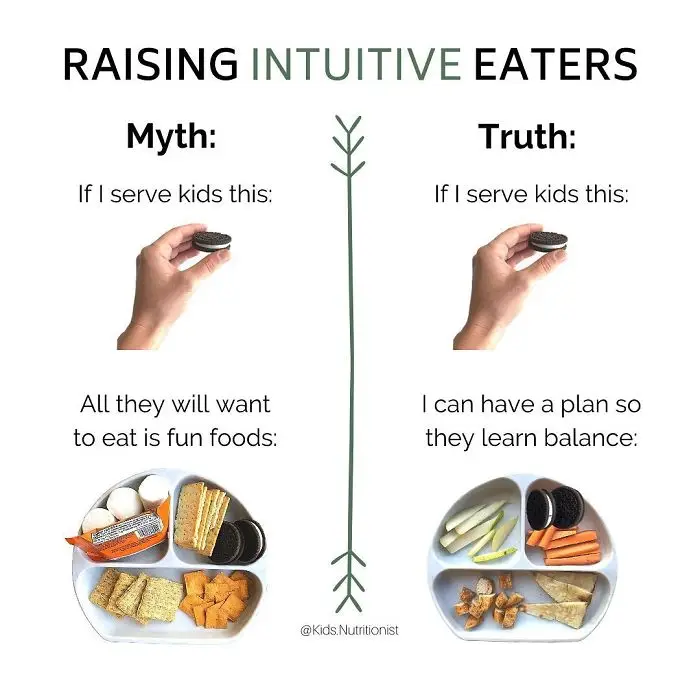
Which side do you relate to? .I’ve had so many parents tell me that they are “scared” to serve fun foods like crackers, cookies, or chips. Oftentimes we want the very best for kids' health and wellbeing! ..One mistake I see is parent’s NEVER exposing their child to these foods, then they come to me later expressing that their child was sneaking, bingeing or hoarding these foods when they get older. These parents feel so defeated, confused, and scared for their child’s health. Will this happen to everyone? Obviously not! .. However, there’s a huge link between restricting fun foods from kids too much, and kids later fixating and overeating these foods. I think there’s a common misconception that these foods cannot be eaten AT ALL. ..That’s not reality!Obviously those foods taste great, there’s nothing wrong with that!... What we aim for is balance and variety:1. So they can have a healthy relationship with all foods, that won’t lead to too much restricting or bingeing 2. The more variety they have, the more likely they will develop curiosity around food. Which will help them from getting stuck eating the same foods over and over. ..The parents I work with benefit from a plan. A plan in place that works for their family, while also benefiting their little ones health. If a family is going through a restrict and then “free-for all” method around fun foods, it can feel chaotic. This chaos may show up in how a child acts around these foods. The families that I have worked with on how to serve fun foods, feel so much less pressure knowing they can enjoy ALL foods, and still raise happy healthy eaters. ..Life is too short to be “scared” of food, and to feel out of control around food. It’s just food!
Report
5points
#24
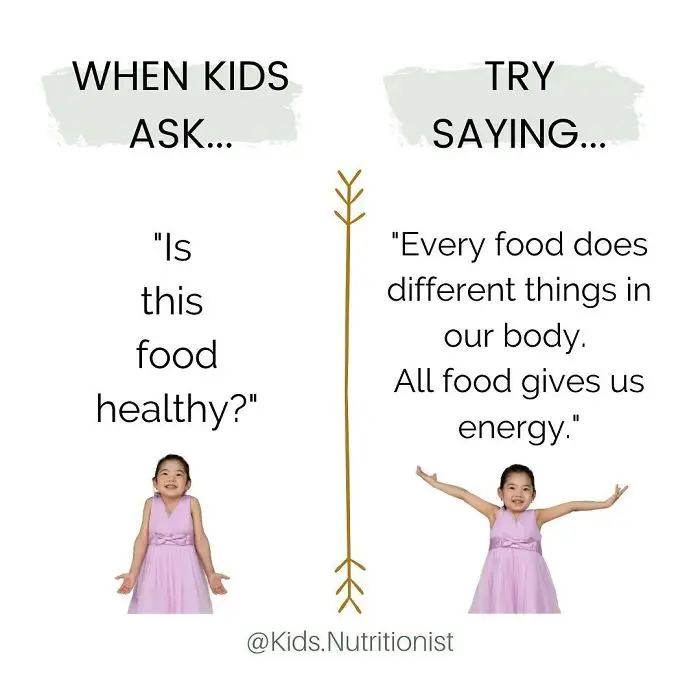
There’s so much we could talk about when kids ask about food!Nutrition is individualized and everyone has different needs! What may be “healthy” for one person may be “harmful” for another. That’s why I skip out on labeling foods “healthy/unhealthy.” Studies show, teaching that to kids may lead to fixation and obsession over foods. Obsession around food may lead to some unbalanced eating habits that are hard to unlearn! I want to help parents prevent that from happening with their kiddos, so they can feel confident in feeding their kids, without perpetuating unsupportive nutrition behaviors. Parents and guardians, you don’t have to know everything!! Your kids look up to you, but often in these moments, they are just learning and making connections with food. They just want quick answers! I keep these answers in my back pocket:“Foods do different things in the body”“Some foods do a lot in the body, some foods do a little.”“All food gives us energy” If you are tired of second guessing if you are on the right track with your kiddos nutrition, it may be time to find individualized support.
Report
5points
#25
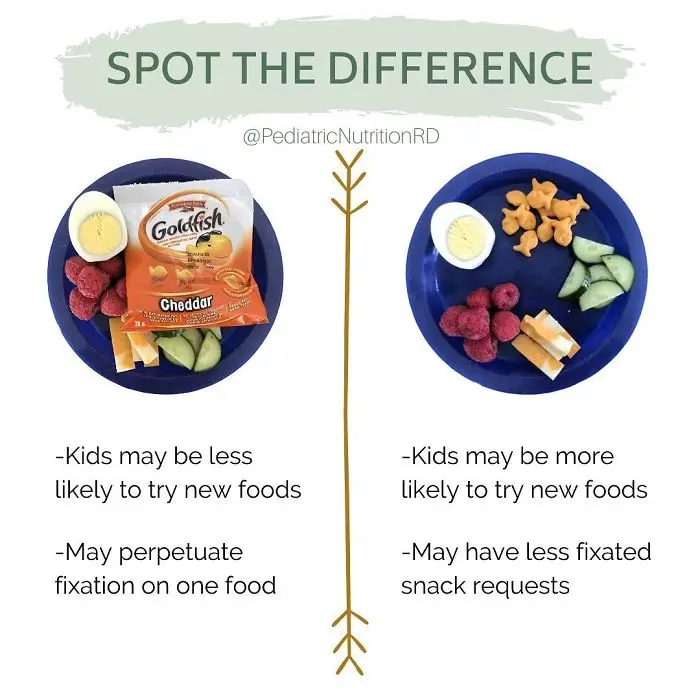
Is your child constantly asking for snacks? I’m a firm believer that any food can be served at any meal, and that all foods can fit in our meal routines. In some previous posts i’ve talked about snacks being “mini meals”, which will look different depending on your time, capacity, and food you have available!If you’ve been following me for awhile, I love to talk about taking food off of a “pedestal.” It sounds good in theory, but what does that mean when we go to serve food?It means presenting food as neutrally as we can! Sometimes we are unintentionally leading kids to put food on a pedestal, just by how we are presenting it to them! I recommend taking snacks out of their packaging, and serving them with a few other food items.Why I recommend this:1. Selective eaters may get focused or fixated on a specific package, or “brand.” Which may actually make it harder for them to want to try any “different” foods in the long run.2. Presenting everything equally on a plate shows that there’s nothing special about the snack. It subtly takes that snack off the pedestal, because it blends in with the other colors and textures on the plate. With time this may lead to less fixation on specific snacks!
Report
5points
#26
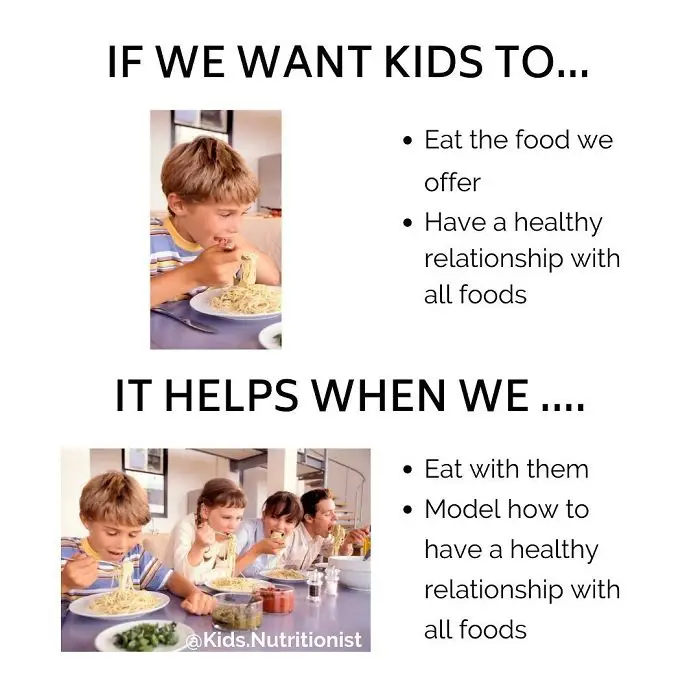
Wondering what may help your picky eater? I was talking with a mom the other day, and she said “I’m so sick of nothing working for helping my kid to eat, we’ve tried everything!” I totally related to this, feeding picky eaters is tough! We talked it out a bit, and she told me she was so focused on putting food in front of her toddler, and then trying to feed the baby, that by the time mealtime was done, an hour had passed! She would quickly scarf down her food after everyone was already moved on to the next activity.Between getting the baby to eat and fighting with her toddler about eating, she was exhausted. We talked about what changes she could make, and then it hit her. She wasn’t 𝐬𝐡𝐨𝐰𝐢𝐧𝐠 her kids the mealtime behavior she wanted from them! Parents and guardians, there’s tons of research that backs up that modeling the behavior we want to see (without pressure), is crucial. Eating with kids at mealtime:-Improves selective and picky eating-Helps kids learn how to socialize and eat-Is linked to better performance in school-Gives kids the opportunity to see what a healthy relationship with all foods looks like I know it is tough to do, but the dishes will still be there. Parents nourishing yourself and sitting with your kids even for 5 minutes can make a HUGE difference.
Report
5points
#27
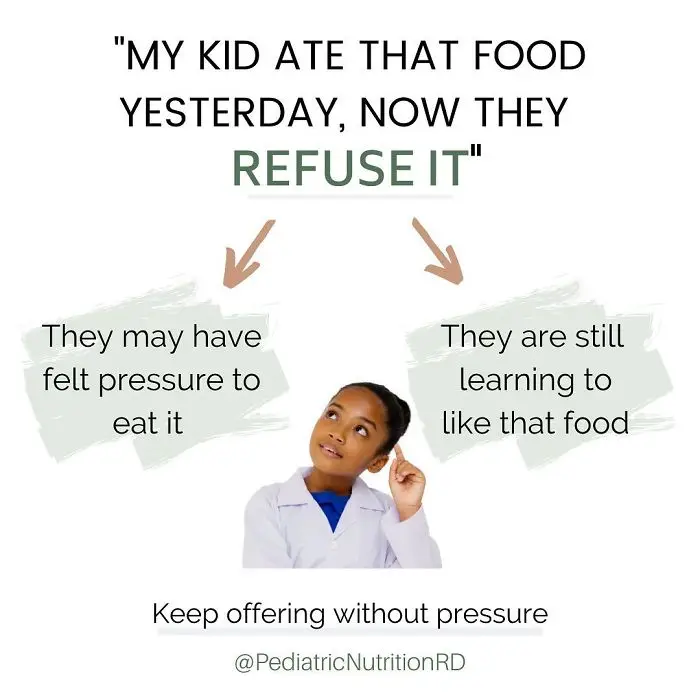
Has this ever happened to you? Where you serve your child a food, they try it, eat it, say they like it, and then the next day refuse it? It’s happened to me. I was soooo tempted to say “well you ate that yesterday, so I know you like it”. I wanted their eating patterns to make sense, and I thought I had nailed it! Nope. Looking back there may have been two reasons why they ate something and then refused it later… 1. There may have been a subtle form of pressure at the last meal… Maybe just enough where they felt like they should eat it out of politeness. Subtle forms of pressure may look like: “Just try it, or just a bite” “I know you’ll like it” “It’s so healthy for you” . . 2.Signs they are still learning that food: -Taking time to explore and look at it first -Not wanting it to touch other foods on the plate -Waiting to eat it last or only eating a certain part of it (like eating the inside of a grape, but spitting out the skin) . . As parents and guardians we want them so badly to eat “normally”. However normal eating does vary! As soon I realized I may have been slightly pressuring them to eat the food, I switched up my strategy. I ditched those “low pressure” phrases, and I focused on letting kiddos learn and explore the food. I saw so many little improvements such as tasting food, and interacting with it! All without the meal time battle, which saved me so much emotional energy. If you feel like you want peace of mind and a clear simple strategy on how to support your childs’ relationship with food, let’s work together to find a personalized solution. I want to help you spend your energy making memories with your kiddo instead of fighting over food.
Report
5points
#28
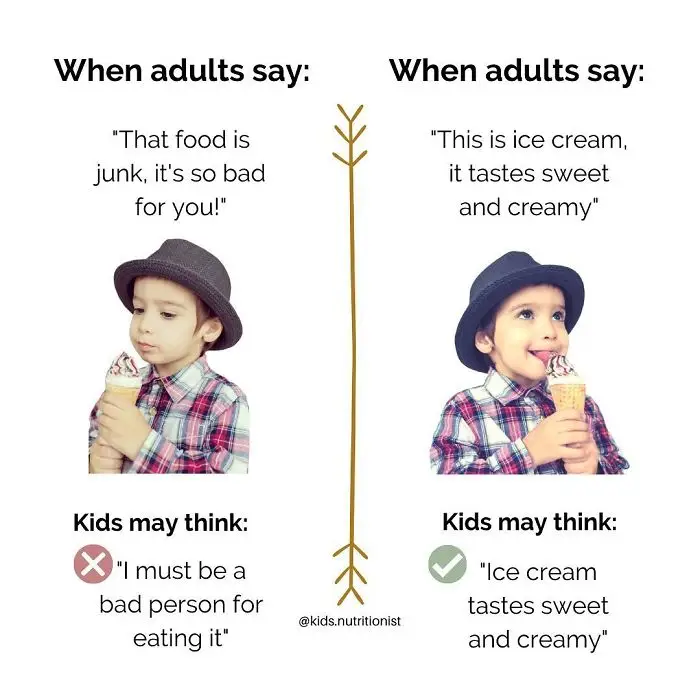
Have you ever said this before? I have. I used to think that if I just labeled things “good and bad” or “healthy/unhealthy” kids would make better food choices. This backfired on me big time. Back when I was nannying, I used these phrases A LOT around the eldest kiddo I took care of. One day we were in the drive-thru to get a coffee for myself, and she started to SCREAM just as I was about to place an order. She kept saying “I can’t eat here, IT’S BAD. I don’t want to be BAD.” At the time she was 4. My heart sunk. I’m ashamed to say, I had created a legitimate FEAR around food for her. You might ask, “Well but did it work? Did she stay away from those junk foods ??” Nope. Weirdly enough, she asked for them more. She would ask when we were going through the drive-thru again. She would ask me to make them for her constantly. I realized (the hard way) labelling food as good/bad, or “junk” is unnecessarily confusing to kids. They may feel like they did a bad thing after eating, and then the shame they feel may drive them to fixate on that food. There’s even studies to back up what I experienced in real life. I learned a totally different approach that has been proven time and time again to support kids in their nutrition, and relationship with food. I told her I was wrong, and that foods aren’t “good/bad,” they’re just different. We both unlearned, and she shifted away from being fixated on those foods. I’m happy to say after implementing my new approach, she’s now a happy active kid who has spent more time learning to ride a bike, than being fixated on food. I’ve seen her eat all of those foods, and be able to stop eating because her tummy was full. It balances out, and her eating patterns are less chaotic. I’m so relieved. We can make changes and adjust if something isn’t working! If you are looking for 1:1 guidance on how to support your little one's nutrition, so you can have more time to enjoy them meeting milestones, let’s work together
Report
4points
#29
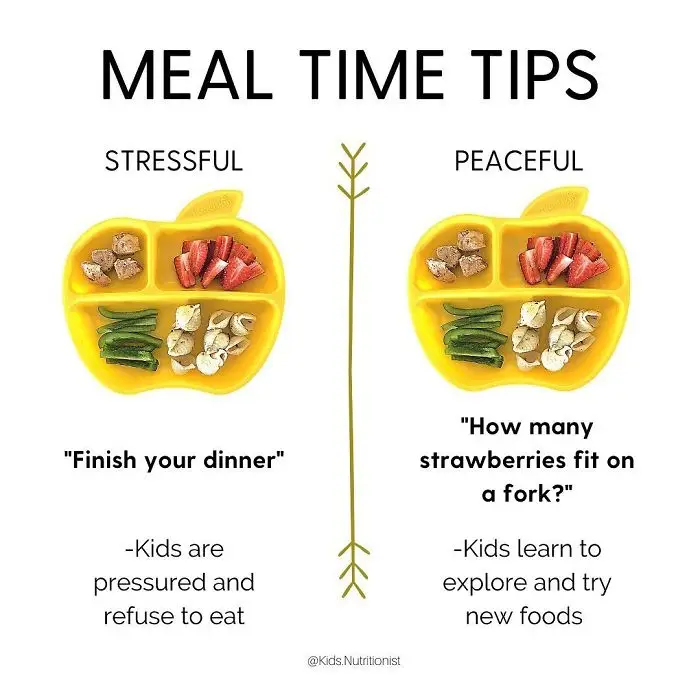
I recently had a client say that she wanted her little one to grow up to have a better relationship with food than she did. She mentioned that growing up her family was a “finish your plate” family. She said when she felt that kind of pressure at meal times it lead her to actually HATE the food she was made to finish.I’ve heard TONS of stories like this from families. Just because we were taught to eat a certain way growing up, doesn’t mean we have to pass that down to our little ones.Mealtime pressure like “finish your plate” can sometimes backfire for the hesitant or selective eater. If strategies like this are working for you, then that’s great! You don’t have a hesitant eater.However, if your little one is showing less interest in food, and rejecting food more frequently it may be time to adjust your approach.Letting kids interact and explore the food WITHOUT pressure is a huge win!No pressure meals looks like:-Not focusing on eating every last bite, instead focusing on making mealtime pleasant-Letting your child explore and learn the food even if they don’t finish it.After working with my client, she felt so empowered to help her little on become a curious eater in a respectful way that aligned with her values. I help families go from stressful meals to peaceful family meals, where their little one is curious about food.
Report
4points
#30
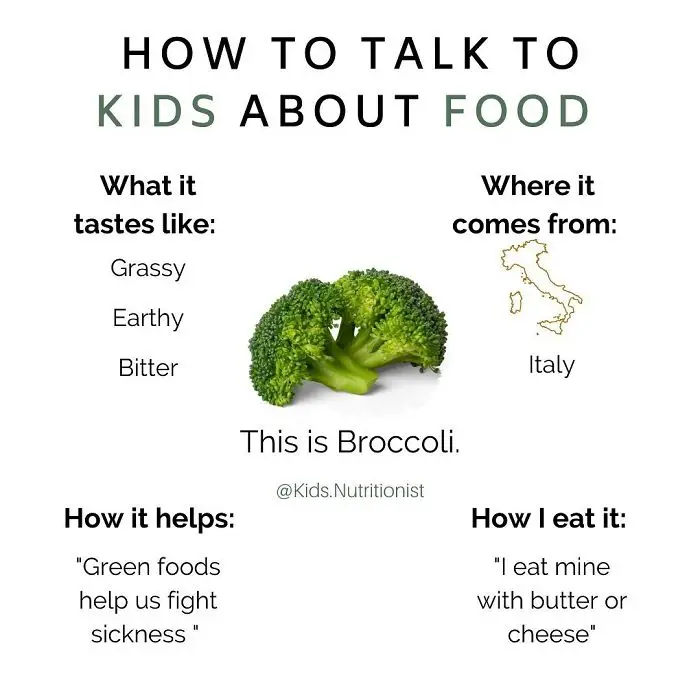
Kids love asking about food all time. We know that what we say in those moments matters, especially if we want kiddos to have a healthy relationship with all foods growing up. One thing I work with my clients on is resisting the urge to ADD anything unnecessary when we talk about food. I like to boil it down to digestible facts (no pun intended) Usually young kids are satisfied with that! Keep in mind: Young kids aren’t always motivated to make food decisions based on what nutrients are in them! When I’m giving a kiddo a new food I recommend: -Teaching them about the food WITHOUT the additions of “it’s so healthy/unhealthy for you.” -Talking about where it’s from, what it tastes like, how I like to eat it, what it does in the body. If they ask a question that I don’t know the answer to, I tell them “That’s a great question, let’s look it up.” Strategies like this help many of my clients support their kids in having a healthy relationship with all foods, without confusing messages. Their kids learn to trust what their body needs, eat normally, and become curious eaters. Which saves these parents from so much worrying, because they were able to help their kiddos grow up to be resilient to disordered eating messages.
Report
4points