
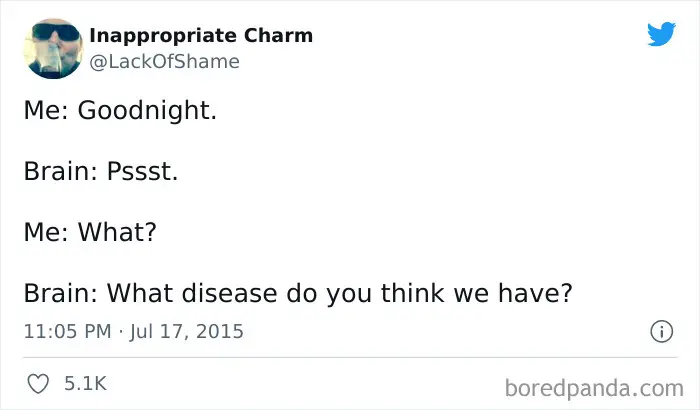
"To reduce overthinking, we need to train ourselves to trust our first impressions and instincts—and commit to a decision," she gave some spot-on advice on how to fight back against over-analyzing certain situations. We need to learn to trust our gut instincts more.
#23
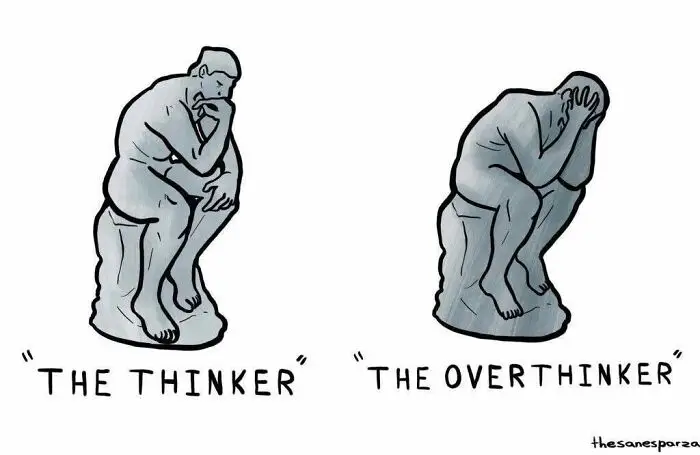
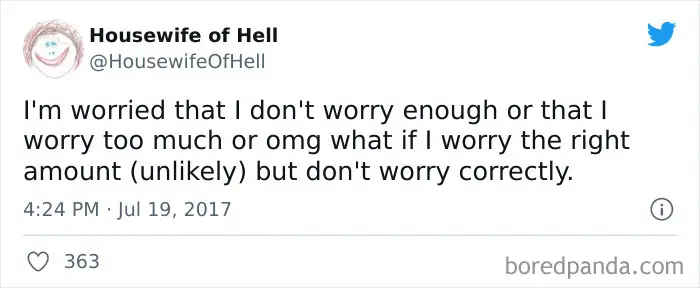
"We need to recognize that the longer we ponder, the more confused we are likely to get. Thus, we should practice making the decision that feels right and learning from the new behavior. Creating new patterns in who we approach life isn’t always easy, but we can train ourselves to do things differently with practice,” she said.

#26
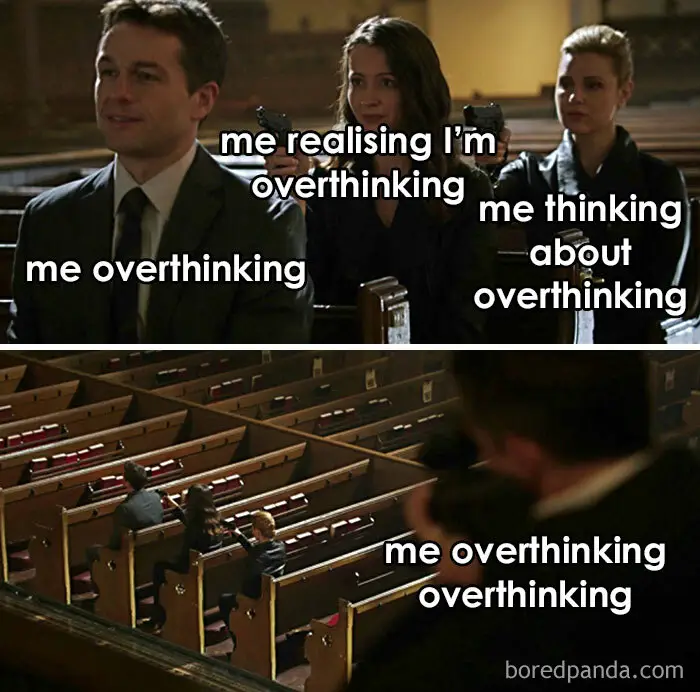
In the professor’s opinion, overthinking may be tied to the fact that we have more time for leisure than ever before.
“We have a lot more time to think than other generations—when people were super involved in the physical acts required in 'making a living'—when this meant rising early, physical labor all day, and no time for luxuries such as 'creative thought,' 'rumination,' or video game playing or mindless television watching. Life didn’t give space for a lot of overthinking—life was uncertain and you had to act quickly and instinctively, in many cases,” she explained to Bored Panda.

#29
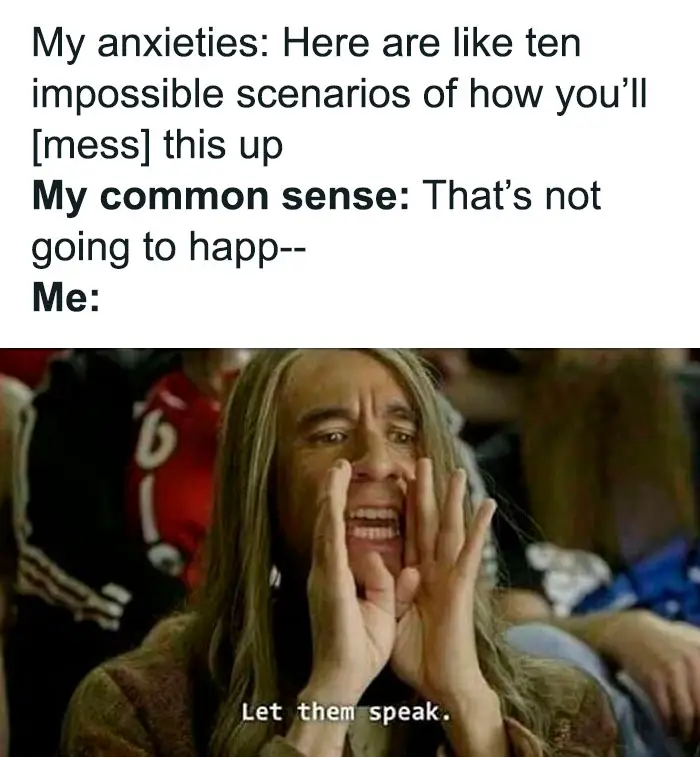
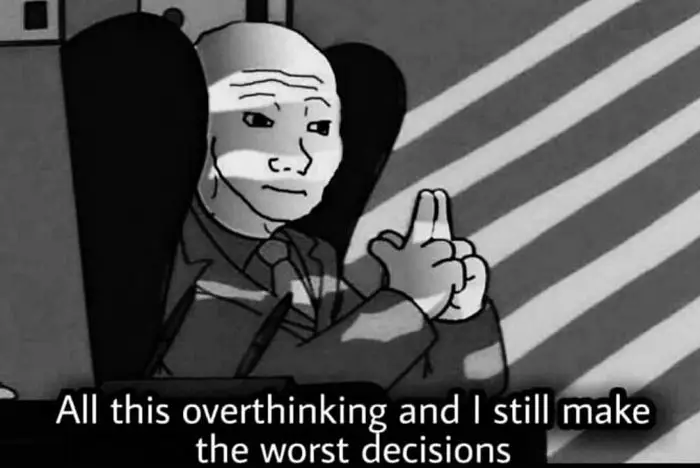
"Overthinking is probably part product of increased leisure time, advances in cognitive complexity, and the ridiculous array of choices that life now presents us. When you had to worry about protecting crops, livestock, feeding a family, and making do with what you had, you don’t have the time worry about the trivial things that modern man has the luxury of overthinking."
#32