





Depending on how closely you paid attention during history class, you might be a treasure trove of historical facts, or you might know almost nothing about the past. But even if you remember every single story that your teachers ever told you, there are hundreds more that you may not have heard.
And if you’re interested in expanding your knowledge about the past, we’ve got a list of fascinating yet often overlooked stories right here. History buffs on Reddit have been sharing tidbits of information that sound too wild to be true, so we’ve compiled our favorites below. Enjoy reading through these tales full of fun facts to share with friends, and be sure to upvote the stories that prove that reality really is stranger than fiction!
#21
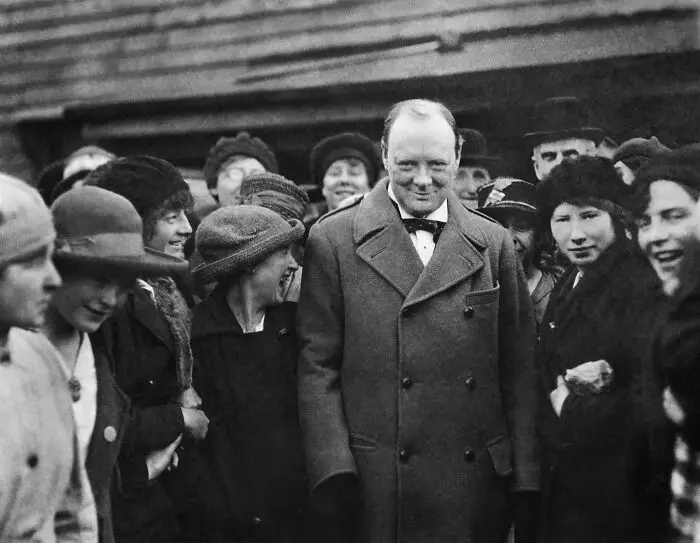
During WWII, while London was being bombed. Winston Churchill didn't like the idea of being stuck in the cellar of 10 Downing Street (where the PM of GB typically reside while they are in office). So he had his staff set him up with a lawn chair on the roof. He bring a bottle of Whiskey, a cigar, and just watch from the roof as London was bombed while everyone else sat huddled together in the cellar praying to not take a direct hit.
Report
14points
#22
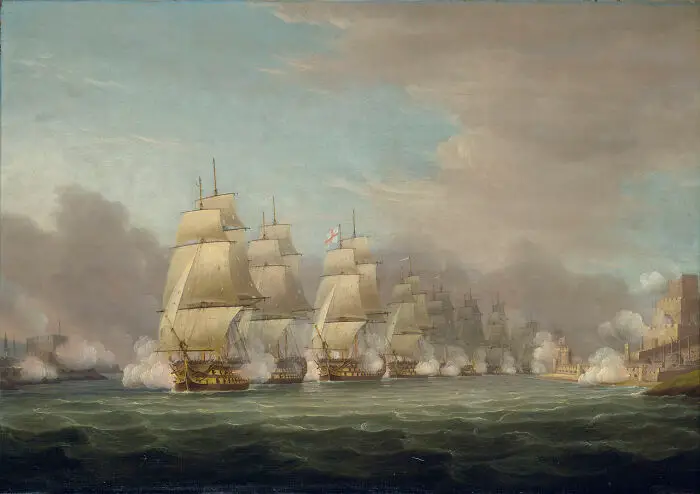
The time a 340 year old museum piece was used to repel an invasion.
The Dardanelles Operation was a fairly minor skirmish during the Napoleonic wars. The Ottomans aligned with the French against Britain and Russia. The British sent a fleet to intimidate the Turks and force them to reopen the strait.
As the British fleet sailed towards Constantinople, French engineers worked with the Turkish army to repair and improve shore defenses. Part of this included reactivating a 340 year old supercannon modeled on the one used in the famed Turkish conquest of Constantinople in the 1400s.
This cannon weighed 17 tons and fired stone cannonballs that were two feet in diameter.
After meeting little resistance from the Turkish fleet, the British were forced to withdraw after taking heavy damage from the shore batteries, including from the colossal "Dardanelles Gun".
**Tl;DR: Trebuchets are nice, but can they fire a 360 kg projectile over 2400 meters?**.
13points
#23
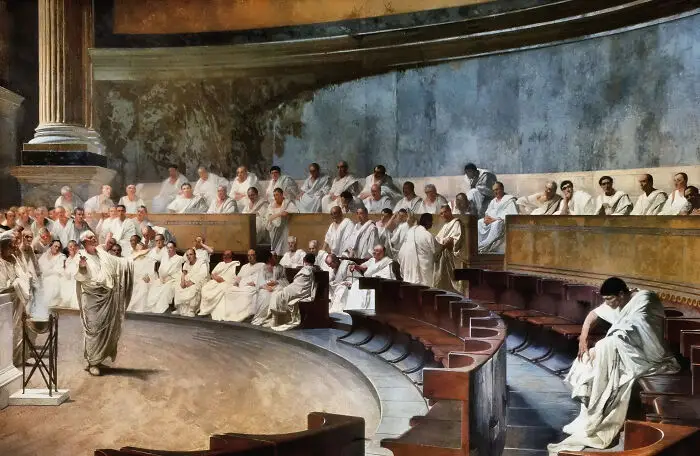
Cato the Elder, a roman senator, would give several vehement speeches, all ending in something along the lines of "Carthago delenda est," roughly translating to "Carthage must be destroyed. Carthage did end up getting destroyed a couple years after he passed away.
Years later, Cato the Younger was on the Senate. Julius Caesar was reading a note during a meeting, causing Cato to accuse him of being a spy. After Caesar denied the accusations, Cato asked Caesar to read out the note, because if he really was innocent, he wouldn't have anything to hide. Caesar agreed. It was a love note from Cato the Younger's sister.
Furthermore, I think Carthage should be destroyed.
Report
13points
#24
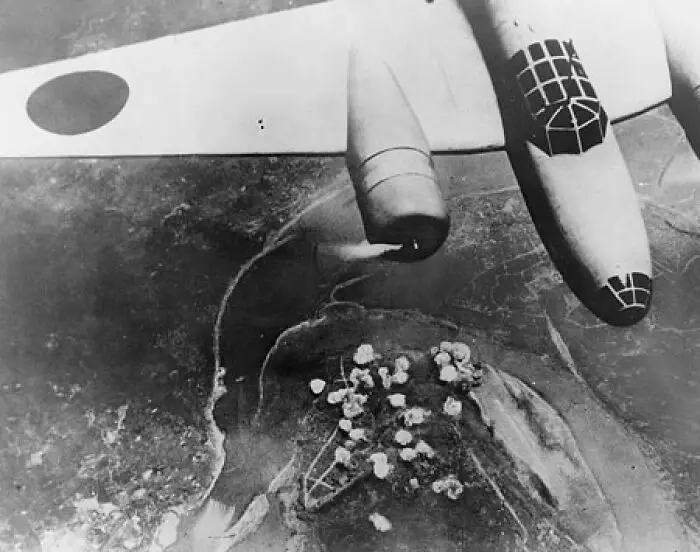
During the First Sino-Japanese War, a Chinese admiral pawned one of the main guns on his flagship to a scrap dealer, in order to pay off some gambling debts.
This was the same war where the Empress embezzled from the army to fund her palace renovations.
This was the same war where the Empress embezzled from the army to fund her palace renovations.
Report
13points
#25
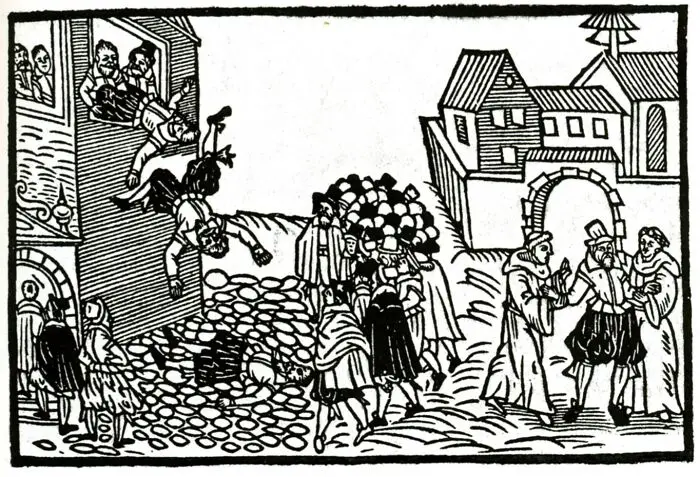
The Defenestration of Prague.
The Thirty Year's War, one of the most devastating wars in early modern Europe, started when a group of Protestants tossed a couple of Imperial delegates out of a window. The delegates survived the 70 foot fall because they landed in a pile of manure.
The Thirty Year's War, one of the most devastating wars in early modern Europe, started when a group of Protestants tossed a couple of Imperial delegates out of a window. The delegates survived the 70 foot fall because they landed in a pile of manure.
Report
13points
#26
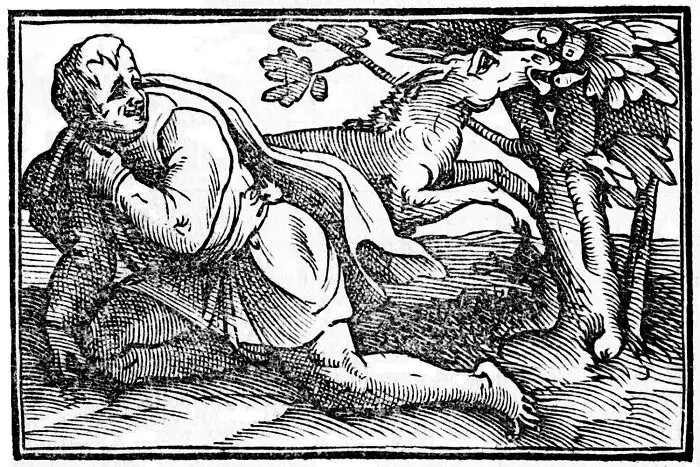
The Greek stoic philosopher Chrysippus [passed away] of laughter after watching a drunk donkey trying to eat a fig.
Report
13points
#27
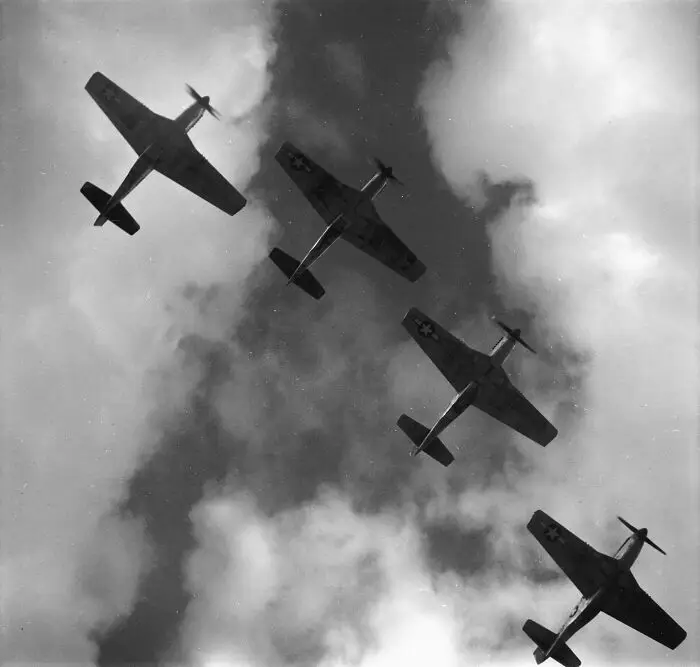
In WWII England an English physicist figured out that the Germans were using directional radio beacons to guide the buzz bombs towards London. He designed a transmitter that would synchronize with the German transmissions and, as the buzz bombs got closer the Britain, overwhelm the German signals with one that steered the bombs so that they'd drop into open farm fields. The Germans never did figure out what he's done, instead they racked their brains trying to figure out how the Brits were 'bending' their radio beacon beams. There are some fascinating books written about WWII electronic warfare, but not many people are into that or aware of them.
Report
13points
#28
Julius Caesar was captured, near the island Pharmacusa, by pirates, who already at that time controlled the sea with large armaments and countless small vessels.
To begin with, then, when the pirates demanded twenty talents for his ransom, he laughed at them for not knowing who their captive was, and of his own accord agreed to give them fifty. In the next place, after he had sent various followers to various cities to procure the money and was left with one friend and two attendants among Cilicians, most [cruel] of men, he held them in such disdain that whenever he lay down to sleep he would send and order them to stop talking.
For eight and thirty days, as if the men were not his watchers, but his royal body-guard, he shared in their sports and exercises with great unconcern. He also wrote poems and sundry speeches which he read aloud to them, and those who did not admire these he would call to their faces illiterate Barbarians, and often laughingly threatened to hang them all.
The pirates were delighted at this, and attributed his boldness of speech to a certain simplicity and boyish mirth. But after his ransom had come from Miletus and he had paid it and was set free, he immediately manned vessels and put to sea from the harbour of Miletus against the robbers. He caught them, too, still lying at anchor off the island, and got most of them into his power. Their money he made his booty, but the men themselves he lodged in the prison at Pergamum, and then went in person to Junius, the governor of Asia, on the ground that it belonged to him, as praetor of the province, to punish the captives. But since the praetor cast longing eyes on their money, which was no small sum, and kept saying that he would consider the case of the captives at his leisure, Caesar left him to his own devices, went to Pergamum, took the robbers out of prison, and crucified them all, just as he had often warned them on the island that he would do, when they thought he was joking.
-Plutarch, *The Life of Julius Caesar*.
12points
#29
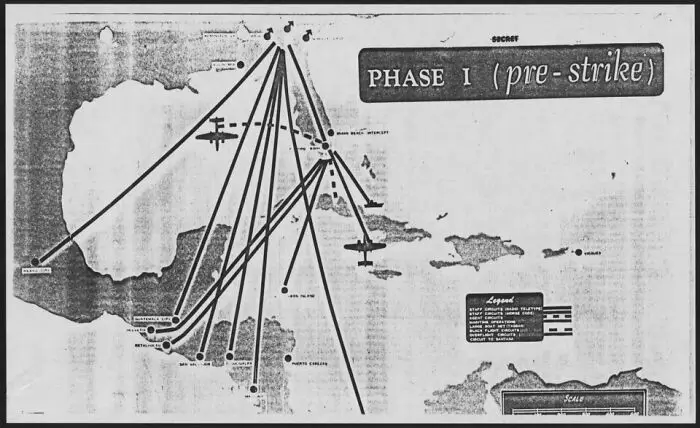
26th of September, 1983 - Russian early warning systems detected what they thought were nuclear launches from the United States. One man, Stanislav Petrov, deemed the reports a false alarm and decided not to pass the information to his superiors. Should he have done so, the USSR probably would have launched a retaliation against a non-existent nuclear attack, which would have prompted the US to launch its own retaliation.
27th of October, 1962, during the Cuban Missile Crisis - a Russian nuclear submarine thought it was under attack, as a US ship was dropping practice depth charges near it in an attempt to force it to surface. Flotilla commander Vasili Arkhipov was the sole officer against the use of a nuclear torpedo. Had the sub launched that torpedo, the US probably would have retaliated.
Had either of these men not been in the right place at the perfect time, we probably would not be alive today.
12points
#30
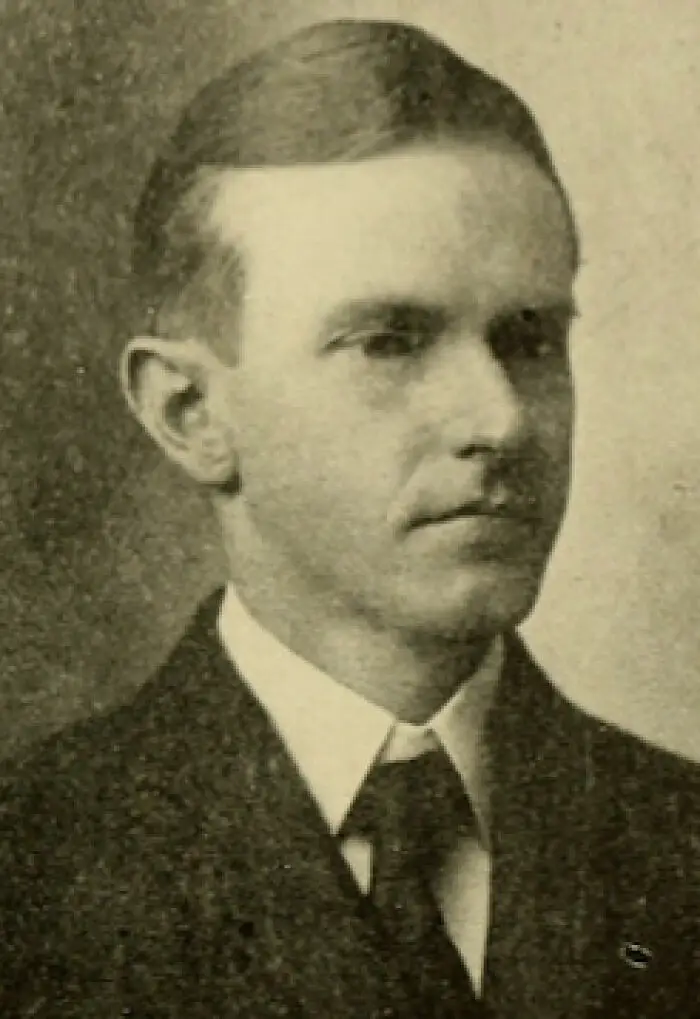
When Calvin Coolidge was president he went on a fishing trip to South Dakota (for THREE MONTHS). Unbeknownst to him, the local officials were stocking the locations he was fishing with extra fish because they wanted him to like South Dakota. Why? They wanted federal money and support to create Mount Rushmore.
Report
12points
#31
So the first printing "technology" was carving entire pages of books onto wooden blocks then stamping all the blocks onto paper to produce books.
This was extremely time-consuming because of all the carving that was required. In addition, these blocks only allowed you to reproduce one particular book. Still, it was an amazing technology that allowed people to pass on stories and knowledge. People became more educated and intelligent. To this day, still one of the most important inventions in history.
Then, someone came up with the idea that instead of carving entire pages onto blocks, why not carve single letters and use those letters to compose words and sentences? That way, not only do you do less carving, you also get way more scale and can produce any material you want.
This simple idea to go from carving entire pages to just letters? It took 400 years before someone came up with it. *400 years*. The average life expectancy at that time was around 40 years. ~~That's 10 generations~~ (Lifespan doesn't mean generations) of people who have come and gone before someone realized there was a better way to do things.
Report
11points
#32
There was a word that American soldiers used to call medics over to them if injured (WWII) over in Japan. The name "Tallulah" was chosen due to the "l" sounds in the name. The Japanese pronunciation of this was noticeable, not nearly as noticeable as them yelling "medic", which was done by the Japanese soldiers to lure American medics over to end them.
Anyway, I wrote a poem about this history tidbit in college, and I think it will always be one of the least suckiest things I've written.
Anyway, I wrote a poem about this history tidbit in college, and I think it will always be one of the least suckiest things I've written.
Report
11points
#33
During the Second Punic War, Hannibal (the Carthaginian general) repeatedly outsmarted and decisively beat the Romans, to the point that many Romans honestly thought the end was near. It wasn't until Scipio Africanus was made general that the war turned in their favor and they won.
The interesting part: some time after the war, Scipio visited the court of the king of Syria and met Hannibal there, and the two of them had a conversation. Scipio asked Hannibal who he thought were the three greatest generals of all time. Hannibal replied that Alexander was the greatest, Pyrrhus was the second best (a slight jab at Scipio since Pyrrhus fought Rome in the Pyrrhic War), and Hannibal himself was the third best. Scipio thought this was an arrogant answer, since Hannibal had been beaten by Scipio but still thought himself a better general than Scipio. Scipio asked how high on the list Hannibal would be if he had managed to win the war. Hannibal replied that in that case, he would be even greater than Alexander.
I like to think of it as a sort of indirect compliment. Sort of sweet almost.
Edit: Almost forgot, after the war the senate accused Scipio of misappropriating war funds, which he took offense to after everything he had done for Rome. He stayed salty about it until he died, and his epitaph read "Ungrateful fatherland, you will not even have my bones."
Report
10points
#34
In grade school I learned that Rome fell in the 400s.
Then in high school, I learned that that was only the western empire, and the Eastern Empire (Byzantine Empire) survived until 1453.
Then in college I learned that the tzars of Russia, the kings of Spain, the Holy Roman Emperors, German kaiser, various rulers of Liechtenstein, and probably many others have all claimed, at one point or another, to be the last heirs of Rome. So it's not entirely clear when/if the empire is/was finally "done".
My favorite trick question is now, "when did the last Roman emperor passed away?".
Report
10points
#35
My mother's uncle, who fought in the Korean War, had an interesting story about fighting the Chinese. I heard this story later after he had passed away from my uncle, my mother's brother. He typically wouldn't talk about his experience in Korea with anyone, but he and my uncle were close and he would share some things with him sometimes about it.
Everyone was sick with dysentery, so everyone basically was in their foxholes with no pants on because they were continuously having diarrhea. They were attacked by Chinese and their position was overrun, so they were in melee combat with bayonets. The Chinese must have been suffering from dysentery also, as many of their soldiers had no pants on. So imagine Chinese soldiers and American soldiers, bayonet fighting, with no pants on. At the time it wasn't so funny, but he was able to look back at the experience with a bit of sick amusement.
Everyone was sick with dysentery, so everyone basically was in their foxholes with no pants on because they were continuously having diarrhea. They were attacked by Chinese and their position was overrun, so they were in melee combat with bayonets. The Chinese must have been suffering from dysentery also, as many of their soldiers had no pants on. So imagine Chinese soldiers and American soldiers, bayonet fighting, with no pants on. At the time it wasn't so funny, but he was able to look back at the experience with a bit of sick amusement.
Report
10points
#36
One of my favorites was during the French Revolution (and wars with the rest of Europe) there was a point where the Dutch Navy couldn't get out of the spot they were harbored at in the Netherlands because the harbor froze over. The French army approached and, noticing the ships trapped in the ice, charged and captured 14 Dutch ships.
Many people like to say this is the only time in history that a cavalry charge captured naval units, but that's not actually true. There was a time during the Spanish American wars for independence (Simon Bolivar and co.) where Jose Antonio Paez led a charge of his cavalry into the Apure River in what is today southwest Venezuela and captured 14 enemy boats that were traveling down the river. This is even more impressive because Paez didn't have the benefit of having a frozen, sturdy surface to ride over *and* he charged through alligator infested waters to do it.
Many people like to say this is the only time in history that a cavalry charge captured naval units, but that's not actually true. There was a time during the Spanish American wars for independence (Simon Bolivar and co.) where Jose Antonio Paez led a charge of his cavalry into the Apure River in what is today southwest Venezuela and captured 14 enemy boats that were traveling down the river. This is even more impressive because Paez didn't have the benefit of having a frozen, sturdy surface to ride over *and* he charged through alligator infested waters to do it.
Report
10points
#37
Franz Ferdinand's car - which he was assassinated in - had the licence plate: A11 1118. World War one ended in the eleventh of November 1918, or 11/11/18.
Report
10points
#38
I'm late to the party, but this is a little too good to pass up. The Tsar Nicholas II instituted prohibition (yes, they really did try it) in Russia in 1914. The tsar needed his armies to be ready (and sober) to mobilize for the conflict that had broken out in Europe in August of 1914.
Nicholas had learned the hard way the level of dependence his army and navy had on alcohol during the disastrous Russo-Japanese war of 1904-05. There are reports of Russian naval officers being so drunk that they opened fire on, and sank, other Russian ships. There is also another account of a group of Russian soldiers going AWOL and attacking a Japanese encampment on the mere rumor that the enemy had some booze with them. They risked their lives for drinks. Russian soldiers (and to a greater extent, officers) were drunk, uncontrollable, and insubordinate.
So at the outset of World War One, Nicholas II decides that Russia will not suffer the same fate they did in 1905. He bans all sales of alcohol in shops subject to the Empire's authority except in first class restaurants.
Thus began Russia's sorry experiment in prohibition, concerned that their soldiers would be too drunk to be able to function if they were legally allowed to buy alcohol.
Report
10points
#39
The Aztecs are overlooked in most history classes, but they were far from the primitive tribesmen that most people think of.
At the height of its power Tenochtitlan, the capital of the Aztec Triple Alliance, was rivalled in size by cities like London and Constantinople, and it was all built on a *giant artificial island*. It's a shame their culture was obliterated, because though they might have been a bit too obsessed with sacrifices, they were an incredibly fascinating civilization.
At the height of its power Tenochtitlan, the capital of the Aztec Triple Alliance, was rivalled in size by cities like London and Constantinople, and it was all built on a *giant artificial island*. It's a shame their culture was obliterated, because though they might have been a bit too obsessed with sacrifices, they were an incredibly fascinating civilization.
Report
9points
#40
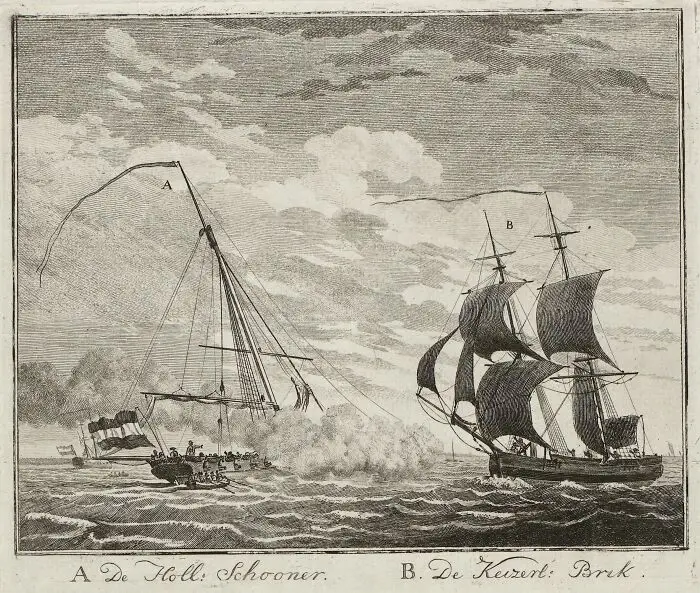
The Kettle War. The only casualty was a soup kettle and the soup inside.
Report
9points


