

What does it even mean to become financially independent? Is it when we finally get our first bank account separate from our parents’? Is it when we get our first job? Or is it when we’re finally able to pay our own bills?
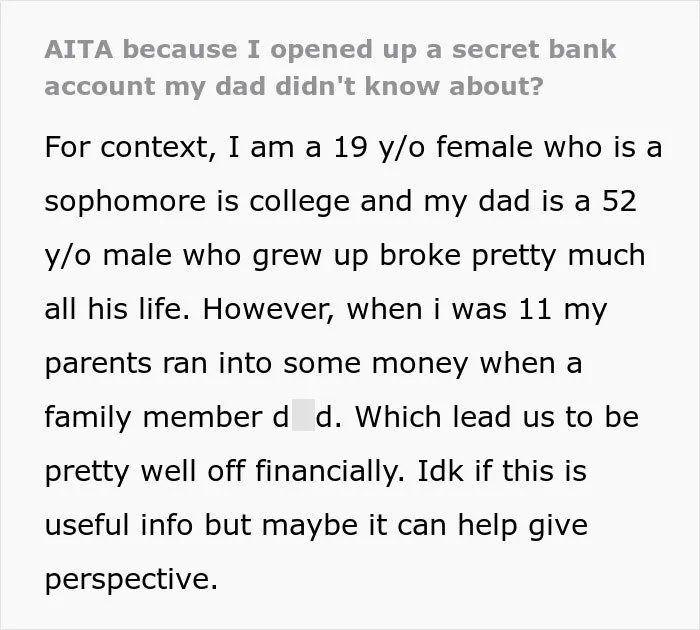
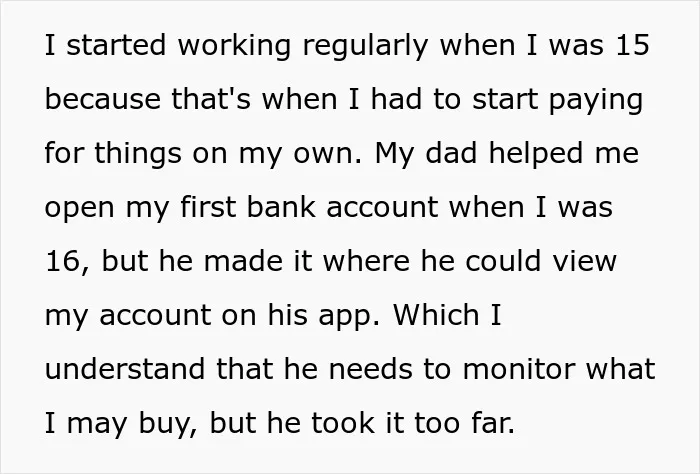
Well, this can mean different things to different people, but one thing is for sure: if a parent monitors your finances, the idea of being even remotely independent goes out the window. A woman on r/AITA realized this when her dad started controlling her spending, even though she was earning the money herself. So, here’s what happened.
It’s never easy to cut the metaphorical umbilical cord

And a woman realized this when she noticed her dad was monitoring her bank account movements, even though she was already working
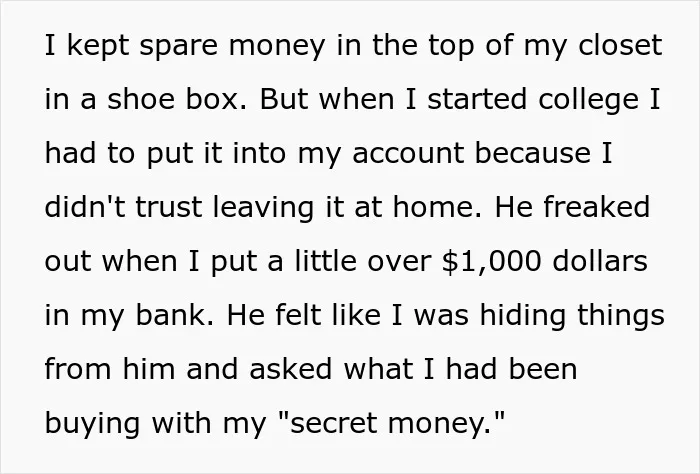
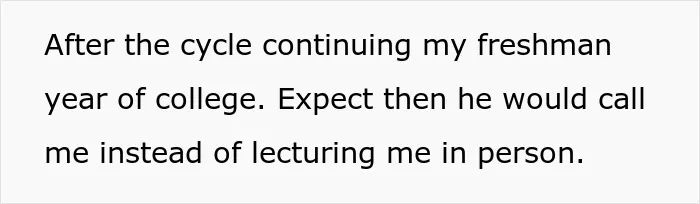
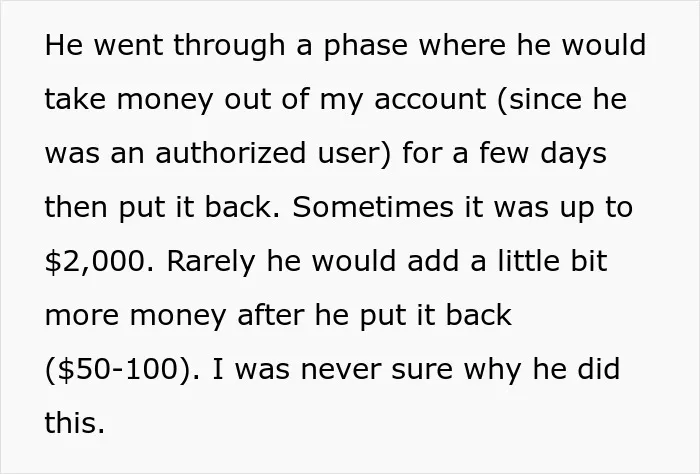

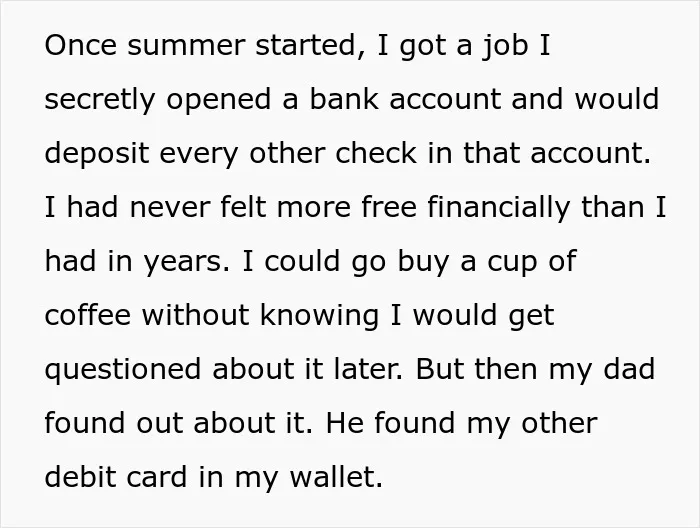
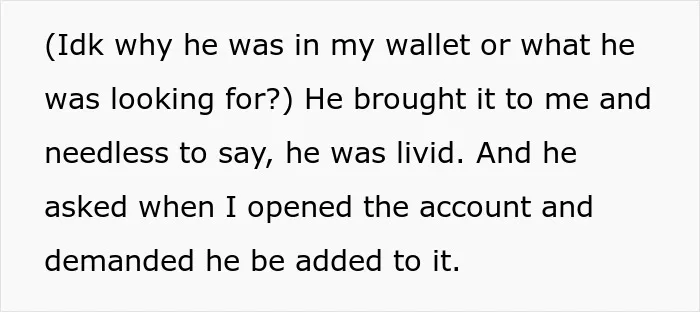
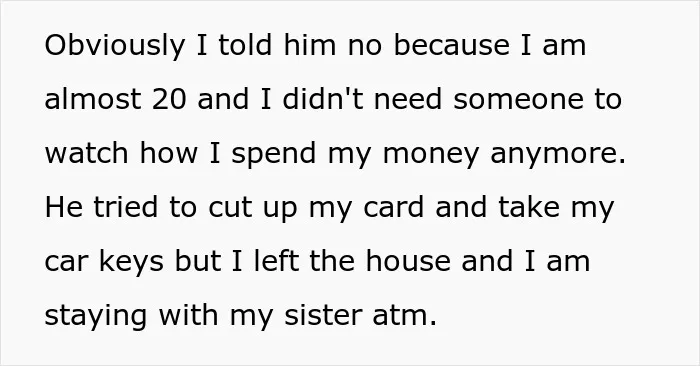
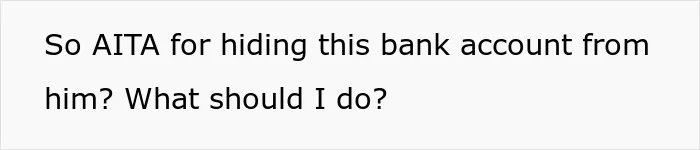
Many people who grew up with financial problems might end up projecting those fears onto others
Most young adults eventually need to learn to manage their own finances, but sometimes their parents aren’t ready for that step. The father, in particular, seems to have had money issues throughout most of his life, and psychologists note that early-life financial instability can have lasting effects on the brain. It can even keep someone in a state of hypervigilance, where survival instincts take over.
For someone with unresolved money trauma, small purchases can feel like an existential threat rather than ordinary adult expenses. Unfortunately, the father took things a step further, and the boundaries dissolved over time. This is known as “financial enmeshment,” which happens when a parent’s anxiety and need for security become entangled with their child’s financial behavior.
This can lead to a pattern of helicopter parenting, and yes, it can extend well beyond childhood. Studies published in the Journal of Child and Family Studies show that helicopter parenting can continue into college. Parents may believe that this kind of micromanagement teaches financial literacy, but research suggests the opposite. Without opportunities for trial and error, young adults may take longer to develop financial competence.
Not allowing their kids to grow financially might stunt their competence as adults
Unfortunately, if the dad continued behaving this way, it could seriously affect the 19-year-old’s transition into adulthood. According to self-determination theory, healthy psychological development between the ages of 18 and 25 relies on autonomy and competence. If the dad continued to undermine her sense of independence, she might develop even more serious coping mechanisms than just opening a second bank account.
That doesn’t mean it’s necessarily bad to rely on your parents for financial guidance or advice. In fact, surveys show that 60% of emerging adults receive some level of financial help from their parents. However, shared finances can also become a major source of conflict over boundaries once teenagers and students turn 18.
So, what do experts recommend in this situation? First, establish firm boundaries. After repeated boundary violations, keeping a joint account may no longer be an option. Psychologists recommend that when parents confuse control with care, adult children replace defensive tactics with clear, explicit boundaries. But what would you do in this situation, Pandas? Let us know in the comments!
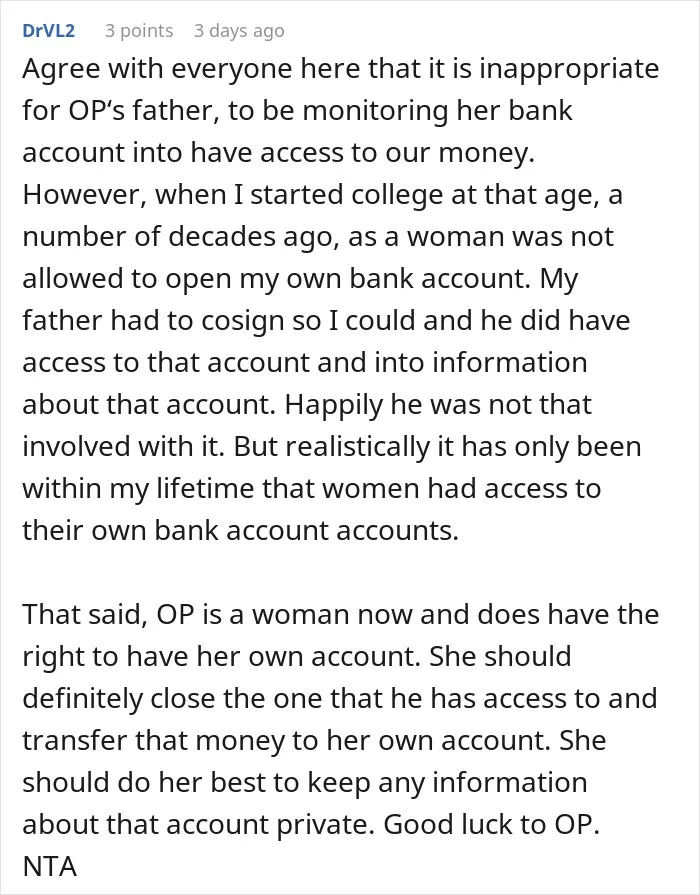
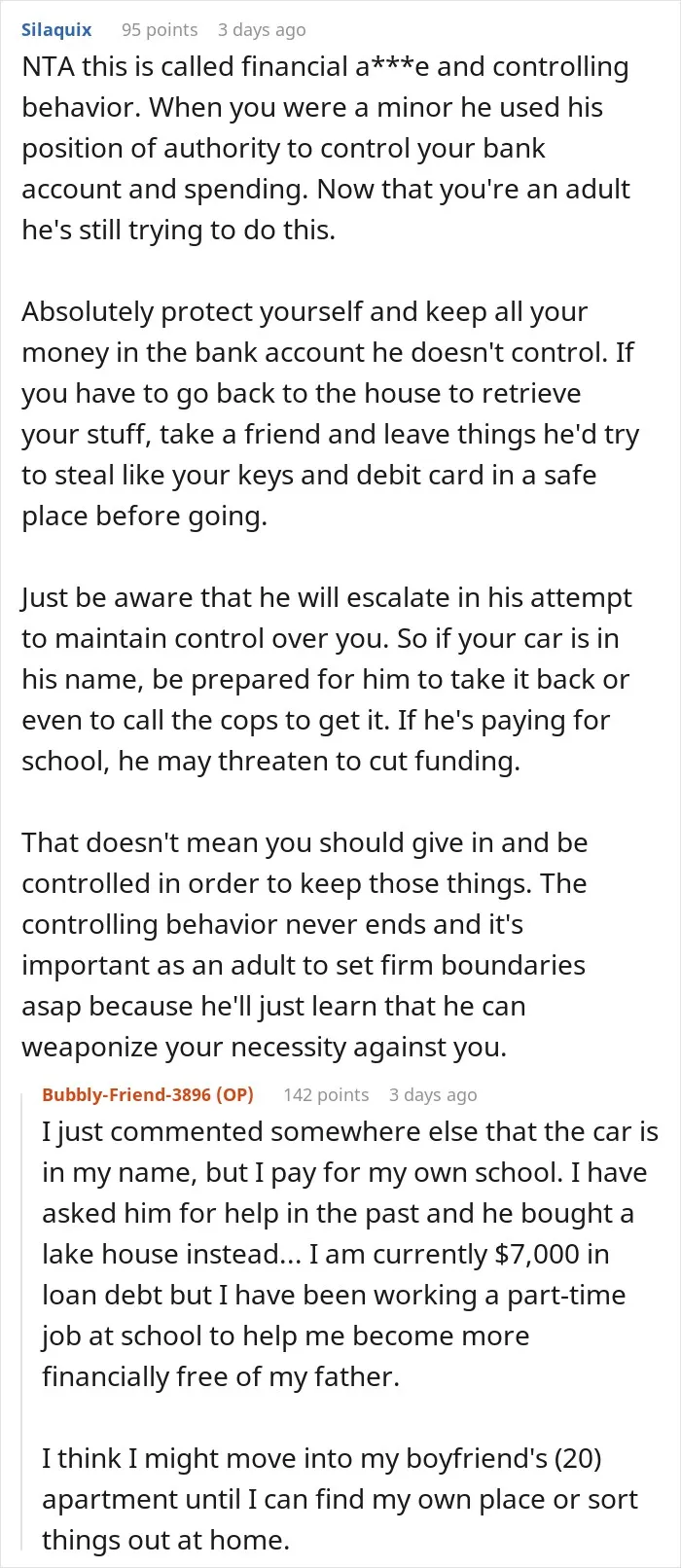
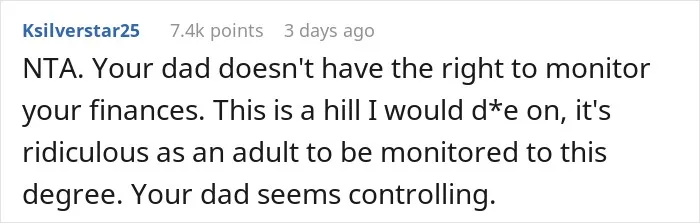
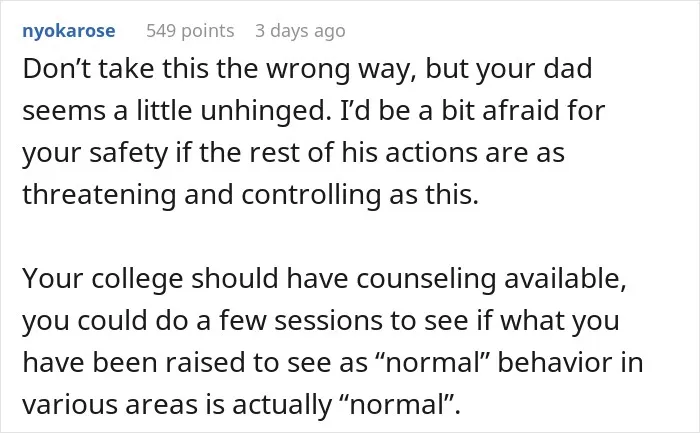
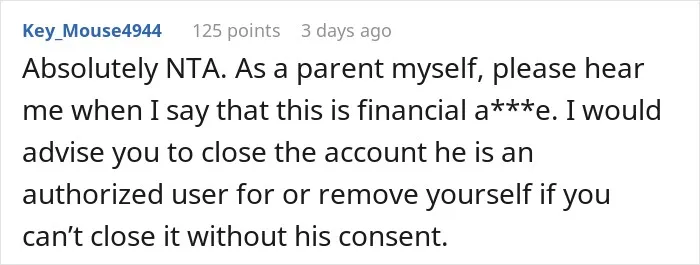
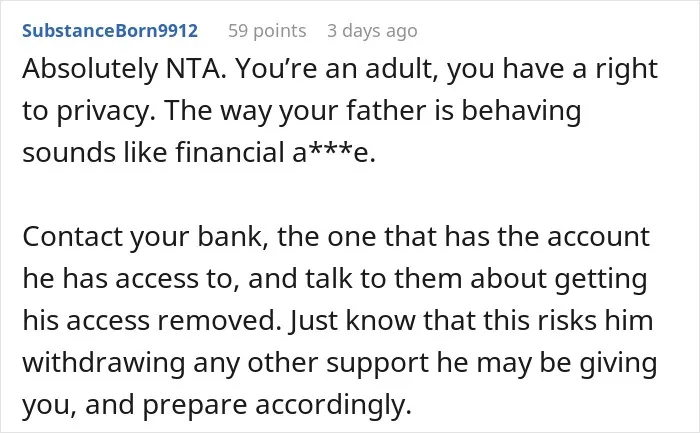
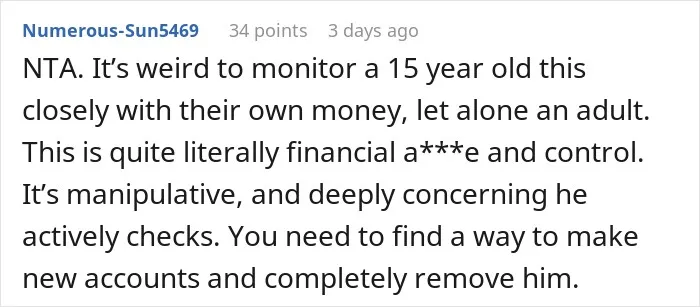
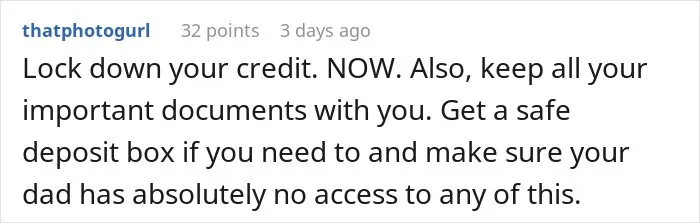
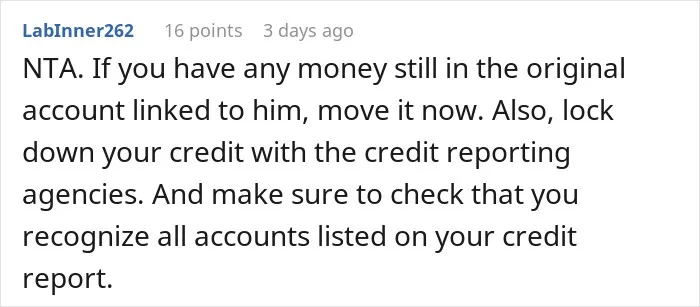
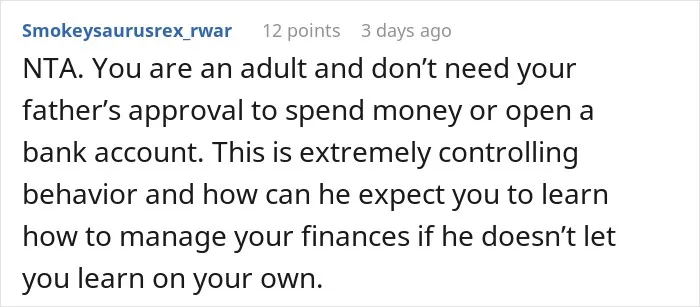
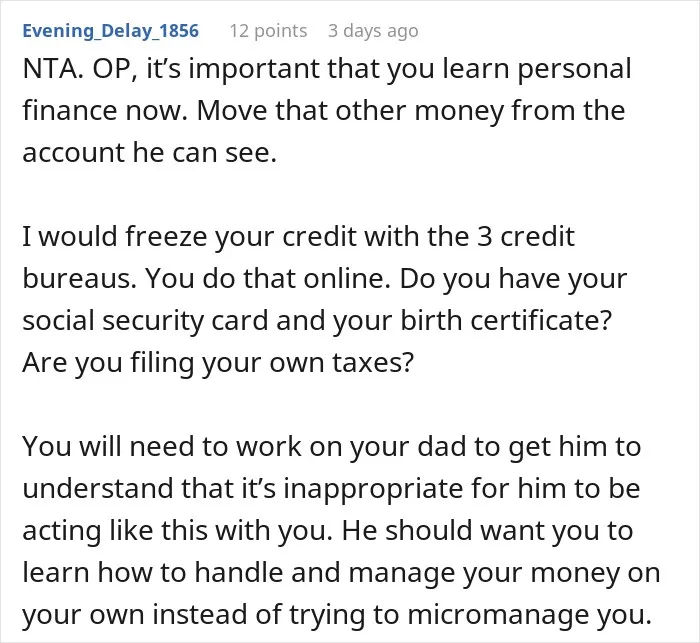
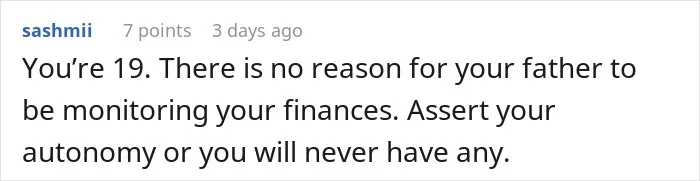
Readers' opinions were unanimous: the woman was definitely not wrong in this situation
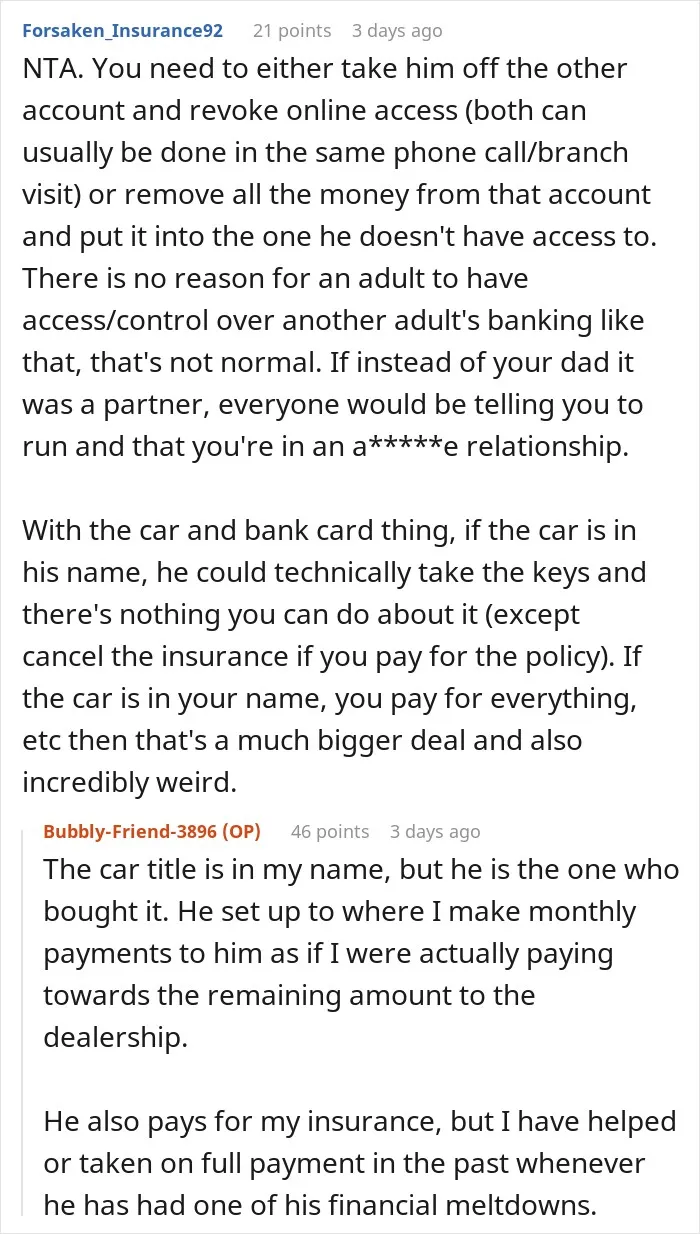
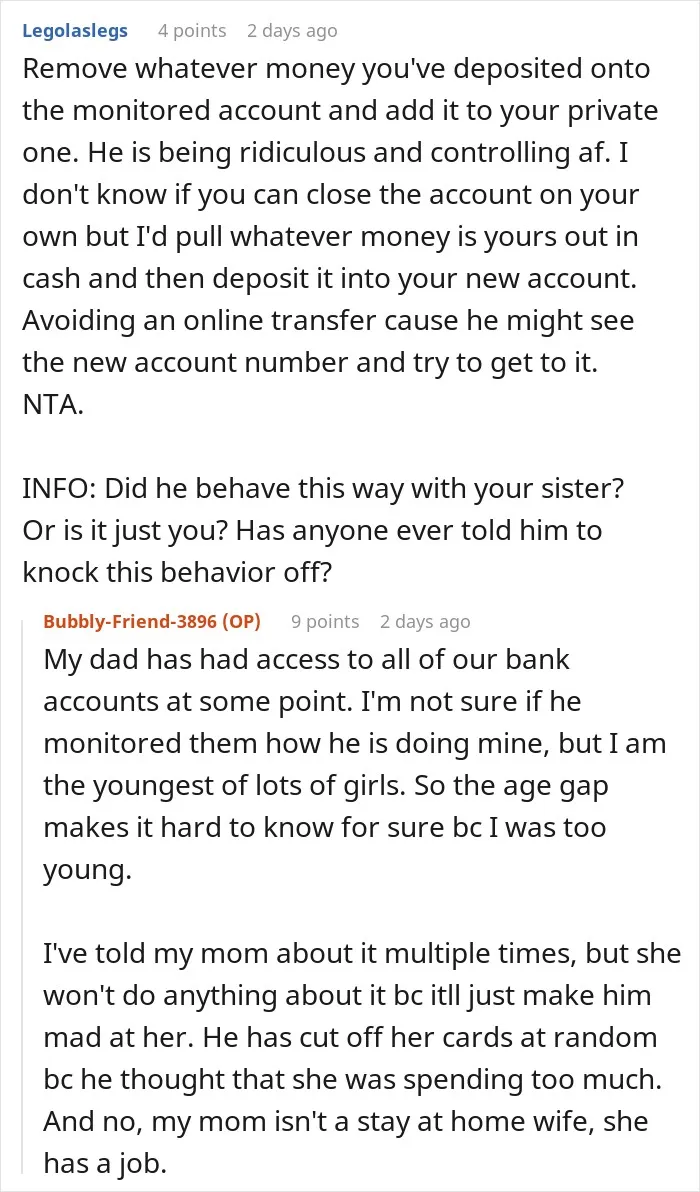



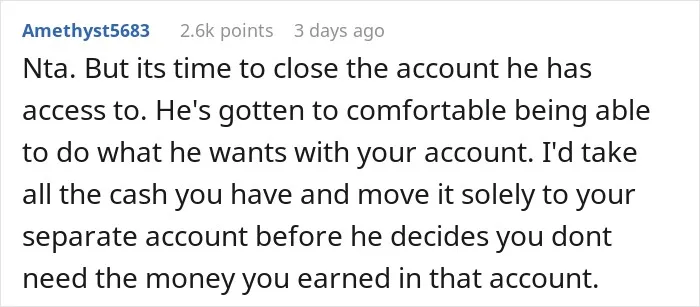
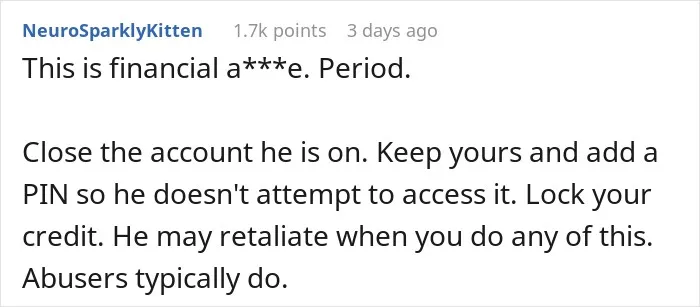
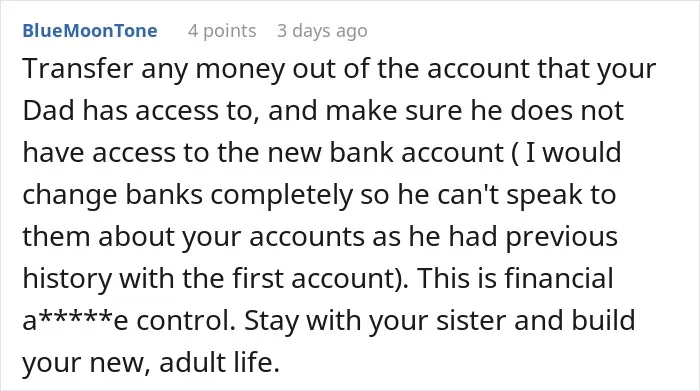
Some netizens even advised her to completely shut down the account she has with her dad



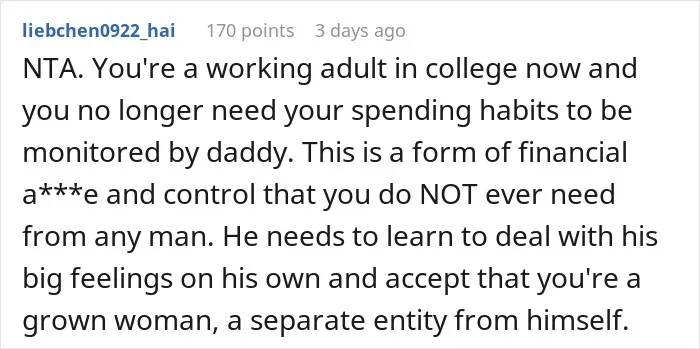


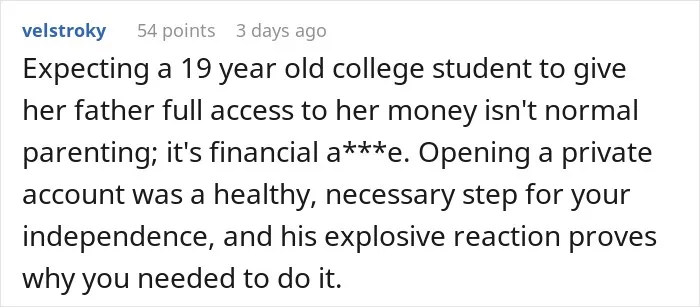



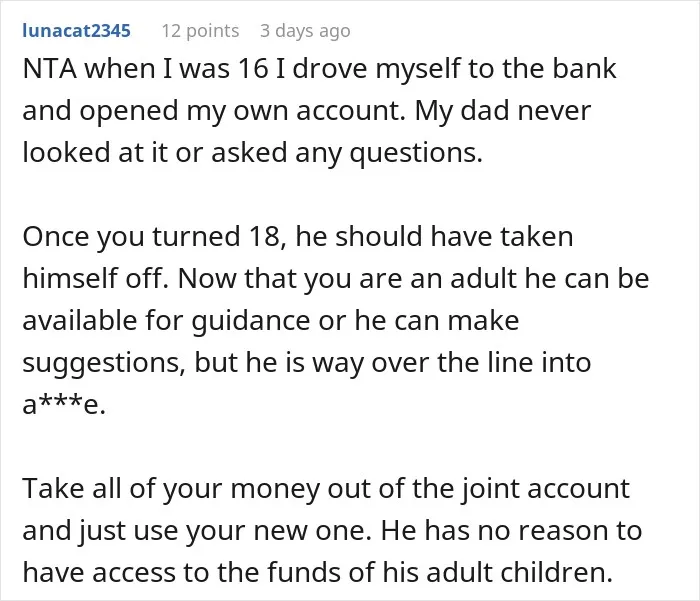




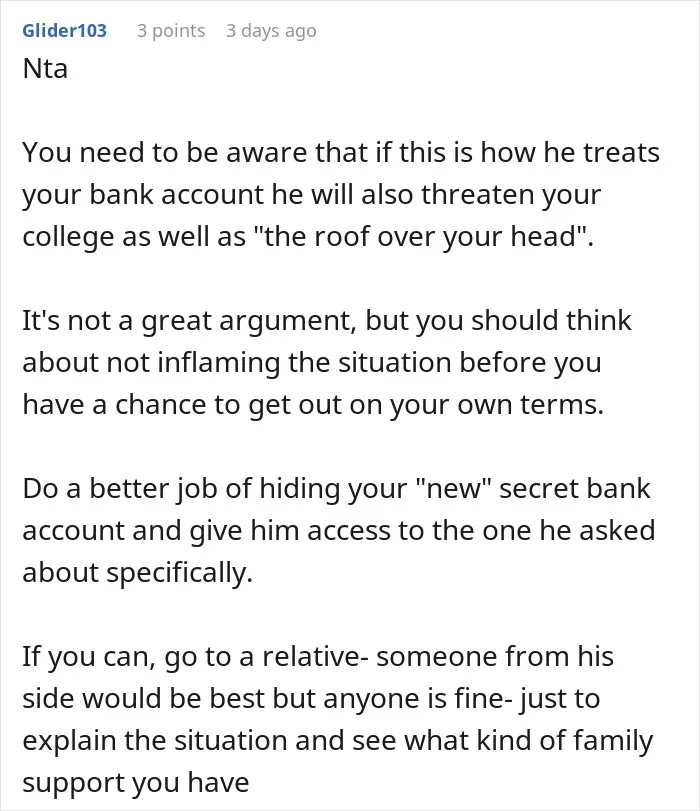
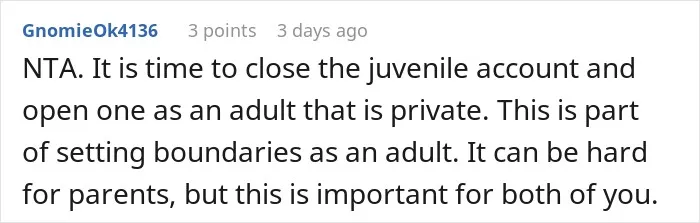
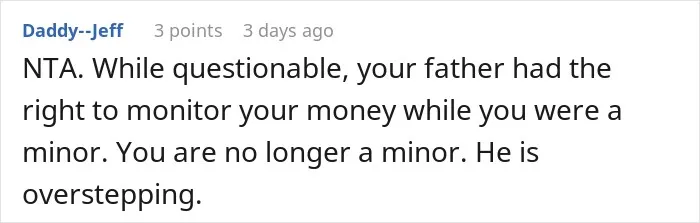
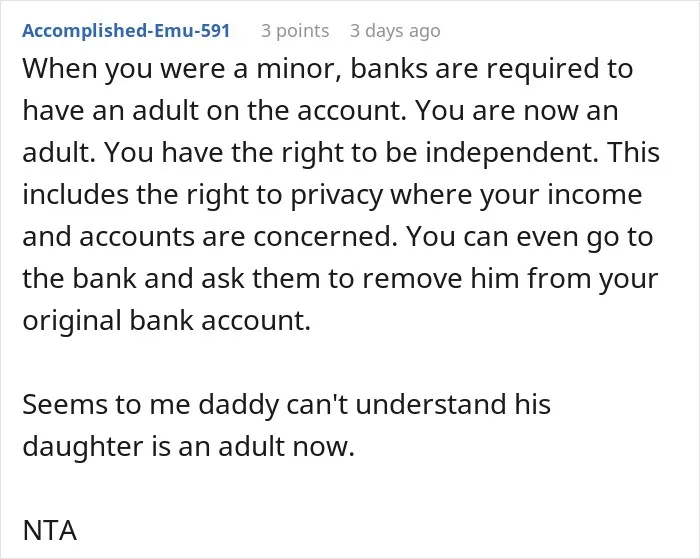
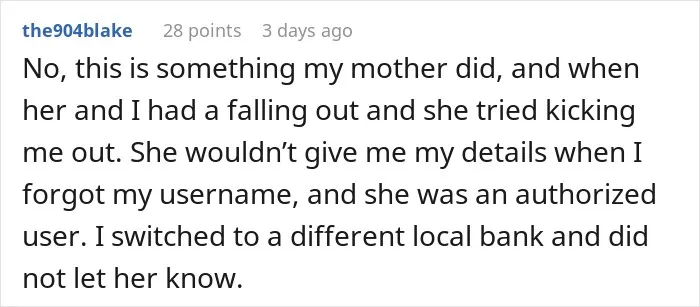
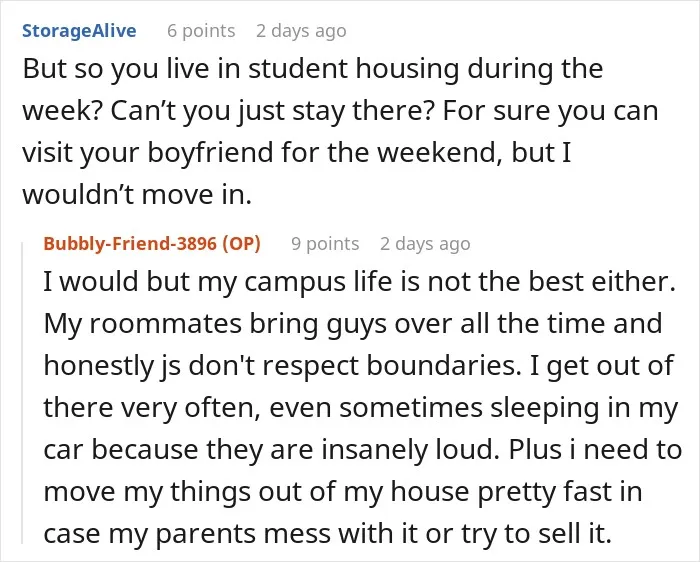
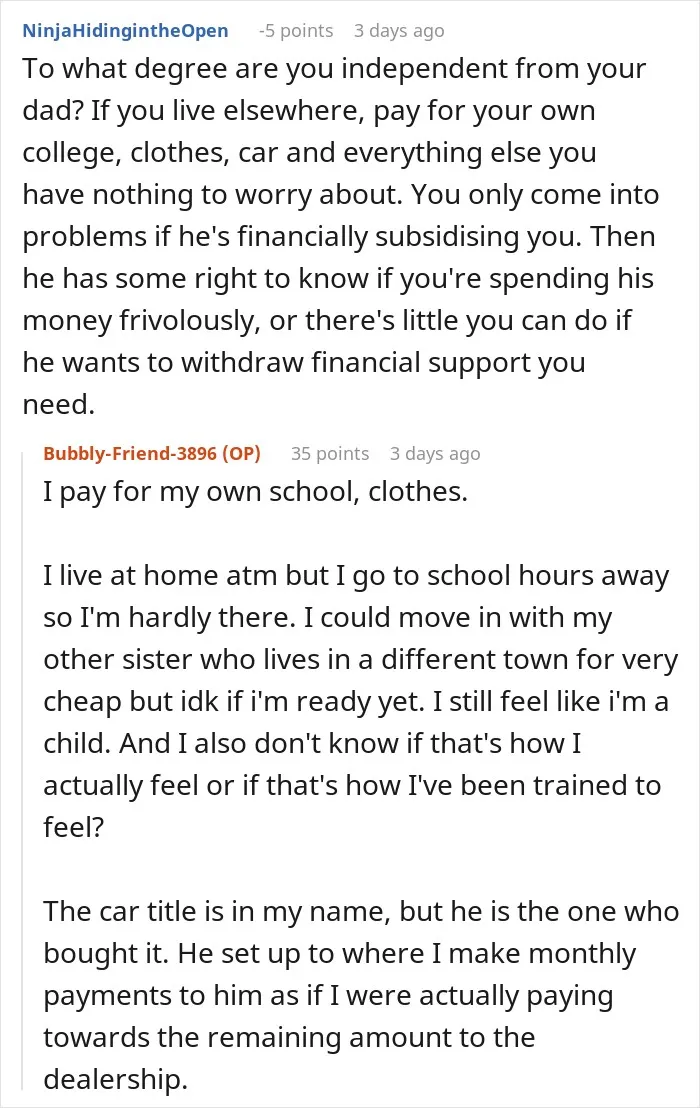
Many others shared their own experience with overbearing parents