



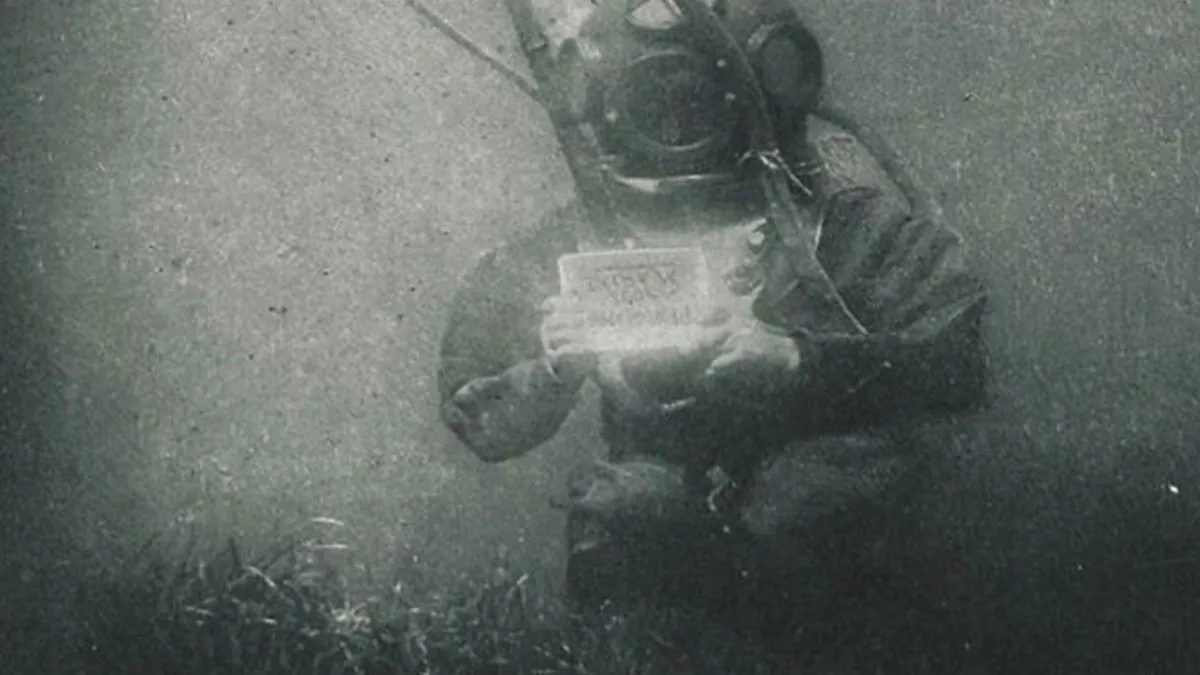




Photography has come a long way since the first ever photo saw the light of day. We've gone from painstakingly exposing metal plates for hours at a time, to snapping high-definition selfies in the blink of an eye. Some might even argue that much of the true magic of photography has been lost in the digital era.
Long before social media, Instagram and iPhoneography, people risked chemicals, smoke, and other dangers in a bid to trap light and time on a surface. Their work opened the door to photography as both an art and a science. Miraculously, some of the first ever photographs taken hundreds of years ago have stood the test of time.
The world's first photographs weren't just images. Each one captures not only a subject, but also the spirit of human innovation. They tell the story of how people learned to "draw with light." They speak to trial and error, scientific curiosity and the sheer wonder that once surrounded this new art form.
Bored Panda has put together a list of the most incredible oldest surviving photographs for you to admire instead of mindlessly scrolling through Instagram. From the world's very first image ever taken, to the first photo captured under water, each provides a fragile portal to another time and place.
#21 Portrait Of Prince Albert, 1842
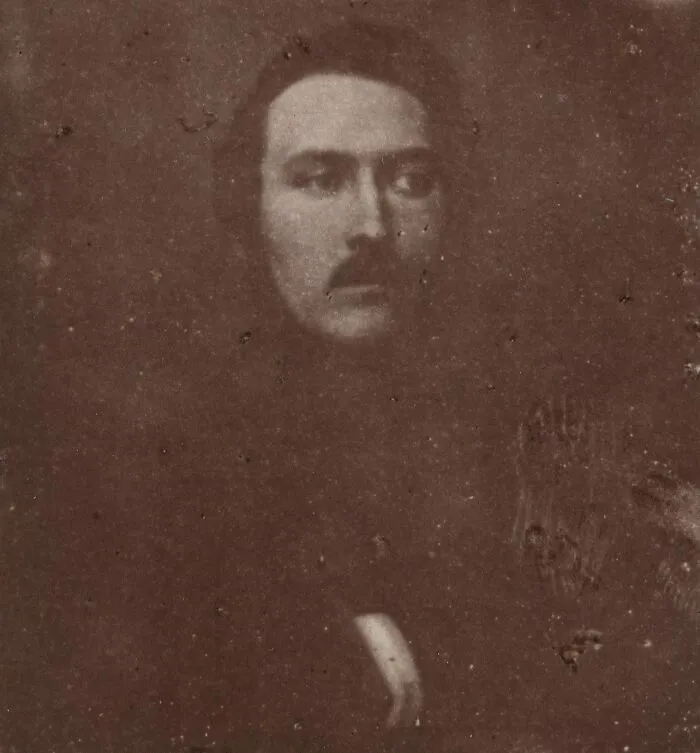
In 1842, Prince Albert sat for what would become the earliest surviving photograph of a British royal. The portrait was taken at a studio in Brighton using the daguerreotype process and was commissioned by the prince himself as a personal item for Queen Victoria. Upon receiving the cased, intimate image, the Queen recorded her simple but positive review in her journal, noting, "Saw the photographs which are quite good."
Report
16points
#22 Pierrot Laughing, 1855, One Of The First Successful Marketing Pictures
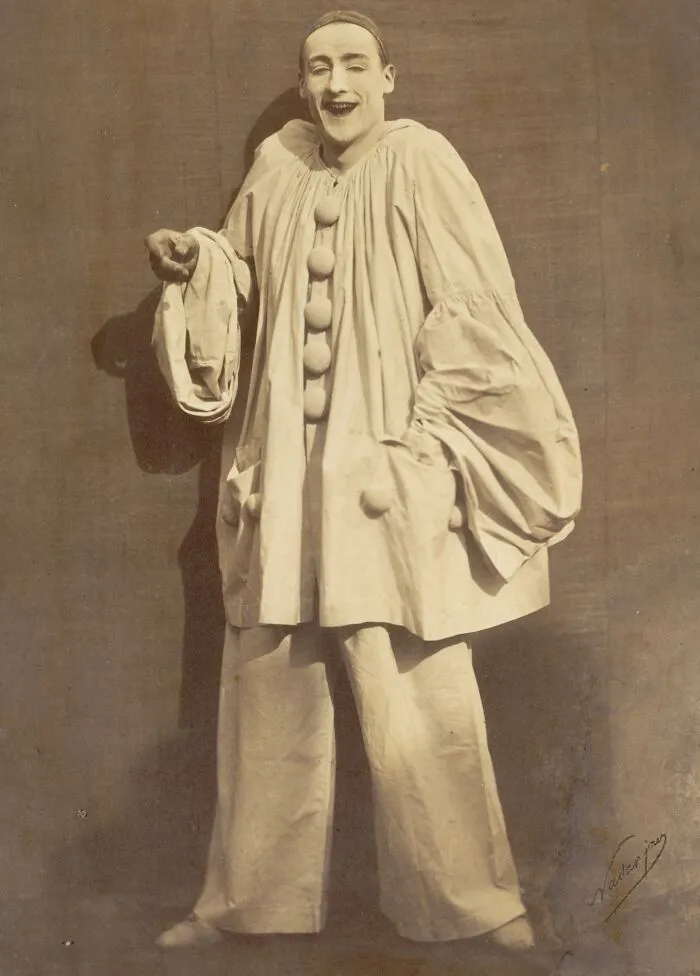
In a clever 1855 marketing campaign for their struggling new studio, the photographer Nadar and his brother hired the mime Charles Deburau for a series of expressive portraits. Deburau posed as the character Pierrot, a figure whose now-famous look of a white face and black skullcap was actually an invention of his father. This photograph, part of the "heads of expression" series, became an enormous popular success and helped launch the brothers' careers.
16points
#23 Oldest Surviving Daguerreotype - L’atelier De L'artiste (The Artist Studio), Louis Jacques Mandé Daguerre, 1837
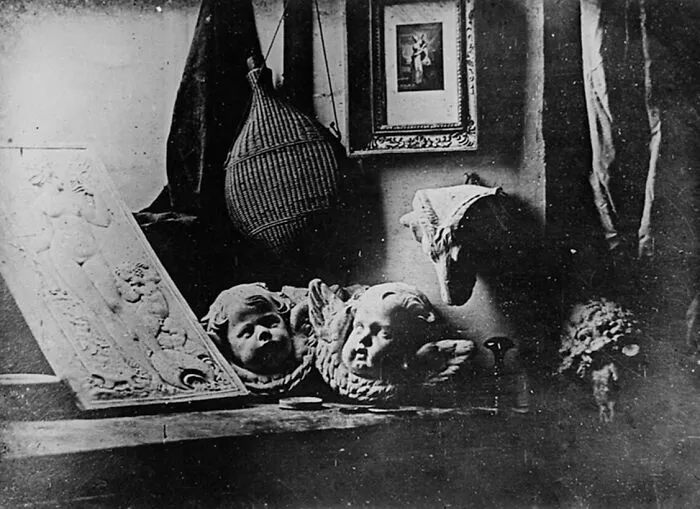
Before he even announced his groundbreaking invention to the world, Louis Daguerre created this image, an 1837 still life titled "The Artist's Studio." The carefully arranged collection of plaster casts and artwork wasn't just a random snapshot; it was a technical demonstration. This photograph served as one of the earliest and most successful examples of his new daguerreotype process, proving its remarkable ability to capture fine detail, texture, and the subtle play of light.
Report
15points
#24 The First Photo Machu Picchu (1912)
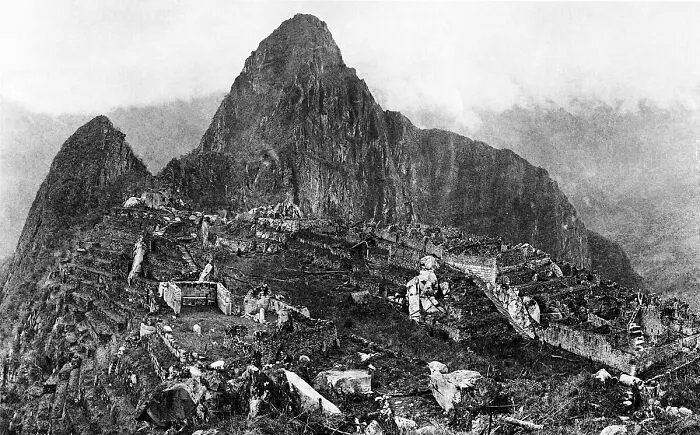
After being guided to the overgrown ruins in 1911 by locals, explorer Hiram Bingham III returned the following year to begin clearing the site, and it was then that he captured this historic photograph. The image, showing only a portion of the now-famous Inca citadel, represents the very first time Machu Picchu was systematically documented on film. It was through these early photographs that Bingham introduced the stunning "lost city" to the rest of the world.
Report
15points
#25 The First High-Speed Photoshoot, 1878
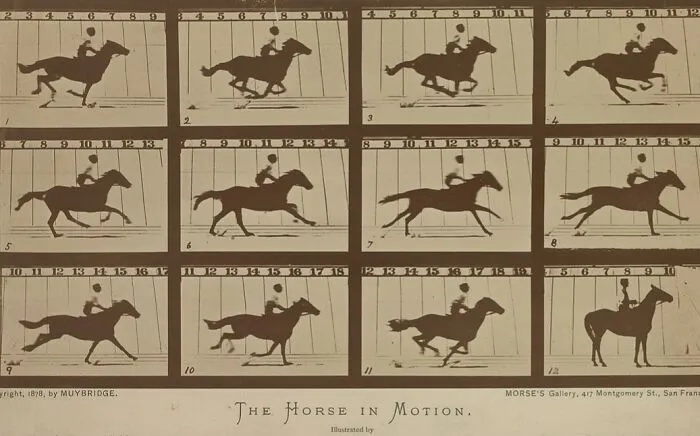
To settle a popular 19th-century debate, photographer Eadweard Muybridge was hired by railroad magnate Leland Stanford to answer a single question: does a galloping horse ever have all four hooves off the ground at once? In 1878, after years of experimentation, Muybridge lined a racetrack with multiple cameras, each triggered by a tripwire. The resulting sequence of stop-motion photographs not only definitively proved that horses do go airborne, but when viewed in rapid succession, they also created the world's first motion picture.
Report
15points
#26 World's First Durable Color Photograph - Tartan Ribbon, 1861
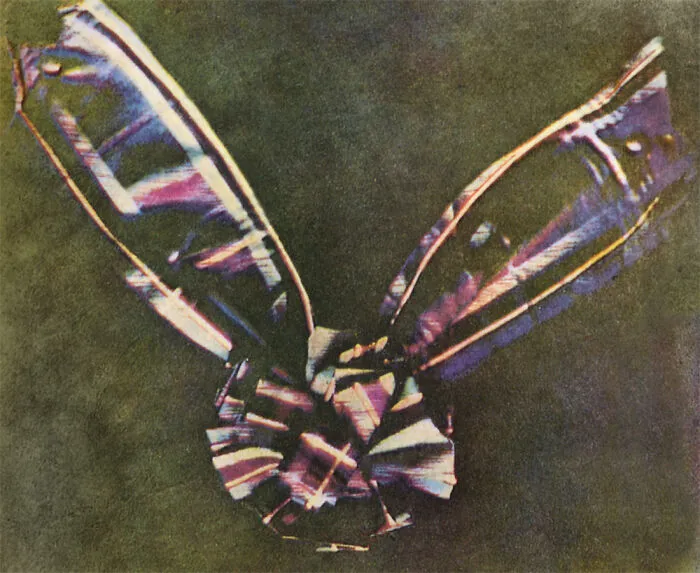
The world's first durable color photograph was created in 1861 not with color film, but with a brilliant scientific demonstration. Guided by the theories of physicist James Clerk Maxwell, three separate black-and-white photographs of this tartan ribbon were taken, each through a red, green, or blue filter. The three resulting images were then turned into slides and projected onto a screen using their corresponding colored lights. When perfectly overlapped, they recombined to form a single, full-color image, proving the three-color method that is now the foundation for virtually all modern color photography and digital displays.
Report
14points
#27 Barricades In Northern Paris During The Days Of June, 1848
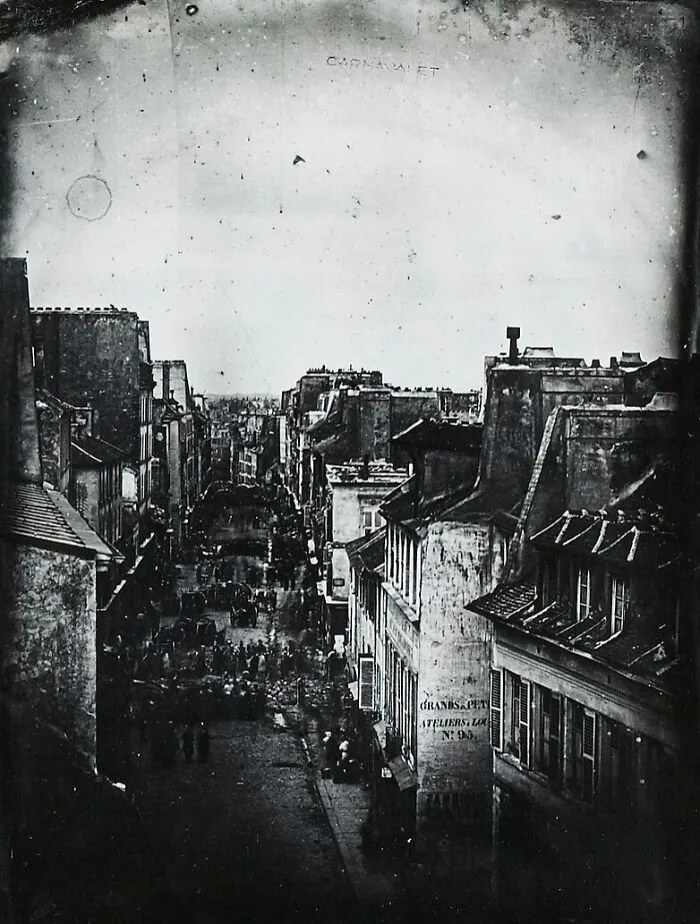
This haunting image of barricades on a Paris street is believed to be the first-ever photograph of a news event in progress. Taken during the fatal June Days Uprising of 1848, the photograph reveals a strange limitation of early photography. The long exposure time required for the daguerreotype process meant that the chaos of the actual fighting was never captured. As a result, the image is an eerie and ghost-like record of the aftermath, showing the stage of a violent conflict with none of its actors visible.
14points
#28 Early Anesthesia
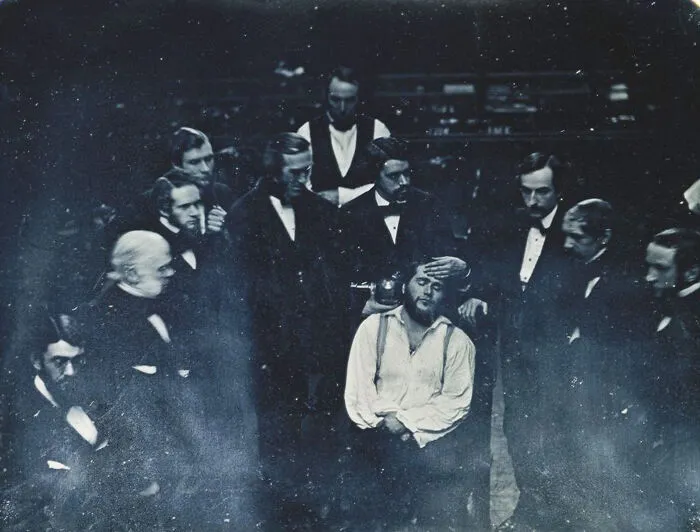
This 1847 photograph captures one of the most important moments in medical history: the early use of ether as an anesthetic. The daguerreotype from Boston shows patient Edward Gilbert Abbott about to undergo a procedure without the conscious terror that had defined surgery for centuries. It's a quiet, historic image that documents the very beginning of painless operations.
14points
#29 View Of A Cheyenne Village At Big Timbers, Around 1853
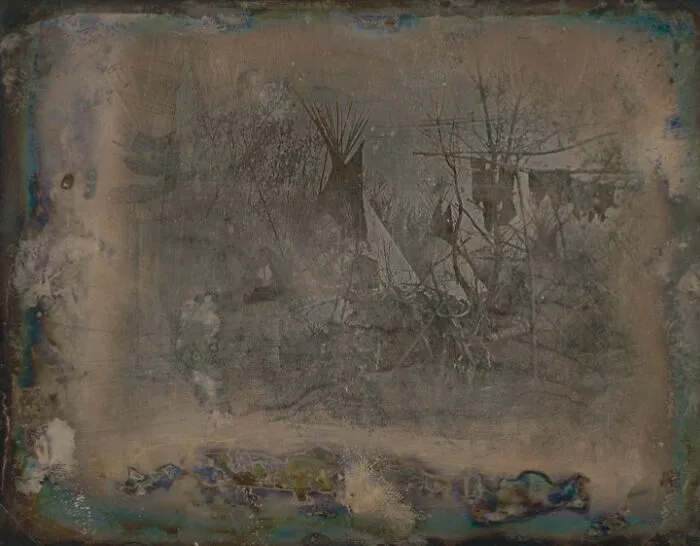
This rare and historic photograph, taken around 1853, offers one of the earliest known photographic glimpses into a Native American community. The image shows a small Cheyenne village at Big Timbers, in what is now Colorado, with four large tipis situated near a wooded area. It is a quiet but invaluable document, capturing a moment of everyday life before the major conflicts and forced relocations that would drastically change the American West.
Report
13points
#30 Louis Jacques Mande Daguerre, 1844
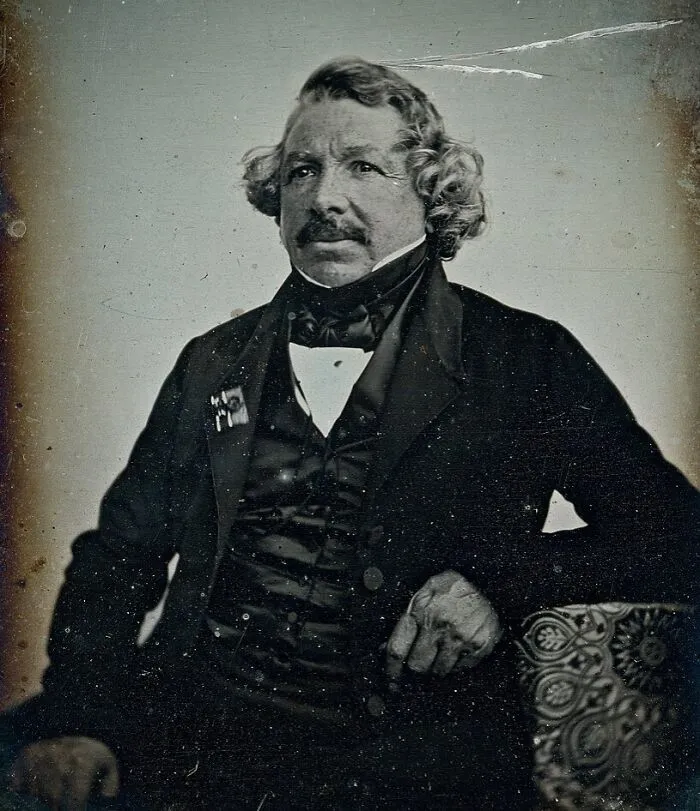
This 1844 portrait shows Louis Daguerre, the artist and inventor who gave his name to the first commercially successful photographic process. After partnering with the original inventor of photography, Nicéphore Niépce, Daguerre refined the technique into the much faster and clearer daguerreotype method. His public announcement of the invention in 1839 sparked a global sensation, effectively launching the age of photography.
13points
#31 A Man Being Arrested In France In Is The First Ever News Photograph, 1847
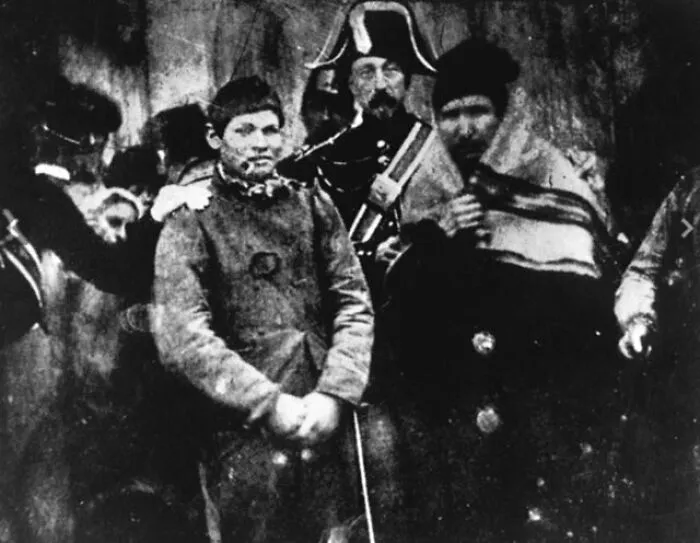
Believed to be the world's very first news photograph, this 1847 daguerreotype captures a dramatic and immediate event: a man being arrested in France. While the specific details of the crime have been lost to history, the image's purpose has not. It was created to document a live moment for public information, reportedly appearing later in an illustrated history of the revolutions that would sweep the country the following year.
Report
13points
#32 The Fatal Crash Of Wright Flyer At Fort Myer, 1908
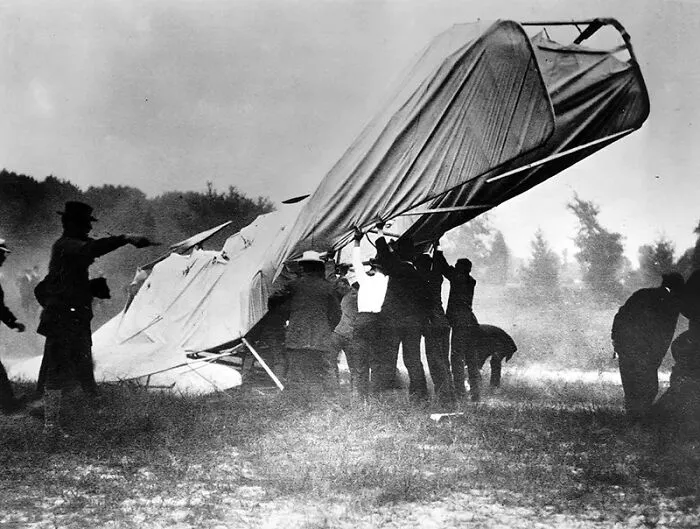
This dramatic 1908 photograph captures the immediate, tangled aftermath of the world's first fatal airplane crash. The experimental Wright Flyer, being demonstrated for the U.S. Army at Fort Myer, Virginia, went down when a propeller shattered mid-flight. While Orville Wright, who was piloting, survived with serious injuries, his passenger, Army Lieutenant Thomas Selfridge, did not, tragically becoming the first person to perish in a powered aircraft accident.
Report
13points
#33 Photograph First Published As An Illustration In A Book - The Haystack, 1844
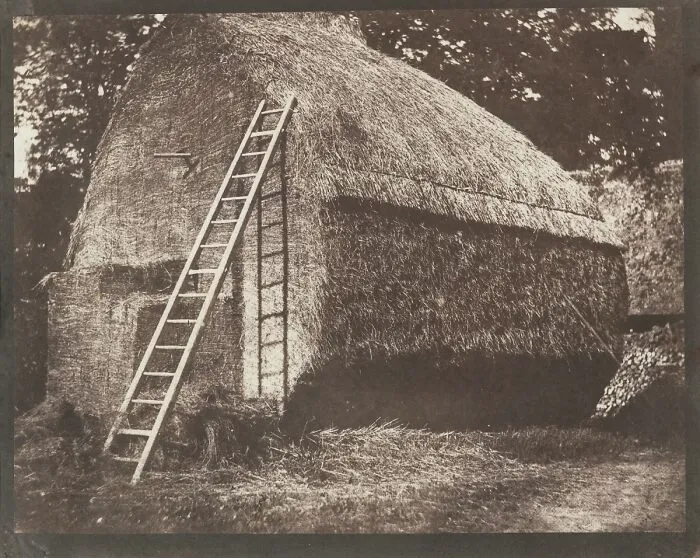
This seemingly simple image of a haystack, captured in 1844, is a landmark in the history of publishing. It was one of the key photographs featured in William Henry Fox Talbot's book, The Pencil of Nature. The publication was a groundbreaking achievement, as it was the very first book illustrated with photographic prints to be sold commercially to the public.
Report
13points
#34 Edinburgh Ale, 1844
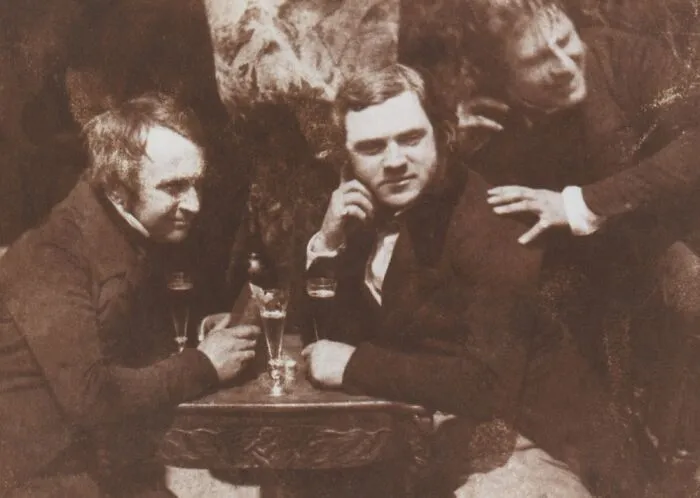
This 1844 calotype, titled "Edinburgh Ale," is less a formal portrait and more a candid moment shared between friends. In the photograph, pioneering photographer David Octavius Hill (right) joins writer James Ballantine and Dr. George Bell for a drink. The scene captures the social and collaborative nature of early photography, right down to the bottle of potent Edinburgh ale on the table, which one contemporary described as a powerful brew that "almost glued the lips of the drinker together."
Report
12points
#35 A Photo Of A New York Estate, 1848
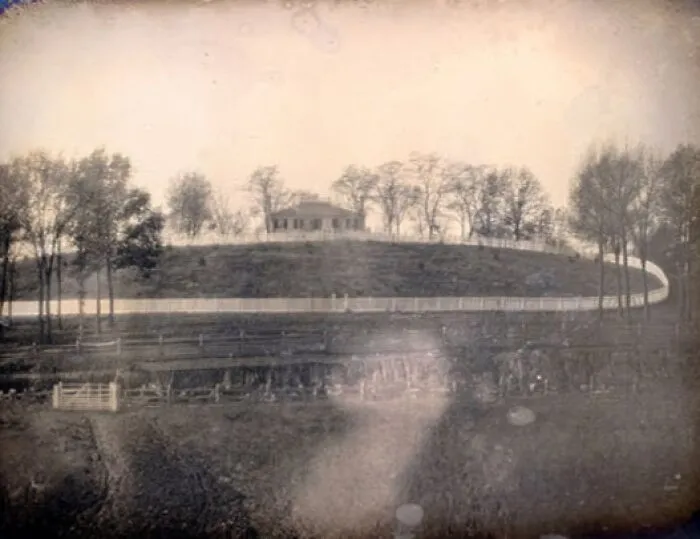
This 1848 daguerreotype provides a quiet, rural view of what was then known as the Old Bloomingdale Road, a street that would eventually become the bustling, world-famous Broadway. The photograph captures a tranquil New York estate at a time when much of upper Manhattan was still countryside.
Report
12points
#36 Blacksmith Forging A Horshoe, 1859-1860
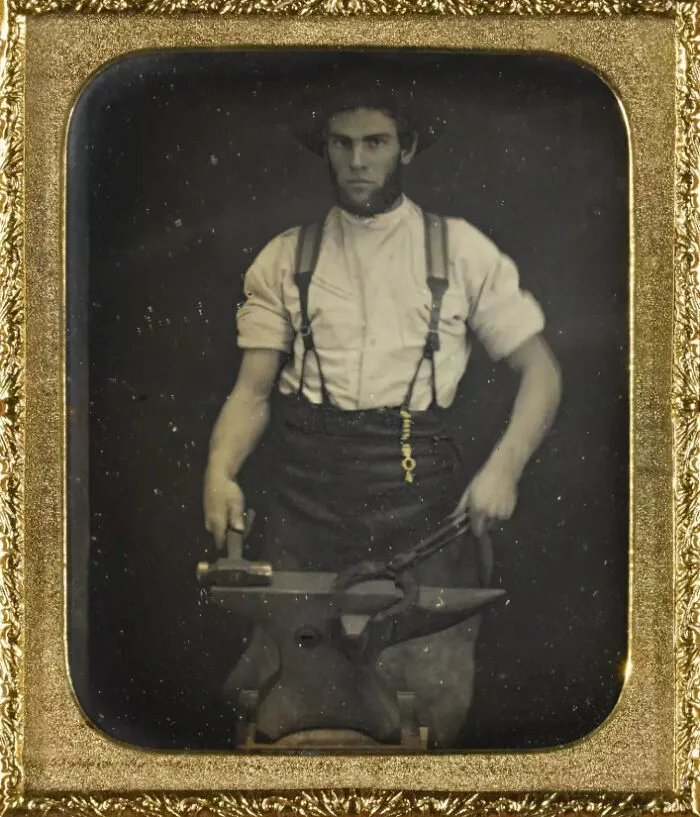
In this 1859 daguerreotype, a blacksmith is captured mid-swing, demonstrating the craft of forging a horseshoe. The image is notable not just for its depiction of skilled labor but also for the person who took it. The photograph was created by Sarah L. Judd, one of the pioneering women who operated their own photography studios in the earliest days of the medium.
Report
12points
#37 The First Digital Image, Created In 1957 With A Rotating-Drum Scanner, First Invented By Nist
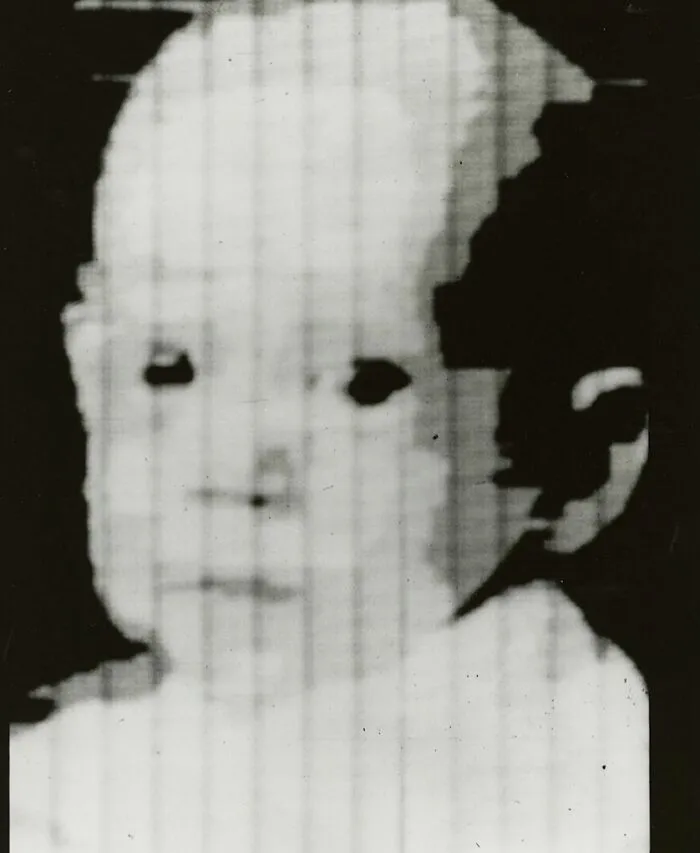
The question "What would happen if computers could look at pictures?" led directly to the creation of the world's first digital image in 1957. Computer pioneer Russell Kirsch and his team developed a drum scanner to feed visual information into a programmable computer. For their first test subject, Kirsch scanned a photograph of his infant son, Walden, creating a grainy, 176x176 pixel black-and-white image that marked the very beginning of digital photography.
Report
11points
#38 US President John Quincy Adams, 1843
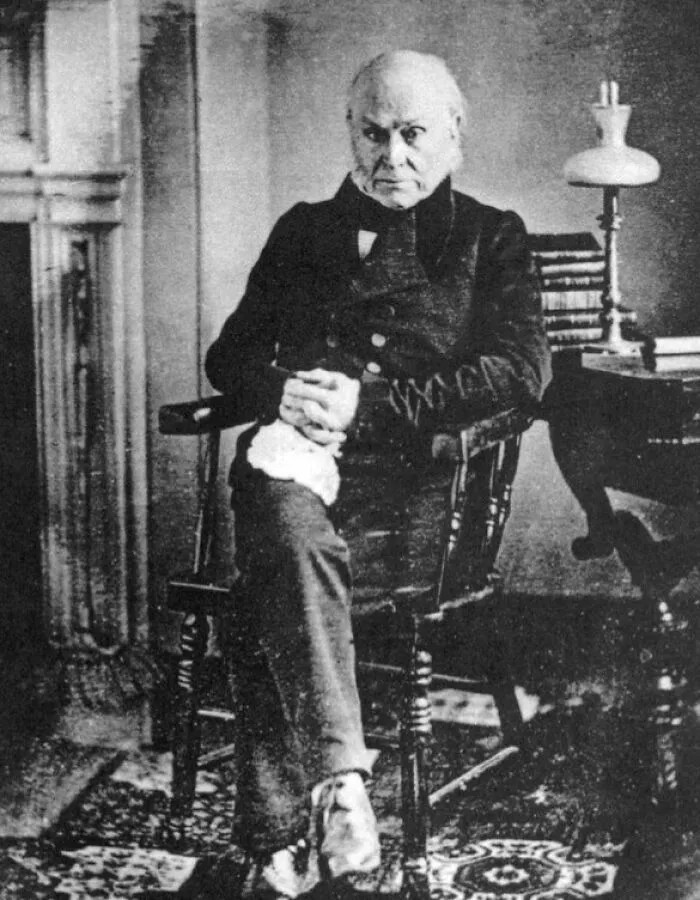
While the exact date is debated, this 1843 daguerreotype holds the distinction of being the first surviving photograph of a United States president. The portrait shows a stern and elderly John Quincy Adams, captured nearly 15 years after he had left the White House. It's a historic and remarkably humanizing image, offering a direct visual connection to one of America's founding-era statesmen.
Report
10points
#39 Earliest-Known Photo Of Lincoln, 1846/7
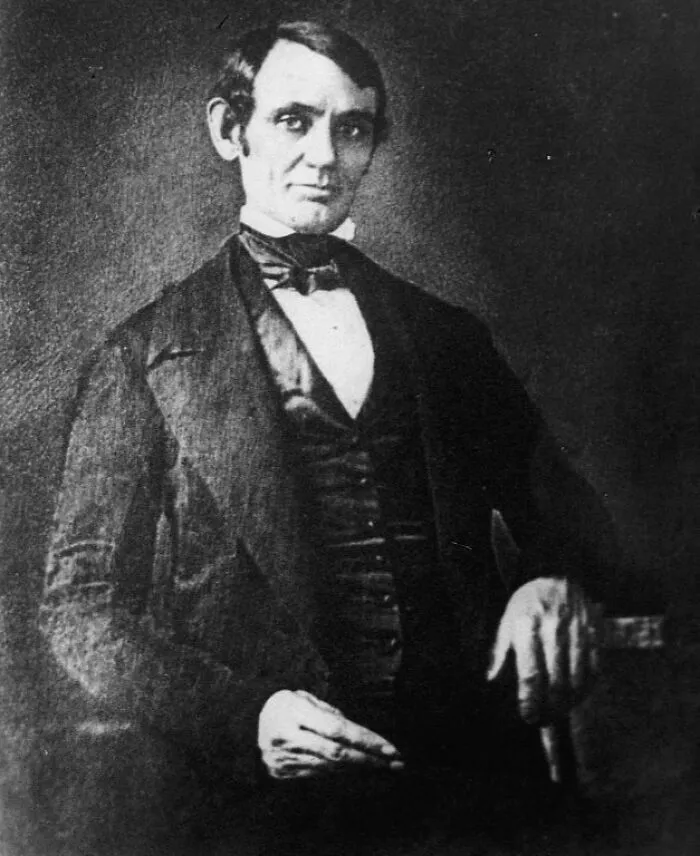
Thought to have been taken around 1846, this daguerreotype is the earliest known photograph of Abraham Lincoln. It captures a 37-year-old Lincoln as a young, clean-shaven congressman-elect from Illinois, years before the beard and heavy burdens of the presidency would famously transform his appearance. This portrait offers a rare glimpse of the future leader as a frontier lawyer on the cusp of his national political career.
10points
#40 Fort Sumter In The Charleston Harbor, South Carolina, April 14, 1861
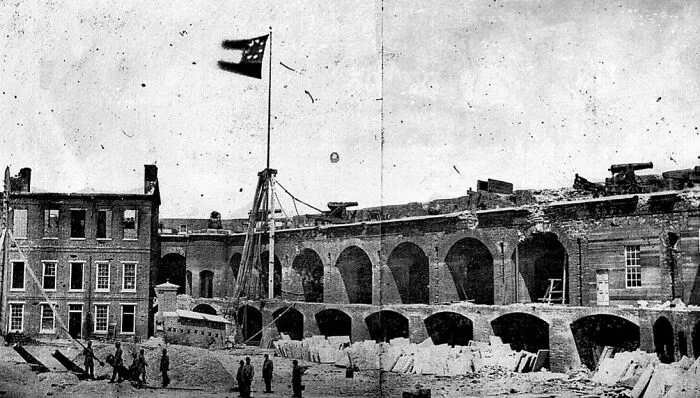
Taken just one day after the fort's surrender, this photograph from April 14, 1861, captures the direct aftermath of the event that ignited the U.S. Civil War. The image shows the Confederate flag flying over Fort Sumter, marking the start of a conflict that would become one of the first to be extensively documented by photography. Created by Alma A. Pelot, it's a stereoscopic photograph, meaning it was designed to be viewed in 3D, offering a more immersive look at this pivotal moment in American history.
Report
10points


