

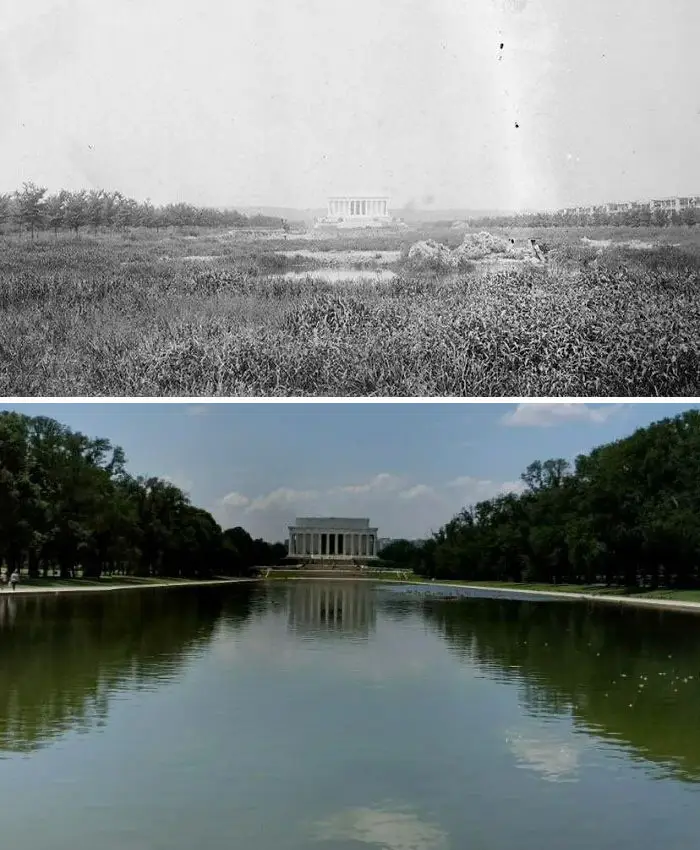
#21 The Lincoln Memorial In 1920 Before The Reflecting Pool Was Built.
Joseph M. Pierre, a professor of psychiatry at the David Geffen School of Medicine at UCLA, previously explained to Bored Panda why some people believe in conspiracy theories, how they’re tied to historical events, and which events appear to attract more lies than others.
According to the professor of psychiatry, people in the past were just as smart as we are now. And, with a few exceptions, a similar part of society tends to believe in conspiracies throughout history, no matter the time period. But the less safe people feel, generally, the more conspiracies thrive.
“The only spike [in believing in conspiracies] from the 20th Century occurred during the 1950’s communist ‘red scare,’” Professor Pierre said. However, this doesn’t change the fact that some conspiracy theorists choose specific historical events over and over again for whatever social or political aims they have in mind.
“It is true that certain historical events do tend to attract conspiracy theories and there is evidence that times of societal upheaval or crisis when people are feeling unsafe and desperate for clarity offer a kind of fertile soil for conspiracy theory beliefs,” the expert revealed.
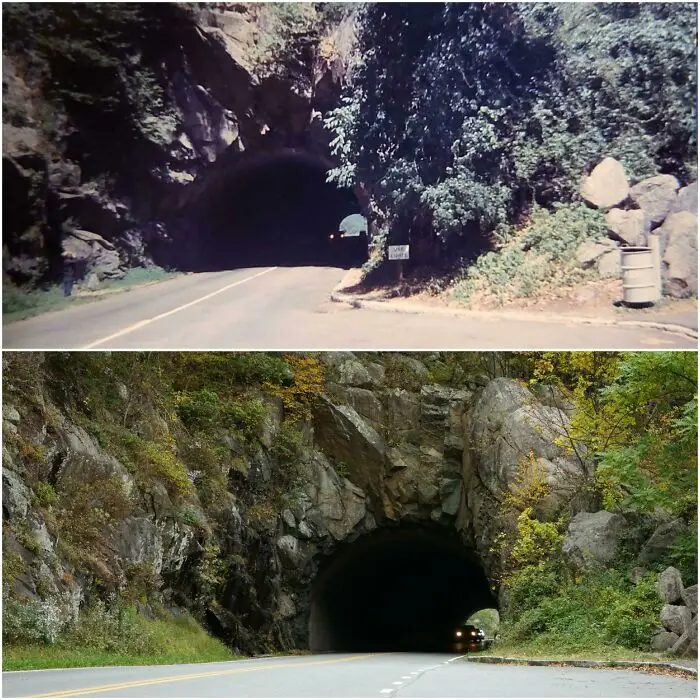
#25 Unknowingly Captured The Same Image In 2020 That My Dad Took On Vacation Back In 1965 - Shenandoah Np
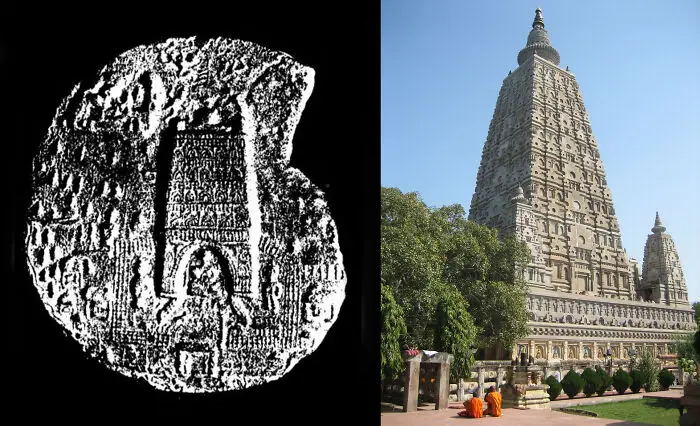
#27 The Mahabodhi Temple At Bodh Gaya, India, As Seen From A Second Century Plaque And How It Looks Like Today
“Over the past 60 years, the assassination of JFK, the death of Princess Diana, and 9/11 are the most obvious examples of national traumas surrounded by conspiracy theory beliefs,” the psychology professor told Bored Panda.
“We should acknowledge that many conspiracy theories, like the idea that the Earth is flat, aren’t really based on any kind of obvious traumatic event,” he added that not all conspiracies or instances of fake news are associated with traumatic events.
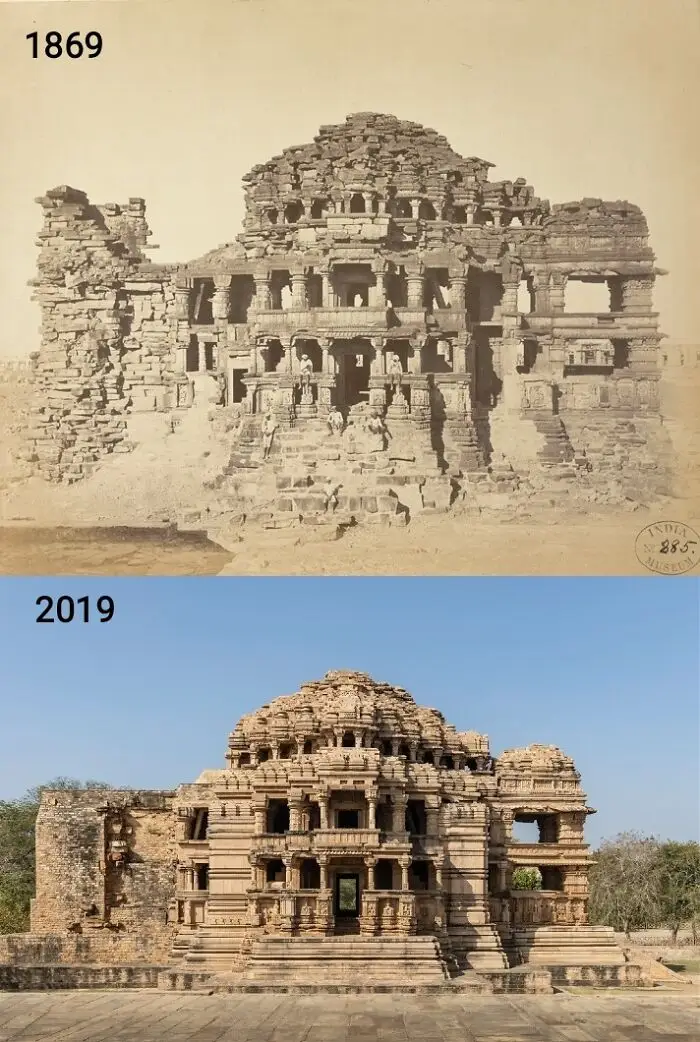
#30 Sas-Bahu Temple, Gwalior Fort, Gwalior, India. 1869 And 2019. The Temple Was Built In 1093.
“People who believe in conspiracy theories are also often attracted to the Manichean narratives that conspiracy theories offer, involving battles of good and evil pitting against each other in an almost apocalyptic fashion. So, it should come as no surprise that conspiracy theories might sprout up from World War II—a real-life apocalyptic battle between good and evil,” the expert told us.
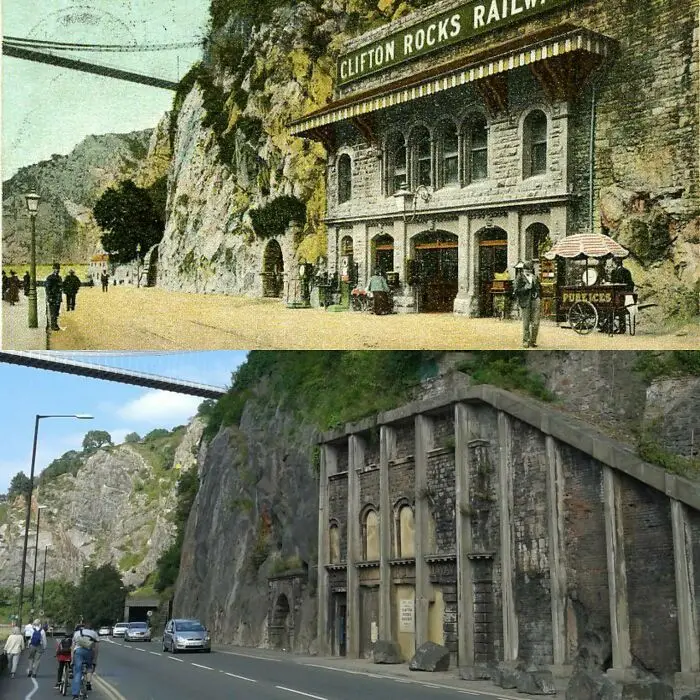
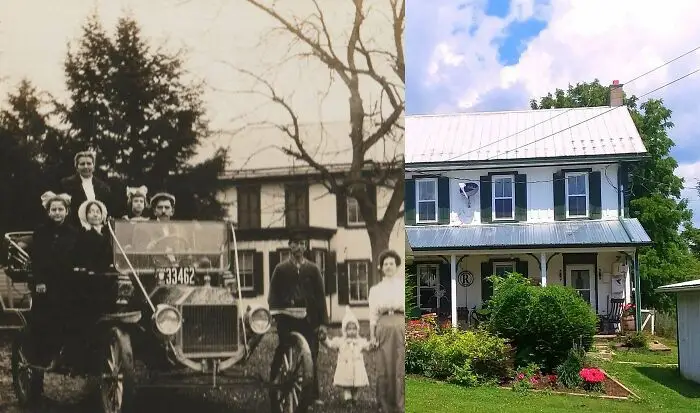
#32 Family Farmhouse 1912-2022 (I'd Especially Like To Note That The Green Bench Has Been On The Front Porch For At Least 110 Years)