


High-quality coffee is the essence of any hardworking and successful company. Anyone who tells you otherwise is either lying, a matcha-lover, or defending their office’s subpar caffeine situation. So, when someone tells you that there’s coffee-related drama swirling at work, you know it’s serious!
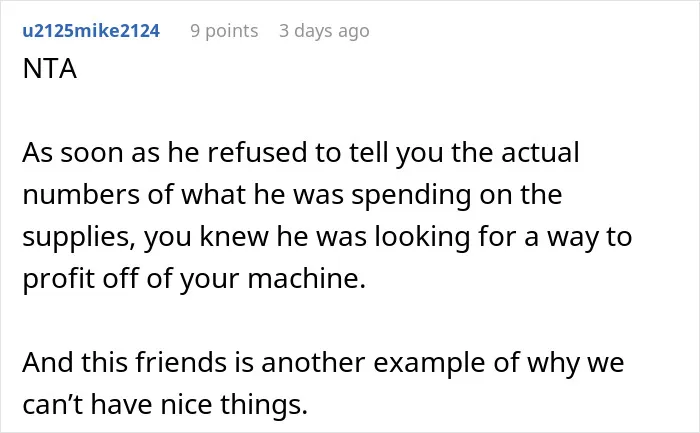
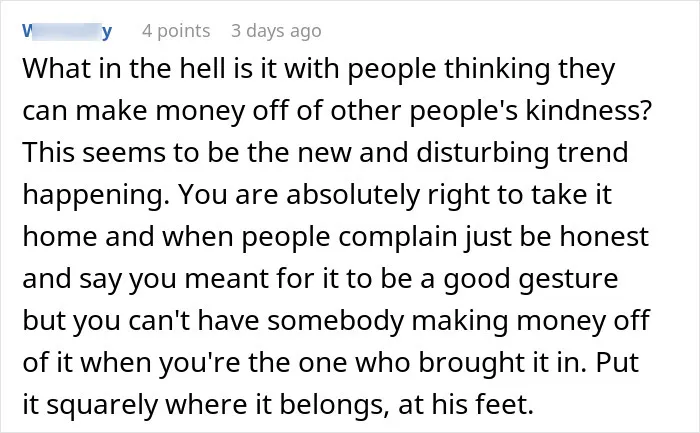
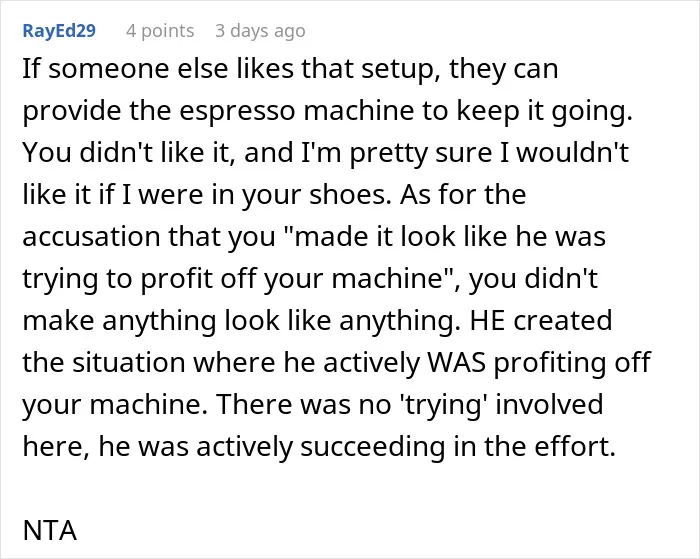
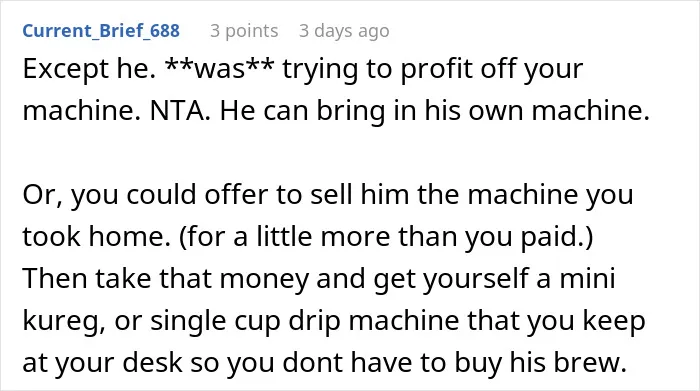
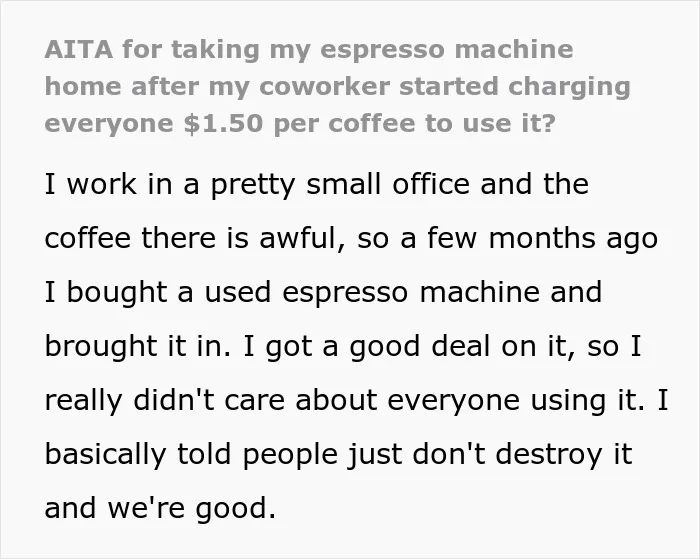
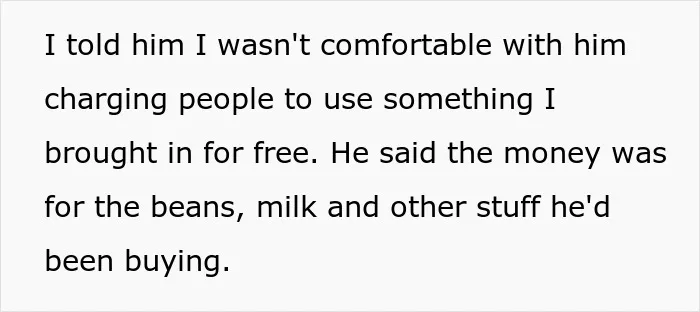
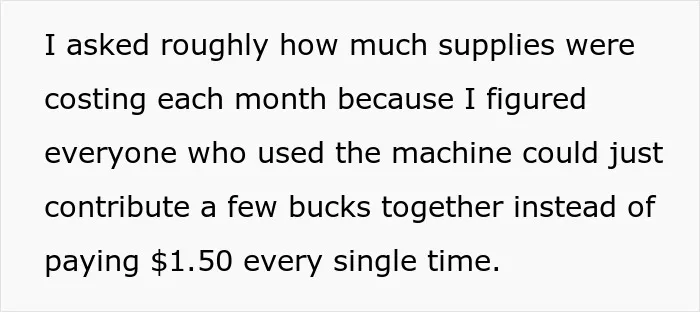
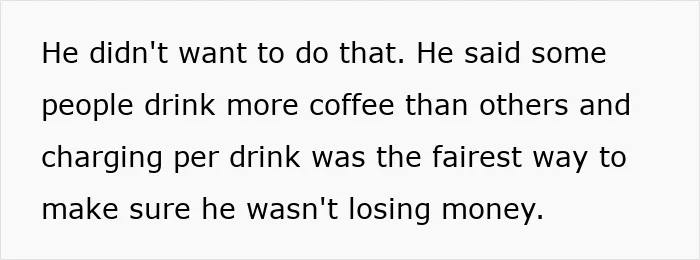
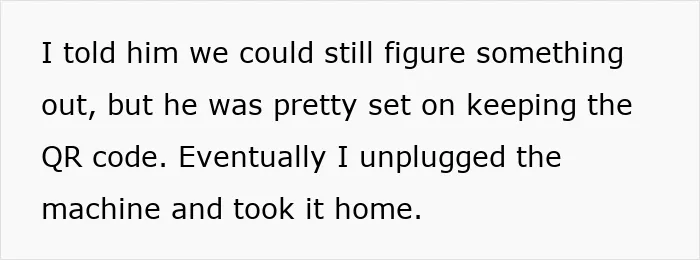
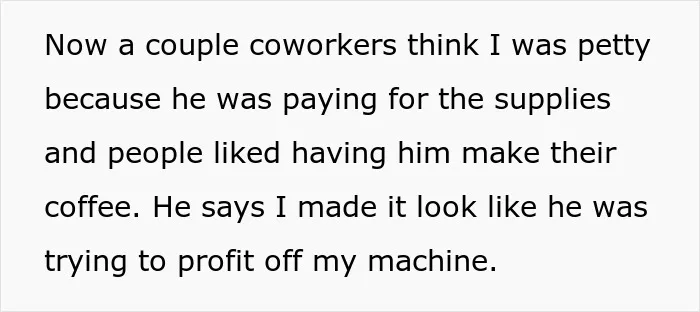
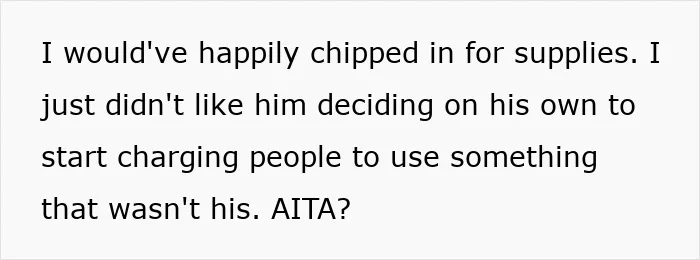
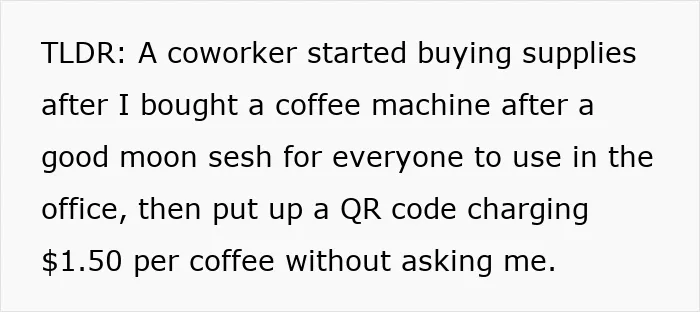
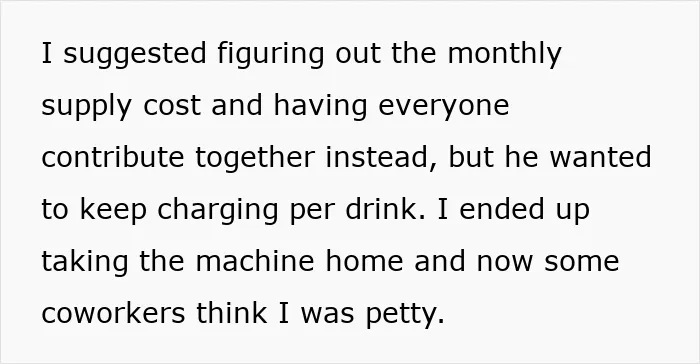
An employee asked the internet to weigh in on the drama happening at work after they bought a coffee machine for the entire office, only to later take it back home. The reason was simple: one of their colleagues turned the machine into their side hustle, charging everyone per cup. Check out what happened below and read the internet’s perspectives.
Coffee is very serious business. As it turns out, this topic can lead to plenty of drama at work

One worker was kind enough to buy a coffee machine for the office. However, their colleague soon turned it into his personal side hustle



Taking the time to understand your coworker's perspective is always worth the effort, especially when you have different opinions
Things probably wouldn’t have escalated the way they did if there was better communication and transparency at the company. If someone is generous enough to buy and then donate a coffee machine to the entire office, it is common sense to talk to them before you start charging money for people to use it.
Moreover, it is slightly bizarre that someone would turn a free coffee machine into an elaborate side hustle. Sure, the $1.50 payments per drink are there to pay for the fancy ingredients the employee took it upon himself to buy. But there’s a sneaking suspicion here that it’s also a way to earn extra cash. Which makes you wonder what the employee is even doing during their work hours if they have so much time to focus on their coffee business startup. In short, you have to ask yourself: what would his boss think of this setup?
Boundaries are essential if you want to have healthy work relationships, however, they’re not so easy to set and protect if you’re not used to standing your ground. Putting your needs first, holding your colleagues accountable for their actions, and disagreeing with them are all easy to do in theory but very difficult to do in practice.
Most people don’t enjoy arguing or getting into conflicts, even though, when done right and respectfully, they can be healthy and help everyone get on the same page. Problems usually don’t solve themselves if you ignore them. At some point, if someone’s behavior at work is problematic, you will have to confront them. Either directly, through your manager, or via HR.
According to Lisa Richey, from The American Academy of Etiquette, during a work conflict, slowing down is essential. Take a deep breath, pause for a moment, and focus on responding to what’s happening instead of just instantaneously reacting from a place full of emotions.
“Take time to understand why the other person may be bringing up a particular issue. The only thing that we can control is the way we react to it in the moment. You have to be fully responsible for yourself,” Richey explained to Business Insider.
Discussing things privately is usually the right way to go. You do not want to air grievances in public. It’s really not a good look.
“Address it later, one-on-one with the person. Do not get into these heated conversations and battles within the conference room as a group.”

Workplace disagreements can be incredibly healthy for everyone, but they require calm and respect
Meanwhile, Arden Clise, from Clise Etiquette, stressed just how important having a calm and respectful conversation is. For example, you may want to use plenty of “I” statements where you share your perspective and feelings. In the meantime, try to avoid “you” statements so that you don’t come off as judgmental, accusatory, and combative.
And according to organizational psychology professor John Eliot at Texas A&M University, it is most definitely possible to find ways to fulfill your colleagues’ needs even if you don’t agree with them or don’t even have the same opinions.
“We all have a need to feel heard and feel understood. Make sure you're understanding what they're saying and then feed some of that back a little bit. That's an active way to let them know, 'This person really is listening to me,’” he told Business Insider.
According to Andy Lopata, who specializes in professional relationships and networking, good leaders have to create space at work for dissent. The reality is that healthy conflict drives better decisions and engagement, he notes in a post on Psychology Today.
However, those professional disagreements have to be constructive to be healthy. Meanwhile, if you have unspoken objections, those can eventually morph into resentment and damage the relationship in the long term.
“By proactively confronting and exploring conflicts, we can move past the resentment that builds when we remain silent and we can come to understand different perspectives. If we are genuinely curious and seek to understand why others challenge our ideas, we can strengthen the solutions we develop. The respect we earn through honest, open conversations directly affects how much we trust our colleagues,” Lopata explains.
“In addition, stimulating healthy debate keeps people engaged. If we feel that our opinions are genuinely taken into account, we feel valued. All of this feeds our ability to collaborate and innovate.”
What’s your perspective, Pandas? How would you have solved the office coffee machine drama? What’s the coffee situation like at your work? How do you protect your boundaries? Share your insights in the comments.

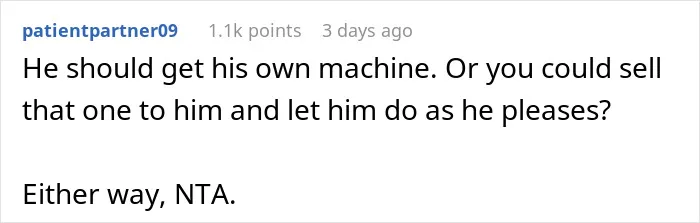
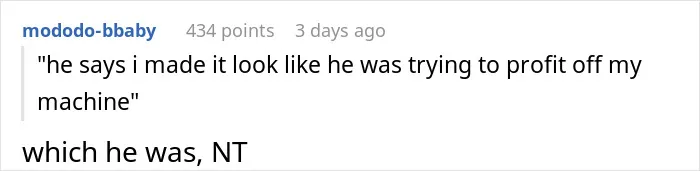
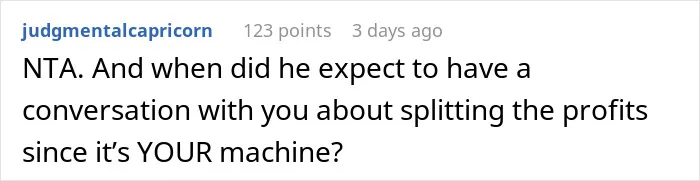
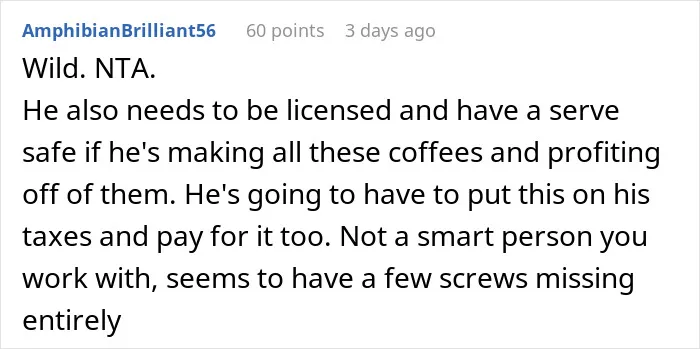
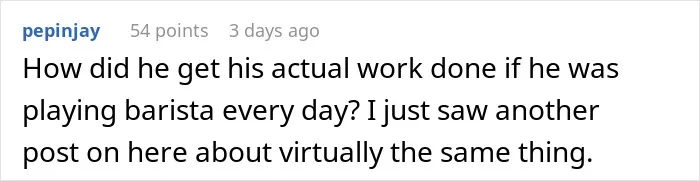
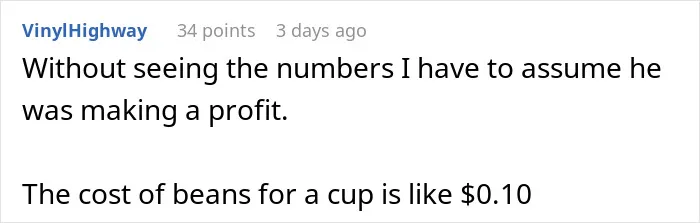
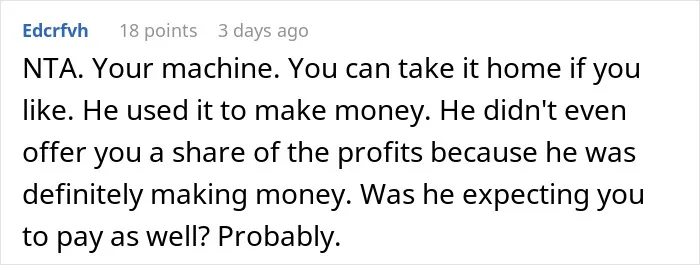
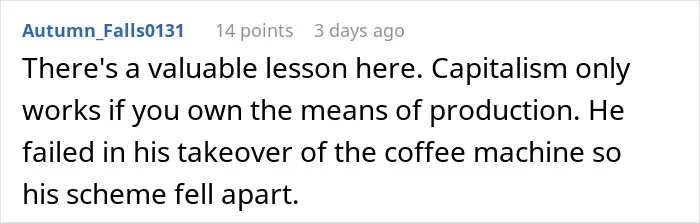
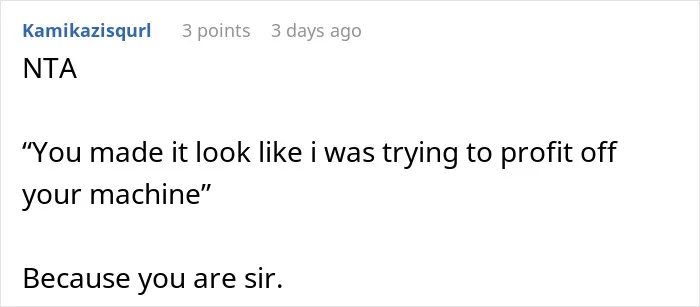
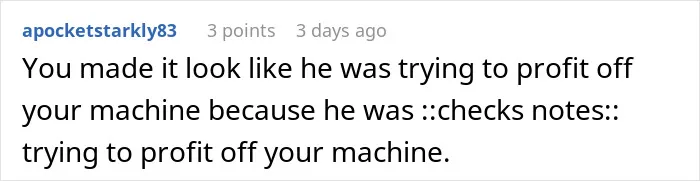
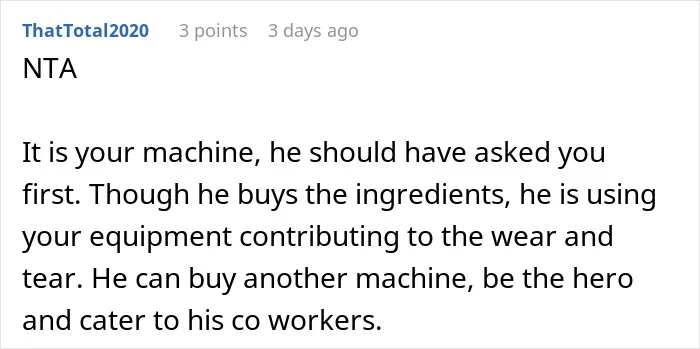
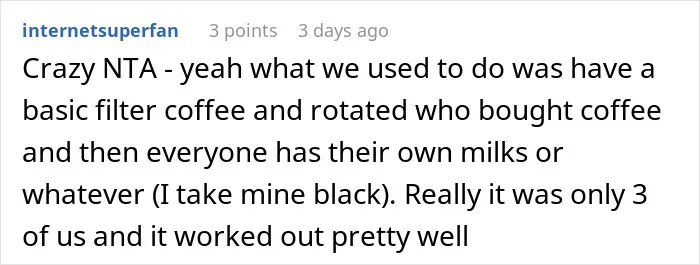
The internet weighed in on the office paid coffee machine drama. Most people thought the author was right to take the machine back