



The Ocean Photographer of the Year 2025 has once again brought together some of the world’s most powerful and inspiring ocean imagery. Hosted by Oceanographic Magazine, the competition celebrates the beauty of the sea while also shining a light on the challenges it faces. Each photograph shows the beauty of ocean life and the challenges it faces.
This year’s winners and finalists have been recognised across a range of categories, including Fine Art, Wildlife, Adventure, Conservation (Impact), Conservation (Hope), the Human Connection Award, and Young. Together, these images capture moments of awe, urgency, and hope, reminding us of the vital connection we share with the ocean.
#41 Adventure Photographer Of The Year, Finalist Byron Conroy
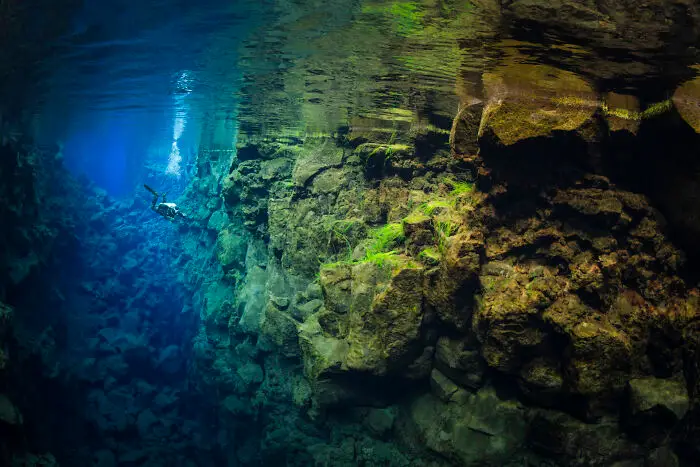
Iceland
"Silfra fissure is a ‘visibility wonderland’," says Conroy. "It is the ultimate wide angle ambient light shooting destination. Visibility extends to more than 100 metres and the fissure looks completely different depending on the time of day and the time of year. My favourite time is spring when we get angled light and the first growth of the green algae."
Report
9points
#42 Adventure Photographer Of The Year, 2nd Place Winner Gergo Rugli
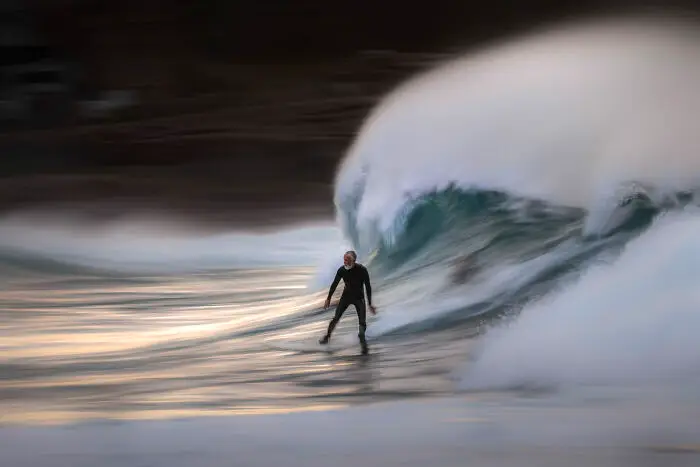
Australia
"Captured on a crisp winter morning at Bronte Beach, this image was the result of a rare alignment," says Rugli. "A powerful southerly swell met strong offshore winds under a soft morning light. I used a slow shutter speed to capture the wave’s motion in a painterly blur while keeping the surfer sharp. This technique allowed me to freeze both chaos and grace in one frame. The title of this image is 'Melchizedek'. referencing the mysterious old king from The Alchemist, who, like this surfer, moved with surprising vitality and purpose."
Report
9points
#43 Conservation (Impact) Photographer Of The Year, 1st Place Winner Hugo Bret
Faroe Islands
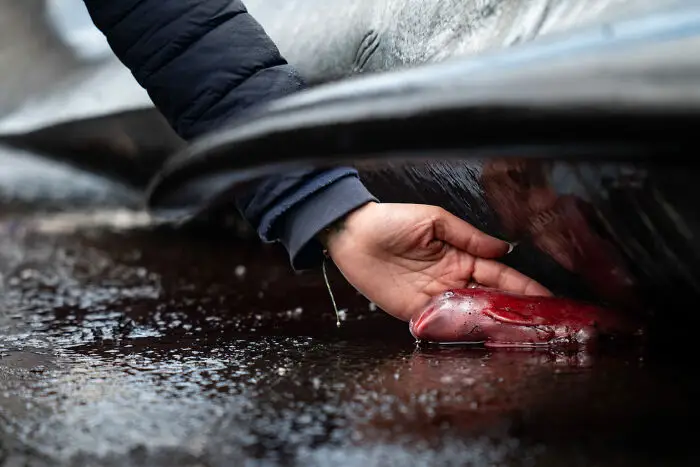
A long-finned pilot whale foetus lies lifeless under its mother’s corpse in the Faroe Islands. "Each year, more than 1,000 cetaceans are killed during grindadráp, the slaughter of entire whale groups, including juveniles and pregnant females," says Bret. "Usually, the foetuses are ripped from their mother’s womb far from the public gaze, but this pregnant female was undetected and eviscerated among the others, revealing this deeply moving scene. While these hunts were once an existential necessity, they are no longer subsistence practices. I hope this image drives global attention to end the grindadráp and, at a broader scale, advocates for a reconsideration of what the human relationship with others living beings should be."
Report
9points
#44 Conservation (Impact) Photographer Of The Year, Finalist Giancarlo Mazarese
Philippines
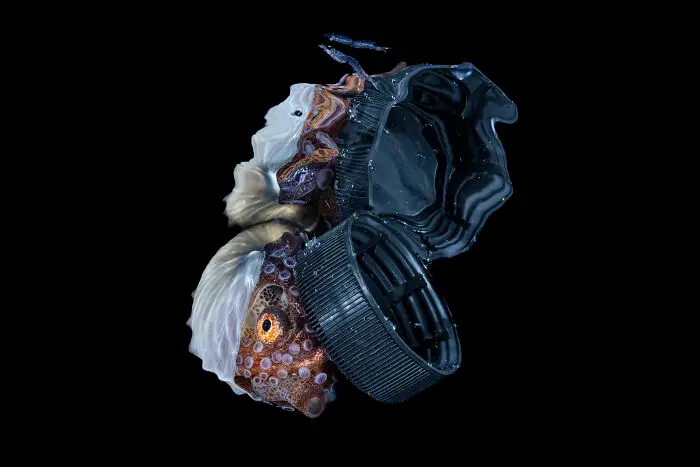
"In the darkness of the open ocean at night, a tiny paper nautilus clings to a plastic bottle cap," says Mazarese. "In the wild, females of this species seek out floating organisms like jellyfish to hitch a ride and navigate the water column. But here, instead of a living creature, she finds only what humanity has discarded. This image, taken in Anilao, Philippines, reflects the silent impact of pollution and the resilience of marine life."
Report
9points
#45 Conservation (Hope) Photographer Of The Year, Finalist Solvin Zankl
Bonaire
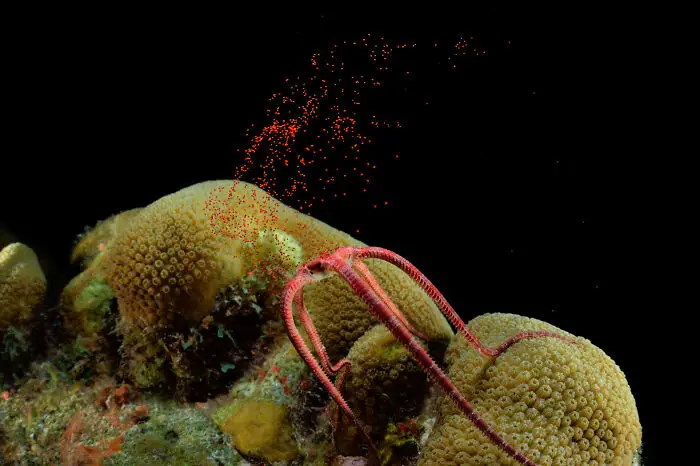
"On the Caribbean island of Bonaire, a female brittle star rears up on the tips of its arms on top of a coral to release its eggs, a few nights after the full moon," says Zankl. "The process is synchronised by the moon so that the eggs are fertilised by sperm from males in the open water and a new generation is born."
Report
9points
#46 Conservation (Hope) Photographer Of The Year, 3rd Place Winner Théo Maynier
Martinique
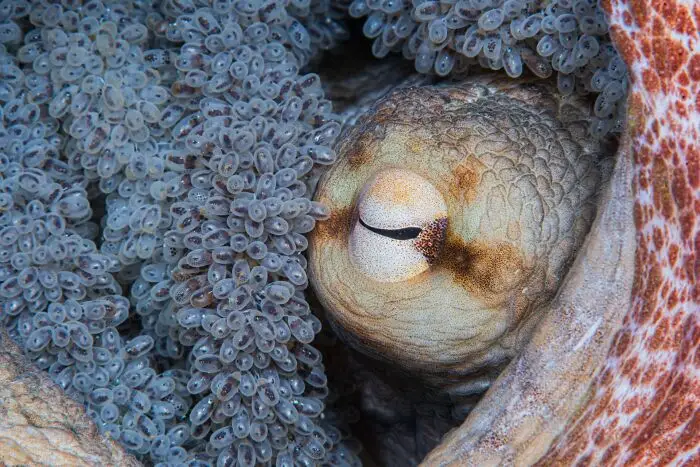
"In Martinique, the octopus, known locally as 'chatroux', is becoming increasingly rare due to human overconsumption," says Maynier. "Marine reserves have been created to offer a refuge for all species, including the octopus, in order to protect them from overfishing and to preserve biodiversity. In this context, this encounter with an octopus and its eggs, observed in the Kay Pothuau marine reserve, clearly stands as a true sign of hope for conservation."
Report
9points
#47 Conservation (Impact) Photographer Of The Year, Finalist Youenn Kerdavid
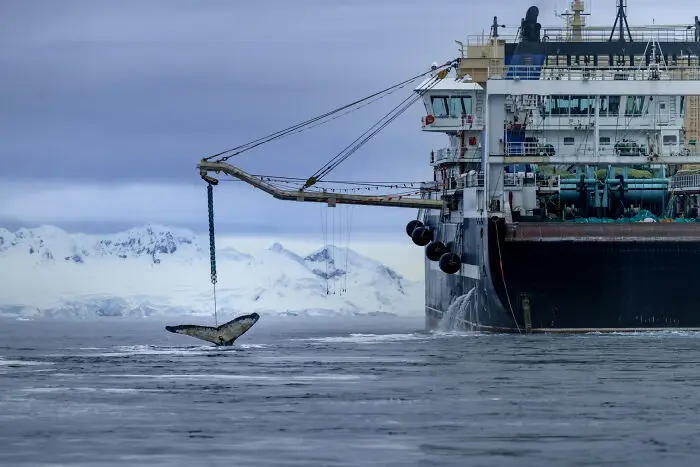
Antarctica
"Over the past 20 years, krill fishing has quadrupled," says Kerdavid, "mainly to produce non-essential products like Omega-3 supplements, pet food, and feed for farmed salmon - used to make the flesh pink for Western supermarkets. A single trawler can catch up to 500 tonnes of krill per day. That's enough to feed 150 whales. Less krill means less food for whales, seals, penguins, and countless other species. Today, krill extraction is one of the fastest-growing threats to Antarctic wildlife. That’s why Sea Shepherd is heading to Antarctica: to expose this industry and show the world what’s really happening: hungry whales following krill trawlers, desperately searching for food."
Report
8points
#48 Conservation (Hope) Photographer Of The Year, 1st Place Winner Sirachai Arunrugstichai
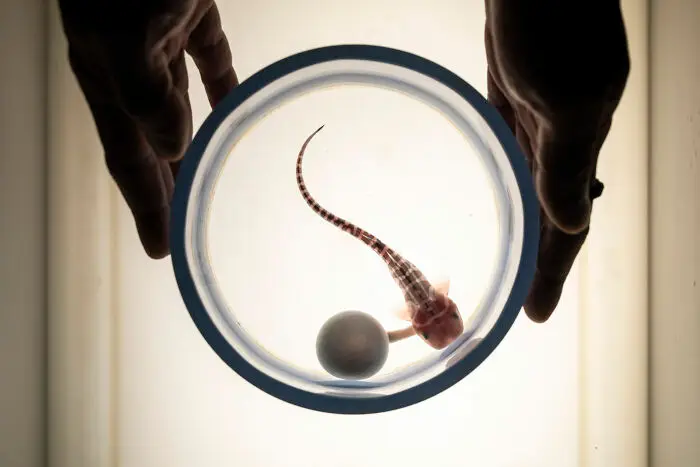
Thailand
"An aquarist holds a glass jar with an early-stage embryo of an Indo-Pacific Leopard shark (Stegostoma tigrinum), its egg case removed for a rearing experiment at Aquaria Phuket, one of Thailand’s largest private aquariums," says Arunrugstichai. "Since 2023, the aquarium’s staff-driven breeding program has produced over 40 pups of this Endangered species, listed on the IUCN Red List. Aquaria Phuket now works with the Department of Marine and Coastal Resources, ReShark, WildAid, Ocean Blue Tree, and private partners on the StAR (Stegostoma tigrinum Augmentation and Recovery) Project Thailand, reintroducing these sharks to the wild, beginning August 2025."
8points
#49 Adventure Photographer Of The Year, Finalist Daan Verhoeven
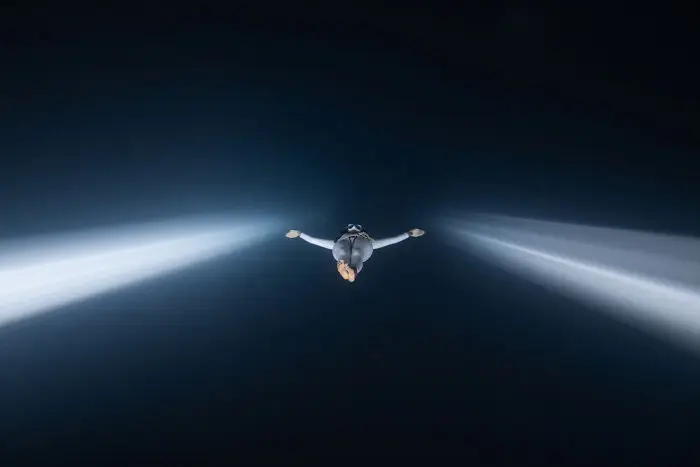
Mexico
"Freediver Surya Lecona Moctezuma dives down in between light beams in a Mexican cenote," says Verhoeven. "I was looking for the contrast between not just the light and dark areas, but the sudden appearance of linear geometry in a natural setting, so I asked Surya to dive right in the middle of the beams. I dived after her, positioning myself directly above."
Report
7points
#50 Conservation (Impact) Photographer Of The Year, Finalist Henley Spiers
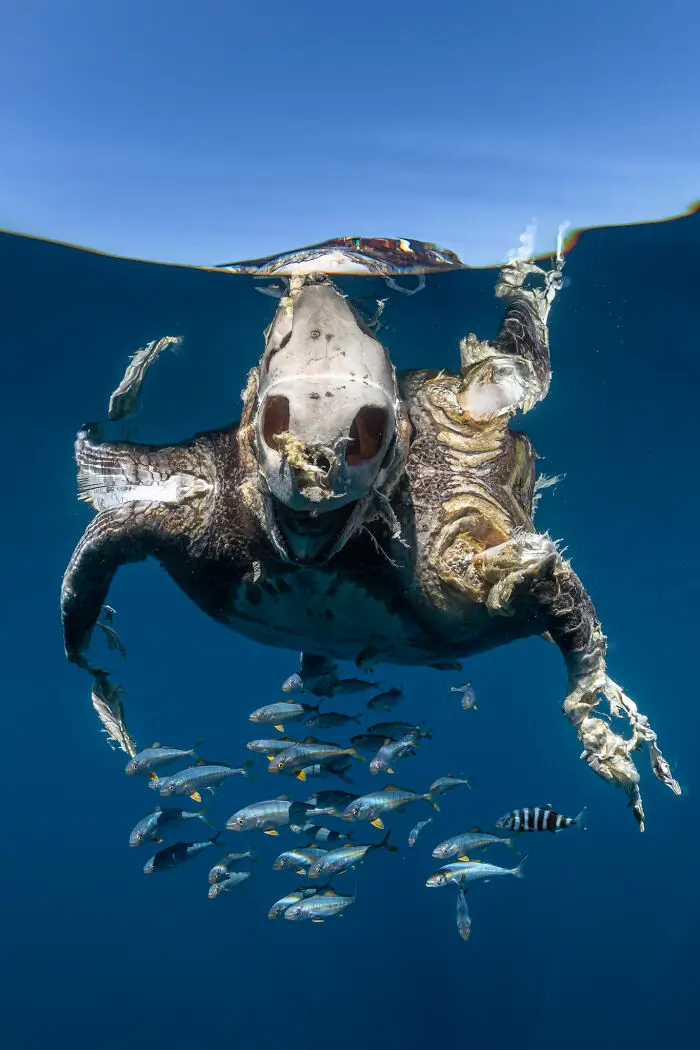
Mexico
"This green turtle was killed by a boat strike, an unnatural and unnecessary death for an endangered species," says Spiers. "Only recently deceased, it is partly decomposed, with the haunting view of the bare skull in contrast to the skin, which remains on the rest of its body, and the juvenile fish which have adopted the turtle carcass as a form of safe refuge. We came across this turtle by chance, a dispiriting sight at the end of a long and fruitless day at sea. I can only hope that this image acts as a reminder of the enormous human burden placed on turtles and the ocean as a whole."
Report
7points
More from this series:
Read next · Part 394 Breathtaking Photographs Celebrated At The 2026 Ocean Photographer Of The Year AwardsContinuePrevious · Part 1Dive Into 30 Captivating Finalists From The 2024 Ocean Photographer Of The YearPrevious
1Dive Into 30 Captivating Finalists From The 2024 Ocean Photographer Of The Year
2You're here50 Stunning Images From The 2025 Ocean Photographer Of The Year Awards
394 Breathtaking Photographs Celebrated At The 2026 Ocean Photographer Of The Year Awards

