

It can be unfortunately easy to overlook bad behavior from one’s friends. After all, we assume they have the best intentions or that some overstepped boundaries aren’t personal. So it can be jarring to finally admit that one’s “friends” might not actually have your best interests at heart.
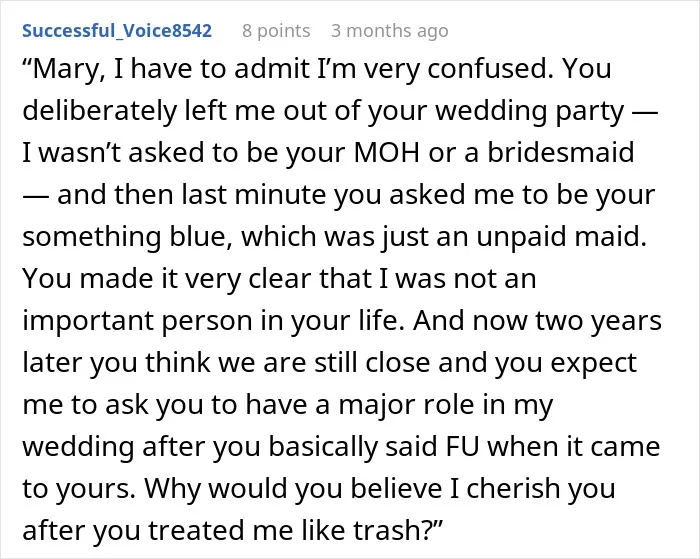
A woman turned to the internet for advice after she decided to not allow one of her friends to attend her wedding. This decision was a result of said friend being dismissive and even snubbing her at her own wedding. Netizens weighed in on the conflict and the bride shared an update later.
Being snubbed by a friend rarely feels good
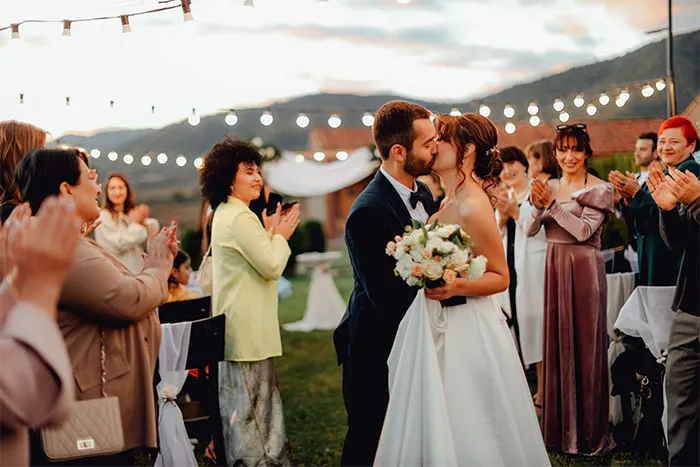
So one woman considered altering her wedding guest list over a friend’s behavior





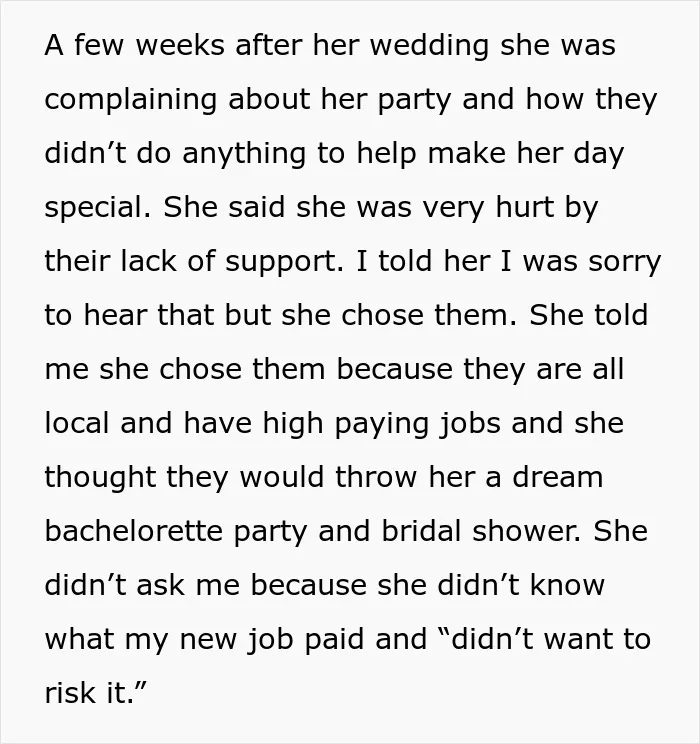
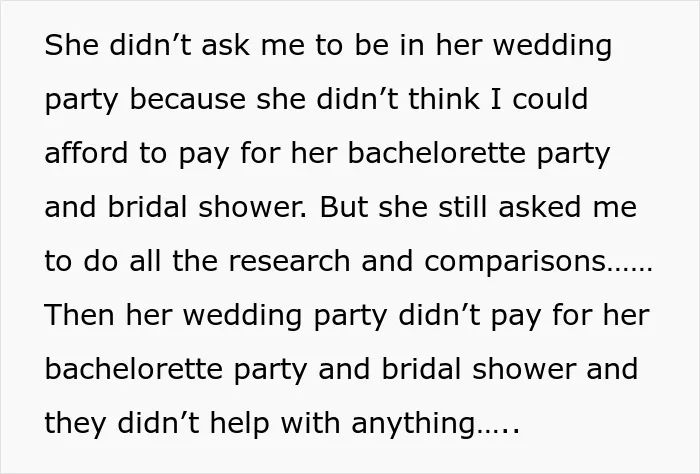
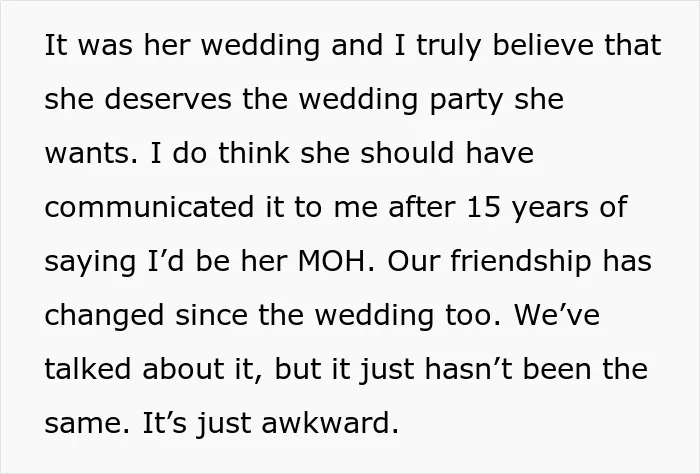
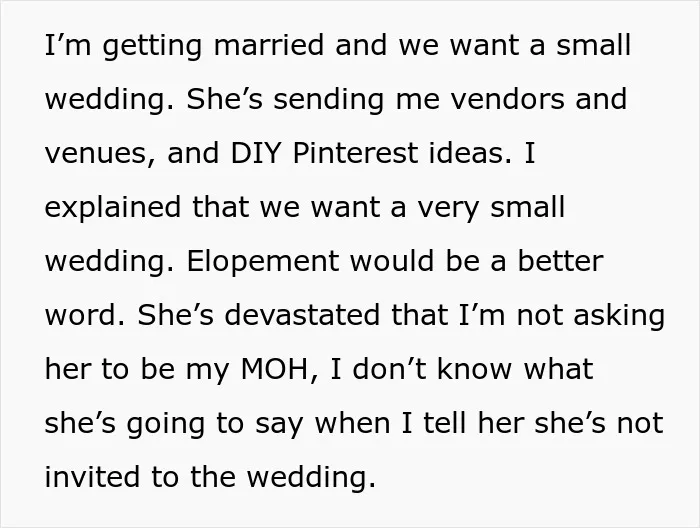
She shared an update later

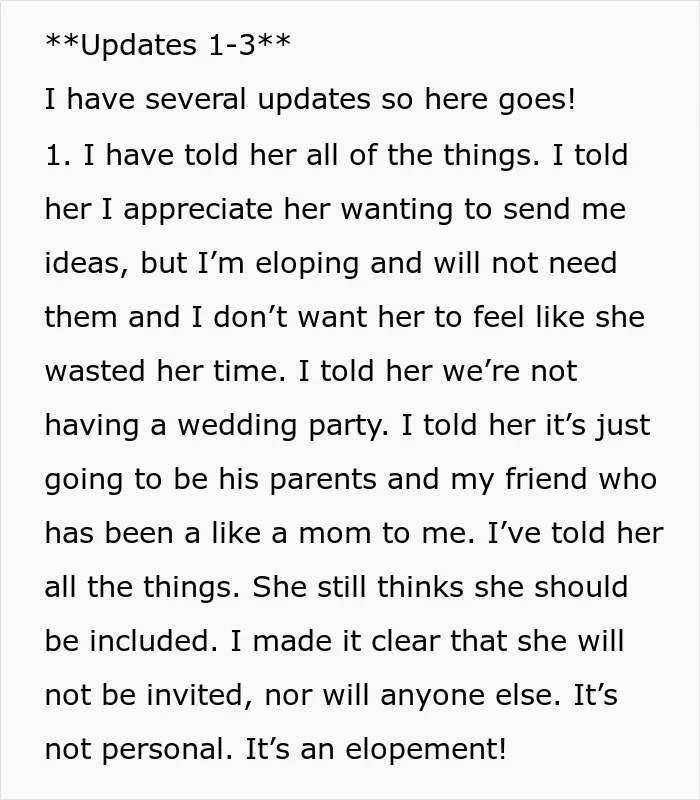
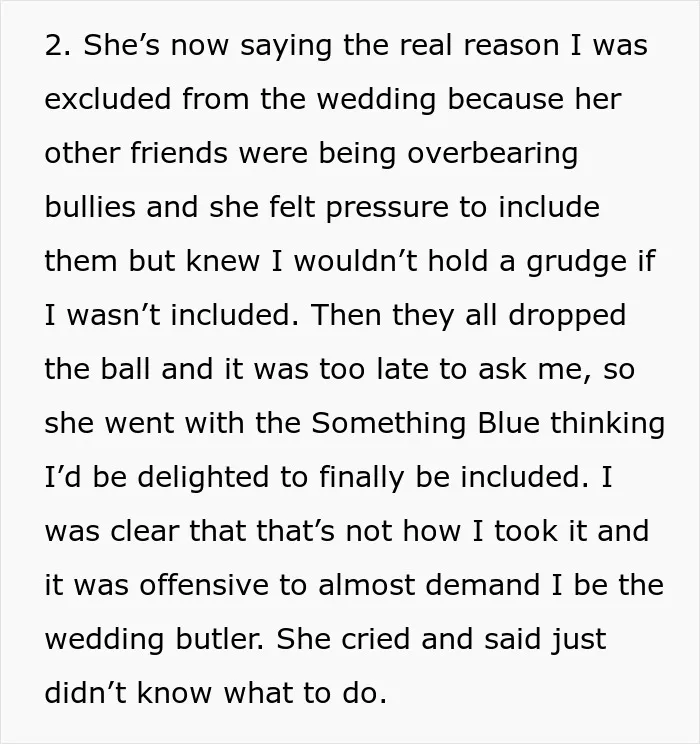
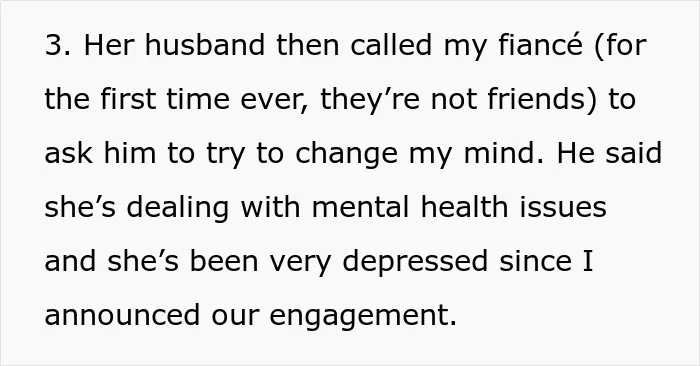

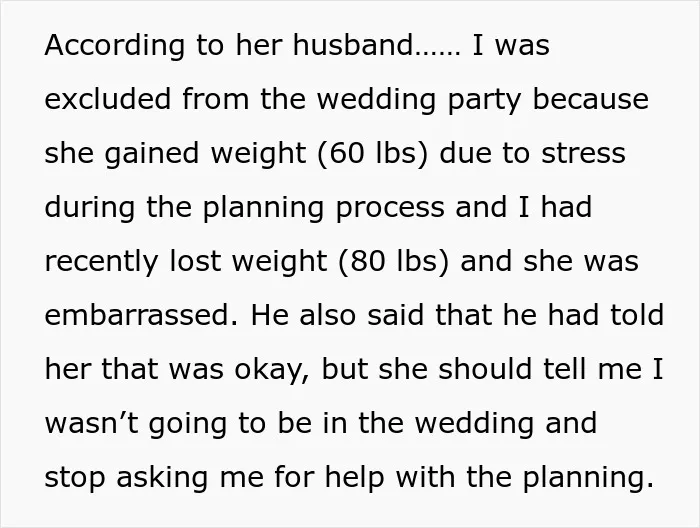
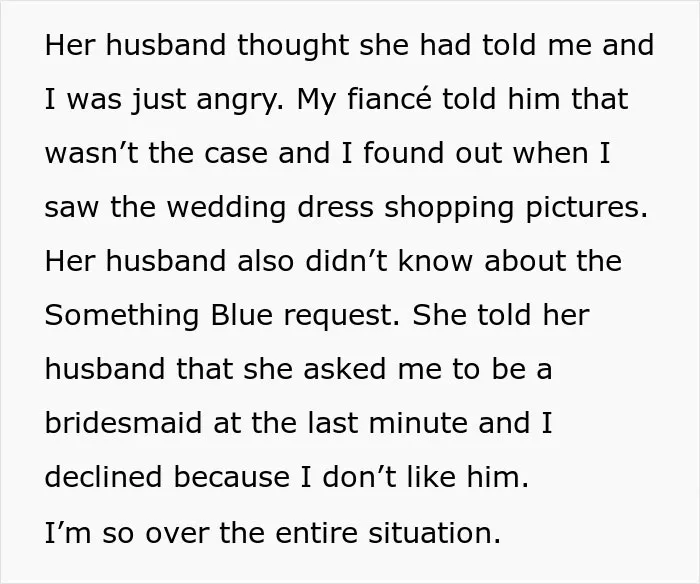
Keeping track if someone is actually your friend can be complicated
Boundaries tend to get pictured as walls, but in friendships they work more like directions. They tell the other person how to be close without things getting tiring, confusing or resentful. Headspace’s overview of healthy relationship boundaries makes the point that limits shared with clarity and compassion usually build trust rather than damage it. The story is a useful example of what happens when that clarity goes missing on both sides.
Consider how many expectations were never actually spoken. Years of casual comments about a maid of honor role created one kind of assumption. Months of vendor research and venue comparisons created another. Neither side stopped to say what the arrangement really was, and when those gaps stay open, each person fills them with whichever version feels most natural. A boundary only works when the actual problem can be explained, since a vague complaint gives the other person nowhere to go with it. A plain question such as “what role do you see me having?” can feel awkward in the moment, but it is far easier than finding out from a photo in the background.
It also helps to separate a boundary from a request. A boundary describes what a person will or won’t do, while a request invites someone else to act. Turning down a role that arrived on short notice with a long list of duties is a boundary in action. Hoping a close friend will be nearby on a big day is a request. Both are normal parts of friendship, and trouble tends to start when one gets treated as an attack on the other. A no to a task is not automatically a no to the person.
A second opinion can be important
Balance matters too. Readers will see this story differently when it comes to who gave what, but many can agree that long stretches of unacknowledged effort tend to build quiet resentment. Quiet resentment usually surfaces sideways, often at the least convenient moment. Saying “I am glad to help with the venue, but I would like to know my role first” often protects a friendship rather than ending it.
The elopement adds a different layer. A guest list belongs to the people getting married, and few topics test a friendship faster. Choosing a tiny event is a decision about the event, not a ranking of friends. Even so, the way a decision is shared matters. Repeating the same answer calmly and consistently usually works better than reopening the discussion every time someone pushes back. It is also worth noticing that messages carried through spouses and partners can blur who is asking for what. Direct conversations between the two people involved tend to keep things clearer and kinder.
There is a balancing point as well. In a Bustle piece on therapy language, psychologist Marisa Franco cautioned that setting boundaries while considering only your own needs can get in the way of building healthy relationships. A Los Angeles Times feature republished by the AJC offers a complementary view, that setting good boundaries can make someone a better friend by creating room for honest closeness. Both ideas can be true at once. A boundary does not require ignoring how the other person feels. It simply means those feelings are not the only thing steering the decision.
For anyone who recognizes parts of their own friendships in this story, a few habits tend to help. Name expectations early, even the ones that seem obvious. Ask directly about roles before offering hours of help. Decline a request without a long defense, since an over explained no often invites negotiation. And allow a friendship to change shape. Some friendships return to their old closeness after an honest reset. Others settle into something lighter, with more space and fewer obligations. Neither outcome means the history was wasted. Years of shared memories can sit alongside a quieter present, and a friendship that is allowed to find its own size often lasts longer than one stretched to fit old expectations.
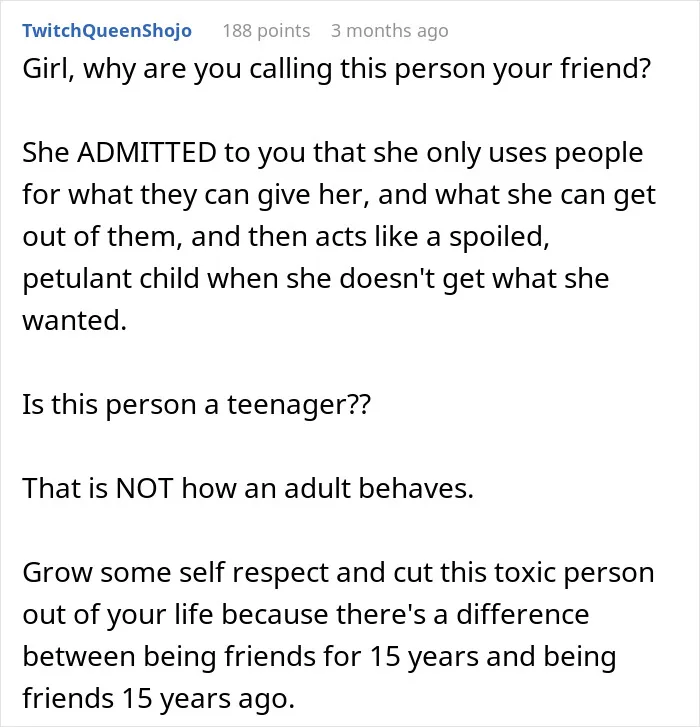
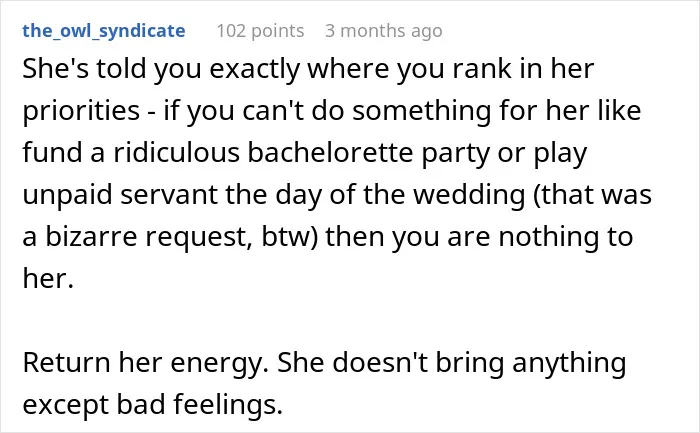
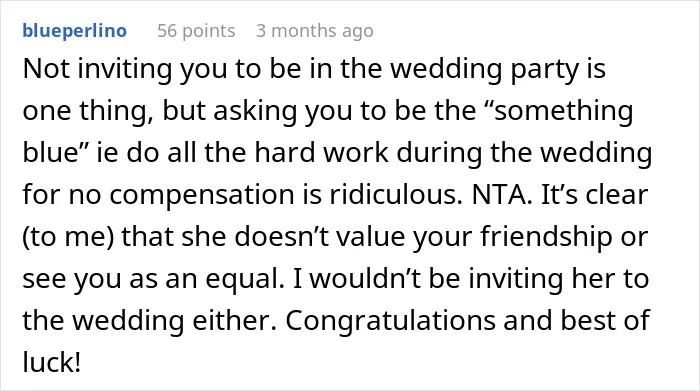
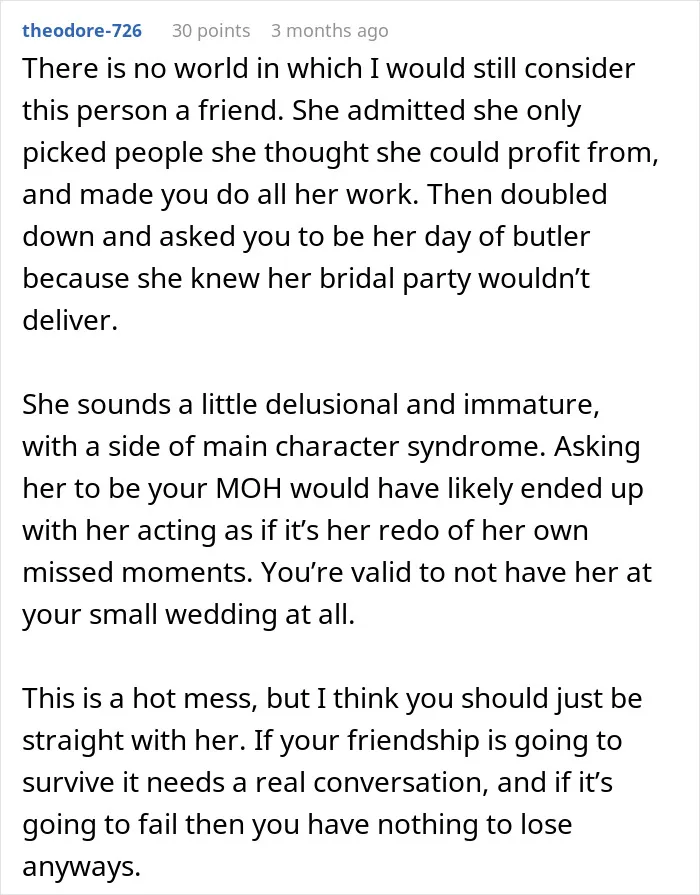
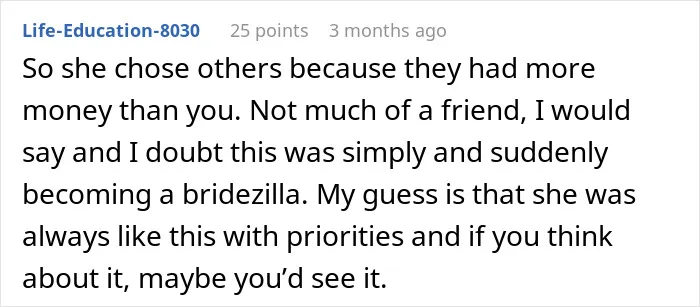
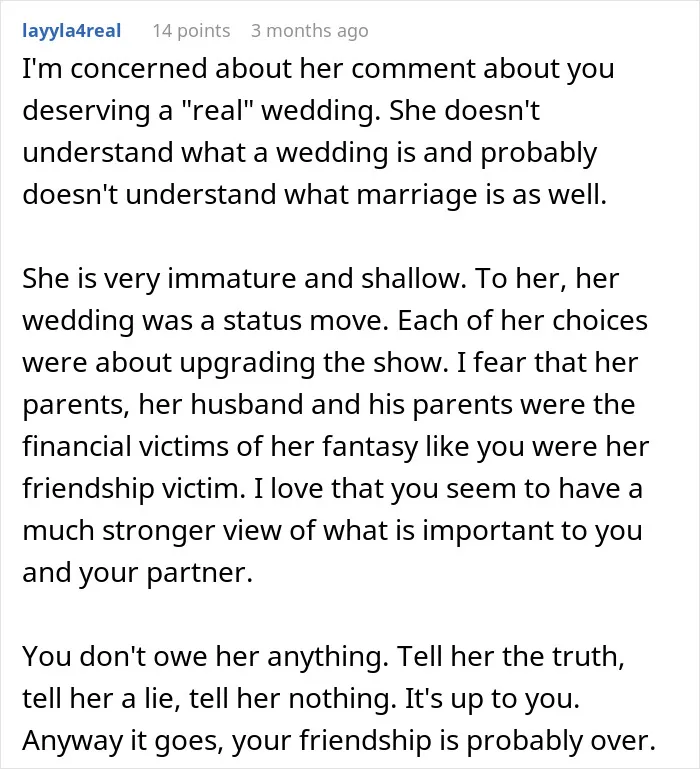
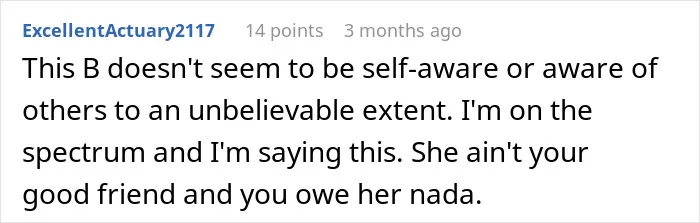
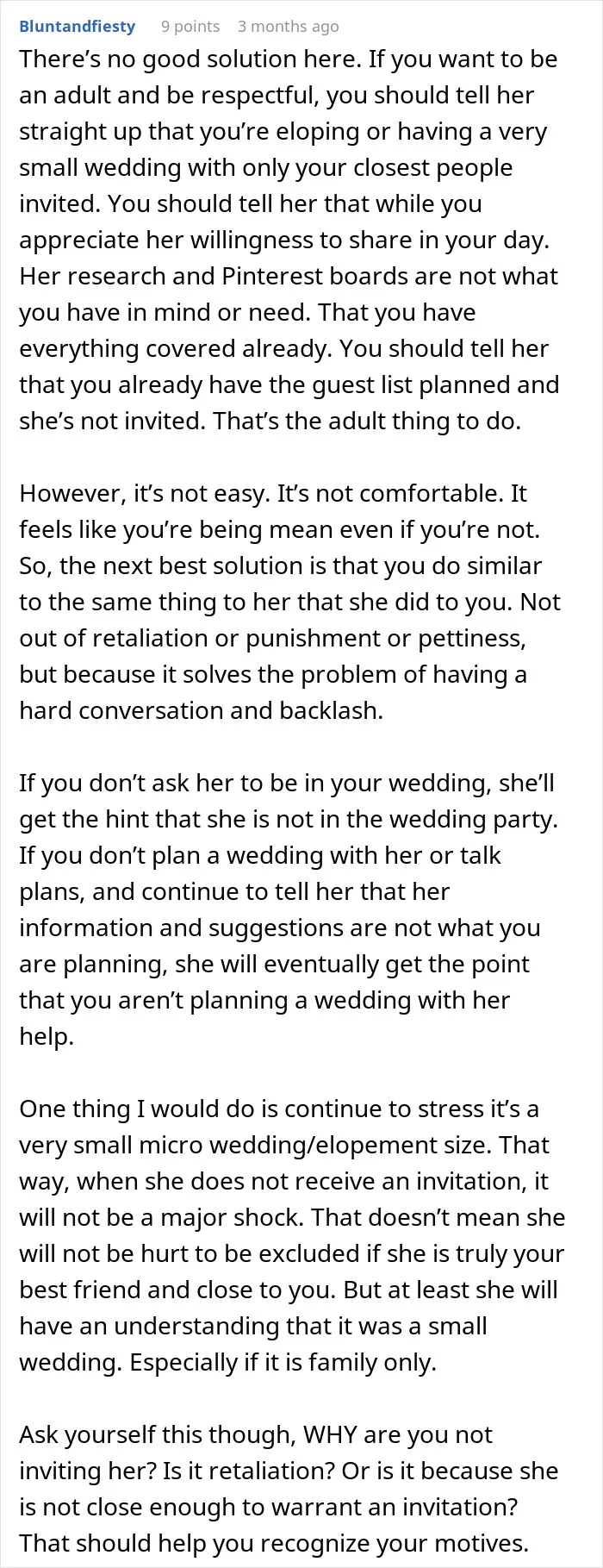
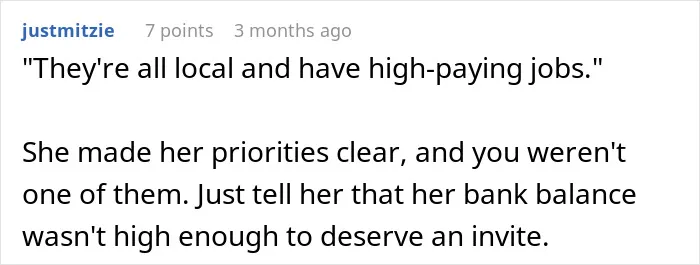
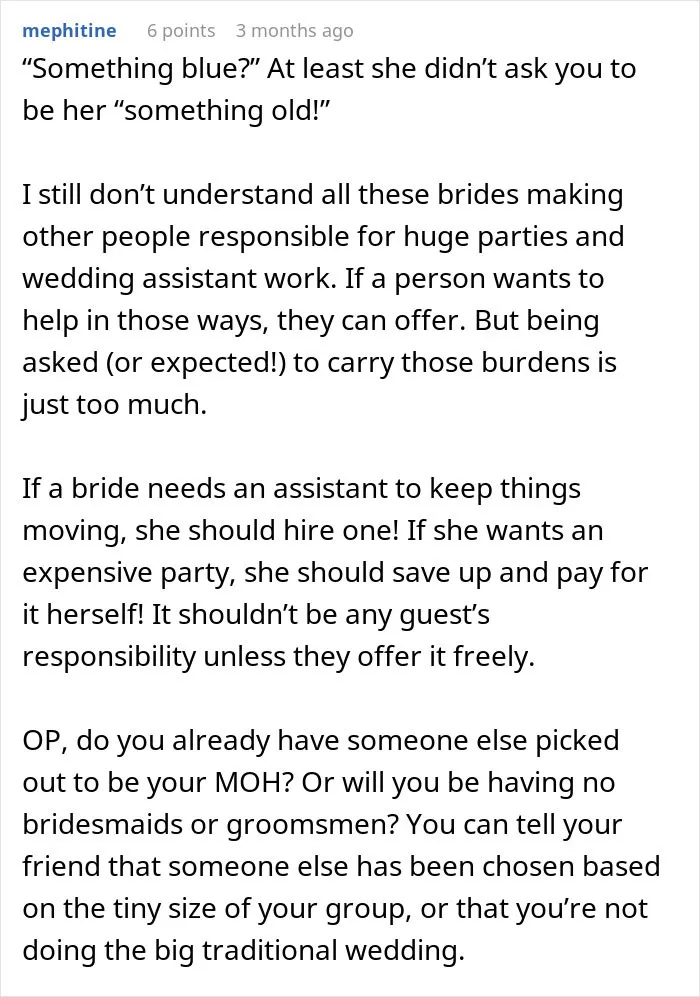
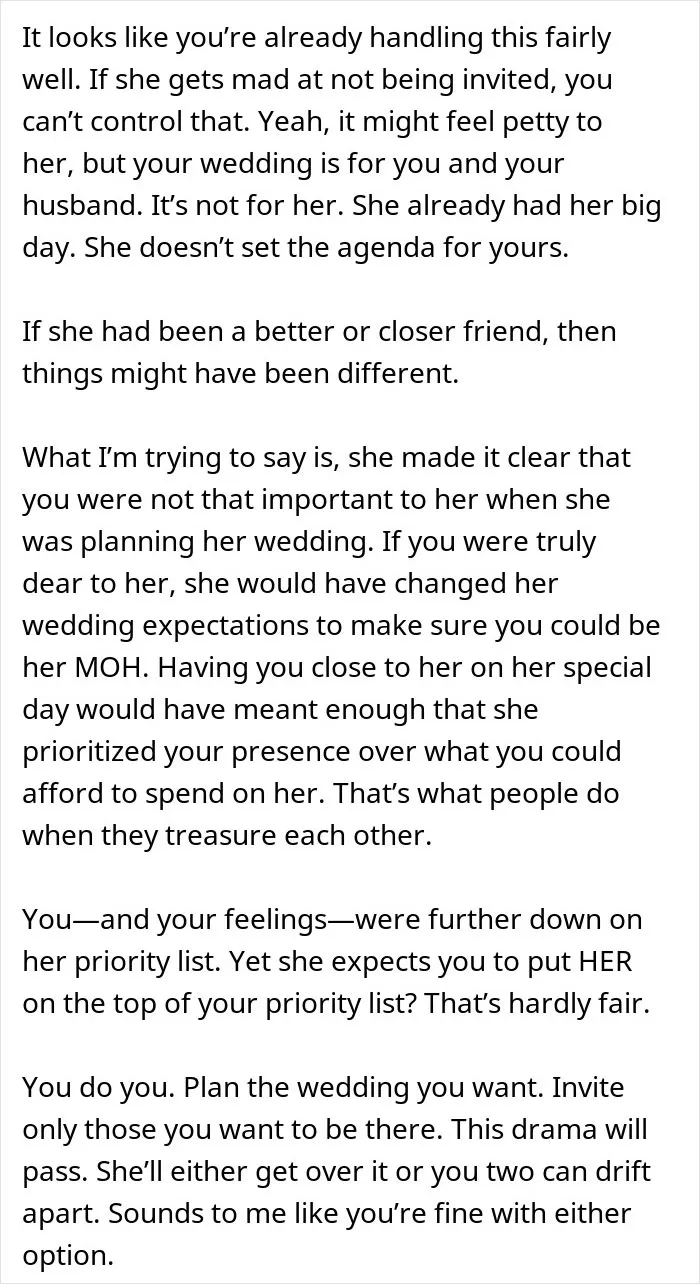
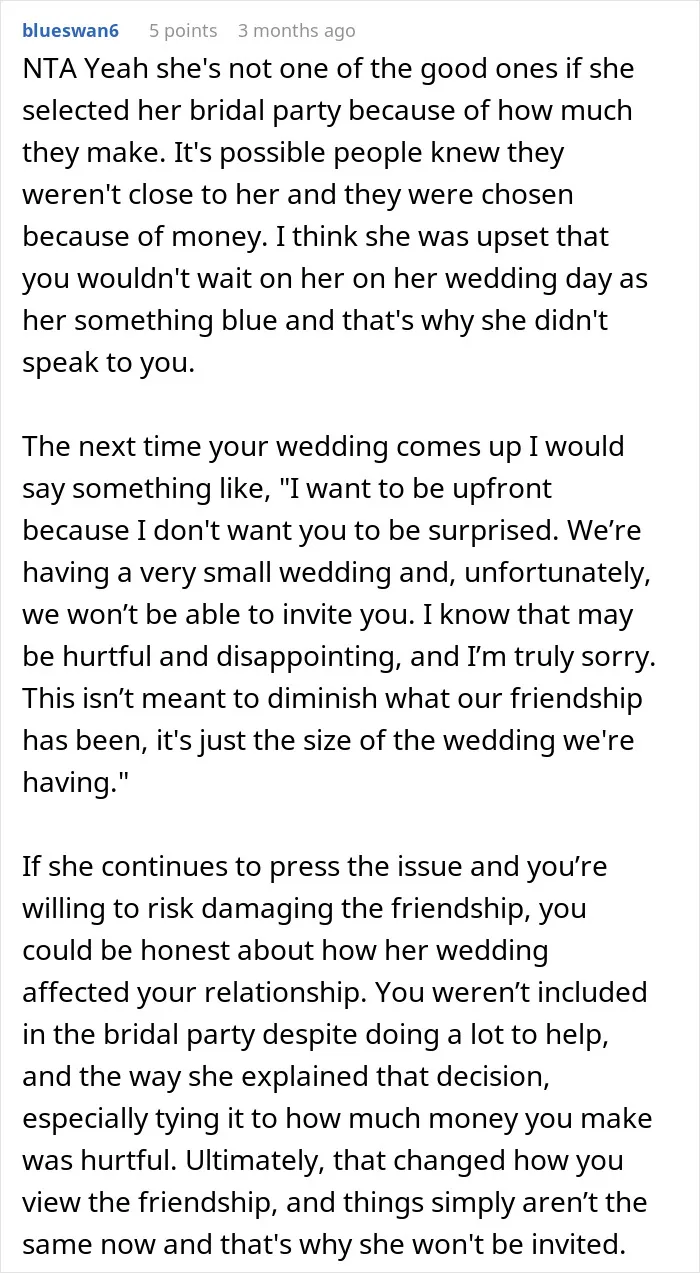
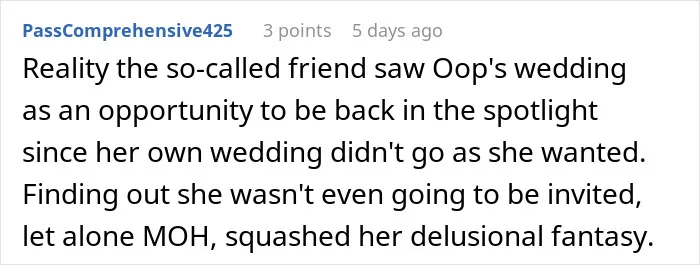
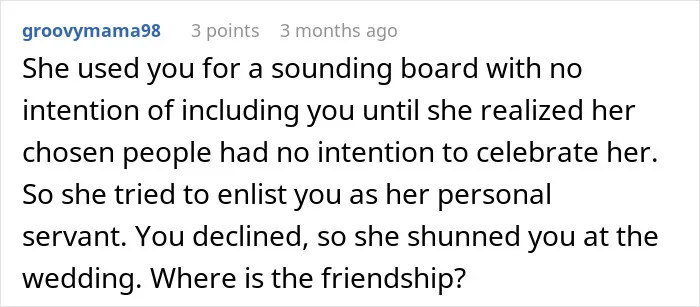
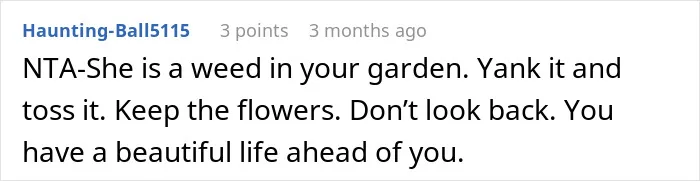
Folks online questioned the friend's behavior