

Most of us have had the displeasure of dealing with a nosy neighbor. You know the type: they keep tabs on everyone coming in and out of your house, count the grocery bags you carry inside, and know exactly which rules you’re breaking when you prune your hedges. Usually they’re a minor irritation who comes knocking with the odd complaint. But some take their curtain twitching to a whole other level.
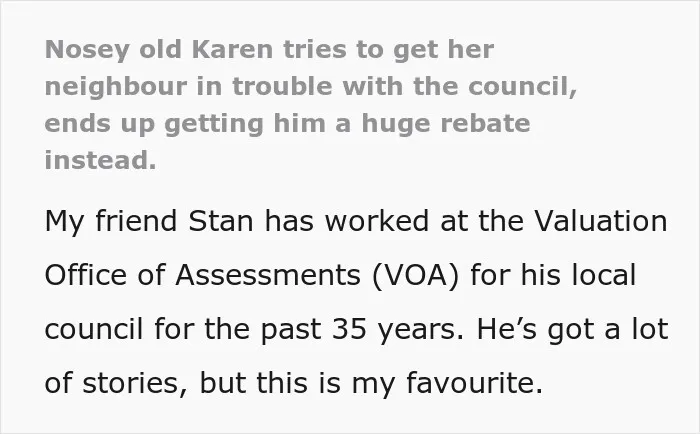
Take “Mildred,” for example. She made a habit of reporting her neighbors to the authorities for any infraction she could spot from her window, real or imagined. So when one man on her street had some renovations done, she was certain she’d finally caught him dodging taxes. Here’s how it all backfired spectacularly, according to a post on r/pettyrevenge from a user whose friend Stan was the unlucky council worker who took her latest call.
A woman made a hobby out of reporting her neighbors to every authority she could think of

But her complaint about one man’s renovations didn’t go quite the way she’d planned


Nosy neighbors are annoying enough as it is, but Mildred took it to extremes
Let’s face it: nearly every street has a Mildred. In a 2026 survey by American Home Shield, nosy neighbors ranked as Americans’ second-biggest neighbor pet peeve, beaten only by parking disputes. The same survey found that 13% of people have filed a complaint or called the police on a neighbor, and nearly one in three said they actively avoid the people next door. Avoidance, the survey explains, “can look like anything from not stopping for small talk to using smart doorbells to time home entry/exit appropriately.”
But some go to even greater lengths: according to a 2026 report by Garon Fence, nearly half of Americans (46%) have physically hidden from a neighbor, whether by waiting inside until the coast is clear, pretending not to see them, switching off the lights, or slipping out a different door.
Unfortunately for Bob and the rest of his neighborhood, there was simply no avoiding Mildred. For her, reporting people seemed less of a civic duty and more of a sport. Nothing she saw through her window was too small to escalate, or too minor to exaggerate. A neighbor buying a five-year-old Mondeo secondhand had to mean tax evasion, and a child recovering from emergency surgery, as per doctor’s orders, was certainly a truancy case.
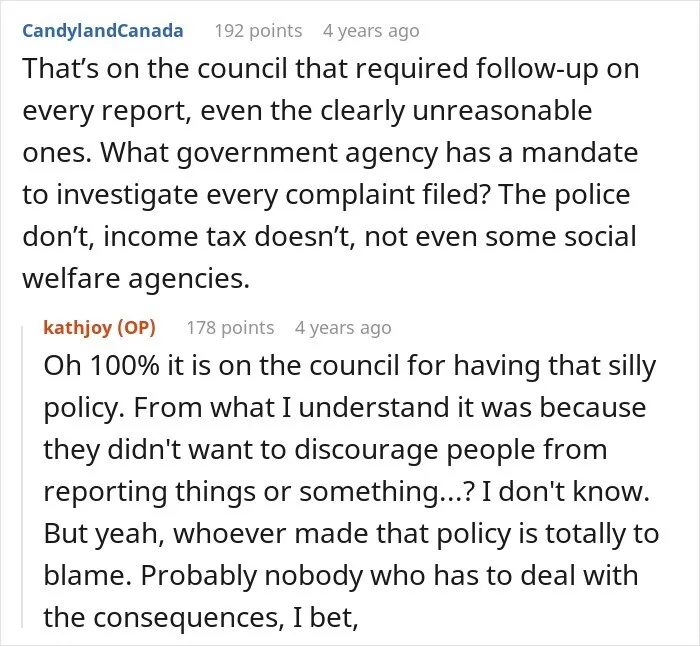
For her, reporting someone was just a matter of making a phone call, presumably to authorities on speed dial. But each exaggerated report meant a letter on someone’s doormat, a family forced to defend themselves, and staff already buckling under a “heavy workload” pulled away from genuine cases to chase claims they knew were likely baseless. Stan and his colleagues knew she was “just a mean old lady,” but they were obliged to follow up anyway. As the poster put it, “policy was policy.” In other words, the serial reporter faced no consequences, while everyone else carried the burden.
The consequences extend beyond her street, too. People like Mildred help give watchful neighbors a bad name, and that stereotype can have serious consequences. As forensic psychologist Gill Harrop, PhD, wrote in Psychology Today, the fear of being seen as nosy can stop people from speaking up when something is genuinely wrong. And every false alarm from a Mildred makes it that little bit harder for someone with a real concern to be taken seriously.
Mildred handed Bob a windfall, and he made sure to thank her for it
The irony is that Mildred handed Bob something he might never have thought to ask for. He’d done everything right: he checked with the council before starting work and was told he didn’t need to report it. Left to his own devices, he’d have had no reason to question his band at all.
That matters because council tax bands are based on what a home was worth back in 1991 in England, and on 2003 values in Wales. And according to money-saving expert Martin Lewis, those original valuations were rushed, with assessors sometimes estimating property values simply by driving past homes. Bands in England have never been revalued since, so mistakes can sit unnoticed for decades.
Lewis estimates that as many as 400,000 homes could be in too high a band. When an error is finally caught, the refund is backdated to when the homeowner moved in, or to 1993 if they’ve been there longer, and payouts can run into the thousands. According to Lewis, one couple who’d lived in their home for over 30 years received more than £8,000.
But really, a band review can go either way. As Lewis points out, you can’t ask for your band to be lowered, only revalued, and that can just as easily push a home into a higher band. In one case he highlights, a woman challenged her band because it was higher than her neighbors’, only for the neighbors to be moved up instead.
What Mildred likely didn’t know is that her plan was flawed from the start. According to the Valuation Office Agency, improvements like extensions don’t change a home’s band until it’s sold, so Bob’s renovations alone were never going to land him with a bigger bill. Still, her complaint prompted an inspection, which uncovered that his property had been in the wrong band all along.
More than a decade of overpayments added up to a windfall, and he knew exactly how to spend some of it—and who to thank for it. Having stayed polite and patient with the council throughout, he saved his pettiness for the one moment it counted: “Thanks for the money, Mildred” was impossible to complain about, impossible to misread, and impossible for her to miss from behind those curtains.
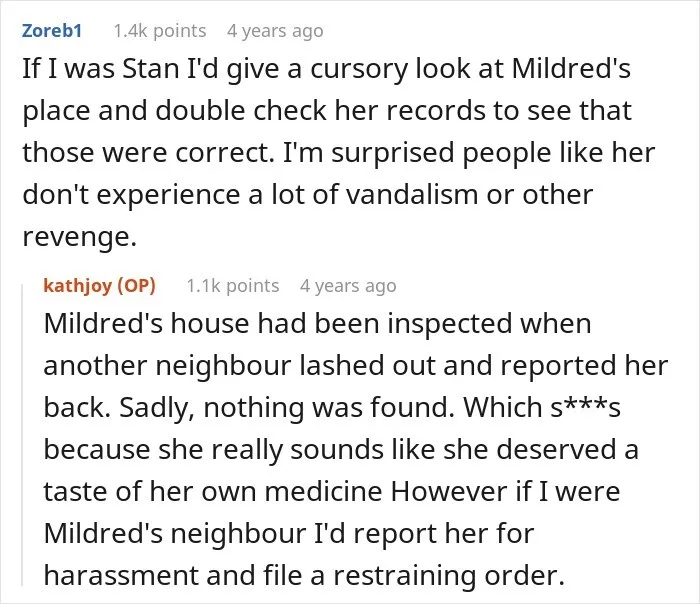
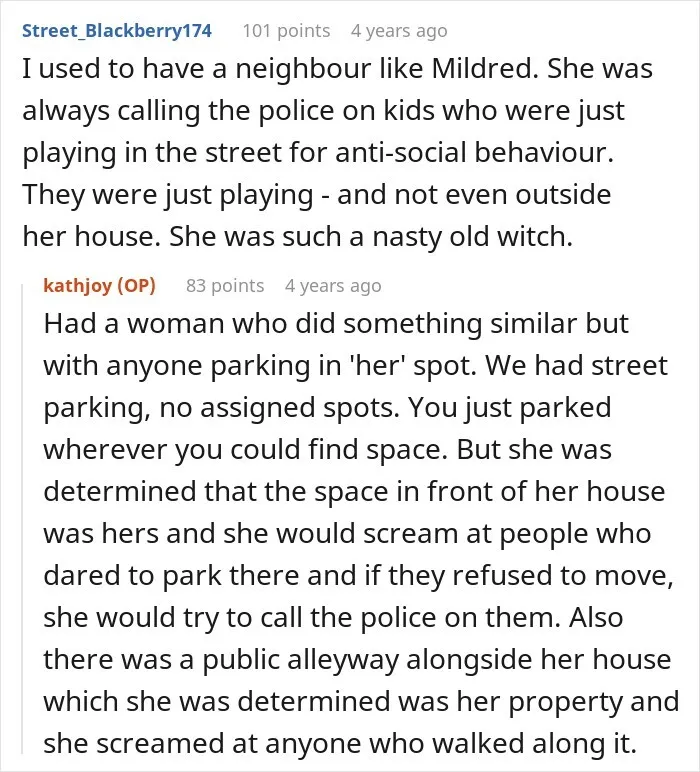
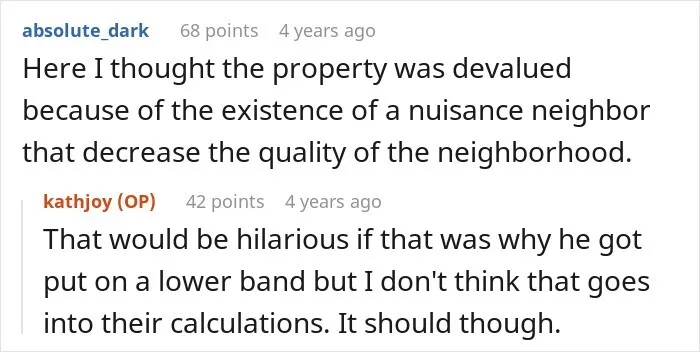
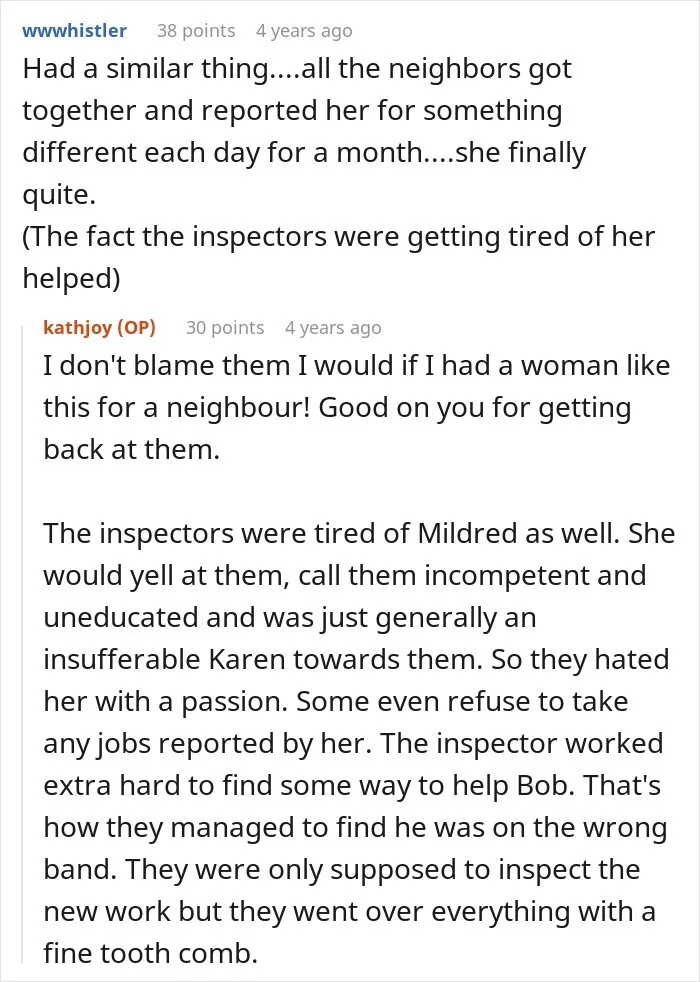
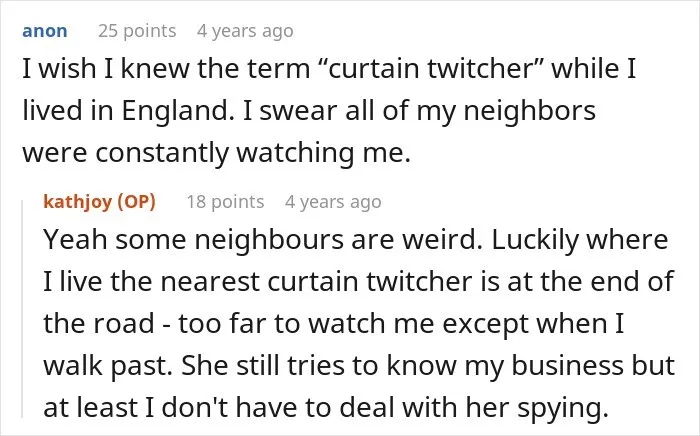
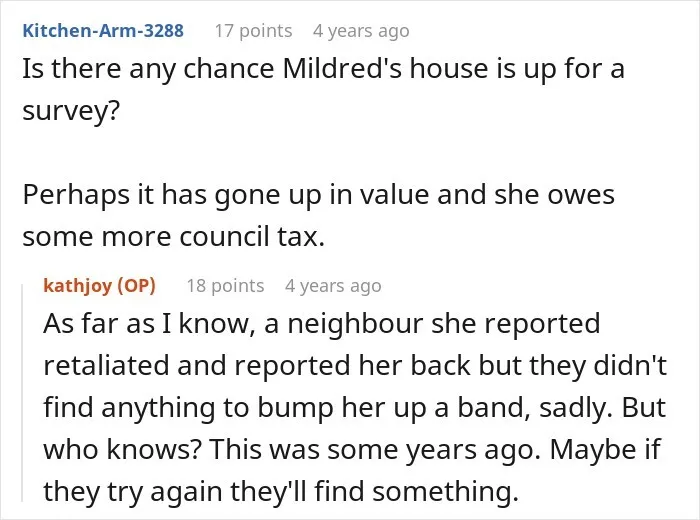
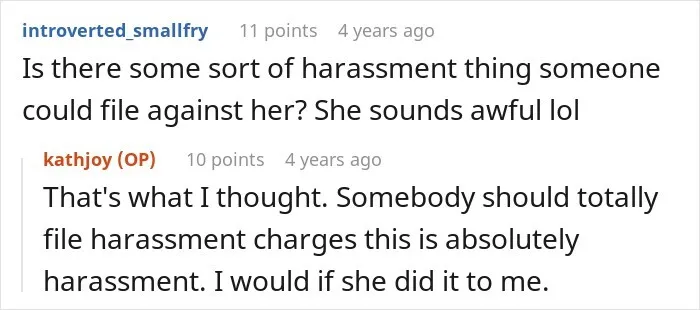
Readers had plenty to say about “miserable” Mildred, and the poster jumped into the comments to answer questions and share a few more details