

Our world is constantly evolving, and there always seems to be some “next big thing” that’s supposed to have a major impact on our lives. But while some of these promises come true, many more are heavily underdelivered.
There have been plenty of occasions when something seemingly so impressive turned out to be nothing more than an absolute flop. As one Reddit user found out, these oversold disappointments are not so easily forgotten because when they asked other netizens to point them out, the answers came pouring through. Scroll down to see some of the best ones!
More info: Reddit

#23

Fidget spinners were big in 2017. I can't find one now, and I don't know what else to do with my hands.
Report
45points
#26

There was this lady who said laboratory testing could be reduced to a machine the size of a microwave… turns out it was all a scam.
40points
#27
DivX.
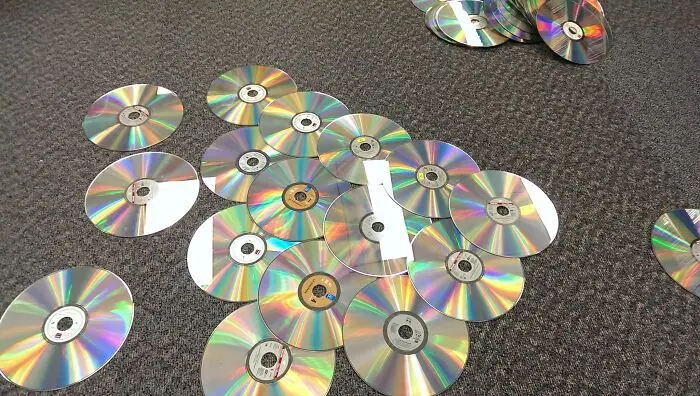
DIVX was a rental format variation on the DVD player in which a customer would buy a DIVX disc (similar to a DVD) for approximately US$4.50, which was watchable for up to 48 hours from its initial viewing. After this period, the disc could be viewed by paying a continuation fee to play it for two more days. Viewers who wanted to watch a disc an unlimited number of times could convert the disc to a "DIVX silver" disc for an additional fee.
DIVX was a rental format variation on the DVD player in which a customer would buy a DIVX disc (similar to a DVD) for approximately US$4.50, which was watchable for up to 48 hours from its initial viewing. After this period, the disc could be viewed by paying a continuation fee to play it for two more days. Viewers who wanted to watch a disc an unlimited number of times could convert the disc to a "DIVX silver" disc for an additional fee.
It lasted for about a year back in the late 1990s before dying — even with the backing of major studios who wanted a piece of the video rental market.
Edit: thanks to those who pointed out the error in my reference to DIVX (the unsuccessful rental company) vs DivX (the compression CODEC).
Report
40points

#29

Taleo. It was supposed to be this site that, if I remember correctly, would enable you to just have a resume and you could quickly apply to a job and submit a cover letter.
Guess HR people got tired of all the resumes that were junk. We have LinkedIn and Indeed Instant apply, but really, I just wanted a central place to upload my resume to apply for jobs.
36points

#32

Lifi, WiFi that works with light reflections, all reflective surfaces in the house must be eliminated, so safe to assume it wasn't very successful amongst people who use their phone in the toilet.
Report
31points
#33
Single-stage-to-orbit spacecraft. This one might take a bit of explaining.
You'll obviously be familiar with the Space Shuttle, which was retired in 2011 with no immediate replacement. But the thing is, even back in the 1990s, NASA was already looking at what the Space Shuttle's successor would be. And one idea they really fixed on was that, whatever this replacement would be, it would have to be a *single-stage rocket.* See, the space shuttle itself was reusable, but it relied on disposable outboard rockets to reach space, and those had to be replaced after every flight. So, the logic went, if a spacecraft could launch and reach orbit all in one piece-- without dumping its rocket boosters every time-- then it would be cheaper and more efficient.
NASA decided to build something called the X-33, which was this funny-looking triangle-shaped spacecraft that could fly up to space and back using just its own engines. It didn't need any rocket boosters the way the shuttle did. So for a while in the 1990s, it looked like single-stage spacecraft were the way of the future. But as they say, reality bites. It turned out that the X-33's special engines made it too heavy to fly, let alone reach space, and it was cancelled in 2001 before the prototype was finished. After that, NASA kind of fell out of love with the whole single-stage-to-orbit concept, and to this day they've never built one.
Report
29points