








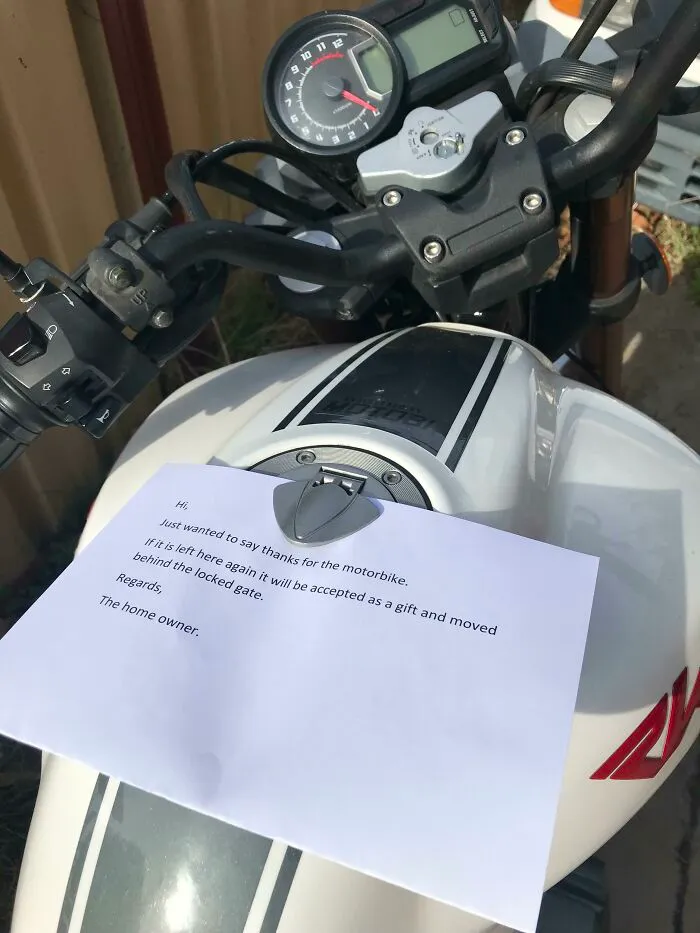
#2 It Gives Me The Chance To Be A Movie Star

A community can become chaotic over plenty of issues, but nothing turns friendly neighbors into bitter enemies quite like parking.
According to a survey by Churchill Motor Insurance, nearly half of all UK homeowners (48%) have had a parking issue with a neighbor. The respondents said their neighbours have either blocked access to their driveway, garage or allocated parking space.
About one in six said it turned into a full-blown argument.
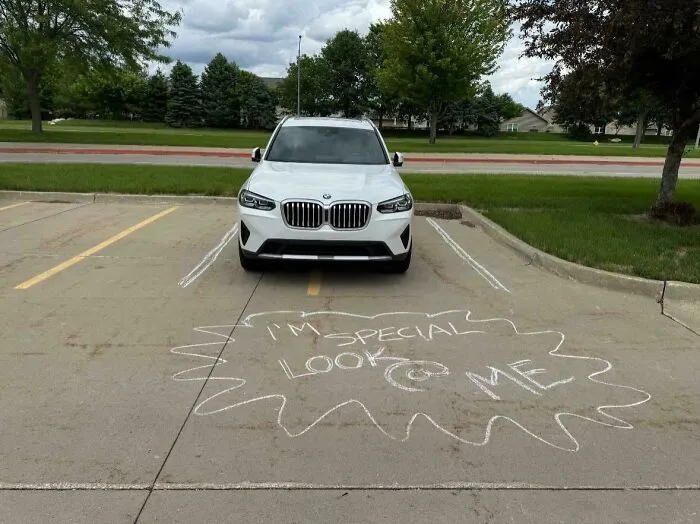
#4 Nobody Should Have Their Ice Cream Melted Searching For A Parking Space


According to research from RAC Insurance, a quiet “cold war” is brewing on many residential streets over parking.
In their survey, 14% describe local parking as “poor” or even “appalling.” For 62% of those frustrated residents, the biggest issue was pure selfishness.
Four out of ten said they hate it when neighbors hog street spots while leaving their own driveways empty. And nearly a third said they’ve been blocked into their own driveways.
Even worse, 73% say this terrible parking happens every single day, and 26% admit it caused them to stop speaking to their neighbors entirely.

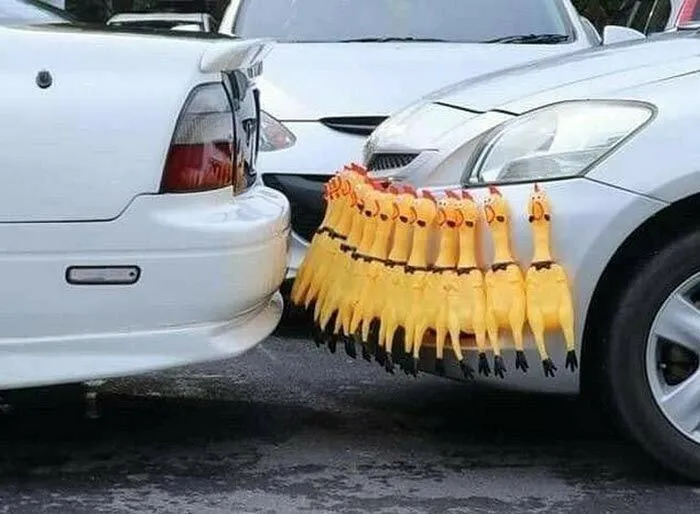
#8 Note That Got Left On My Neighbors Car After He Parked Crooked And Hit The Car Next To Him


These arguments can drag on for years, ruining relationships and causing daily stress. The problem is even worse in busy cities. When spots are scarce, a tiny inconvenience easily turns into a major disruption.
“Parking is a very sensitive issue, particularly when it’s outside your own home as it brings out the ‘Nimby’ in everyone,” said RAC Insurance’s Simon Williams.
“The moment someone parks selfishly people’s hackles are going to be raised, whether that’s parking in the street when they have the space to be able to park on their own drive or parking so close that it makes it almost impossible to get out.”

So who are these terrible parkers? The short answer: most of us.
Nobody wakes up and decides to be the neighborhood parking villain. Instead, people rationalize their own behavior. Drivers often convince themselves that parking on the street is just for a quick second, or that their car is “barely touching” a driveway. What feels like a minor convenience to one person can look like complete disrespect to everyone else.
This mindset comes down to basic human psychology: territorial defense. When someone else eyes “our” spot, a defensive instinct kicks in.
#13 Love Thy Neighbor


This stubborn reaction is deeply rooted in human behavior, as proven by a Penn State University study published in the Journal of Applied Social Psychology.
Researchers tracked how drivers behaved when leaving parking spaces under different levels of social pressure. When no one was waiting, drivers took an average of 32 seconds to pull out.
However, when another driver waited for the space, departing drivers took nearly 7 seconds longer to leave.
If the waiting driver grew impatient and honked, the departing drivers took almost 43 seconds — deliberately slowing down to defend their space.
Interestingly, the study also revealed that male drivers vacated their spots noticeably faster when a luxury car was waiting than when an older, cheaper model was waiting.
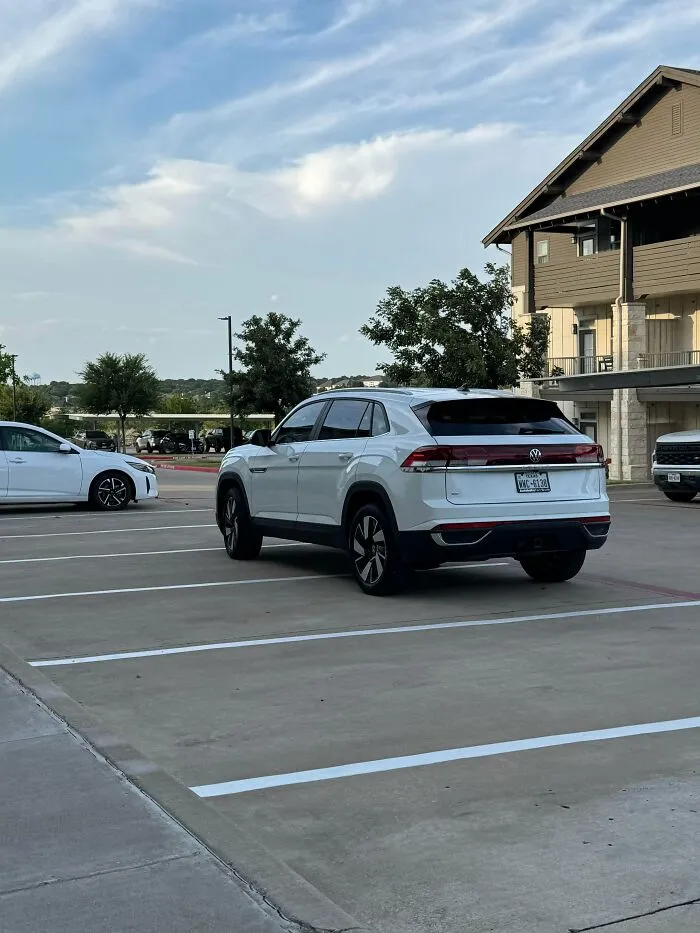
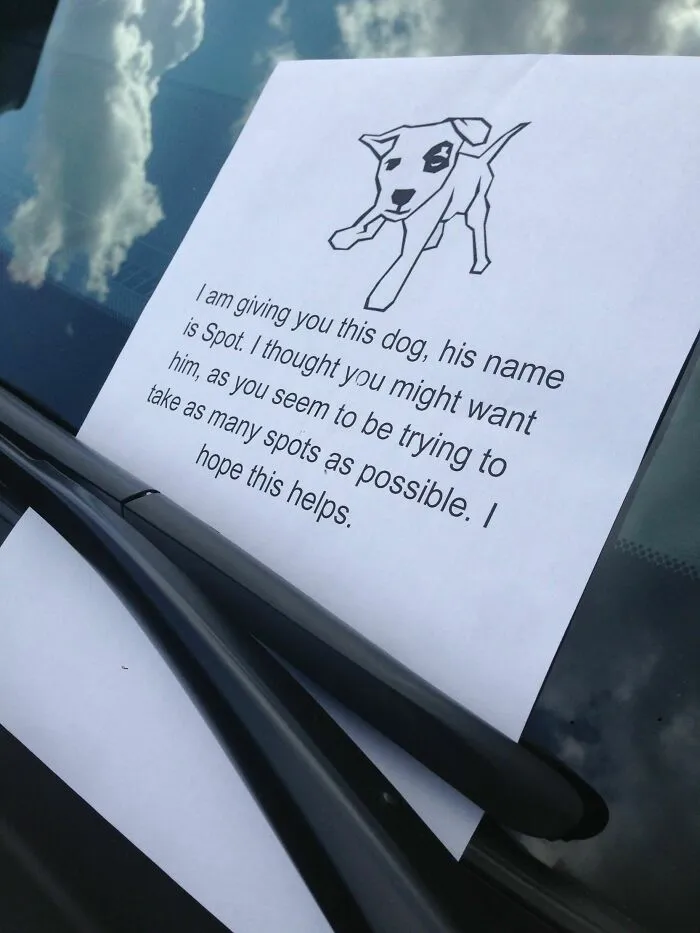
#17 My Neighbor Kept Parking Taking Up Two Spaces, So I Made Sure She Had Her Own Parking Spot

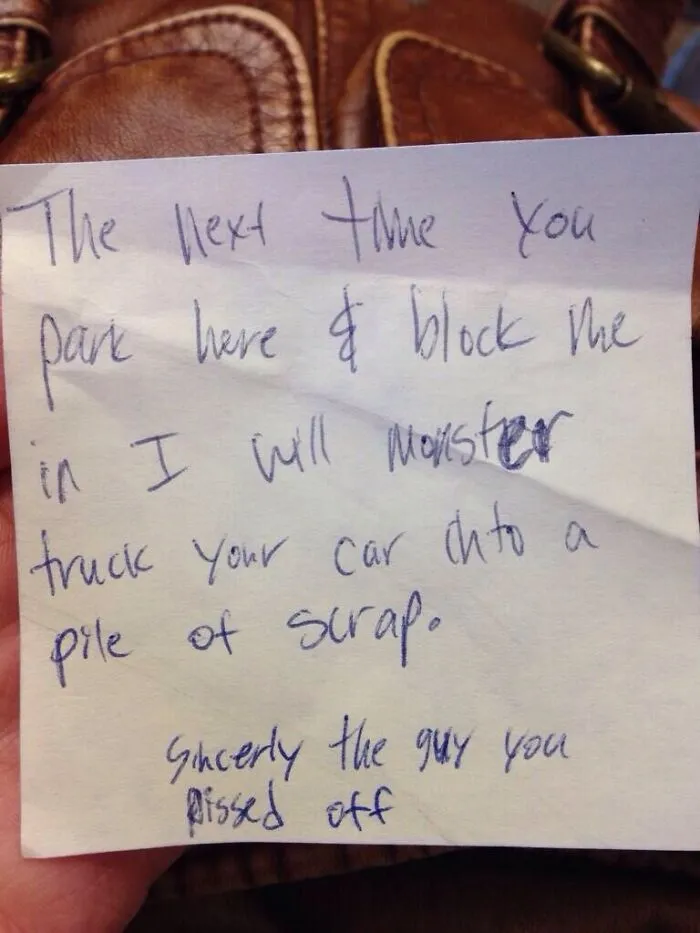
When parking disputes arise, neighbors usually resort to small, silent acts of retaliation — as this list shows.
The most common first step is the passive-aggressive windshield note. These notes range from sarcastic remarks about “learning how to color inside the lines” to furious, scribbled threats.
Drivers who receive them usually feel insulted rather than remorseful. They often park worse out of spite, and trigger an endless cycle of petty revenge.
#19 The Way My Neighbor Parks His Truck In Front Of My Driveway. Every Day
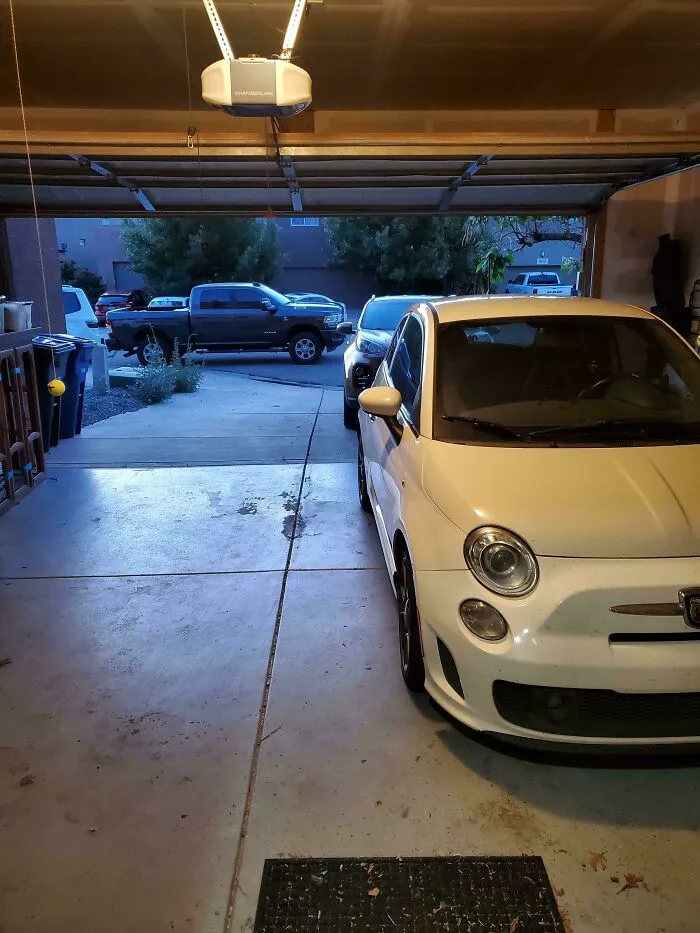
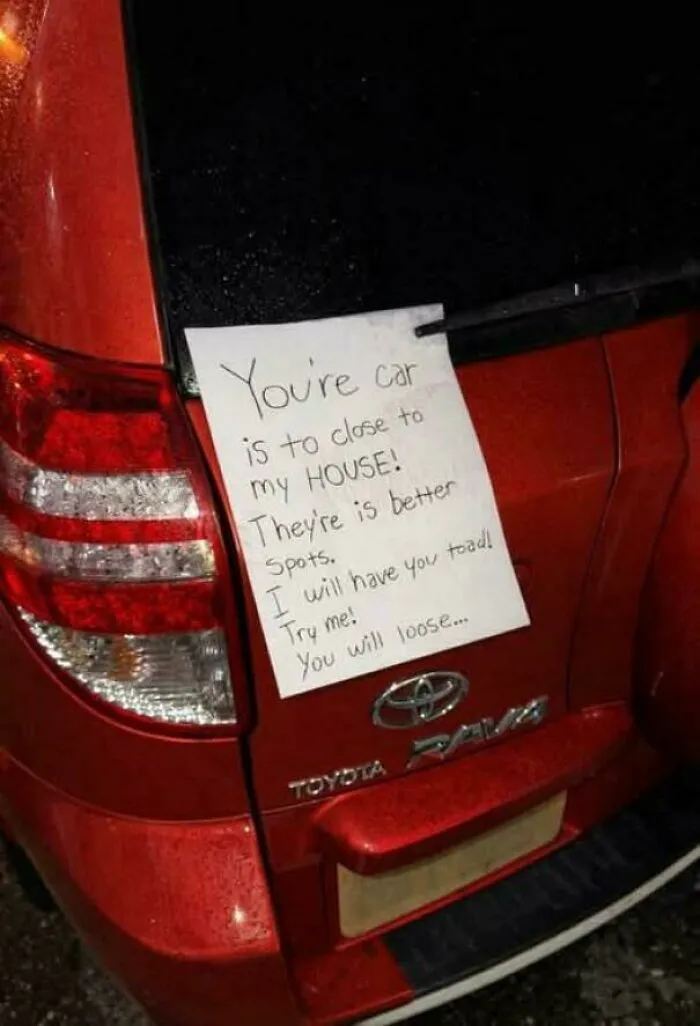
Some people also use physical barriers to claim public street space. They might block off curbs using cone setups, trash cans, or lawn chairs. Others intentionally double-park or park inches away from an enemy’s bumper, trapping their vehicle.
In extreme cases, this anger can even turn into active property damage and harassment.
There have been instances of frustrated neighbors keying doors, throwing eggs on the windows, or slashing tires. Some residents also resort to installing security cameras or leaving hateful messages on local community apps like Nextdoor.


