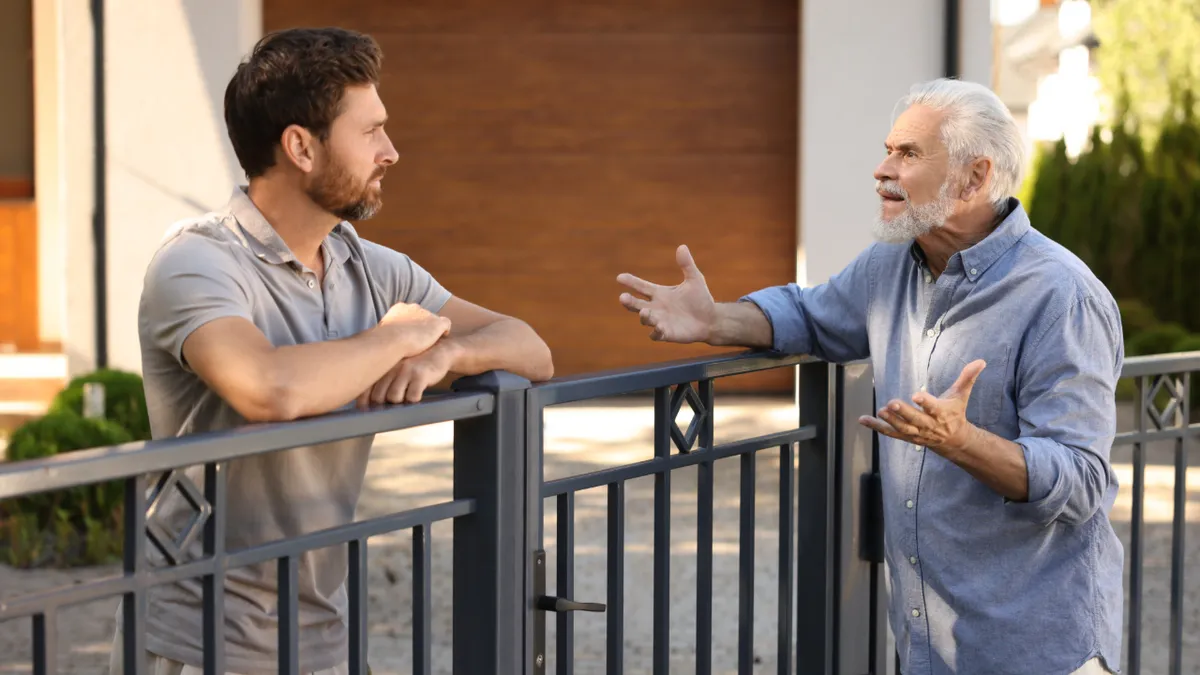


Getting along with your neighbors can really affect how comfortable you feel at home. It’s normal to help out or make small exceptions sometimes, especially when they live so close. Still, it’s important to know the difference between being thoughtful and letting someone take advantage of your kindness.
One homeowner faced this problem when his neighbor started letting car detailing customers park in his driveway. As the neighbor’s business got busier, the situation became more difficult to overlook. After trying to solve it several times, the homeowner took a new approach and posted his story on Reddit to see if others thought he went too far.
Setting boundaries with neighbors can be tricky when small favors turn into ongoing expectations and everyday frustrations

A homeowner grew frustrated as his neighbor’s car detailing business brought more customers into his driveway
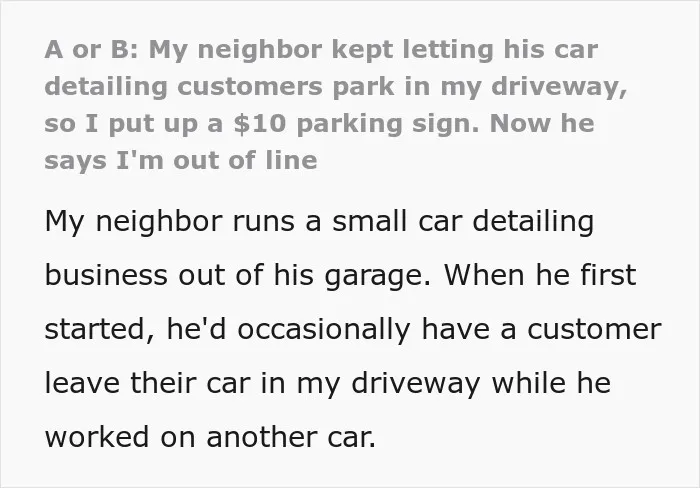

The parking problem continued despite the neighbour’s promises to stop
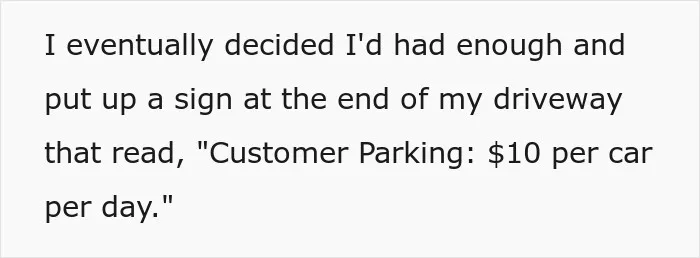
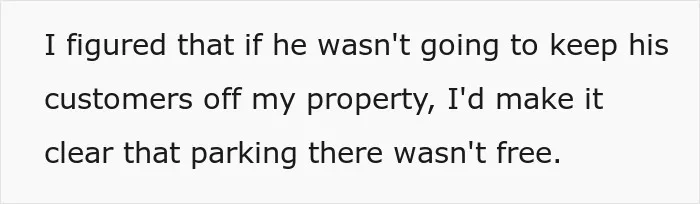
The homeowner posted a $10 parking fee sign after repeated warnings failed
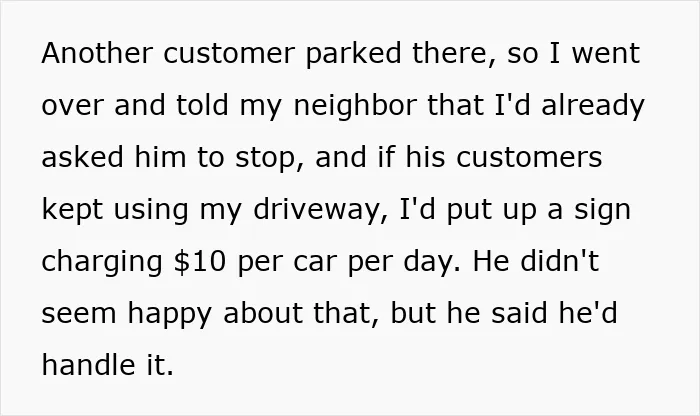
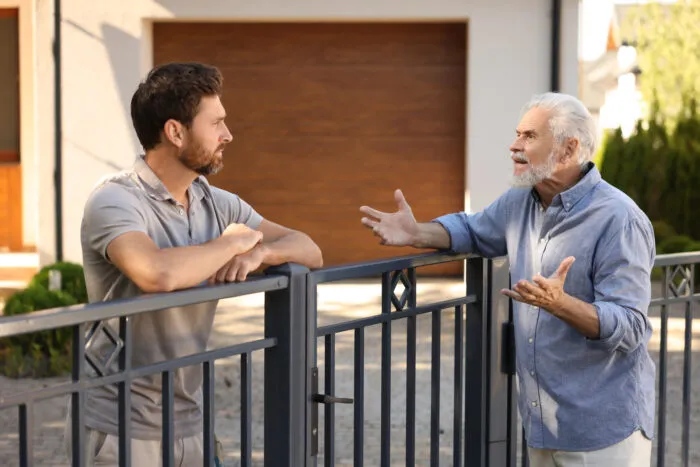
The neighbor called the parking sign unreasonable and complained it made his business look bad
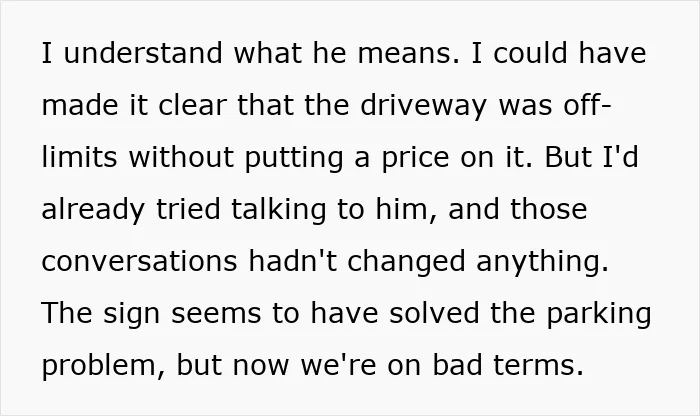
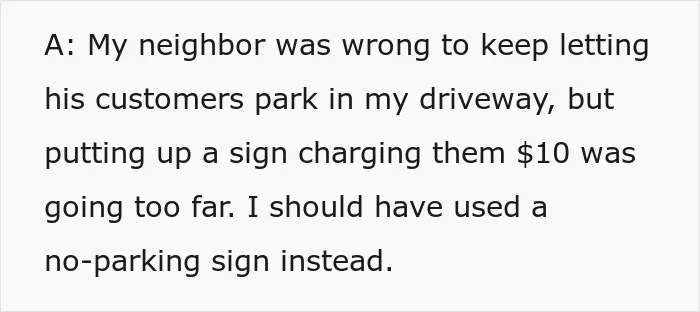
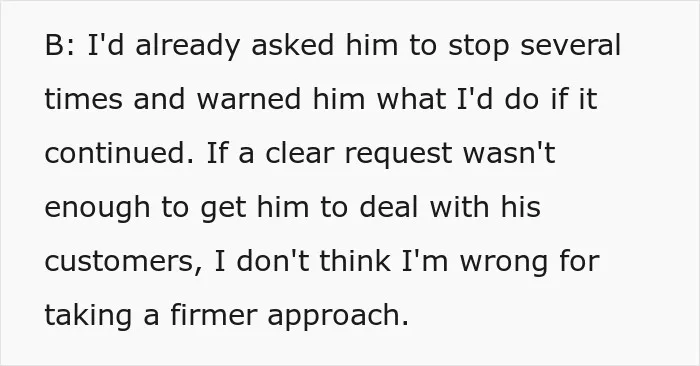
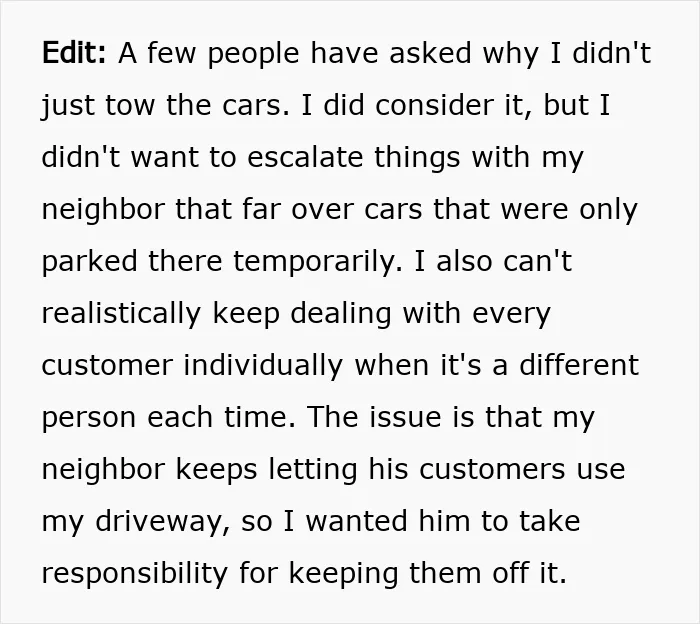
The homeowner began questioning if his actions went too far or if he did the right thing
Doing a small favor for a neighbor can make things easier for everyone. But if that favor turns into something they expect all the time, it can get tricky. For example, a neighbor might ask to park in your driveway once or twice, then start using it regularly without asking. What started as a nice gesture can quickly become an inconvenience that interrupts your daily life.
Issues like parking, noise, and property lines can cause tension between neighbors. In fact, about 60% of people in surveys say they've had some kind of problem with a neighbor, which shows how common these frustrations are. Even small problems can become exhausting if they happen over and over, making it tough to stay on good terms.
Being considerate also means knowing when to set boundaries. Helping someone doesn’t mean you have to say yes to everything or always open up your space. If a neighbor depends on your kindness, they should think about how their actions affect you too. Doing favors works best when both people feel good about it, not when one person is always giving in.
When a favor begins to disrupt your daily routine, having a direct conversation can help prevent resentment. Rather than waiting for the other person to notice the issue, let them know what needs to change. For example, a homeowner could say that while occasional parking was okay before, customers can’t use the driveway anymore because it gets in the way of coming and going.
It’s important to explain the problem without making it personal. For instance, saying, “I need to keep my driveway clear,” gets the point across without offending your neighbor. This way, you focus on the behavior that needs to change and avoid making the other person defensive.
Boundaries are only helpful if people understand what they mean in real situations. If a neighbor says sorry but keeps doing the same thing, repeating your request might not work. The homeowner might need to be more firm about the limit and think about what to do next. Being direct doesn’t always mean you’ll agree, but it does make expectations clear.
People often say yes to favors to avoid letting others down or causing tension. As a result, they might end up with more on their plate than they can handle, just because saying no feels uncomfortable. The American Psychological Association notes that this habit of agreeing automatically can develop over time, so it helps to pause and think before accepting new requests.
If someone is used to getting a favor, setting a new boundary can catch them off guard. For example, a neighbor who often parks in someone else's driveway might find a new parking rule inconvenient, even if the homeowner just wants to use their own space. Disagreements like this can happen when people have different views about what was originally agreed upon.
It’s normal to feel frustrated when someone changes the rules, but that doesn’t always mean the decision is unfair. What matters is whether the new boundary considers both people’s needs or tries to control the other person without good reason. In neighbor disputes, being clear about the problem and avoiding personal attacks can help keep the conversation focused on what really matters.
A driveway can seem like an easy spot to park, especially if parking is tight near a business. Still, just because it’s convenient doesn’t mean you have the right to use someone else’s property whenever you like. Even if the owner said yes before, that favor doesn’t mean you can keep doing it without asking again.
A study in the Journal of Consumer Research looked at how people react when they feel someone is taking over something they see as theirs. In five experiments, the researchers found that people who felt ownership were more likely to see someone else’s actions as an intrusion and react by defending what they thought was theirs.
To avoid property disputes, it’s best to ask before using someone else’s space and respect their answer. If a neighbor needs parking for customers, they should look for other options instead of using someone else’s driveway. Homeowners can also explain their concerns and set clear boundaries. Good neighbors work together, rather than expecting one person to always give in.
At the end of the day, being a good neighbor means respecting each other’s space and knowing when a favor has gone too far. After all, kindness should never come at the expense of your own comfort.
What do you think? Was the homeowner right to charge for parking, or did he take things too far? Share your thoughts in the comments!
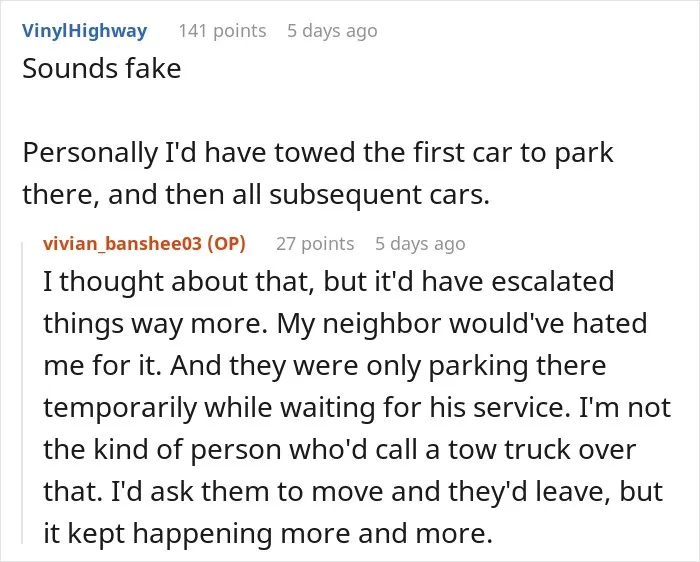
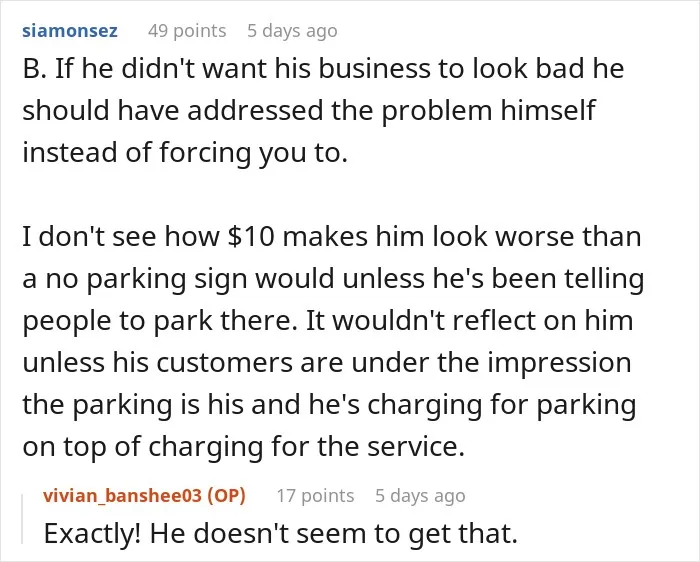
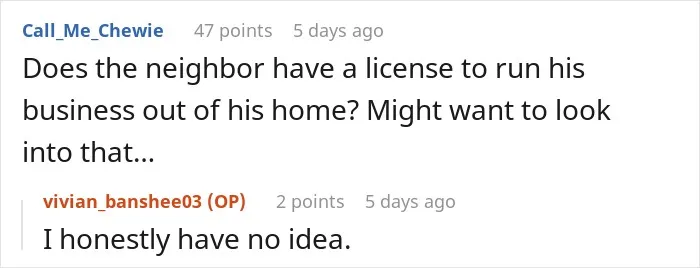
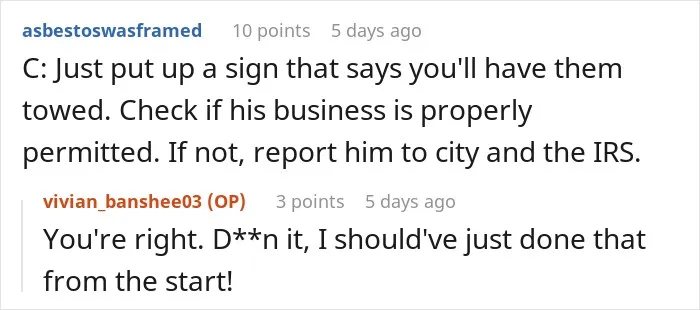
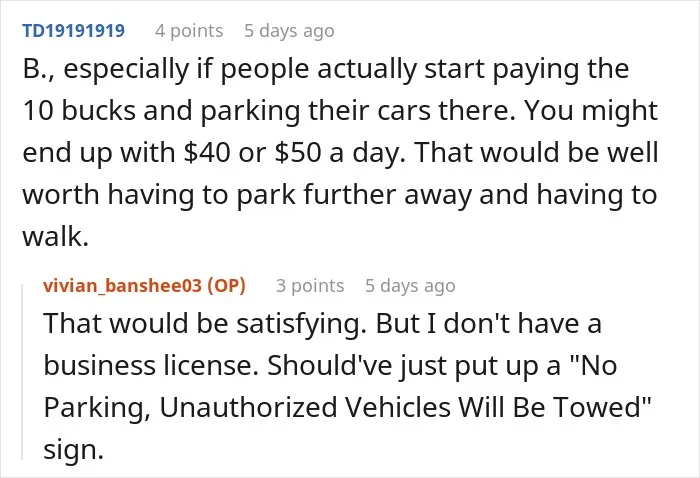
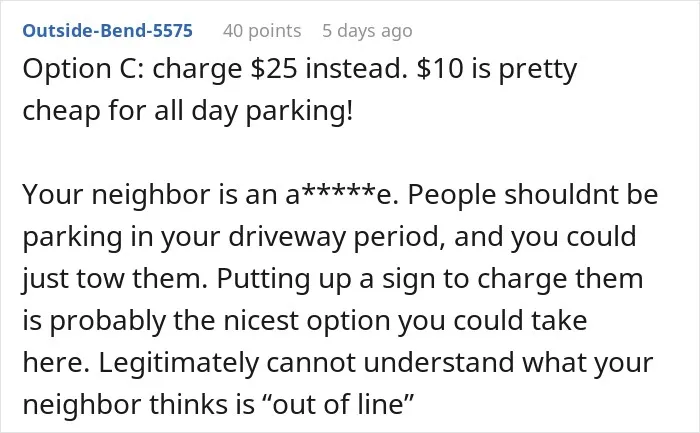
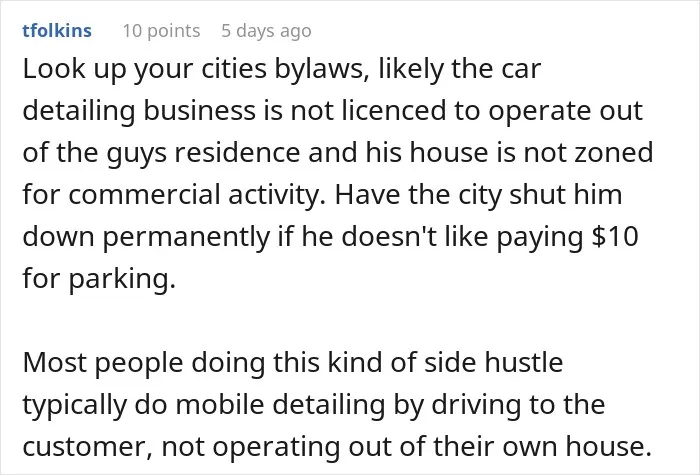
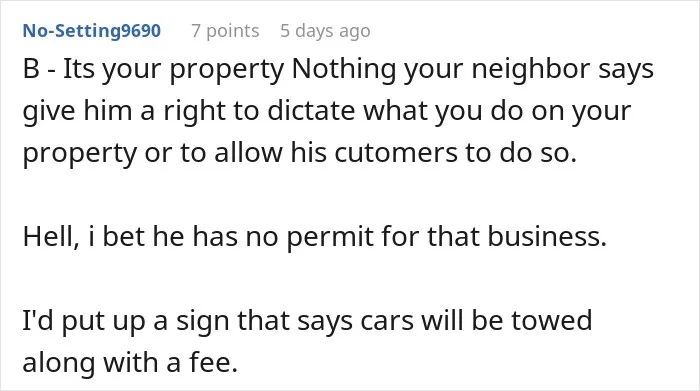
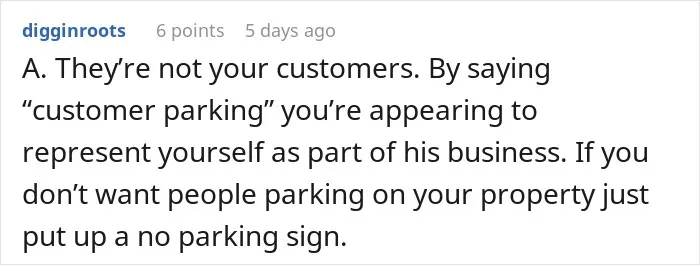
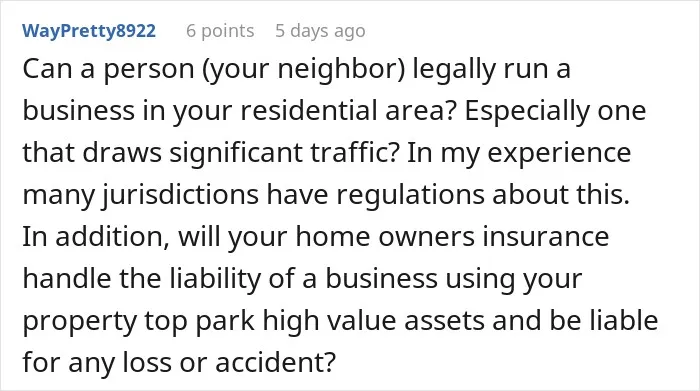
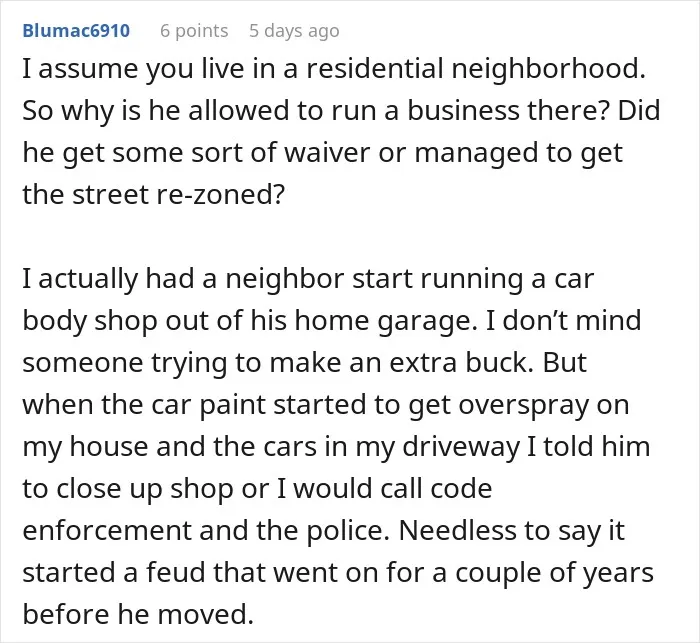
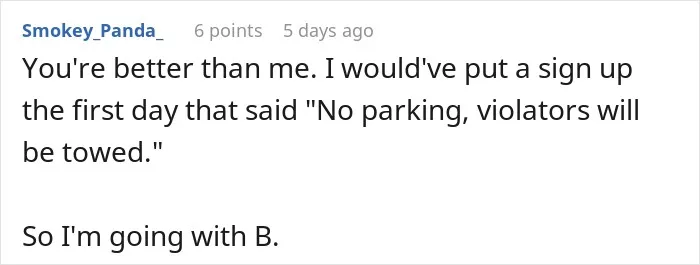
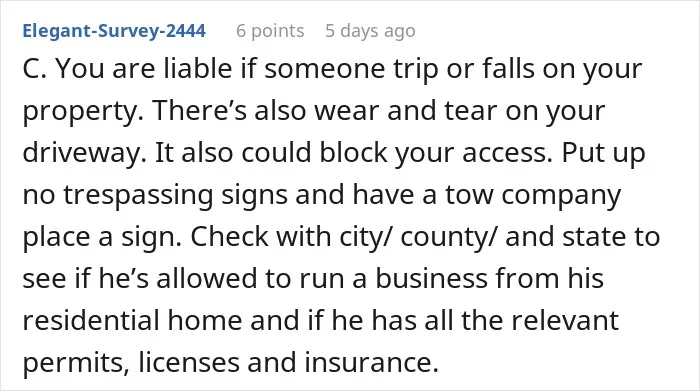
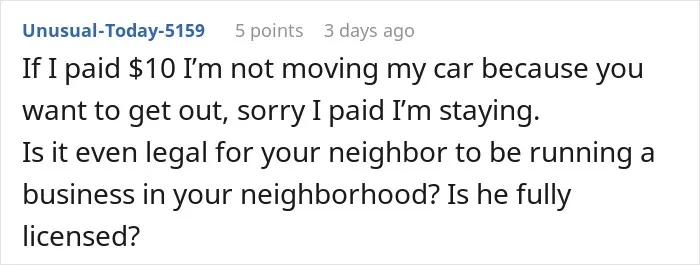
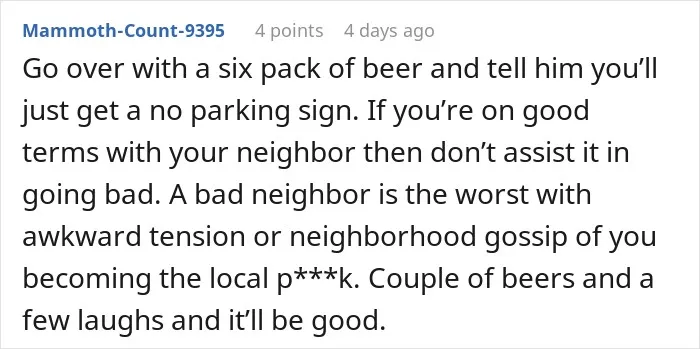
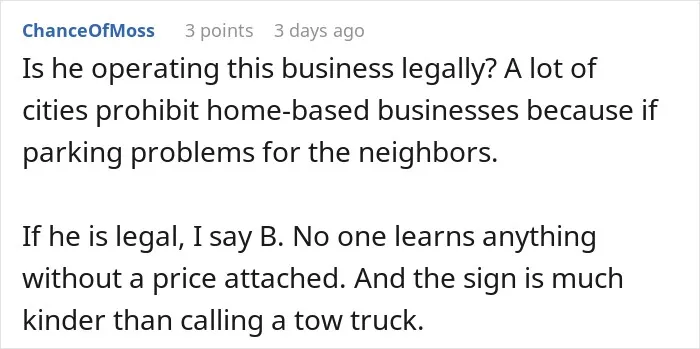
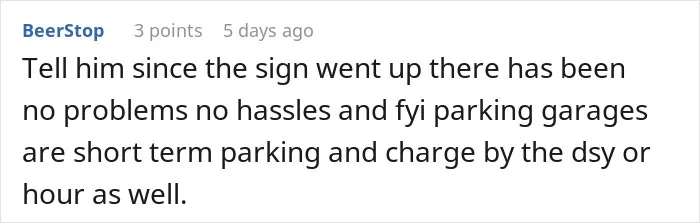
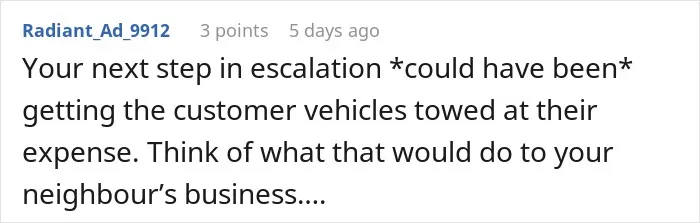
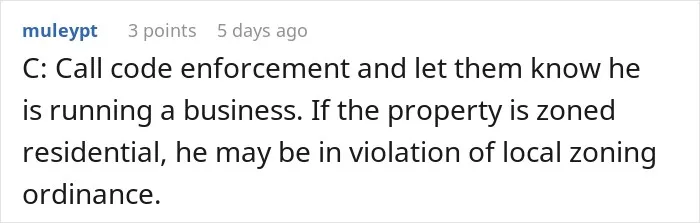
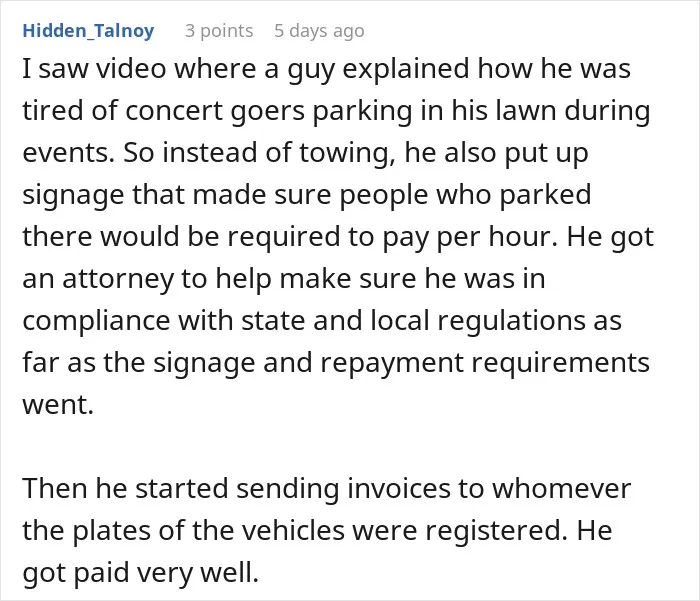
Netizens supported the homeowner and argued that he could have taken an even firmer approach