
Solar panels are a great way to save on electricity bills, and getting the most out of them depends on how much sunlight they receive. That's why homeowners need to think carefully about where they install their panels and whether nearby trees or buildings could cast shadows over them.
This homeowner ran into this very issue after his neighbor installed a $21,000 solar system and complained that the 38-year-old redwood in his backyard was blocking some of the sunlight. The neighbor even came up with a costly solution and expected him to foot the bill. But was that really his responsibility? Pandas, read on to find out!
Installing new features on your property requires some consideration for the neighbors living nearby
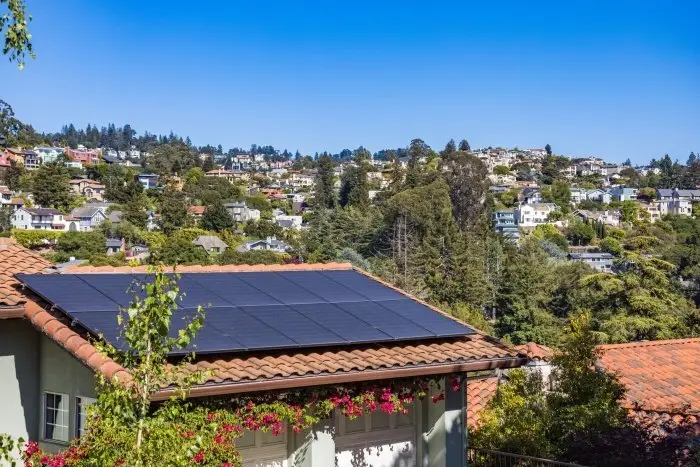
This man's neighbor demanded he pay to remove his decades-old redwood tree after installing solar panels
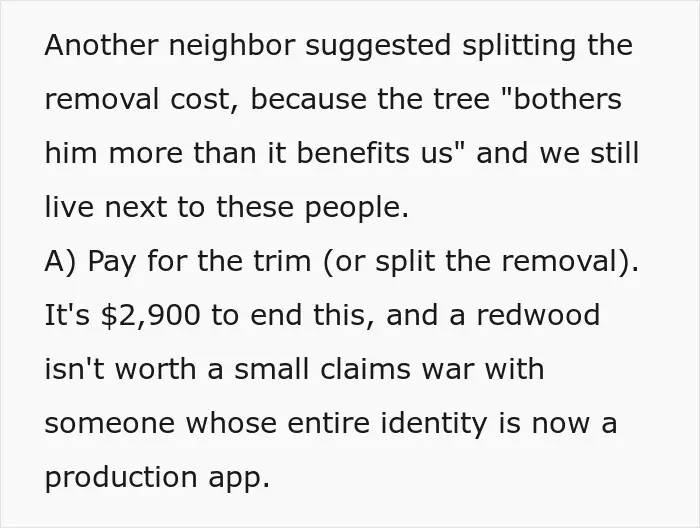
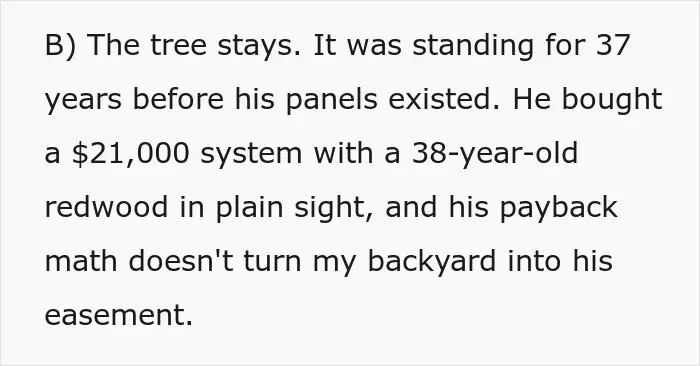
Solar panels need sunlight, but does that give owners control over neighboring trees?
Solar panels convert sunlight into electricity, so anything blocking the light can affect how much power they generate. Inside the panels, photovoltaic cells absorb sunlight and turn it into an electric current. When a shadow falls across the panels, some cells receive less sunlight, which can reduce the amount of electricity produced.
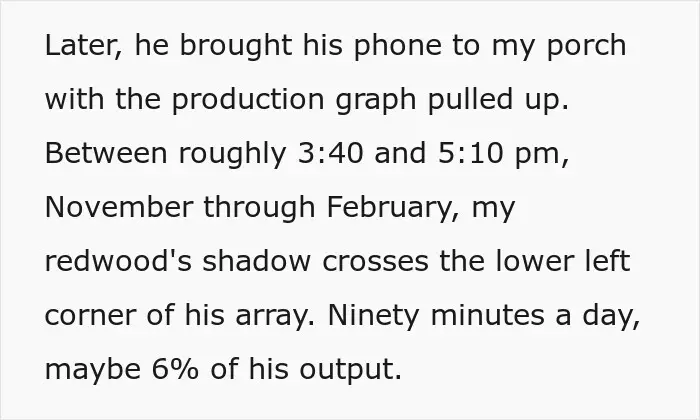
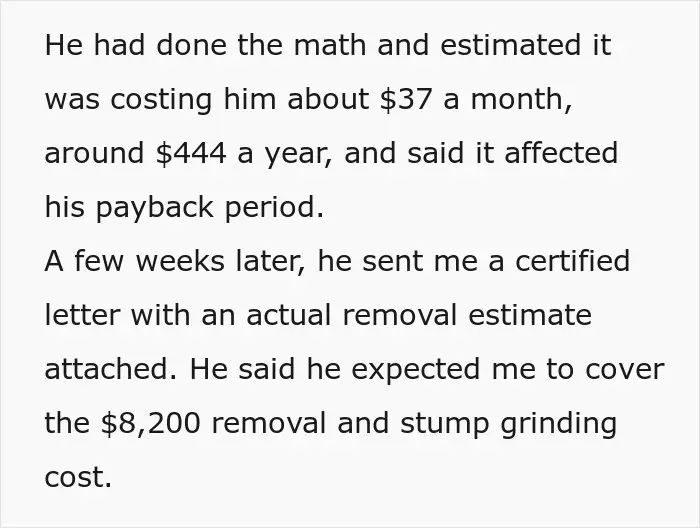
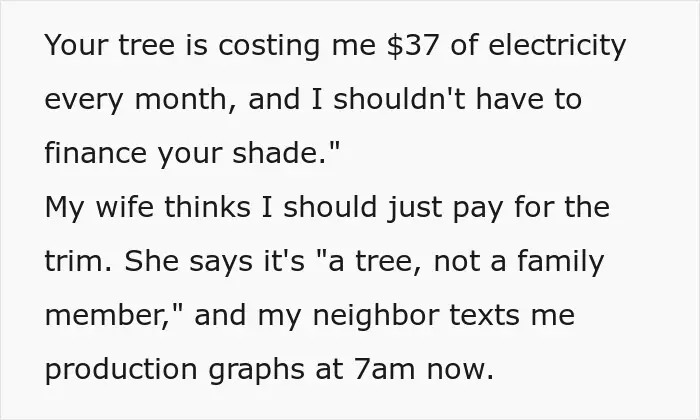
However, a study on partial shading in solar panels found that power losses aren't always proportional to the area covered by a shadow. The way the shadow falls across the cells and how the panels are connected can also affect their output. An independent assessment would help establish whether the neighbor's estimated $37 monthly loss is accurate.
Even if the redwood is affecting his panels, that doesn't give the neighbor the right to dictate what the homeowner can grow on his property. One way to secure access to sunlight across a neighboring property is through a solar easement. This is a written agreement that specifies the area that must remain clear and the conditions for protecting access to sunlight.
These agreements are best discussed before solar panels are installed, so both property owners know what they're agreeing to. For example, Nevada law allows solar easements to be created even when solar equipment has already been installed. However, the neighboring property owner must agree in writing, and the document must specify the area to be kept clear and the periods when sunlight access is protected.
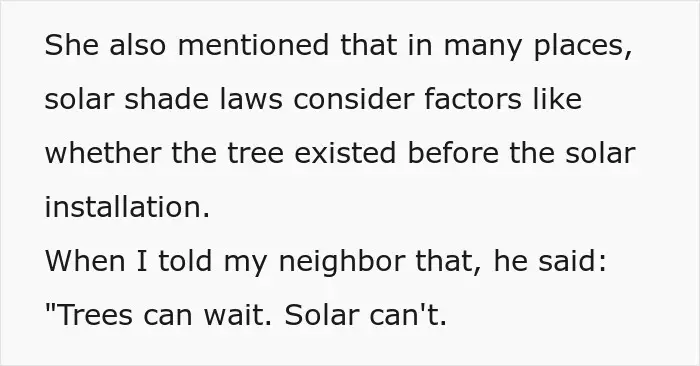
In this story, the neighbor raised the shading issue only after installing his panels, without first reaching an agreement with the homeowner. That doesn't necessarily give him the right to demand changes to the established tree, especially when local laws may protect it. Trimming or removing it could also cause significant damage.
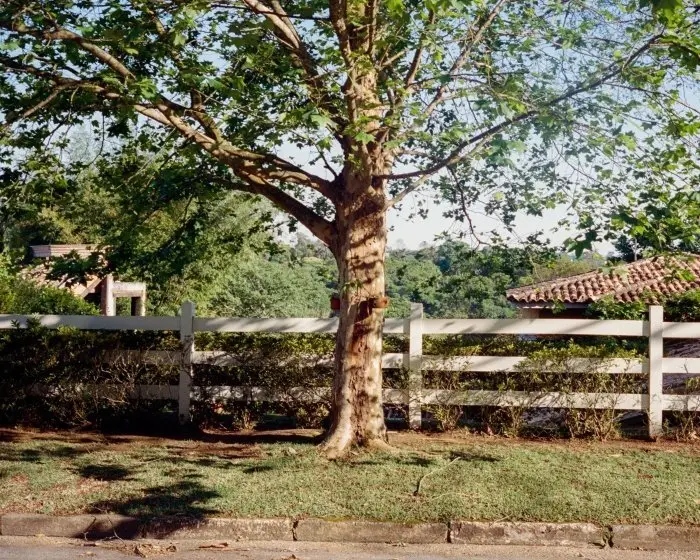
Heavily trimming or removing mature trees can harm their health and affect the surrounding environment
The Environmental Protection Agency explains mature trees provide valuable shade that helps keep homes and outdoor spaces cooler. They also absorb rainfall, reduce runoff, and provide habitats for wildlife. That redwood is doing more for the homeowner than making his backyard look nice.
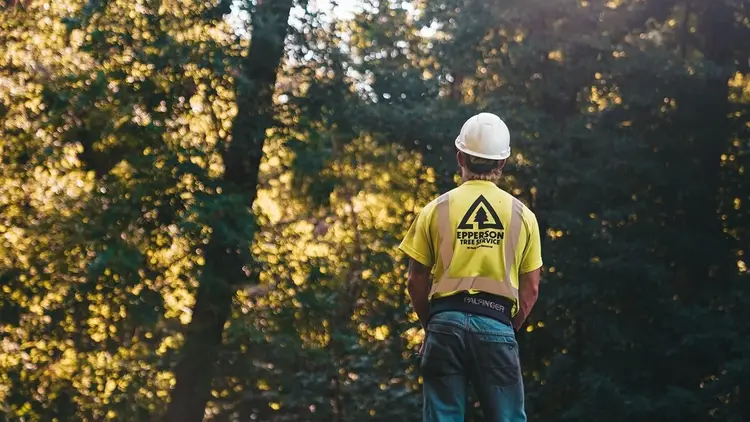
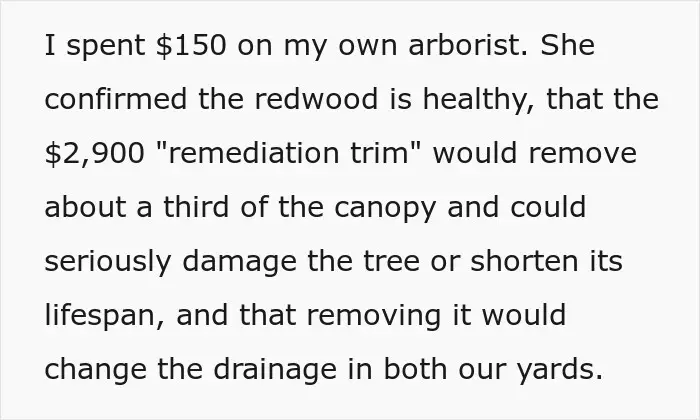
Trimming an older tree requires careful planning. Trees need their leaves to produce and store energy, so removing too much canopy can affect growth and put them under stress. The Texas A&M Forest Service advises against removing more than 25% of a tree's crown at one time. This makes the proposed removal of about a third of this redwood's canopy quite concerning.
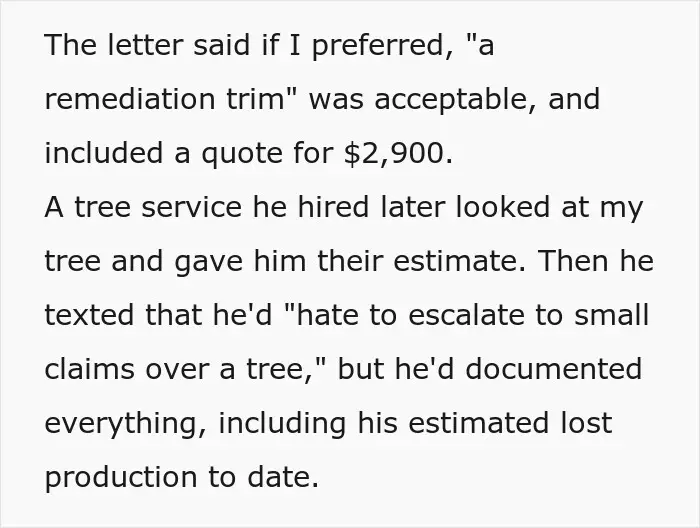
The homeowner also had an independent arborist assess the tree, which was an important step. Her warning that the proposed trimming could seriously damage it gave him another reason not to accept the neighbor's quote without question. Before agreeing to major pruning, getting advice from a qualified arborist can help establish what the tree can safely tolerate.
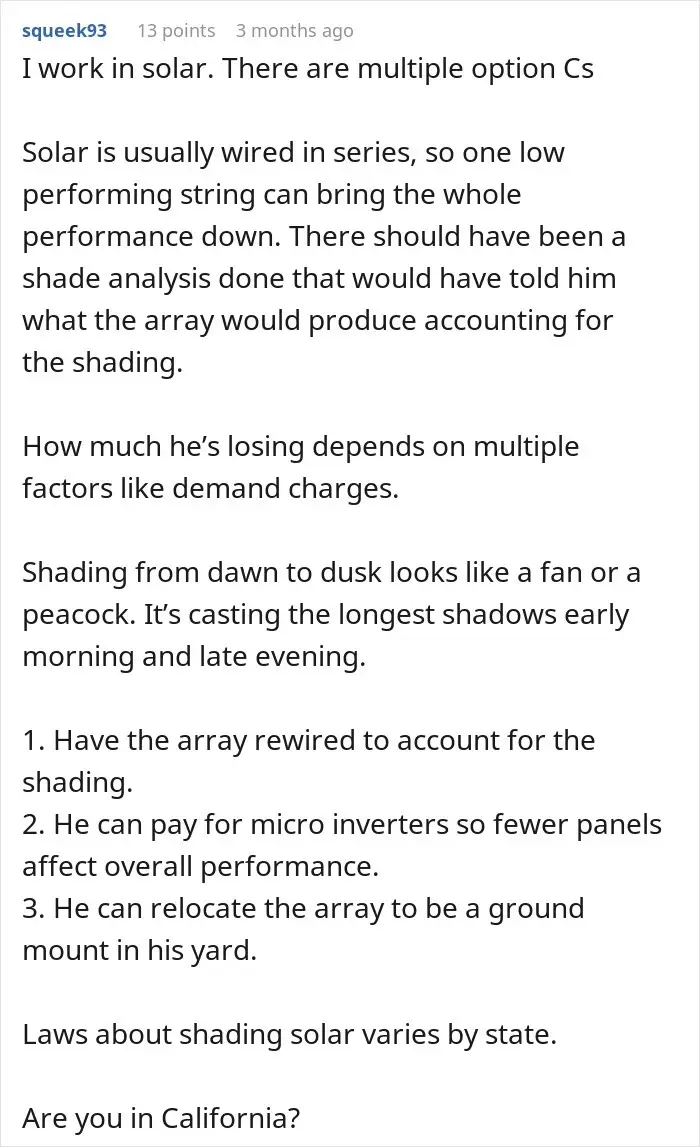
There may also be ways to reduce the effect of shade without sacrificing the tree. A National Renewable Energy Laboratory study found that microinverters and other power electronics could recover some of the electricity lost to partial shading. The neighbor could ask his solar installer whether his existing system could benefit from these technologies before considering removing or heavily trimming the redwood.
The two neighbors have competing interests, but the redwood was there long before the solar panels were installed. But we want to hear from you, Pandas. Would you pay for the trim to keep the peace, or leave the tree as it is? Share your thoughts in the comments!
Readers said he had every reason to keep his redwood and shouldn't let his neighbor bully him into cutting it down